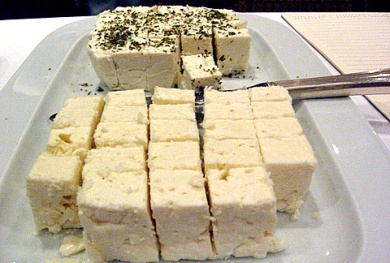
The US Agriculture Secretary, Tom Vilsack, was in Brussels this week, among other things to have lunch with EU Agriculture Ministers during their monthly Council meeting. He also took the opportunity to have a discussion with Commissioner Ciolos on some of the agricultural issues that are proving difficult to resolve in the ongoing negotiations on the US-EU Transatlantic Trade and Investment Partnership (TTIP) free trade agreement.
One of these issues is the EU demand that the US should recognise and protect the EU’s list of geographical indications (GIs). Geographical Indications are defined in the WTO as “indications which identify a good as originating in the territory of a Member, or a region or locality in that territory, where a given quality, reputation or other characteristic of the good is essentially attributable to its geographical origin”. The EU recognises two types of GIs for foodstuffs – Protected Designation of Origin and Protected Geographical Indication – and similar categories for wines and spirits.… Read the rest
Food safety in the US-EU TTIP negotiations
There is widespread concern that the ongoing negotiations on a transatlantic free trade area between the US and the EU, known as the Transatlantic Trade and Investment Partnership (TTIP), may result in a watering-down of EU food safety standards under US pressure to remove measures which are perceived as barriers to trade.
According to a report from the US-based NGO the Centre for Food Safety, “many analysts believe that a central aim of the negotiations is to dismantle many food safety regulations that corporations view as impediments to trade and profitmaking.”
Less dramatically, the European Consumer Organisation BEUC notes in its position paper that: “[…] the EU food legislative framework guarantees consumers a high level of protection and information. BEUC believes the TTIP should not lead to a downward harmonisation and that the EU should remain free to maintain, strengthen and enforce the rules it deems necessary to preserve the interests of consumers in areas such as food safety, GMOs, the use of growth promoters in livestock production or cloning.”… Read the rest
The 2013 CAP reform and biodiversity
A recent paper in Science (unfortunately, behind a paywall unless you have access through a library or individual subscription) written by 21 authors from across Europe provides a very timely review of the impact of the recent CAP reform from the perspective how it addresses the EU’s biodiversity commitments. UPDATE There is a short summary by one of the authors here.
The EU’s overall objective in its Biodiversity Strategy for 2020 agreed in 2011 is to halt the loss of diversity and to restore degraded ecosystems. Specifically, Target 3A is to “maximise areas […] covered by biodiversity-related measures under the CAP”. While this is not a very meaningful target, it was presumably intended to imply that the CAP should do much more in the future to prevent and reverse declines in biodiversity. The authors conclude that the CAP reform does not fulfil this target.
CAP greening and biodiversity
The authors review the three main greening measures under Pillar 1 as well as the prospects for financial support to enhance biodiversity measures under Pillar 2 and find them wanting.… Read the rest