
Wasting money on young farmers?

This post first appeared in the IIEA EnvironmentNexus blog.

One of the issues on the CAP reform agenda discussed at the last Agricultural Council meeting was whether the proposed young farmers’ payment in Pillar 1 should be a voluntary option for member states or not. The Council is arguing for a voluntary payment. Both the Commission and Parliament argue, on the contrary, that the payment should be mandatory.

Making this a mandatory payment could imply a three- to four-fold increase in CAP expenditure on young farmers. One might assume that such a substantial increase in expenditure would be justified by well-founded evidence of substantial gains in either generational renewal or farm productivity.

In fact, in proposing a general top-up of direct payments for young farmers in Pillar 1 the Commission ignores the advice of its own evaluations of assistance to young farmers. Despite the high profile campaign by CEJA, the European Council of Young Farmers, this payment is the wrong instrument addressing the wrong problem.… Read the rest

Challenges of implementing networking and governance mechanisms in the EIP

This guest post is written by Doris Marquardt, Senior Researcher at the Institute for Regional Development and Location Management, EURAC, Bolzano, Italy.

The setting-up of the European Innovation Partnership (EIP) ‘Agricultural Productivity and Sustainability’ as a new instrument under the rural development pillar in the next funding period has – in comparison to other elements in this CAP reform – so far not been the subject of contentious debate.
According to the draft regulation, the EIP is seen as a driver for innovation in the primary and food sectors. Added-value creation is expected by linking researchers and practitioners, promoting the transfer of new approaches into practice, informing the science community about research needs that matter “on the ground”, and by focussing existing policies on innovation. It is intended that the EIP will help build a competitive primary sector that secures sustainable global food and raw material availability. Dissemination of results (on innovation) and EU-wide networking should lead to gains for the sector as a whole.… Read the rest

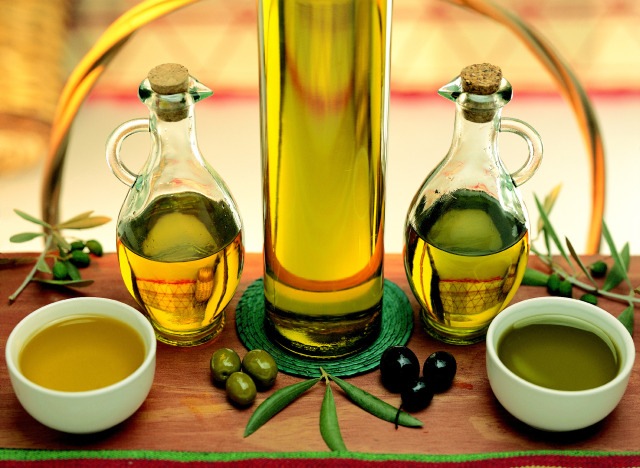
EU to ban reusable olive oil bottles in restaurants

Olive oil marketing regulations are at the centre of a political storm in the UK following newspaper reports that the EU Commission proposes to ban the use of olive oil jugs and dipping bowls in restaurants from 1 January 2014 (see, for example, the Daily Telegraph and Guardian reports).
The proposal is reminiscent of EU rules preventing the sale of crooked cucumbers (repealed in 2009). Apart from the substantive issues around the merits or otherwise of the proposal itself, the issue throws light on the working of the EU’s comitology system as well as raising questions about the balance between maintaining uniform conditions of competition within the EU while also respecting the principle of subsidiarity.
The proposal is found in a draft Commission implementing regulation amending an earlier implementing regulation on the marketing of olive oil in the Community. Part of the background to this regulation is the evidence of extensive fraud in the marketing of olive oil – olive oil is reputed to be the most adulterated agricultural product in the EU (see this interview with Tom Mueller in the New Yorker based on his book Extra Virginity: The Sublime and Scandalous World of Olive Oil).… Read the rest

A race against time

Two important meetings as part of the process of agreeing a CAP reform took place earlier this week – the Agricultural Council on Monday and the Ecofin Council on Tuesday. The Agricultural Council meeting was notable for the success of the Irish Presidency in getting agreement on a compromise mandate on the Common Fisheries Policy reform after 36 hours of negotiations which it is hoped will be the basis for a political agreement with the Parliament before the end of the Irish Presidency in June.
We are not yet at the same point with the CAP reform dossier (see this recent update to the Irish Parliament by Simon Coveney, the Irish Minister representing the Council in the trilogue negotiations and this view from Mairead McGuinness, one of the shadow rapporteurs in the European Parliament). Both the Irish Presidency and the Agriculture Commissioner continue to make bullish pronouncements (as indeed they must) that an overall CAP package also acceptable to the European Parliament negotiators will be agreed at the next Agricultural Council in June.… Read the rest

A short bibliography on CAP greening

As this was a relatively quiet week for news on CAP reform, I thought it might be useful to gather together in one place some references to the debate that has taken place on CAP greening since the publication of the Commission’s proposals in October 2011. This remains one of the knottiest issues to resolve in the CAP trilogues. These papers provide a guide to the general issues in this debate. There is also an emerging literature which attempts to estimate the impact for particular regions and farming systems of implementing the greening measures which I do not cover here. The papers are presented in rough chronological order and include a number of my own contributions so there is a certain amount of repetition.
Alan Matthews, Environmental Public Goods in the New CAP: Impact of Greening Proposals and Possible Alternatives, 2012, Brussels, European Parliament.
This note prepared for the European Parliament’s COMAGRI discusses the greening component of direct payments in the Commission’s legislative proposals of October 2011 for the Common Agricultural Policy in the period after 2013.… Read the rest