
The UK milk ‘crisis’ – fact or fiction?
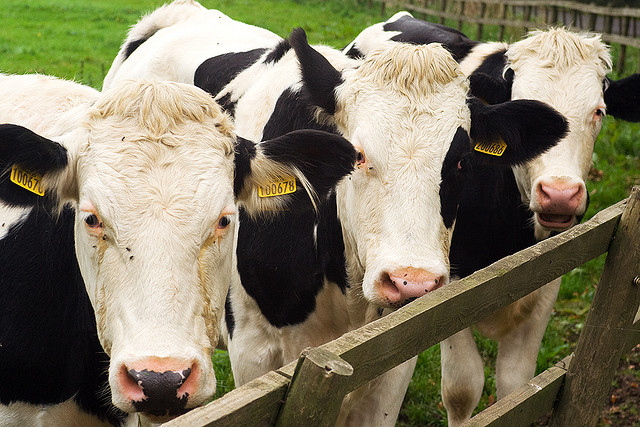
Reading the UK press over the past few weeks it appears that the UK dairy industry is on its last legs and that UK dairying will soon become an extinct species. The Daily Mail reports that “campaigners warned it was the worst crisis the industry has ever seen”. At the other end of the political spectrum, the Guardian headlines its story “No whey forward – future of Britain’s dairy industry hangs in the balance” and goes on to claim “Years of falling milk prices could spell an end to the fresh, safely produced dairy products we take for granted.”
According to Rob Harrison, the chairman of the NFU’s dairy board, in The Telegraph: “Being a dairy farmer at the moment is like being a boxer – on the ropes and taking body blow after body blow. There is only so much you can take before throwing in the towel.” The House of Commons Environment, Food and Rural Affairs Committee has just published a report on dairy prices in response to the alarm.… Read the rest

Why the poor EU response to higher grain prices?

Since 2007/08, the world has lived with substantially higher, if fluctuating, prices for grains following the global food price spike that began in 2007. Economists would predict that higher prices would lead to a global supply response. Indeed, global cereals production has increased by over 500 million tonnes in 2013 compared to 2006 production of just over 2 billion tonnes (FAOSTAT statistics are used throughout this post, and cereals production is measured inclusive of the volume of milled rice). This corresponds to an increase of 25% over this period, or a compound annual growth rate of 3.3% per annum which is impressive.
What is also of interest is where this supply response has taken place. Immediately after the food price shock it seemed that most of the supply response was taking place in developed countries, with only a limited supply response in developing countries. Various reasons were suggested for this. It was argued that there was limited transmission of the international price increases to domestic markets in developing countries, either because of high transactions costs (inefficient transport systems, expensive customs procedures) or because of deliberate government policies (reducing import tariffs or imposing export restrictions in order to limit the extent of price increases on domestic markets).… Read the rest