European Parliament postpones vote on CAP reforms

COMAGRI and the European Parliament have decided to delay their voting on the Commission’s CAP reform proposals until the New Year, according to a report in the UK Farmers’ Guardian today. The new timetable means that it is unlikely that the new regulations can be agreed between the Council and the Parliament until late in the Irish Presidency in the first semester next year.

The latest CAP reform timetable is:

December 15

    – deadline for compromise amendments to be presented to Agriculture Committee.

January 23/24, 2013

    – CAP vote in Agriculture Committee.

March 2013

    – plenary vote in Parliament.

March 2013 onwards

    – trilogue negotiations between EU Commission, Parliament and EU Ministers.

Whether this means that the new CAP regulations can come into force on 1 January 2014 or not is unclear. In the press report quoted above, the NFU calls on the Agriculture Commissioner to prepare transitional rules on the presumption that this is unlikely to happen.… Read the rest
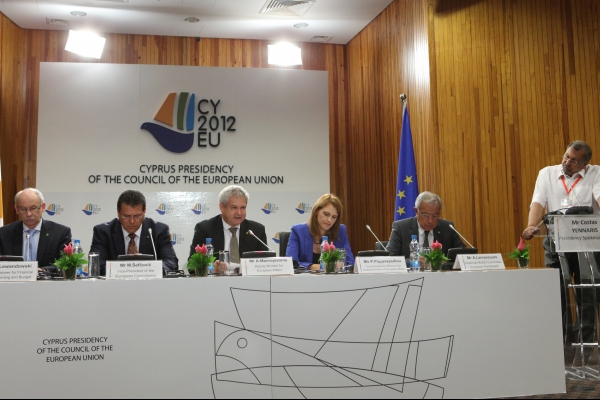
Cyprus Presidency issues second revised MFF negotiating box

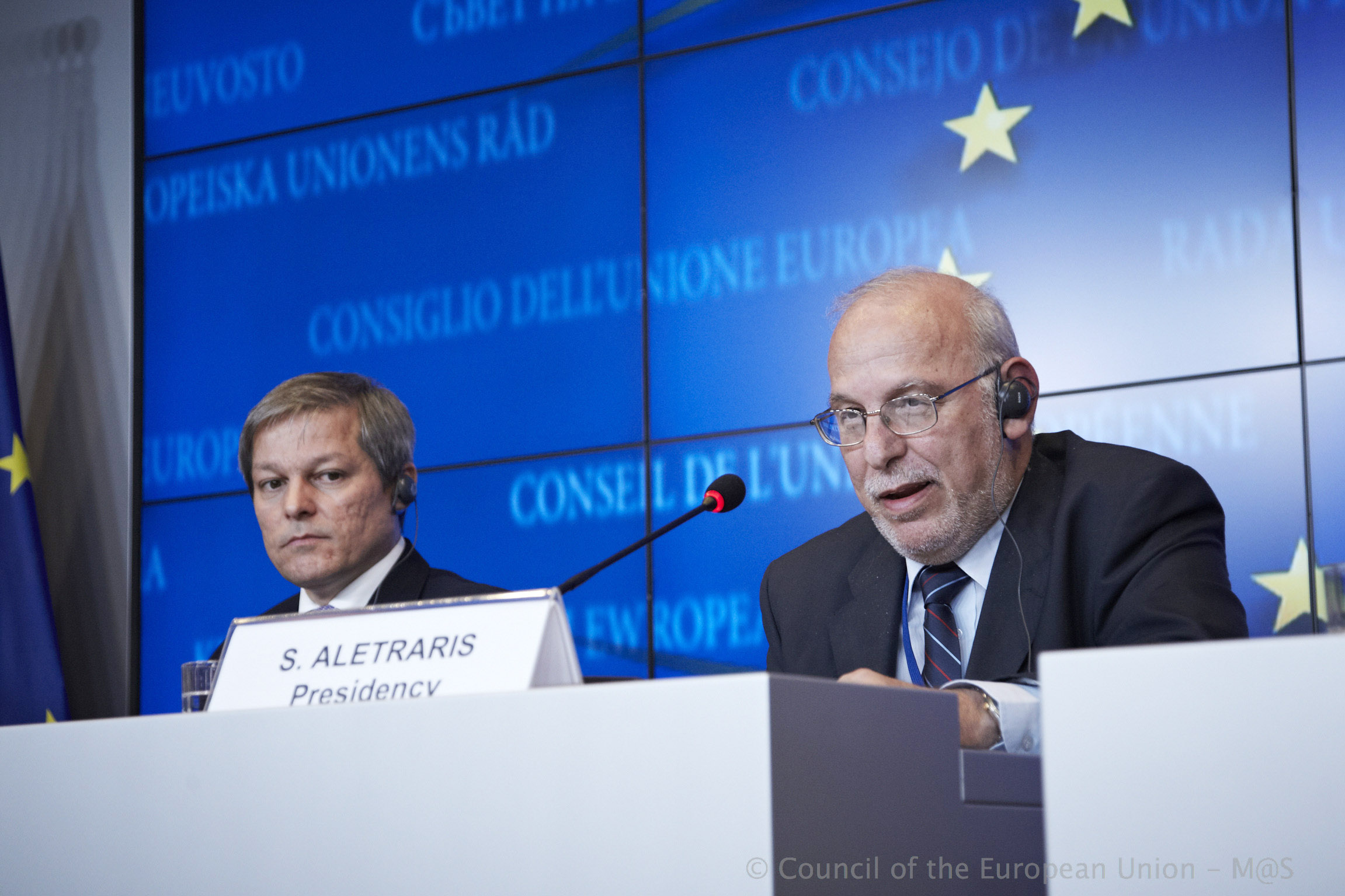
The Cyprus Presidency yesterday circulated its second revision to the MFF negotiating box, this time inserting some figures for the individual MFF headings for the first time.

It is a cautious document in its attempts to balance the very different interests of the member states as they try to reach agreement on the MFF at the special November European Council meeting. Agricultural spending escapes lightly in the Presidency proposal which shows where budget reductions in the proposed 2014-2020 MFF might fall.

The preamble to the document states that it presents savings across all Headings of the MFF amounting to at least €50+ billion (this is in comparison to the Commission’s revised MFF proposal in July 2012). However, it goes on to note:

According to the assessment of the Presidency this is a starting point for delegations in order to reflect on the effects of reductions. More sizeable reductions are needed in order to reach a compromise.

Read the rest

October Agricultural Council continues CAP debate

Agricultural Ministers continued to grind through their discussions on CAP2020 issues under the Cypriot Presidency at the Agricultural Council meeting on 22 and 23 October earlier this week. Three issues were on the agenda: internal convergence, support for young farmers in Pillar 1, and a strengthened role for producer organisations. The background note prepared by the Presidency is here, and the conclusions of the meeting are reported here. The discussions took place on the basis of two questionnaires circulated by the Presidency on internal convergence and young farmers, respectively.

Internal convergence

Many member states applying the Single Payment Scheme (SPS) have voiced concerns about the difficulties in achieving a uniform level of distribution of direct support at national or regional level (internal convergence) by 2019. The Commission has indicated its openness to address these concerns and to consider suggestions for some flexibility in the rhythm and methodology of progress, without prejudice to the principle of achieving internal convergence.… Read the rest

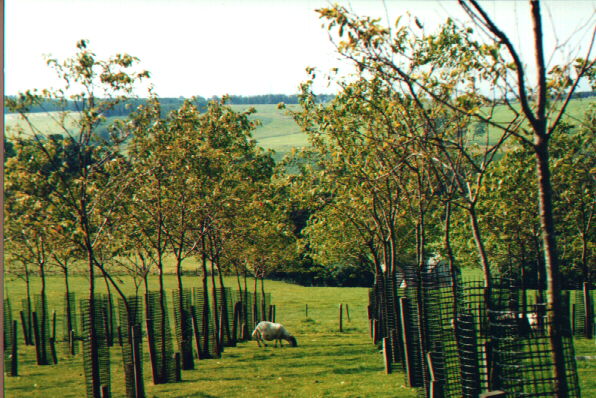
What potential agroforestry holds for the future CAP?

More than 80 policy makers, farmer’s representatives, NGOs and scientists got together on Wednesday this week in the European Parliament in Brussels to discuss the potential agroforestry holds for the future CAP. The event, entitled “Agroforestry: Trees for a Sustainable European Agriculture”, was organised and chaired by MEP Gaston Franco with the aim of promoting and supporting agroforestry at the European level. The programme (see agenda and presentations here) has brought together many speakers with various backgrounds and perspectives, resulting in a demonstration of a diverse and sophisticated picture of the field.

Agroforestry combines production and environmental protection in an innovative way, said Alain Canet – President of the French Agroforestry Association. It allows optimising the use of natural resources and produces biomass and biodiversity as well as it “offers innovative solutions to modern challenges of rural development,” argued Christian Dupraz, Researcher and President of the European Agroforestry Federation (EURAF).… Read the rest

Farmer-friendly ideas on greening

COPA-COGECA leaders are currently presenting their new detailed position on greening and green growth at the Congress of European Farmers, organised in Budapest on October 1?3, 2012. The theme of the Congress  is “The Future Common Agricultural Policy (CAP): How European Farmers can ensure Food Security Innovatively and Profitably”.

COPA-COGECA is largely against the greening proposals tabled by the Commission last year, saying that they make farmers do a lot more for less money, thereby leading to higher costs, higher food prices and more dependence on imports. They would also increase bureaucracy, of course. Therefore, the farmers’ organisation produced a list of six alternative measures to tackle the problem of greening in a farmer-friendly way: crop diversification (of rotated crops), a certification scheme (food), permanent grasses, replacement of EFAs by uncultivated land, break crops, protein crops.

These items, serving as an extended list of greening measures for farmers, reflects the diverse nature of European agriculture and allowing farmers to make choices more flexibly, based on their own farm situation – says COPA-COGECA.… Read the rest

How close is the EU to agreement on spending one trillion euro?

The negotiations on the 2014-2020 multiannual financial framework (MFF) are critical to the current CAP reform process. These negotiations will determine the size of the financial envelope as well as many of the key parameters which will decide the future shape of the CAP.

I have previously commented on the slow progress of the MFF negotiations (see here and here). In principle, these negotiations need to be completed under the Cypriot Presidency by the end of this year, to allow the negotiations on the future CAP regulations to be completed under the Irish Presidency in the first half of next year, so that the necessary supplemental legislation as well as member state rural programmes can be passed and approved by the end of 2013.

The official view remains that the negotiations are on track to reach a conclusion by the end of November (a special meeting of the European Council will be held on 22-23 November solely to discuss the MFF, with some suggestions that the meeting could be extended into the weekend if necessary).… Read the rest

OECD reports EU farm transfers at lowest level ever

The OECD produced the 2012 edition of its Agricultural Policy Monitoring and Evaluation report during the week. This is the publication that keeps tabs on the transfers to and from farmers and consumers as a result of government policy interventions. It also usually contains a chapter on a special theme, which this year is devoted to fostering innovation and productivity growth in agriculture.

General findings

The results are summarised in a series of indicators, of which the most well-known is the Producer Support Estimate (PSE) usually expressed in percentage terms. It measures the percentage of farm receipts in a country that is due to public policies.

Another useful indicator is the Nominal Protection Coefficient (NPC) which measures the ratio between the average price received by producers (at farm gate), including payments per tonne of current output, and the border price (measured at farm gate).

The report finds that in 2011 support to producers across the OECD area amounted to €182 billion as measured by the Producer Support Estimate (PSE).… Read the rest

Further thoughts on CAP greening

Kaley Hart (of the IEEP) and Jonathan Little (on secondment to the European Parliament’s secretariat) have just published a paper which provides a useful summary of the first round of the CAP greening debate over the past 12 months. They argue that, in relation to the individual greening measures, each has a range of potential benefits as well as a set of issues which may serve to constrain this potential. They note that the perceived added cost and bureaucracy involved with green direct payments has been a common theme of the public debates within the Agriculture Council.

The second part of their paper compares the relative merits of different alternative options to the Commission’s proposals. They conclude:

What is clear from this analysis is that there is no perfect alternative approach to greening the CAP, with any choice inevitably involving compromises. The amount of additional benefits delivered from the scale of investment in greening is clearly of paramount importance from an environmental perspective, however, a trade-off has to be made between environmental additionality and administrative simplicity.

Read the rest

Cyprus Presidency proposes CAP budget cut in next MFF

The first initiative in what member states hope might be the final push to get agreement on the next Multi-annnual Financial Framework by the end of this year under the Cyprus Presidency took place yesterday (30 August) when the Cypriots hosted an informal meeting of the General Affairs Council in Nicosia.

During July, the Cypriots held a series of bilateral meetings (‘confessionals’) with the 27 member states and Croatia. Based on these discussions an Issues Paper was prepared for the meeting. This paper reported briefly on the outcome of the bilateral consultations, presented the Presidency´s proposed orientations for reflection by the delegations, and included a brief reference to the next steps.

The Issues Paper

The summary of the bilateral consultations is a daunting list of areas of disagreement, ranging from the overall size and composition of the next MFF, the sources and make-up of revenue sources, to more specific concerns on cohesion policy, the CAP, and other expenditure headings (this earlier post discusses the state of play on some of these issues at the beginning of the summer).… Read the rest

COMAGRI CAP2020 amendments published

The amendments proposed by COMAGRI committee members are now posted on the COMAGRI website. They include those proposed by the rapporteurs in their draft reports The links to the amendments to the four main regulations are given here.

Direct payments regulation (2292 amendments).
Single CMO regulation (2227 amendments)
Rural development regulation (2127 amendments)
Horizontal regulation (769 amendments)

The next COMAGRI meeting on 3 September will exchange views on the amendments to the Commission proposal related to direct payments to farmers after 2013. The total of 2292 tabled amendments include the 111 by the rapporteur, Luis Manuel Capoulas Santos. In addition, other Committees have also adopted opinions to this proposal.

It will be up to the rapporteur and shadow rapporteurs to consolidate these amendments into a smaller number of critical amendments on which the committee will vote. This work is expected to take up much of the early autumn.

This post was written by Alan Matthews.Read the rest