The European Council’s Strategic Agenda 2024-2029

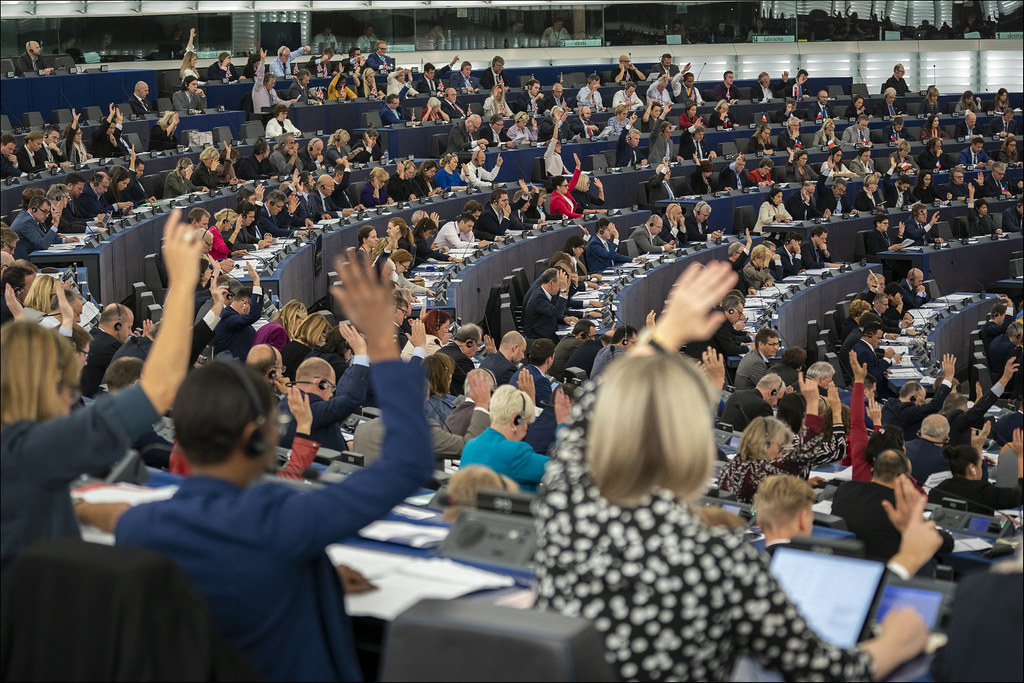
Two defining events for the European Union take place in the next eight weeks:  the European Parliament elections take place on 6-9 June and will determine the balance of power between the various political groups with differing priorities for the future of Europe; and the European Council meeting on 27-28 June will adopt the EU’s Strategic Agenda 2024-29 as well as attempt to agree on nominees for the EU’s top jobs, including the President of the European Commission. The climate organisation E3G has produced a very nice graphic that illustrates the key steps in the political timeline for the rest of this year .

Source: E3G.

In this post, I focus on the preparation of the Strategic Agenda for the period 2024-29, a process that takes place every five years. It is easy to be cynical about this process. The European Council has a history of producing conclusions with high-sounding principles and commitments that on closer inspection turn out to be rather vague and woolly.… Read the rest

Introducing a tax on agricultural GHG emissions? The Danish case

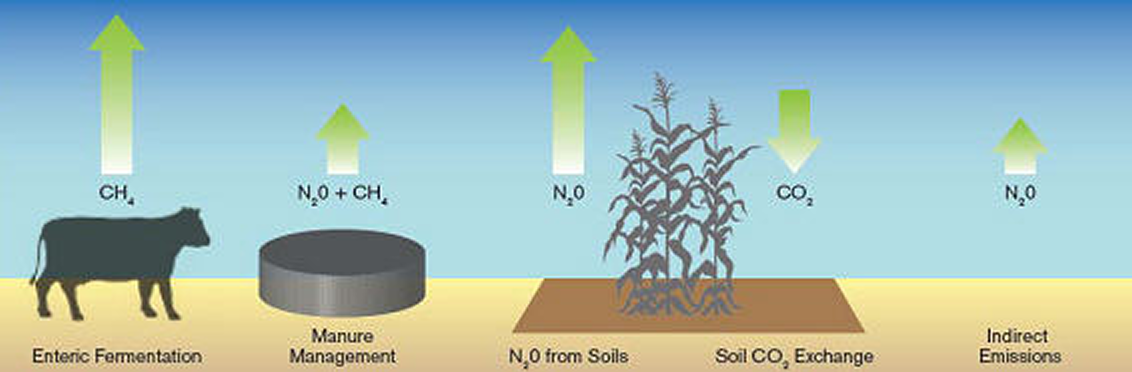
In its first progress report on EU climate policy published in January 2024, the newly-established European Scientific Advisory Board on Climate Change noted that there is no EU-level price on emissions in agriculture/food, forestry and land use, which suffer from an overall lack of incentives to reduce emissions and increase removals. It recommended that the EU should start preparations now with a view to expanding the pricing regime of EU GHG emissions to all major emitting sectors, including agricultural/food and LULUCF, through a legislative proposal for after 2030.

In November 2023 the Commission published an exploratory study investigating ways to price GHG emissions from agricultural activities along the agri-food value chain and how this could be accompanied by providing farmers and other landowners with financial incentives for climate action. The study responded to a 2021 report by the European Court of Auditors, which recommended that the Commission should “assess the potential of applying the polluter-pays principle to agricultural emissions, and reward farmers for long-term carbon removals”.… Read the rest

Target-compatible Environmental Payments under the CAP – Economic Requirements and Legal Scope

This guest post is contributed by Prof. Dr. Rudolf Mögele and Prof. Dr. Martin Scheele. Prof. Dr. Rudolf Mögele is Honorary Professor at the University of Würzburg; previously, he was Deputy Director General at the European Commission, DG Agriculture and Rural Development, responsible for three Directorates (Legal Affairs, Audit and Assurance and Markets). Prof. Dr. Martin Scheele is Honorary Professor at the Thaer-Institute, Humboldt University, Berlin; previously, he was Head of Unit at the European Commission, DG Agriculture and Rural Development, responsible for conception and coherence of Rural Development.

Agri-environmental payments reflecting costs incurred and income forgone

In the discussion on the CAP, more and more attention is given to the importance and functioning of environmental and climate-related payments. Such payments are established by Article 37 of CAP-Regulation (EU) 2021/2115 under the name “eco-schemes”: Article 31(7)(a) provides that eco-schemes may take the form of “green” top-ups to direct payments while Article 31(7)(b) states that they may also be granted as compensation for additional costs incurred and income foregone.… Read the rest

What does the Commission’s proposed 2040 climate target mean for agriculture?

On 6 February last, the Commission published its Communication Securing our future:  Europe’s 2040 climate target and path to climate neutrality by 2050 building a sustainable, just and prosperous society. The Communication proposes a Union-wide, economy-wide 2040 target reaching 90% net GHG emissions reduction compared to 1990 levelsthat will put the EU on an effective, cost-efficient, and just trajectory towards climate neutrality by 2050, as called for under the European Climate Law”.

In fact, what the Climate Law calls for is ambiguous. In recital (30), the Commission should propose a Union intermediate climate target for 2040, as appropriate, at the latest within six months of the first global stocktake carried out under the Paris Agreement and which was concluded at COP28 in Dubai in December 2023. But in the text of the Law, Article 4(3) states that the Commission “at the latest within six months of the first global stocktake … , the Commission shall make a legislative proposal, as appropriate, based on a detailed impact assessment, to amend this Regulation to include the Union 2040 climate target, ..’.… Read the rest

Who feeds Europe, and how much do they earn?

One of the demands in the ongoing farmer protests is for fair prices and a fair income. But how many farmers are there and what do individual farmers earn? In my previous post, I examined income trends at an aggregate level, both for the EU and for France as a Member State case study. In this post, I want to dig more behind the aggregate numbers to look at how incomes are distributed within the farming sector.

There are 9 million farms (holdings) in the EU. This figure comes from the latest Agricultural Census taken in 2020 (with figures in the inter-census years derived from the Farm Structure Surveys usually taken every three years or so). The requirements for a holding to be included in the Agricultural Census that year were set out in  Regulation (EU) 2018/1091. Previously, there had been a specific requirement to cover all agricultural holdings above 1 ha in size.… Read the rest

What is actually happening with agricultural incomes?

Farming protests are currently taking place in several European countries. Several reasons are advanced for what is prompting these demonstrations – concerns over incomes and rising costs, the burden of additional environmental regulation, free trade agreements with third countries, the uncertainty arising from increasingly volatile weather conditions, the sense that society no longer values the work of farmers in the same way as in the past. No doubt all factors play some role, but in this post I want to dissect the farm income context. I make use of a chart that I posted on my X and LinkedIn feeds a little time ago, but a blog post allows me to give some additional background.

We frequently hear that farmers’ incomes across Europe have been under pressure from a variety of factors, ranging from strong price fluctuations to rising production costs and extreme weather phenomena. The basic message of the chart (which I reproduce later in this post) is that, on the contrary, farmers have made steady gains in their income from agriculture over the last two decades (since 2005) and agricultural income levels have been at their highest in the past three years, despite higher input costs.… Read the rest

The European Scientific Advisory Board on Climate Change 2024 progress report and agricultural emissions reduction

The newly established European Scientific Advisory Board on Climate Change (ESABCC) first made its mark when delivering its advice to the Commission in July 2023 on setting the EU’s 2040 mitigation target. It recommended emission reductions of 90–95% by 2040 relative to 1990. The Commission Communication proposing its climate target will be published on 6 February 2024. It is expected to propose a reduction target in net emissions of at least 90% in line with the recommendation of the Advisory Board. This is the target to which the new Climate Commissioner Wopke Hoekstra committed in his appointment hearing before the Parliament’s Environment Committee in October last year.

The ESABCC has now followed up with its first progress report published last week 17 January 2024 containing advice on policy actions that can support the legal target in the European Climate Law of achieving climate neutrality by 2050 at the latest. The report includes both an assessment of progress, based on an analysis of relevant indicators and their comparison with indicative benchmarks, as well as an assessment of the consistency of existing policies with the EU’s climate objectives.… Read the rest

European Parliament polling reaches tipping point for right-of-centre majority

Latest polling results from the three institutions that provide regular updates on seat projections for the European Parliament elections in June 2024 now point for the first time to the possibility that the three right-of-centre political groups – the EPP, ID and ECR – may have a majority of seats on their own in the next Parliament.

My previous synthesis of the seat projections in May 2023 (see my blog post here) showed that the left-of-centre groups – S&D, Greens and the Left – together with Renew were still slightly ahead of the right-of-centre groups though they would have required support from the independent MEPs – the so-called Non-Inscrits – to create an overall majority. This is no longer the case.

In the following table, I present the seat projections by the three institutions – Europe Elects, Politico Poll of Polls, and Der (europäische) Föderalist – as a percentage of the overall number of seats (note, this is not a projection of the share of total votes received by the national political parties affiliated with these political groups).… Read the rest

Contrasting recent decisions on pesticides

During the past week, I was intrigued by a post on the social media platform X from Pascal Canfin, Chair of the Committee on Environment, Public Health and Food Safety in the European Parliament which in translation read: “We have just rejected in Parliament a proposal from the Commission which would have allowed the importation of foodstuffs produced with a pesticide banned in Europe, tricyclazole. This would have been unfair competition that was unacceptable for our farmers. I welcome it.

What intrigued me about this post was the implication that, because the Parliament had rejected the Commission proposal, the imports of foodstuffs (specifically, rice) produced with tricyclazole into the EU would no longer be possible.… Read the rest

Trilogues begin on the Certification Framework for Carbon Removals Regulation

The Commission put forward its legislative proposal for a Certification Framework for Carbon Removals (CFCR) in November 2022. The Regulation has the two broad objectives to define quality criteria for carbon removal activities to ensure only high-quality removals are certified, and to define rules for the verification and certification of carbon removals, including rules for the functioning and recognition by the Commission of certification schemes. The main innovation in the Regulation is that it defines Certified Removal Units (CRUs) that can be used in national or corporate GHG inventories or exchanged through voluntary carbon markets.

In a previous post last September, I discussed the amendments to the Commission’s proposal being discussed by the Council and European Parliament at that time. Last month, both institutions finalized their mandate for negotiations (the Council) and first reading position (the Parliament). I summarise in this post the main changes proposed by the two institutions to the Commission’s proposal, using the framework developed in the previous post.… Read the rest