How much progress has been made on agreeing the 2014-2020 MFF?

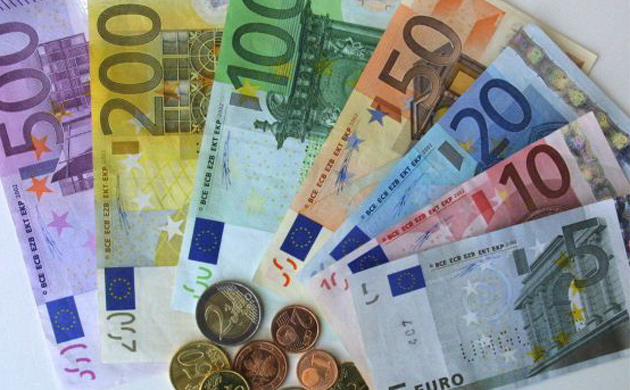
Discussions on the CAP regulations post-2013 and negotiations on a new multi-annual financial framework (MFF) for the period 2114-2020 are inextricably linked. As EU politicians and civil servants take to the beaches for their summer vacation this month, it is timely to review how far the negotiations on the MFF package have come and how close/far we are to/from an agreement. The official view (see the Council MFF website) is that we are on course to reach political agreement on the MFF package by the end of this year. This would allow legislative work to be finalised in sufficient time for the new MFF, new rules on own resources and new spending programmes to apply from 1 January 2014, but this may be more wishful thinking than a real forecast.

The MFF package is more than the MFF Regulation which decides the ceilings for the different expenditure chapters in the EU budget for the 2014-20 period.… Read the rest

What role for agriculture in rural development?

The European Commission partially justifies the Common Agricultural Policy (CAP) of the EU with the CAP’s contribution to ‘viable rural communities’. Maintaining viable rural communities was one of the three strategic aims for the CAP set out in the Commission’s Communication on the CAP towards 2020 in November 2010. It was justified in the following terms:

To maintain viable rural communities, for whom farming is an important economic activity creating local employment; this delivers multiple economic, social, environmental and territorial benefits….
Agriculture is an integral part of the European economy and society. In terms of indirect effects, any significant cut back in European farming activity would in turn generate losses in GDP and jobs in linked economic sectors – notably within the agri-food supply chain, which relies on the EU primary agricultural sector for high quality, competitive and reliable raw material inputs, as well as in non-food sectors. Rural activities, from tourism, transport, to local and public services would also be affected.

Read the rest

Is selling 'experiences' a potential growth path for European agriculture?

Three researchers at Leuven University, Jo Swinnen, Kristine Van Herck and Thijs Vandermoortele, in a recent paper in the newly-launched BAE Bio-based and Applied Economics journal put the spotlight on the potential to base future growth in European agriculture on the willingness of consumers to pay a price premium in exchange for various ‘experiences’ (working paper version available here ). They suggest that this may be a more promising growth strategy, at least in some sectors or for some regions, than a more conventional emphasis on producing food, albeit of high quality, at low cost.

Definition of experience goods

The researchers base their proposal on two pieces of evidence. The first is evidence generally that there is rapid increase in the demand for experience-related products and services. It is important here to explain what the authors mean by experience goods.
Products and services are assumed to consist of three components, each of which add value.… Read the rest

Old interests in the New Member States

On July 3, a conference was organised on the future of the CAP with the attendance of representatives of six New Member States (Bulgaria, Czech Republic, Hungary, Poland, Romania, Slovakia) in Rzeszów, Poland. Although the original goal of the meeting was to provide solutions to those issues that affect the CEE agriculture after 2014, a Common Statement of Agricultural Ministers was published, which is a useful source to identify NMS interests in the CAP reform debate.

It is the unanimous opinion of the respective New Member States (NMS) that in its current form, the CAP does not serve the original objectives such as simplification, decreasing administrative burdens and convergence. Regarding the Multiannual Financial Framework, the NMS call for consistency between EU objectives and tasks defined in the EC legislative proposals on CAP after 2013. As to new objective criteria regarding the distribution of rural development support, NMS call for the usage of development gap of individual Member States combined with their past performance (allocation for the period 2007-2013).… Read the rest

Eurobarometer food security survey

What are we to make of the findings in the latest Eurobarometer survey of EU public opinion on Europeans’ attitudes to their own food security? (The survey also covered attitudes to global food security, food quality and the countryside).

On the one hand, only two out of five (43%) respondents are concerned about food security in their own country, while more than half (56%) are either not very concerned or not at all concerned. Only two out of five (40%) respondents are concerned about food security at EU level, while more than half (57%) are either not very concerned or not at all concerned. On the other hand, in all Member States a large majority of respondents supported the view that the EU should produce more food to reduce its dependence on imports. Levels of agreement exceeded the EU average of 81% in 17 of 27 Member States.

Responses to survey questions are in part determined by the way the question is asked.… Read the rest

The European Parliament report on the measurement of farm support

A variety of estimates of the level of farm support circulate. Many of them rely on creative accounting. For example, during the recent farm bill debate in the US Senate on C-Span television, a Senator claimed that the EU subsidized its farmers seventeen times more than the US, quoting as “evidence” that farm subsidies accounted for 45% of the EU budget, while by contrast the US farm spending was less than 1% of the US federal budget. On the opposite, the Momagri (a French arable crops producers sponsored think tank) published estimates that US farm support was three times higher than the EU one. Defining meaningful indicators is important since, on both sides of the Atlantic, the fact that the other party supports its farmers is used as an excuse to maintain, increase or “re-couple” support. In the EU Parliament, for example, more and more MEPs seem to be arguing for maintaining support and even make it more countercyclical payments mostly because “the US does it”.… Read the rest

Gunfight for CAP Budget Money

It has been clear for some time that most of the key issues of the CAP reform will be negotiated upon in the framework of the negotiations on the Multiannual Financial Framework (MFF) by foreign ministers and heads of state of the EU Member States. The Danish Presidency prepared a special document – a Negotiating Box, which should define all the negotiating issues and facilitate the conclusion of negotiations. The negotiations have thus started to heat up, negotiators have presented their arguments and formed the clubs of like-minded countries. Before the negotiations culminate, expectedly at the turn of 2013, we shall try to define the positions of individual actors on the key issues and speculate on the possible outcome of negotiations on the basis of the available sources (Agra Europe, Agra Focus, internal positions of Member States).

Two major groups have been formed in the negotiations on the MFF, which is manifested in common meetings and statements.… Read the rest

The EU as a destabilising force in world grain markets

I have argued before on this blog that the EU’s policy during the food price spike of 2007-08 in lowering applied tariffs on staple foods may have helped to mitigate the impact of higher food and feed prices on livestock producers and, to some extent, on consumers, but at the expense of exacerbating the global price increases facing other countries, including developing countries.

The EU’s policy of varying applied tariffs within its bound rates contributed to destabilising world market prices just as did the export restrictions applied by other countries, and undermines its moral authority, in the G20 and elsewhere, in seeking strengthened WTO disciplines on export restrictions as a way to enhance global food security.

In a paper [requires library access] published in the American Journal of Agricultural Economics in January this year, Philip Abbott of Purdue University provides some quantitative evidence of this effect. His methodology is straightforward. He compares the evolution of producer prices for staple commodities with the trend in retail food prices over the 2006-2008 period, distinguishing between major grain exporters which left borders open and major grain exporters which restricted exports.… Read the rest

Negotiations on future CAP have speeded up

Despite the hot summer across Europe, the previous weeks were quite busy in Brussels. On June 18th and 19th 2012, the European Parliament’s Agricultural Committee Rapporteurs presented their four draft reports on the reform on the Common Agricultural Policy, while one week on, on June 25th, these draft plans were confronted with national interests (based on the report ‘The CAP Reform: The State of Play in National Parliaments’) at a meeting between Agriculture Committee MEPs and representatives of national parliaments. This process is due to the Parliament’s newly engaged co-decision powers with the Council based on the Lisbon Treaty. Meanwhile, the Danish Presidency has also submitted its report to the Agricultural Council on the progress achieved during the first half of 2012.
On the 18th and 19th meeting, draft plans regarding direct payments, rural development, the single common market organisation and the common provisions for financing, management and monitoring were tabled in the COMAGRI meeting, providing the first official indication of the thinking in the European Parliament on the original legislative proposals of the Commission.… Read the rest

Co-financing rates in Pillar 2

The Agricultural Council meeting on 18 June held a discussion on the proposed rural development regulation in response to a Presidency questionnaire (the webcast of the Council discussion is here). One of the questions posed by the Presidency was:

Is the proposed provision concerning increased EAFRD contribution rates relevant for meeting the objectives of the rural development policy, or should alternative operations qualify to receive a higher rate of co-financing?

According to the minutes of the Council meeting:

Co-financing rates for rural development support are part of the negotiating box for the MFF (2014- 2020). Member states spoke in general terms of the need for a simple and targeted system for financing activities to meet the EU objectives for rural development. In its proposal, the Commission envisages a single maximum co-financing rate for most of the measures supported by the European agricultural fund for rural development (EAFRD) with only a few exceptions which could benefit from higher co-financing rates.

Read the rest