The future for national envelopes and Member State flexibility in Pillar 1

A feature of the move towards decoupled direct payments in the EU since the Fischler 2003 reform has been greater flexibility for Members States in the management of these payments. This can be seen in various ways: the different options on which to base the Single Payment Scheme; different cross compliance requirements including definition of Good Agricultural and Environmental Conditions; different possibilities for modulating payments between Pillar 1 and Pillar 2; and provisions for ‘national envelopes’ and for the retention of partial coupling.

In this post I examine the future for national envelopes and partial coupling in the light of the Commission’s draft regulation on direct payments after 2013. At issue is the extent to which the draft proposals expand the scope for coupled payments and national flexiblity more generally in the post-2013 period.

National envelopes sometimes refer to the overall ceiling on the funding for direct payments allocated to each Member State, but here I use it in the more specific sense to refer to the share of direct payments over which Member States have some discretion over how to make these payments. They have been contested since their introduction as part of the Agenda 2000 reform. On the one hand, proponents argue that they are a response to calls for greater subsidiarity because they give greater flexibility to Member States on how to allocate aid payments to help specific groups of farmers. For this reason, they have been viewed sceptically by other Member States which fear that they could lead to distortions of competition since they are implemented according to national criteria.

Article 69 in the 2003 reform

The 2003 reform allowed Member States to retain up to 10% of their previously coupled payment ceilings under Pillar 1 for specific supports to farming and quality production (Article 69 of Council Regulation (EC) No. 1782/2003). The additional payment had to be granted for specific types of farming which were important for the protection or enhancement of the environment or for improving the quality and marketing of agricultural products. Furthermore, the money had to be returned to the sectors from which it was withheld.

Seven Member States and one region chose to implement national envelopes under Article 69 – Finland, Greece, Italy, Portugal, Slovenia, Spain, Sweden and Scotland (UK) [see Commission summary here]. All Member States which implemented national envelopes used the measure to support the beef sector, with support for the arable and sugar sectors supported by four Member States each. Other sectors for which national envelopes were used included the sheep, dairy, tobacco, olive oil and cotton sectors, with Italy introducing a national envelope for energy crops in 2007.

Article 68 in the 2008 reform

In the 2008 Health Check, Article 69 (now renumbered as Article 68 of Regulation 73/2009) expanded the scope of national envelopes while keeping the overall 10% share of each Member State’s direct payments ceiling [IEEP has a good briefing on this]. Its purpose remains assistance to sectors or regions with particular difficulties but its use became more flexible. Member States can continue to use these payments for environmental measures or improving the quality and marketing of products or animal welfare. However, the money no longer had to be used in the same sector although this option was continued.

But in addition, the national envelope can now be used to help farmers producing milk, beef, goat and sheep meat and rice in disadvantaged regions or to support economically vulnerable types of farming. It can be used to top up entitlements in areas where land abandonment is a threat. It may also be used to support risk management measures such as contributions to crop and animal insurance premia and mutual funds for plant and animal diseases. Countries operating the Single Area Payment Scheme (SAPS) became eligible to use national envelopes for the first time. Moreover, Member States which made use of Article 69 of Regulation (EC) No 1782/2003 were given a transitional period in order to allow for a smooth transition to the new rules for specific support.

In order to comply with WTO Green Box conditions, support for potential trade-distorting measures under Article 68 is limited to 3.5% of national ceilings. This includes support for types of farming important for the protection of the environment, support to address specific disadvantages, and support for mutual funds.

Member States were given three opportunities to make use of Article 68 in that they could notify the Commission of their intentions in August 2009, August 2010 or August 2011. By comparing the Commission’s regular summaries of the implementation details it is clear that use of Article 68 has expanded over time. In the May 2011 summary, only Cyprus, Malta and Luxembourg appeared not to make use of Article 68 at all.


Partial coupling

The provisions for specific support in the national envelope articles should be seen in the context of the possibilities for continuing partial coupling under the Single Payment Scheme. In the 2003 Fischler reform, there was significant scope to retain partial coupling. For example, Member States could continue to couple 25% of arable payments and 40% for durum wheat (Article 66), 50% of payments to sheep and goats (Article 67), 100% suckler cow premium and 40% of slaughter premium or 100% slaughter premium or 75% of special male premium (Article 68). Some coupled payments for minor crops and processing aids also continued.

The 2008 Health Check integrated the partially coupled payments in the arable crops, olive oil and hops sectors into the Single Payment Scheme from 2010. Processing aids and most other coupled payments, including some specific payments in the beef sector, are integrated into the single payment scheme by 2012 at the latest. With the implementation of the Health Check agreement, the suckler cow and sheep and goat premia as well as payments for cotton will be the only formally coupled payments still allowed to remain in 2013.

The amounts available for coupled payments under the Health Check reform (either as partial coupled payments or under the specific support provisions in Article 68) are calculated annually by the Commission. The specified amounts for 2011 can be found here. The share of direct payments which are maintained coupled in 2011 is just under 7% (some minor payments for protein crops, nuts etc. but also cotton are not included). However, the percentages differ quite significantly across individual Member States, as shown in the diagram below.

Share of coupled payments 2011

Portugal, Belgium and Slovenia have the highest shares of coupled payments. For the old Member States, the main coupled payments are the suckler cow premia (Portugal, Belgium, Austria, France and Spain) while in the new Member States the main coupled payments relate to sugar and fruits and vegetables. Also of interest is the balance between residual coupled payments and specific supports introduced under Article 68. For countries to the right of the diagram, the main payments are those under Article 68. Overall, specific supports under Article 68 account for 2.6% of direct payments while residual coupled payments account for 4.0%.

Coupled payments under the Commission’s draft legislative proposal for direct payments post 2013

The main innovation around national envelopes in the draft Regulation is that Article 68 is replaced by a general provision to allow voluntary coupling where certain conditions are met. Member States can grant up to 5% of their national ceiling to sectors or regions where specific types of farming or specific agricultural sectors undergo certain difficulties and are particularly important for economic and/or social reasons. This proportion is increased automatically to 10% of their national ceiling for the new Member States or countries that have provided coupled support to suckler cows (Portugal, Belgium, Austria, France and Spain). If desired, these latter Member States can apply to the Commission to use an unrestricted proportion of their national ceiling for coupled payments provided they meet a series of conditions set out in the draft Regulation.

Furthermore, after 2016, all Member States can apply to increase the specified percentages (5% or 10%, respectively) that apply to them if they can show that an increase is necessary to meet these specified conditions. These conditions include:
– the necessity to sustain a certain level of specific production due to the lack of alternatives and to reduce the risk of production abandonment and the resulting social and/or environmental problems,
– the necessity to provide stable supply to the local processing industry, thus avoiding the negative social and economic consequence of any ensuing restructuring,
– the necessity to compensate disadvantages affecting farmers in a particular sector which are the consequence of continuing disturbances on the related market;
– where the existence of any other support available under the DP Regulation, the RD Regulation or any approved State aid scheme is deemed insufficient to meet the needs referred to in this Article.

As some of the existing coupled payments (sugar, fruits and vegetables) will lapse and be fully integrated into the decoupled payments scheme after 2012, these provisions would seem to give plenty of scope for Member States to maintain or even increase coupled payments after 2013. Particularly the inclusion of market disturbance as a justification for specific payments is a new departure, even if the scope of these measures is limited to maintaining the existing level of production but not increasing it.

On the other hand, Member States will lose the possibility to provide support to specific agricultural activities entailing agri-environment benefits under Pillar 1 (the current Article 68(1)(v)), while support for risk management schemes are also moved to Pillar 2. Whether any Member State will feel strong enough about these omissions to fight for their retention in Pillar 1 remains to be seen.

Court of Auditors launches broadside against deficiencies in agri-environment schemes

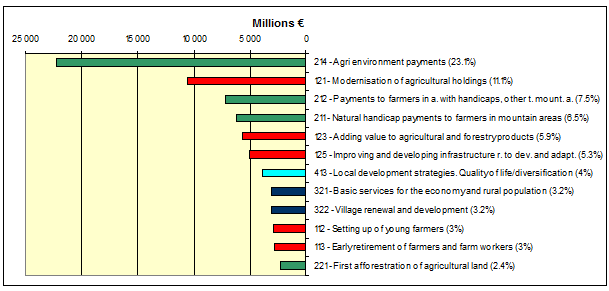
Are we as taxpayers getting good value for money from agri-environment payments under the EU’s rural development (RD) policy? This is an important question, given that agri-environment payments will amount to around €22 billion during the 2007-2013 RD programming period, alone accounting for around 23% of all Pillar 2 spending. It becomes more important given that the Commission is flagging that it wants to direct even more funding towards the provision of environmental public goods in the next programming period.

Breakdown EU Rural Development spending 2007-2013Breakdown EU Rural Development spending 2007-2013
A European Court of Auditors report published last Monday (September 19) provides a rather critical response to this question. The Court summarises its findings as follows:

Agri-environment is a key EU policy which aims to respond to society’s increasing demand for environmental services. This report assesses whether this policy is well designed and managed. The Court found that the conditions for assessing whether or not the objectives of the policy have been achieved are not in place. The systems for providing guidance to farmers were generally well implemented. However, considerable problems were identified concerning the aid amounts. Most expenditure was made on basic horizontal schemes without applying selection procedures and without clear decisions about the desirable degree of targeting. Although the audit identified good practices, the weaknesses found by the Court have hampered optimal achievement of the main objectives of agri-environment, namely contributing to EU-level priority areas (biodiversity, water, climate change) and improving the environment and the countryside.

The Court concludes its audit with four recommendations. Two of these relate to improved Commission oversight of the way Member States implement the relevant EU legislation.

Member States are criticised because often their rural development programmes do not contain clear environmental objectives. Where objectives are specified, there is often little linkage made between these objectives and the environmental sub-measures to be funded. Where the linkages are made, there is often little attempt made to monitor the impact of the measure, and little information was available on the environmental benefits of agri-environmental schemes. Aid payments to farmers often do not provide the right incentives, either over-compensating farmers in some cases or not compensating enough in other cases to ensure sufficient participation to really make an environmental difference. All of these issues are addressed in the legislation, and despite some rebuttal of the Court’s criticisms in the Commission’s replies to the audit, clearly there is still some way to go before good practice is routine in the Member States.

Court calls for more targeting of agri-environmental payments

The other two recommendations are more far-reaching because they raise a fundamental policy issue for future agri-environmental schemes. The Court found that, in the 8 regions it examined, the great bulk of agri-environment payments were made through broad, ‘horizontal’ measures available to all farmers in the region, often 80% or more of the total. It also noted that part of this expenditure is for maintaining existing favourable farming practices. It questioned whether in many cases there is an environmental benefit from this expenditure.

One of the more striking statistics in the report is that the Court found no evidence of specific environmental pressures in 39%, almost two-fifths, of the 203 individual environmental contracts it examined. In other words, within a 10 km radius of these farms, there was no evidence of water pollution; no evidence of marginalisation or abandonment of farming; no evidence of threats to exceptional plant diversity; no evidence of soil degradation; no threats to animal populations or animal biodiversity; no threats to plant communities in areas with normal biodiversity; and no evidence of landscape degradation.

The Court’s response to this finding is worth quoting in full:

A rational way to implement agri-environment policy is, on the basis of clearly identified environmental problems, to determine the required targets for impacts and participation levels and on this basis to determine the necessary financial resources. Identifying environmental problems means that there must be an environmental threat justifying why farming practices must be maintained or changed. Failure to apply this logic leads to an insufficient focus on environmental effects. Thus, the audit found that in 39 % of the 203 contracts reviewed, there were no specific environmental pressures in the area where the contract was implemented, or such problems could not be identified by the Member States…

The Court concluded that the large amounts of money spent on entry-level schemes, in contrast to the small amounts spent on higher-level schemes, were insufficiently justified in the rural development programmes concerning their environmental effects.

It favoured, instead, targeting funds to geographical areas, types of farms or farming practices by setting appropriate eligibility criteria. It noted that ensuring that funds are spent according to regional needs and priorities is of key importance for enhancing the environmental effects of agri-environment sub-measures.

The Commission’s defence of the status quo is that ‘the purpose of agri-environment support is not only to address environmental pressures but also to maintain and enhance environmental potentials and opportunities’. Its argument seems to be that it ok to provide agri-environment payments now to farmers without evident environmental problems in order to prevent such problems arising in the future.

The Court was not convinced by this argument. Instead, it recommended that the Commission should consider whether expenditure should be more precisely targeted to specific environmental needs in the next programming period. Specifically, it recommended that:

  • Member States should be required to better justify cases when the objective is to maintain environmentally friendly farming practices;
  • Member States should assess the potential benefits created by improved geographical targeting of agri-environment expenditure versus the increased administrative costs in¬curred;
  • Member States should set quantified targets for participation levels based on the required environmental effects and then determine the level of financial resources needed;
  • Agri-environment payments should be split into simple, generalised agri-environmental actions with a relatively low rate of aid and more demanding actions attracting a higher rate of aid and targeted to EU-level priority areas. Support for organic farming would constitute a third measure.
  • The Commission in its response defended the mix of basic and higher level schemes, noting that basic schemes, if well designed and implemented, can offer significant environmental benefits at relatively low cost. However, it did accept that better targeting of agri-environment payments is necessary and is envisaged in the framework of the CAP post 2013.

    One wonders what the mix between basic and higher level schemes would be if agri-environment payments were managed by Ministries of the Environment rather than Ministries of Agriculture?

    The mystery of the EU's disappearing AMS

    Alan Swinbank of Reading University in the UK has been doing some detective work to understand the dramatic fall in the scale of the EU’s trade-distorting support (reported in the Amber Box under WTO rules) in the EU’s latest notification to the WTO which covers the marketing year 2007/08. His findings are reported in the latest issue of the online Estey Centre Journal of International Law and Trade Policy.
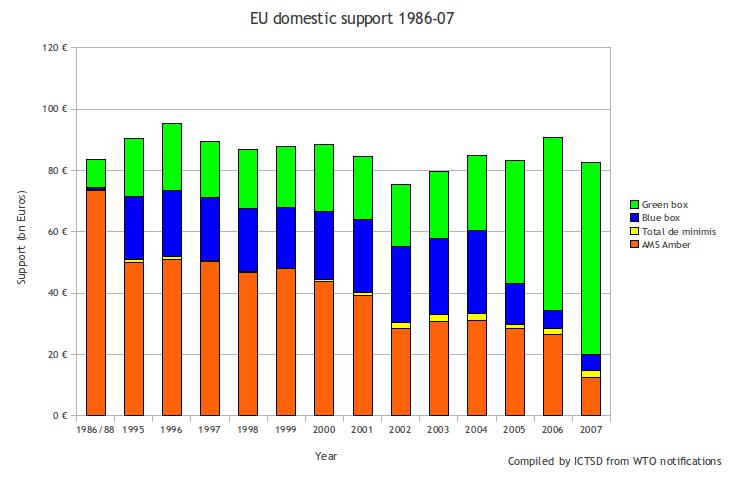
    As previously reported on this blog, the EU figure for Amber Box support (called the Current Total Aggregate Measure of Support in WTO jargon) fell from €26.6 billion in 2006/07 to €12.4 billion in 2007/08. The significance of this reduction is clearly shown in the figure below.

    EU WTO Domestic Support NotificationsEU WTO Domestic Support Notifications

    It turns out that the reason for the more than halving of the reported EU AMS in 2007/08 compared to 2006/07 is that the EU no longer calculates an ‘equivalent measure of support’ for fresh fruit and vegetables. Until 2007/08, it calculated an AMS for 16 fresh fruits and vegetables plus separate AMS’s for a number of processed fruit and vegetables (notably tomatoes and peaches) and bananas. This AMS was calculated as the support provided through the entry price system, which sets the minimum import price for imported fruits and vegetables.
    But in 2007/08, without comment, the EU has dropped this calculation and now reports virtually zero trade-distorting support in the fruits and vegetables sector. While some non-exempt direct payments (e.g. production aids) are reported, these fall below the de minimis threshold and thus are not counted as part of current total AMS.
    Alan Swinbank speculates on the reasons for this reporting change. He notes that, in 2007, the EU introduced a further reform of the market regime for fruits and vegetables. Among other changes, this permitted land on which fruits and vegetables were grown to be eligible for the Single Payment Scheme, and it integrated the previous coupled payments for processed fruit and vegetables into that Scheme. However, although it also abolished export subsidies, it did not alter the legal framework relating to external trade, including the entry price system.
    Swinbank concludes:

    The 2008 reform of the fresh and processed fruit and vegetable regimes did produce notable outcomes in a WTO context….. But it did not change the entry price system, and hence any claim that it eliminated the AMSs on these 16 fresh fruits and vegetables is contentious.

    Not surprisingly, this rather dramatic change in the reporting of the EU’s AMS prompted questions in the WTO Committee on Agriculture under the review process of compliance with commitments. At the meeting on 31 March 2011, the EU responded to queries as follows:

    The notification of European Union’s support to the fruit and vegetables sector in the 2007/08 marketing year reflects changes introduced in the 2007 reform, which warrants a move from a notification based on a price gap calculation to a notification of budgetary outlays, to the extent that no price support of any type exists any longer after the reform. The only such support still existing prior to the 2007 reform was a Community compensation for withdrawals that constituted, because of the way in which it was implemented, a survival of the previous public withdrawal system. This type of support has been abolished as a result of the reform.
    Subsequently, to the extent that the domestic support measures in the fruit and vegetables sector after the 2007 reform do not meet Green Box criteria, they fall under the non-exempt direct payments and are therefore calculated using budgetary outlays. The budgetary outlays notified related to the value of production of products in the fruit and vegetables sector result in many cases in a de minimis level of support. [G/AG/W/83/Rev.1 18 July 2011].

    I confess I don’t find it easy to decipher what exactly this response is trying to say. Despite having notified a price gap calculation since 1995 based on the entry-price system, it now seems that the EU argues, not only that no price support exists after the reform, but that the only price support before the 2007 reform was actually the scheme of Community compensation for withdrawals. However, even though it now seems to consider that the price gap (entry price) methodology was a mistake, it has not submitted revised domestic support estimates for earlier years.
    It seems I am not the only person to have a comprehension difficulty. For the Agriculture Committee meeting on 23 June 2011, the United States posed the following supplementary question to the EU: [G/AG/W/84, 16 June 2011]

    It is United States’ understanding that the primary measure providing support for fruit and vegetables for which the AMS was calculated as a product-specific equivalent measure of support, prior to the 2007 reforms, was the entry-price system which is still in place. Can the European Union confirm whether this understanding is correct? Since this system was not replaced by the new measures, but rather the new types of support are provided in addition to the entry price system, why wouldn’t the correct calculation of AMS be the sum of support as previously calculated for the existing measures, and the additional support provided under the new mechanisms?

    The EU’s response to this question posed at the 23 June 2011 meeting has not yet been posted on the WTO website, so to date its answer is unknown.
    For Swinbank, the whole affair raises a number of interesting questions. What did the EU hope to gain from this change at this stage in the Doha Round negotiations? Why would the EU decide, in 2011, to report this significant reduction in its current total AMS which reveals to the entire WTO membership that the EU will have no difficulty in meeting the projected Doha Round AMS commitment of a 70% reduction even without further substantive policy change? Why did it not wait until a review of the entry price system had been concluded in the wake of a Doha agreement, given that entry prices for many products are probably not protective?
    Why indeed?

    The mystery of the EU’s disappearing AMS

    Alan Swinbank of Reading University in the UK has been doing some detective work to understand the dramatic fall in the scale of the EU’s trade-distorting support (reported in the Amber Box under WTO rules) in the EU’s latest notification to the WTO which covers the marketing year 2007/08. His findings are reported in the latest issue of the online Estey Centre Journal of International Law and Trade Policy.

    As previously reported on this blog, the EU figure for Amber Box support (called the Current Total Aggregate Measure of Support in WTO jargon) fell from €26.6 billion in 2006/07 to €12.4 billion in 2007/08. The significance of this reduction is clearly shown in the figure below.

    EU WTO Domestic Support NotificationsEU WTO Domestic Support Notifications

    It turns out that the reason for the more than halving of the reported EU AMS in 2007/08 compared to 2006/07 is that the EU no longer calculates an ‘equivalent measure of support’ for fresh fruit and vegetables. Until 2007/08, it calculated an AMS for 16 fresh fruits and vegetables plus separate AMS’s for a number of processed fruit and vegetables (notably tomatoes and peaches) and bananas. This AMS was calculated as the support provided through the entry price system, which sets the minimum import price for imported fruits and vegetables.

    But in 2007/08, without comment, the EU has dropped this calculation and now reports virtually zero trade-distorting support in the fruits and vegetables sector. While some non-exempt direct payments (e.g. production aids) are reported, these fall below the de minimis threshold and thus are not counted as part of current total AMS.

    Alan Swinbank speculates on the reasons for this reporting change. He notes that, in 2007, the EU introduced a further reform of the market regime for fruits and vegetables. Among other changes, this permitted land on which fruits and vegetables were grown to be eligible for the Single Payment Scheme, and it integrated the previous coupled payments for processed fruit and vegetables into that Scheme. However, although it also abolished export subsidies, it did not alter the legal framework relating to external trade, including the entry price system.

    Swinbank concludes:

    The 2008 reform of the fresh and processed fruit and vegetable regimes did produce notable outcomes in a WTO context….. But it did not change the entry price system, and hence any claim that it eliminated the AMSs on these 16 fresh fruits and vegetables is contentious.

    Not surprisingly, this rather dramatic change in the reporting of the EU’s AMS prompted questions in the WTO Committee on Agriculture under the review process of compliance with commitments. At the meeting on 31 March 2011, the EU responded to queries as follows:

    The notification of European Union’s support to the fruit and vegetables sector in the 2007/08 marketing year reflects changes introduced in the 2007 reform, which warrants a move from a notification based on a price gap calculation to a notification of budgetary outlays, to the extent that no price support of any type exists any longer after the reform. The only such support still existing prior to the 2007 reform was a Community compensation for withdrawals that constituted, because of the way in which it was implemented, a survival of the previous public withdrawal system. This type of support has been abolished as a result of the reform.

    Subsequently, to the extent that the domestic support measures in the fruit and vegetables sector after the 2007 reform do not meet Green Box criteria, they fall under the non-exempt direct payments and are therefore calculated using budgetary outlays. The budgetary outlays notified related to the value of production of products in the fruit and vegetables sector result in many cases in a de minimis level of support. [G/AG/W/83/Rev.1 18 July 2011].

    I confess I don’t find it easy to decipher what exactly this response is trying to say. Despite having notified a price gap calculation since 1995 based on the entry-price system, it now seems that the EU argues, not only that no price support exists after the reform, but that the only price support before the 2007 reform was actually the scheme of Community compensation for withdrawals. However, even though it now seems to consider that the price gap (entry price) methodology was a mistake, it has not submitted revised domestic support estimates for earlier years.

    It seems I am not the only person to have a comprehension difficulty. For the Agriculture Committee meeting on 23 June 2011, the United States posed the following supplementary question to the EU: [G/AG/W/84, 16 June 2011]

    It is United States’ understanding that the primary measure providing support for fruit and vegetables for which the AMS was calculated as a product-specific equivalent measure of support, prior to the 2007 reforms, was the entry-price system which is still in place. Can the European Union confirm whether this understanding is correct? Since this system was not replaced by the new measures, but rather the new types of support are provided in addition to the entry price system, why wouldn’t the correct calculation of AMS be the sum of support as previously calculated for the existing measures, and the additional support provided under the new mechanisms?

    The EU’s response to this question posed at the 23 June 2011 meeting has not yet been posted on the WTO website, so to date its answer is unknown.

    For Swinbank, the whole affair raises a number of interesting questions. What did the EU hope to gain from this change at this stage in the Doha Round negotiations? Why would the EU decide, in 2011, to report this significant reduction in its current total AMS which reveals to the entire WTO membership that the EU will have no difficulty in meeting the projected Doha Round AMS commitment of a 70% reduction even without further substantive policy change? Why did it not wait until a review of the entry price system had been concluded in the wake of a Doha agreement, given that entry prices for many products are probably not protective?

    Why indeed?

    How will Rural Development funds be allocated among the member states?

    The early September draft of the Commission legislative proposal for the new Rural Development regulation to be released on October 12th next was inconclusive on how Pillar 2 spending would be allocated across the Member States. The annual amounts available to each member state will not be determined in the Regulation, but will be left to a subsequent Commission implementing act, taking into account (a) objective criteria linked to the three objectives of the Regulation (agricultural competitiveness, sustainable land management and balanced territorial development) and (b) past performance.

    The draft impact assessment on the new regulation which also has yet to be formally released provides some further guidance on the Commission’s thinking, and shows how the distribution across member states would be affected by the use of different objective criteria. The simulations show how judicious selection of the criteria can almost exactly reproduce the status quo!

    Various options are considered in the impact assessment. The first is distribution according to the so-called modulation formula used to distribute the additional resources made available through modulation to the member states. This formula is

    (0.65 Area + 0.35 Labour) x GDP inverse index.

    The resulting share out of funds compared to the current (2013) distribution is shown in the first figure.

    Redistribution Pillar 2 funds using modulation formula

    A second option is to come up with a new formula using criteria related to the future policy objectives weighed on the basis of their importance in the policy design. For the integration scenario (which is the scenario proposed in the draft Regulation), possible objective economic criteria include agricultural area and labour force as indicators of the size of the agricultural sector and labour productivity as an indicator of the extent to which the sector is lagging behind.

    Possible objective environmental criteria include agricultural area, Natura 2000, NHA, forest and permanent pasture areas as indicators of the public goods provided. Work on climate change vulnerability indicators is still ongoing and hence such indicators cannot be used.

    For the territorial balance objective, possible objective indicators include rural population as an indicator of the target group benefiting from the support while the extent to which rural areas are lagging behind is covered by the use of a GDP coefficient for the whole formula. To take account of the cohesion objective, the whole formula is calibrated by GDP/capita in PPS (the lower the GDP in the MS, the higher the MS envelope).

    The specific formula examined is

    [1/3 [(½ Area + ½ Labour) x labour productivity inverse index] + 1/3 (1/3 NHA area + 1/3 Natura 2000 + 1/6 Forest + 1/6 Permanent pasture) + 1/3 Rural population] x GDP inverse index

    The resulting share out of funds as compared to the current (2013) distribution is shown in the second figure.

    Redistribution Pillar 2 funds using integration scenario formula

    The results of both of these options differ considerably from the current distribution. So the impact assessment goes on to consider ways to smooth out the impact of redistribution. It identifies a number of ways that the current distribution may be taken into account:

    • by distributing 50% of the total envelope on the basis of the current distribution key and 50% on the basis of the new distribution key (transfers from the market remain exempted from the redistribution)
    • by providing that no MS should end up with less than 90% and not more than 110% of its current envelope
    • by providing for a transitional period gradually moving towards the new distribution
    • for the small Member States (LU, MT) an ad hoc solution would in any case be required.

    Redistribution Pillar 2 funds incorporating past performance

    By applying these criteria, we could actually manage to reproduce the current distribution as is shown in the figure above! I draw the conclusion that so-called ‘objective criteria’ are far from objective and in fact are highly political. Leaving the resolution of this issue to a Commission implementing act to be adopted under the examination procedure seems much more likely to succeed that leaving it to the Council and Parliament to agree at the third reading in the conciliation committee. Wise move!

    Global food prices remain very high

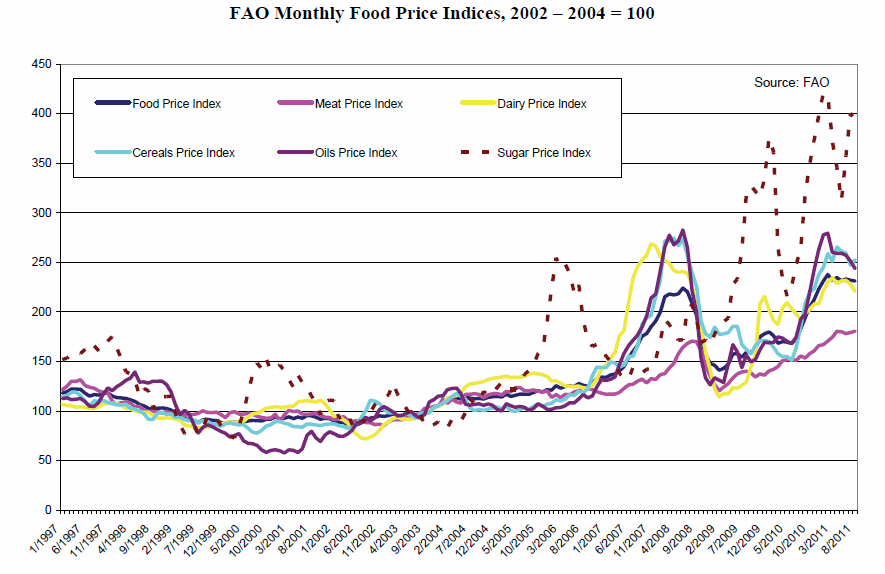
    The Commission has published its latest international food price monitoring newsletter for September. This tracks price changes for five major food groups included in the FAO food price index. After hitting a record level of 237.7 in February 2011, the FAO Food Price index continues lingering above levels observed during the 2007/08 food crisis, settling at 231.0 in July 2011 and 231.1 in August 2011. Compared to June 2011 levels, meat and sugar indices strengthened, while other eased slightly. These high food prices continue to fuel concern about food price inflation in developing and emerging economies.

    FAO food price index Sept 2011

    Commission’s impact assessment of direct payments changes

    The Commission’s impact assessment of the range of changes to direct payments included in its draft legislative proposals provide useful additional detail on the economic impacts to be expected from these changes and thus their political feasibility. The impact analysis has yet to be released officially but the relevant annex of the draft assessment can be found here.

    Annex 3 of the impact assessment (IA) addresses all of the proposed changes in Pillar 1: greater convergence between Member States; the move toward flat rate payments within Member States or regions; additional income support in less favoured areas; capping of payments; the small farmer scheme; specific support for young farmers; a better definition of ‘active farmers’; as well as coupled aids (the ‘green’ payment option is evaluated in Annex 2 of the IA).

    The IA considers a variety of options on which to base greater convergence of payments between Member States. In my previous review of the draft legislative proposals, I commented on the very limited nature of the convergence implied by the favoured mechanism, to reduce by one third the gap between existing payments per hectare and 90% of the EU average. This limited effect is confirmed in the impact assessment, which calculates that the redistribution would amount to just €738 million out of a total budget of €42.8 billion! The following graph, taken from the impact assessment, illustrates how this would play out at the Member State level.

    Redistribution between MS - Pragmatic approach with MFF distribution keyRedistribution between MS – Pragmatic approach with MFF distribution key

    The simulations using so-called ‘objective criteria’ underline why this pragmatic approach was adopted for the draft legislative proposals. Objective criteria could include GDP per head, the amount of AWU’s (Agricultural Work Units) or gross value added in agriculture/AWU (for economic criteria) or the area in less favoured areas, Natura 2000 zones or area under permanent pasture (for environmental criteria). Under one version using objective criteria for redistribution, the amount redistributed could amount to €4.5 billion, ‘which is likely to make it politically unacceptable for many Member States to agree to such a redistribution’ as the IA notes.

    The IA goes into detail on the likely impact of a uniform flat rate payment within Member States on the distribution of payments by type of farming within MS. In France, for example, combining the EU-wide redistribution implied by the ‘one third reduction in the 90% gap’ rule with a uniform flat rate payment on a national basis would reduce Net Value Added per AWU on arable farms by, on average, 11%, by 7% on mixed farms, and by 1% on dairy farms, but would increase it by a massive 24% on other livestock farms. This redistribution is due, partly, to the inclusion of ‘naked land’ in the eligible area and partly to the reduction in the disparities under the historic basis for the Single Farm Payment.

    Interestingly, the Commission notes that the move to a regional model is likely to increase the rate of capitalisation of support in land prices. This is because the flexibility for activating entitlements with additional eligible land is reduced due to the existence of only a very limited amount of ‘naked’ land and the absence of differences in the entitlement level in the regional model. If this argument is correct, it means that less of the payment will stay with the farmer and more will end up in the hands of the owners of land, particularly with rental arrangements.

    The IA has also simulated the impact of capping although it admits that the FADN database used for this exercise is not very reliable because, as a sample survey, it may not well capture the very small number of very large farms in some Member States. Using the option contained in the draft legislative proposals (fixed ceiling of €300,000 with mitigation by 100% of wages), the overall amount modulated to Pillar 2 at EU-27 level would be 0.8%. Higher percentages would be involved in some Member States (Bulgaria 5.4%, Hungary 2.8% Romania 1.7%, Slovakia 1.7%, UK 3.8%). Interestingly, neither Germany (with its large farms in East Germany) nor the Czech Republic would be particularly affected by this measure.

    Draft market organisation regulation confirms market orientation with safeguards

    The two previous posts covered the Commission’s draft proposals for the Direct Payments regulation and the Rural Development regulation. In this post, I cover its draft proposal for a revised single common market organisation regulation.

    Summary

    • There is the first formal acknowledgement that the Commission is not going to propose legislation to renew the sugar quota regime when it expires in 2014/15, although there will be a one year extension. Ending the sugar quota system is given as an example of simplification of the CAP under the proposal.
    • A single animal disease/loss of consumer confidence provision is extended to plant products given the experience with the e.coli outbreak in Germany over the summer.
    • The general market disturbance clause is expanded to cover all sectors in the CMO. In this context, we should also recall the proposal for a new Special Reserve in the MFF regulation for crises in the agriculture sector with an annual ceiling of €500 million to be mobilised over and above the ceilings of the financial framework. Farmers will also be made potential beneficiaries of the Global Adjustment Fund which, for example, could provide assistance to farmers adversely affected by trade agreements. There is also the provision that Member States can use some of their Pillar 1 national ceiling to couple payments to products which are adversely affected by continuing disturbances on that market.
    • The product coverage for recognition of producer organisations and their associations as well as interbranch organisations by Member States is expanded to all sectors in the current Single CMO.
    • Building on the lessons of the milk crisis for the functioning of the food chain and the recommendations of the High Level Expert Group on milk, the Regulation incorporates the proposal already made for the milk sector that sets out basic conditions if Member States make written contracts compulsory and to allow dairy farmer producer organisations to negotiate contract terms including price with a view to strengthening the bargaining power of milk producers in the food chain.
    • It also reflects the proposal already made on marketing standards in the context of the quality package.

    Evaluation

    The organisation of commodity markets has been at the core of the CAP since its foundation, but the amount of support provided through market intervention measures (as opposed to tariffs) has gradually been reduced under successive CAP reforms. Despite calls from some quarters for a reversal of this process, and the reintroduction of high support prices underpinned if necessary by supply control measures such as quotas, the draft legislative proposal maintains the current market orientation.

    Indeed, for sugar, the remaining commodity subject to quotas, the draft makes clear that quotas will not be renewed after 2015/16 for this product. This is despite calls from some in the industry to extend quotas for a longer period.There is a one year reprieve as the current regime, which is due to end in 2014/15, is extended for one further year “in order to allow for a reasonable period of adjustment for operators in the sector”.

    The main ‘new issues’ addressed in the regulation are volatility and bargaining power in the food chain. Volatility is address by the extending the possibility of support in the case of market disturbances due to a loss of consumer confidence, an animal disease outbreak or price volatility (in addition to the enhanced risk management toolkit available in Pillar 2).

    The proposal to try to strengthen the position of dairy farmers in the food chain by requiring written contracts and permitting collective bargaining over the milk price have been well signalled previously in the wake of the High Level Expert Group report.

    This draft regulation represents a ‘steady as you go’ approach given the unfounded hysteria whipped up around issues such as food security and should be broadly welcomed for that reason. It was too much to expect that the Commission would unilaterally announce the end of export subsidies even though this would have been a very desirable move to include in the regulation, but that is for another negotiation on another day.

    Leaked rural development regulation has few surprises

    In a previous post I looked at the draft Direct Payment regulation, one of four key regulations which will shape the future CAP after 2013. In this post, I look at what is proposed in the Rural Development regulation. This comes with the health warning that the actual legislative proposals will not be released until October 12th, and some of these proposals may change in the meantime.

    Summary of proposals

    • Greater coordination of EAFRD spending to ensure complementarity of RD programming with the programming of the other shared-management funds, the Regional Fund, the Social Fund, the Cohesion Fund and the Fisheries Fund. The funds are placed under a Common Strategic Framework (CSF) at EU level which will be transposed into Partnership Contracts at national level. The CSF will replace the current approach of establishing separate sets of strategic guidelines for these funds. In principle, monies from these other funds can be used to support the priorities in the RD Regulation.
    • Abolition of the three axes which required Member States to devote a minimum share of their Pillar 2 national ceiling to each axis. Instead, the objectives of the RD Regulation are expressed through six EU-wide priorities. These are: fostering knowledge transfer in agriculture and forestry; enhancing competitiveness of all types of agriculture and enhancing farm viability; promoting food chain organisation and risk management in agriculture; preserving and enhancing ecosystems dependent on agriculture and forestry; promoting resource efficiency and the transition to a low carbon economy in agriculture and forestry; and realising the jobs potential and development of rural areas.
    • Innovation to be encouraged through the European Innovation Partnership (EIP) on Agricultural Productivity and Sustainability aimed at promoting resource efficiency, building bridges between research and practice and generally encouraging innovation. The Partnership will act through operational groups bringing together farmers, advisors, researchers and businesses who will propose innovative projects and ensure broad dissemination of the results.
    • Despite the introduction of a specific priority to promote the transition to a low carbon agriculture and food economy, including fostering carbon sequestration, no new measure to specifically address this priority has been introduced. Specific reference is made to the need for the EIP to promote a low-emission agricultural sector. This reference seems to be the only addition to the Regulation intended to help agriculture address climate change challenges (although other measures, such as the farm advisory service and aid for investment can, of course, be targeted to climate change measures).
    • Payments to farmers in mountain areas, other areas affected by significant natural constraints and areas subject to specific constraints where there may be a danger of land abandonment (these latter areas cannot exceed 10% of the Member State area) are continued in Pillar 2, although additional payments may also be provided in Pillar 1. Tighter area limits for areas affected by significant natural constraints are proposed.
    • Aid to encourage earlier farm retirement has been eliminated.
    • An enhanced risk management toolkit is introduced including support to mutual funds and a new income stabilisation tool to address volatility in agricultural markets.
    • The distribution of RD funds across Member States remains to be decided. It will be based on objective criteria linked to the objectives of a competitive agriculture, sustainable management of natural resources and balanced territorial development of rural areas, but also taking into account past performance. This latter is presumably intended to prevent any sharp redistribution of resources arising from the application of the objective criteria between the Member States.
    • A performance reserve will be established as part of the performance framework, amounting to 5% of the EAFRD contribution to each RD programme plus assigned revenue. It will be allocated in 2019 on the basis of a review by the Commission.
    • Funds released by capping direct payments in each Member State are reserved to financing projects relating to improving the farm competitiveness, including of large farms.

    Evaluation

    These draft proposals would represent only a marginal change from the current Rural Development programme, with a lot of flexibility left to Member States to decide on how they want to spend their funds. The Commission is clearly putting a lot of store on the European Innovation Partnership to boost innovation and to address the productivity slow-down in agriculture, but much more detail will be required on how this will work in practice before its significance can be assessed.

    Rural development programming will continue, but the major flaw in this multi-annual approach has not been addressed. This is the stop-go nature of the schemes when one funding period ends and the next begins. Member States have to prepare their programmes for assessment by the Commission, but they cannot start to draw these up before the Commission has published its Community Strategic Framework and this has been adopted by the Council and the Parliament. This must then be transposed into a Partnership Contract at the national level and arrangements must be made to ensure that various stakeholders and partners (including women and minority groups) are involved in drawing up these Partnership Contracts. The Commission will then assess the consistency of the Partnership Contract with the Common Strategic Framework and the National Reform Programme of each country. Only then can the member state/region start on the process of drawing up the rural development programme. The draft programme must also be open to review and discussion among local partners and stakeholders, and it must be subject to an ex ante assessment before it can be submitted. All of this will take time, a lot of time. The Commission then has up to six months before approval might be given. Given that all the programmes from 27 Member States and many more regions will be submitted for review at the same time (the Commission approved 94 national and regional programme in the current programming period), the prospect of a severe breakdown in managing these submissions in Brussels in a very short timeframe is a very real one.

    While commitments under the old programme will continue to be paid in 2014 and 2015, in many countries it is possible that up to a year or more could elapse before approval is given to their new rural development programmes and they can start to fund new beneficiaries and new projects. Programming is all very well, but when combined with a discrete rather than a rolling programming period, it can give rise to a real headache.

    Leaked legislative proposals anticipate Commission CAP reform proposals due October 12th

    The International Centre for Trade and Sustainable Development has made copies of the draft Commission legislative proposals for CAP reform available here. These are the versions circulated within the Commission for comment, and they could change further before they are formally released to the European Parliament and the Member States on 12 October next.  Nonetheless, the draft regulations are worth analysing in detail because of the indications they give to the Commission’s thinking.

    The proposals are contained in four main regulations which would replace the existing regulations governing the CAP, as follows:
    –    A regulation governing direct payments under Pillar 1
    –    A regulation governing rural development payments under Pillar 2
    –    A regulation revising the single Common Market Organisation regulation
    –    A horizontal regulation covering financing, management and monitoring of the CAP.

    We look at the draft Direct Payments Regulation in this post and will comment on the others in later posts. Apologies in advance that this is quite a long post.

    Background

    The legislative proposals are based on the budgetary framework for the CAP set out in the Commission’s multi-annual financial framework (MFF) proposal over the period 2014-2020. This proposal kept the overall budget available for the CAP in the coming period at more or less the same level as in 2007-2013, while also retaining the division between the two Pillars as it is at present after modulation.

    They also follow an impact assessment of the three options set out in the November 2010 Communication (called the adjustment, integration and refocus scenarios) including a public consultation on these options.

    The preferred scenario which emerges from these legislative proposals is a relatively conservative adaptation of the existing CAP. Compared to more radical proposals for reform emanating from groups of agricultural economists and some environmental NGOs, the proposals are a disappointment and a missed opportunity. On the other hand, they broadly maintain the market orientation pursued by the series of CAP reforms during the past two decades and avoid commitments to some of the wilder proposals in the public debate calling for a return to high guaranteed prices backed up by quotas and/or a recoupling of direct payments (though there are some potentially worrying elements on recoupling in the draft proposal to which we return below).

    The proposals maintain the two-pillar structure of the CAP, in which Pillar 1 finances annual payments to support farm incomes as well as market measures while Pillar 2 funds rural development measures under a multi-annual programming approach. The clear separation of objectives between the two Pillars is somewhat blurred by the possibility of using some Pillar 1 funds for measures traditionally addressed by rural development funds, including payments to farmers in areas facing specific natural constraints and payments to new entrants to farming. Also, a proportion of the Pillar 1 payments will now be directed to farmers following practices beneficial for climate and the environment. However, I argue later that this is really a form of super-cross-conditionality rather than the introduction of agri-environment payments (which will continue to be funded under Pillar 2) into Pillar 1.

    Summary of proposed changes to direct payments

    So, what are the changes proposed in the draft direct payment regulation? A short summary would include:

    •    The Single Payment Scheme (in the old Member States and Slovenia) with its multiple types of entitlements and the simplified single area payment scheme (SAPS) in the new Member States will be ended. They will be replaced by a new basic payment scheme from 2014 which will be implemented according to the rules of the Single Payment Scheme (eligible areas, entitlements, activation, transfers, national reserve, etc) but with just a single type of entitlement.
    •    The basic payment will be complemented by a series of additional payments funded under the Pillar 1 national ceiling made available to each Member State. These include a mandatory green payment (30% of the annual national ceiling) to farmers following agricultural practices beneficial for the climate and the environment; a voluntary additional payment (up to 5% of the national ceiling) for farmers farming in disadvantaged areas; a mandatory additional payment to new entrants enrolled in the basic payment scheme (up to 2% of the national ceiling) and a simplified scheme for small farmers (up to 10% of the annual national ceiling). The simplified scheme for small-scale farmers is mandatory for Member States but optional for farmers. In addition, a voluntary coupled support scheme is provided for up to 5% of the national ceiling with the possibility to go beyond this in particular cases.
    •    Contrary to the impression given in the November 2010 Commission Communication that the green payment would be mandatory for Member States to offer but voluntary for farmers to accept, the proposed Regulation requires that farmers in receipt of the basic payment SHALL also observe the environmental criteria which give eligibility for the green payment. This means that these environmental conditions become part of a super-cross-compliance conditionality because they must be met if the farmer is to remain eligible for the basic payment. The three conditions are a requirement that cultivation on arable land must consist of at least three different crops simultaneously (not sequentially), that permanent grassland must be maintained at the level of the individual farm, and that farmers must devote 7% of their eligible area excluding permanent grassland (thus, in reality, a requirement on the arable area) to ecological focus including land left fallow, buffer strips and afforested areas – in effect, the reintroduction of setaside but for all arable farmers with more than 3 ha of arable area.
    •    The unit value of the basic payment is determined as a residual once these other payments are accounted for. Authority is given to the Commission to adjust the value of these payments from year to year, “implying that beneficiaries cannot rely on support conditions remaining unchanged”.
    •    Transfer of entitlements will continue to be allowed, but whereas previously Member States could decide if they wished to restrict transfers to within one and the same region, now entitlements can only be transferred either within the same region or between regions of a Member State where the payment entitlements have the same value. The specific provision allowing transfer through sale with or without land or through lease together with land has been deleted, although the significance of this is not clear. It may be that the conditions of transfer are left to be defined in subsequent implementing legislation to be proposed by the Commission.
    •    The average direct payment per hectare of potentially eligible land and per beneficiary for the year 2013 is €94.7 in Latvia and €457.5 in the Netherlands. The EU-27 average is €269.1. The Regulation proposes some limited redistribution initially of direct payment envelopes (funds) between the Member States, following the formula proposed in the Commission’s MFF proposal which envisages that, for countries currently receiving less than 90% of the EU average payment per eligible hectare, one-third of the gap between their current figure and 90% of the EU-27 average is closed. In the medium-term, however, and by December 31 2028 at the latest, all allocated payment entitlements in the Union should have a uniform value, implying that the payment per eligible hectare in Latvia should be the same as in the Netherlands.
    •    A corollary of this move to convergence across member states is that all payment entitlements within a Member State or region should have the same value by 1 January 2019. For those Member States currently applying the historic basis for the Single Payment, a dynamic hybrid model is proposed. In 2014 50% of a farmer’s basic payment must be calculated on a uniform basis while the remainder can be distributed according to the historic basis. Over the 2014-2019 period Member States must move to a fully uniform payment “through annual progressive modifications …in accordance with objective and non-discriminatory criteria”. Interestingly, a regular linear adaption is not explicitly proposed, suggesting that some Member States might try to backload the modifications to the remaining historic element. Overall, however, there is a rather abrupt shift to a largely uniform payment in the first year, 2014.
    •    The basic payment support (but not the green payment) to very large farms will be capped, although account will be taken of agricultural employment on large farms in setting the thresholds above which payments will be reduced or capped. Funds released by capping direct payments will remain with that Member State.
    •    Support will be limited to active farmers defined as those for which their income from agriculture exceeds at least 5% of their total income, but this restriction will only apply to farms receiving more than €5,000 per annum.
    •    The financial discipline mechanism will be maintained, whereby payments can be reduced to ensure that total payments in the EU as a whole stay within the MFF ceiling, but the mechanism will only apply to payments above the first €5,000 in any calendar year.  The €300 million margin for triggering financial discipline seems to be gone.
    •    Member States will have the option, before 1 August 2013, to transfer up to 5% of their national ceiling to rural development (RD) programming for the period of the Regulation. Conversely, a specified number of (mainly new) Member States can transfer up to 5% of their 2015-2020 envelope for RD measures to direct payments.  This is the only faint echo of modulation left in the new Regulation.
    •    The regulations on cross-compliance are moved from the DP Regulation to the horizontal regulation. Cross-compliance requirements currently consist of separate lists of statutory management requirements (SMRs) and standards of good agricultural and environmental condition of land. It is proposed to organise these in a single list grouped by area and issue.  Some changes are proposed to the details of SMRs, including the addition of the Water Framework and Sustainable Use of Pesticides directives.

    The management of direct payments

    In dividing direct payments between the basic, green, less favoured area and new entrant payments, the Commission has also adopted a schizophrenic approach to their management. For the basic payment, it has opted to continue the system used in the old Member States whereby the payment is linked to an entitlement and the entitlement must be activated by being associated with a hectare of eligible land. For the new Member States, this will require an upgrading of their administrative systems to keep track not only of eligible land but also of who owns the entitlements, given that entitlements can be transferred.

    However, for the green, less favoured area and new entrant payments, the Commission has opted to follow the SAPS approach whereby the payment is made simply in the form of an annual payment per eligible hectare.

    One wonders why the Commission did not decide to standardise on the SAPS approach throughout and why it has retained the entitlements framework for the basic payment. Perhaps it was looking over its shoulder at the WTO and the requirements for green box status of decoupled income supports, which state that “the amount of such payments in any given year shall not be related to, or based on, the factors of production employed in any year after the base period.” By basing the basic payment on possession of an entitlement rather than on a hectare of land, the Commission may hope to stay within the letter of the WTO agreement. But as every entitlement has to be activated with a hectare of land, one wonders if this fig leaf would make an acceptable defence before a dispute panel? Is it a good argument to maintain two different payment rules within the same Pillar 1?

    The removal of a direct reference to the sale or lease of entitlements might suggest that, in moving to the regional approach of a uniform payment per hectare within a Member State, the Commission envisages that every hectare of eligible land will be covered by the payment scheme. But land will only become eligible if a farmer decides to apply for a payment entitlement under the basic payments scheme before 15 May 2014. Given that, in applying for a basic payment, the farmer will be required not only to meet the standard cross-compliance requirements but also the super-cross-compliance conditions associated with the green payment, there is a possibility that, in some regions, farmers may deem the compliance cost to be too high and will opt out of the direct payments scheme. Of course, these funds could then be used to increase the unit value of the basic payment entitlements for all other farmers who decided to opt into the scheme.

    The management of the unit value of the basic payment will become quite complex for national authorities. It appears that, each year, the Commission will set the annual national ceiling for basic payment schemes by deducting from the annual national ceiling the amounts allocated to the green, less favoured area, new entrant and coupled payments. In addition, the national authorities will then have to work out how much has to be allocated to the small farmer scheme, with the residual divided by the number of eligible hectares. The national reserve will be used to even out dips in the amounts allocated because, for example, farmers may voluntarily return their entitlements.

    However, because the amount removed by capping is transferred to Pillar 2, Article 18 appears to make an error when defining the amount available for the basic payment as the difference between the national ceiling and the green, less favoured area, new entrant and coupled payments, when it should be the difference between the net ceiling and these other payments. Net ceilings are the amount available for Pillar 1 direct payments from their national ceilings following the application of capping.

    Convergence

    The degree of convergence achieved between Member States initially is rather limited, as shown by the Commission graphs. However, the one-sentence commitment to achieve a uniform unit value for all allocated payment entitlements in the Union by 31 December 2028 is very ambitious, and presumably inserted under pressure from the new Member States. Indeed, taken at face value, this appears to even rule out different regional unit values within a Member State, even though this is expressly permitted in the current Regulation.

    EU direct payments per ha eligible area

    Proposed EU direct payments per ha eligible area

    The move away from the historic basis in those Member States that continue to use it will be quite rapid. Although 50% of the basic payment can still be allocated according to historic criteria in 2014, the remaining 50%, plus the 30% allocated to the green payment, will all be uniform, at least within regions. This continues to cause angst in countries using the historic basis because of the potentially significant redistribution of payments across farmers that will result. DG Agri official Tassos Haniotis on a visit to Ireland last week suggested that Member States should look beyond administrative regions and think about varying the payment according to, for example, soil quality, as a way of minimising these redistributional effects, but the degree of flexibility to go  down this route is not clear.

    Targeting of beneficiaries

    The stated aim of the DP Regulation is ‘to better target support to certain actions, areas and beneficiaries, as well as to pave the way for convergence of the level of support within and across Member States’.  Given that the option of targeting direct payments solely on public goods (which was the third, refocus scenario option in the impact analysis) was rejected, we should not expect much in the way of greater targeting.

    Every farm remains potentially eligible for basic income support, even if this is reduced, on average, to two-thirds of the amount paid in the current MFF. Some modest capping of payments is proposed, as well as the restriction of payments to active farmers. The Commission has regularly proposed the capping of payments since the original MacSharry reforms in 1992 but has made only minor headway (in the Health Check, for example, capping emerged as higher levels of modulation of Pillar 1 payments to Pillar 2 for larger farms).

    It may stand a greater chance of success with this latest proposal, because of the clever way in which the thresholds will be increased by the salaries paid to hired workers. For example, the maximum threshold proposed for payments is €300,000 which, at the average EU-27 payment, would be equivalent to a farm of about 1,200 ha. If such a farm had ten employees earning, say, €30,000 annually, then the de facto threshold for payments would be €600,000 (i.e. increased by 10 x €30,000). Thus, capping is likely to have more of a symbolic than a real value in targeting payments on lower-income farms.

    Apparently, the Commission intends to calculate, for each Member State, how much will be yielded by capping and this will be deducted from the national ceiling to yield a net ceiling, but this calculation has not yet been done so we don’t yet know how significant it will be. Presumably, Member States will need to do a survey of farms to collect information on how many paid employees they have and their salaries in order to pass on that information to the Commission, who need it ex-ante each year in order to be able to determine the net ceiling from which the unit basic payment value is calculated. This does not seem workable to me.

    The definition of an active farmer caused much angst, and the definition proposed (to exclude operators whose agricultural receipts are less than 5% of their total revenue) may well exclude airports, sports clubs and others who are currently eligible for payments. It is worth noting that it is proposed not to enforce this test when the total of direct payments to an operator does not exceed €5000 per year, in order to avoid accidentally excluding part-time farmers who are seen to play a valuable role in maintaining farming in more marginal farming areas.

    Targeting on public goods

    The green payment will be paid for ‘compulsory practices to be followed by farmers addressing both climate and environment policy goals. These practices should take the form of simple, generalised, non-contractual and annual actions that go beyond cross-compliance and are linked to agriculture such as crop diversification, maintenance of permanent grassland and ecological focus areas’. The big surprise is that, apparently, every farmer who wishes to receive a basic payment (apart from those who opt for the small farmer version of the scheme) must also enrol in the green payment scheme and adopt these conditionalities.

    Environmental NGOs have expressed disappointment at the likely efficacy of the green payments in Pillar 1. Instead of contractual payments to farmers who actually commit to providing public goods, the payments target farm practices assumed to be associated with greater biodiversity and lower carbon emissions and require that every farm with some arable area adopts these practices (crop diversification, maintenance of permanent pasture, and ecological focus areas). However, grassland farmers will automatically qualify for the green payment without having to do anything additional to what they are currently doing, so there will be no additional environmental benefit on these farms.

    While contractual arrangements do have high transactions costs which make them unattractive to governments looking for broad and accessible schemes, the dirigiste nature of the green payment requirements means that the cost of achieving a given level of public good provision will be higher than is necessary.

    Coupling

    The provisions for coupled payments carry forward similar provisions in the current DP Regulation but appear to make them easier to reintroduce. As currently, coupled payments must be based on a fixed area, yields or number of animals. However, in principle, they can now be given to a greatly expanded range of crops and livestock, including energy crops. Cotton is covered by a separate provision for the continuation of the existing crop specific payment.

    Member States can couple up to 5% of their national ceiling meeting two general conditions. These are that the coupled support can only be granted to sectors or to regions of a Member State where specific types of farming or specific agricultural sectors undergo certain difficulties and are particularly important for economic and/or social reasons. Furthermore, coupled support can only be granted to the extent necessary to create an incentive to maintain current levels of production in the regions concerned (how this will be defined is delegated to Commission legislation).

    This proportion is increased to 10% of their national ceiling for the new Member States or countries that have provided coupled support to suckler cows.  The Commission estimates that around 6% of national ceilings will be coupled in 2013. This includes a 3.5% ceiling on coupled specific payments under Article 69 in the Health Check regulation in 2009, plus the continuation of coupled payments to beef, sheep and goats and some fruits and vegetables in countries which chose those options in the 2003 reform.

    However, these latter Member States can apply to the Commission to use an unlimited proportion of their national ceiling for coupled payments under conditions set out in Article 43 of the draft DP Regulation. Indeed, all Member States can apply, after 2016, to increase the specified percentages (5% or 10%, respectively) that apply to to them if they can show that they meet the following conditions. These conditions include:

    – the necessity to sustain a certain level of specific production due to the lack of alternatives and to reduce the risk of production abandonment and the resulting social and/or environmental problems,
    – the necessity to provide stable supply to the local processing industry, thus avoiding the negative social and economic consequence of any ensuing restructuring,
    – the necessity to compensate disadvantages affecting farmers in a particular sector which are the consequence of continuing disturbances on the related market;
    – where the existence of any other support available under the DP Regulation, the RD Regulation or any approved State aid scheme is deemed insufficient to meet the needs referred to in this Article.

    What is important is whether there is any the relationship between the general constraints set out in Article 40 and the specific conditions set out in Article 43. On a plain reading, the two Articles do not appear to be linked, but the general tenor is that the payments should be used to maintain production but not to increase it. Whether this will be the case or not will not become clear until the Commission produces its delegated legislation setting out the rules more explicitly.

    Small farmer scheme

    Member states must introduce the option of a small farmer payment which farmers optionally can apply for. This will be a simple flat rate payment of between €500 and €1,000, the exact value determined by one of two calculation methodologies set out in the Article. Apart from those genuinely small farmers for which there may be a monetary incentive to enter the scheme, a big attraction which could attract other farmers is that receipt of the small farmer payment, exceptionally,  does not require a farmer to enrol in the green payment scheme and to meet the environmental restrictions of that scheme. Small farmers enrolled in this scheme will also be exempt from cross compliance inspections and sanctions, although as the requirements are statutory requirements they must continue to observe these requirements in any event.

    Effects on third countries

    From the point of view of third countries, the question is what impact these proposed reforms will have on them. On balance, it is probable that the proposals will reduce EU production capacity at least in arable crops relative to the status quo. This is because of the requirement to maintain permanent pasture at current levels (which will restrict the ability of EU farmers to plant more arable crops if world prices remain high), the de facto re-introduction of set-aside at a rate of 7% of the arable area and the requirement to diversify crops on a farm basis and to move away from monoculture. In addition, the requirement to move direct payments to a uniform rate in those Member States which currently continue to use the historic basis will reduce support in more productive regions and sectors in favour of more marginal regions. While there is debate about the magnitude of the production effect of direct payments, most observers accept that there is some effect, so this redistribution will also tend to lower production levels in the more productive farming areas of the EU.

    There are some offsetting elements to these production-depressing factors. First, there may be greater scope for coupling payments, particularly to suckler cows and sheep, which would keep production at levels higher than it would otherwise be. Second, quotas on sugar production will be removed after 2016 (but as the arable area cannot be increased, any expansion of sugar beet production would be at the expense of other arable crops). Third, there is a greater emphasis in Pillar 2 on innovation, especially through the European Innovation Partnership. However, it is possible that much of this innovation will be focused on adjustment to low-emission and low-carbon agriculture rather than production-enhancing research.

    On balance, the greater priority given to achieving public good objectives, particularly biodiversity and landscape features, means that EU production potential will be lower than it otherwise would be.

    Next steps

    It must be reiterated that the legislative proposals which emanate from the Commission in October may look somewhat different. Further, the proposals will certainly be revised in the legislative process between the Council and the Parliament.  The question is whether the Commission has correctly identified a potential equilibrium between the very different Member State interests which can garner majority support.