The European Parliament report on the measurement of farm support

A variety of estimates of the level of farm support circulate. Many of them rely on creative accounting. For example, during the recent farm bill debate in the US Senate on C-Span television, a Senator claimed that the EU subsidized its farmers seventeen times more than the US, quoting as “evidence” that farm subsidies accounted for 45% of the EU budget, while by contrast the US farm spending was less than 1% of the US federal budget. On the opposite, the Momagri (a French arable crops producers sponsored think tank) published estimates that US farm support was three times higher than the EU one. Defining meaningful indicators is important since, on both sides of the Atlantic, the fact that the other party supports its farmers is used as an excuse to maintain, increase or “re-couple” support. In the EU Parliament, for example, more and more MEPs seem to be arguing for maintaining support and even make it more countercyclical payments mostly because “the US does it”.… Read the rest

Latest EU AMS notification confirms declining trend in WTO amber box support

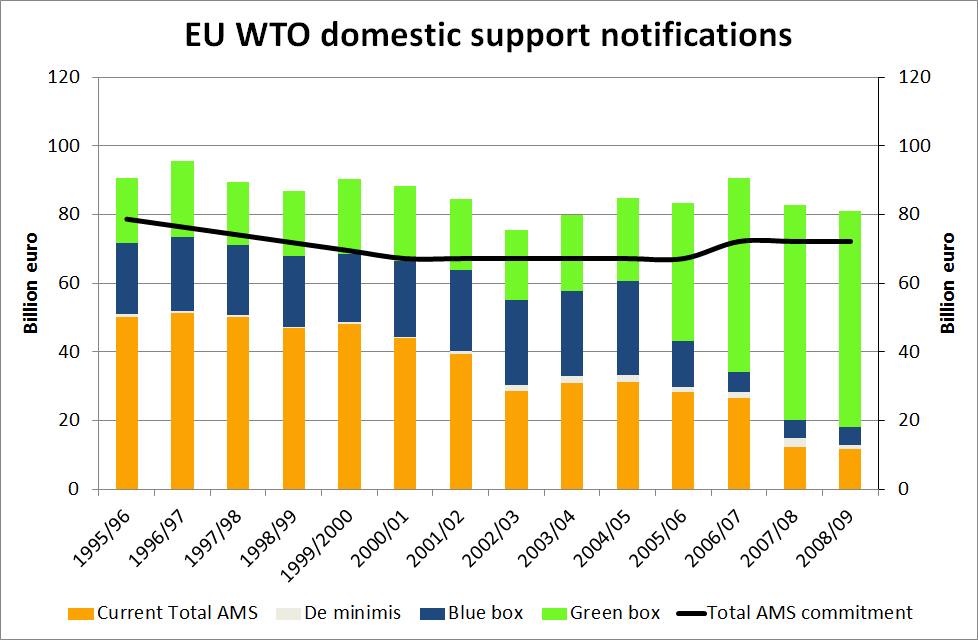
The EU has just submitted its domestic support notification to the WTO for the year 2008/09 (hat tip to LB) and this year there are no surprises. Total support (using the WTO definition) was a shade over €80 billion, but the value of its trade-distorting support (the so-called ‘amber box’, given by its current total Aggregate Measure of Support) fell to its lowest level ever, at just under €12 billion.

In that year, the EU used just over 16% of its Total AMS commitment (its bound ceiling) of €72.2 billion. In other words, the EU could have reduced its AMS commitment by over 80% in that year and would still have fulfilled its WTO amber box obligation.

The AMS includes three main categories of support: direct payments that do not fall under the green or blue boxes as non-exempt direct payments; market price support for products for which an administered price exists; and an equivalent measure of support for those products where the domestic market is supported but where no obvious administered price exists.… Read the rest