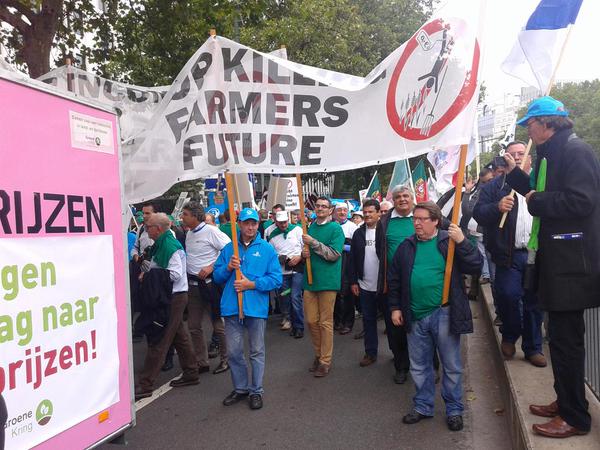
Changes proposed to the management of agricultural crises

The term of office of the previous Commissioner for Agriculture Janusz Wojciechowski 2019-2024 was dominated by crises, including the COVID pandemic, the impacts of the Russian invasion of Ukraine on energy and fertiliser prices, and the impacts of Ukrainian exports of grains and oilseeds on the markets of neighbouring countries. Following the announcement to launch a Strategic Dialogue on the Future of Agriculture in December 2023, it was thus not surprising that Wojciechowski speculated on the need for a common crisis intervention instrument in the future CAP with a reinforced budget, proposing that this should form a “third pillar” of the CAP.

Since then, the Commission has proposed a new architecture for crisis management in the CAP, first in its legislative proposal on CAP simplification in May 2025 and, more recently, in its legislative proposal for the European Fund accompanying its MFF proposal published in July 2025. This post reviews the Commission proposals highlighting the main innovations and assesses the likely performance of the proposed new architecture.

Experience with the use of the agricultural crisis reserve

The EU’s toolbox to respond to crises is set out in the Common Market Organisation Regulation (EU) 1308/2013 and is quite comprehensive. The Regulation provides for market intervention measures (public intervention and private storage aid) to stabilise prices for farmers, as well as provisions to manage crises through sectoral interventions that may be programmed in national CAP Strategic Plans (for example, in the fruit and vegetable sector). In addition, the Commission has broad powers under Articles 219 to 222 of the CMO Regulation to take exceptional measures, as follows:

  • market disturbance (Article 219);
  • animal diseases, plant pests, and the loss of consumer confidence due to risks to public, animal or plant health (Article 220);
  • specific problems (Article 221);
  • severe imbalance in markets (Article 222).

Prior to 2023, when financing of these measures was needed, support could be mobilised by using financial resources under the ‘reserve for crises in the agricultural sector’. This funding mechanism required corresponding cuts in direct payments to farmers and its use required a transfer decision by the Council and European Parliament. This reserve was never used until March 2022, when exceptional adjustment aid to producers affected by the consequences of the war in Ukraine was adopted. The support package amounted to EUR 500 million, EUR 350 million of which was financed from the 2022 crisis reserve. Previously, in all other cases, funding for exceptional measures was made available from other resources under the European Agricultural Guarantee Fund (EAGF) sub-ceiling, without the activation of the crisis reserve.

Starting in 2023, the CAP Horizontal Regulation (EU) 2021/2116 established an agricultural reserve of at least EUR 450 million which was set up at the beginning of each year of the period 2023-2027. Specifically, Article 16(1) provides for a Union reserve “to provide additional support for the agricultural sector for the purpose of market management or stabilisation and to respond promptly in the case of crises affecting the agricultural production or distribution.” The amount for the agricultural reserve is entered directly in the EU budget, making funds from the reserve directly available. A higher amount may be set in the EU budget. This reserve is used to finance both market intervention measures as well as exceptional measures. The agricultural reserve is established by first using the remaining availabilities from the previous year’s reserve not used and carried over, then availabilities under the EAGF sub-ceiling and, if needed, and only as a last resort, by applying financial discipline.

The Commission published a report on The use of crisis measures adopted pursuant to Articles 219 to 222 of the CMO Regulation in January 2024. Between January 2014 and the end of 2023, the Commission reports that 63 exceptional measures were adopted. It noted that exceptional measures were mainly used to help farmers in relation to the damages they suffer as a consequence of market disturbances or issues with animal or plant health. They also, albeit less frequently, helped farmers to address the negative impacts of extreme adverse weather events on their economic returns.

In addition to these EU measures, natural disaster aid can be provided by Member States through state aids. A characteristic of natural disasters is that they tend to be regionally specific. The Agricultural Block Exemption Regulation lays down the conditions under which Member States can provide aid to make good the damage caused by adverse climatic events which can be assimilated to a natural disaster (Article 25) and aid for the costs of prevention and eradication of animal diseases or plant pests and aid to make good the damage caused by animal diseases or plant pests (Article 26). For natural disasters due to adverse climatic events, it is sufficient that the competent authority of the Member State declares a natural disaster and there is a direct link with the damage suffered by farmers, and aid should be limited to compensating for the loss of income and the cost of material damage. Aid to compensate for losses due to animal or plant diseases is intended to cover the loss of income due to quarantine restrictions or to compensate for the value of animals slaughtered or culled or that have died, or plants destroyed, due to the disease or pest or control and eradication measures.    

The CAP Simplification Regulation May 2025

Despite the conclusion in its 2024 report on the use of crisis measures, the Commission took a different line in its CAP Simplification proposal in May 2025. It now argues, perhaps based on its experience in 2024, that crisis payments experience had shown that the agricultural reserve is predominantly used to address natural disasters and adverse climate events, although its primary objective is to help farmers in case of market disturbance.

As set out in Recital (61) to the draft Simplification Regulation:

Experience with the implementation of the agricultural reserve has shown that it is valuable in case of crisis in order to offer support to farmers affected and to contribute to the return of markets to a better balance. However, in the past years it was increasingly used for alleviating the situation of the farmers suffering direct losses due to natural disasters, adverse climatic events or catastrophic events although its intended original purpose as financing market instrument was to focus on compensating and mitigating the impacts of market disturbances. In view of the mounting challenges faced by the Union agricultural sector, including trade tensions, geopolitical uncertainty and increased indirect impact of animal health issues on market balance, it appears justified to refocus the reserve on its original purpose. Compensations to farmers for direct effects of natural disasters, adverse climate events or catastrophic events, such as those resulting in physical losses of plants, animals and products thereof should be addressed by Member States who are in charge of developing robust risk and crisis management strategies with the financial support of their CAP Strategic Plans including the new instruments established by this Regulation. Measures to balance the negative impact on farmers generated by market disturbance such as those affecting prices, costs or sales, also when they are generated as indirect effects of natural disasters, adverse climate events or catastrophic events, should continue to be financed by the agricultural reserve. (bolding added)

The Commission therefore proposed to clearly limit the use of the agricultural reserve by amending Article 16(1) of the Horizontal Regulation (EU) 2021/2116. The proposed amendment would add to this Article “The reserve shall not be used for measures providing support to farmers affected by natural disasters, adverse climatic events or catastrophic events. However, the reserve can be used for measures addressing market disturbance caused by natural disasters, adverse climatic events or catastrophic events including measures adopted pursuant to Articles 219 and 220 of Regulation (EU) No 1308/2013”-

Instead, the draft Regulation proposes to introduce a new intervention of complementary crisis payments to farmers. Complementary crisis payments are defined as “direct payments to farmers following natural disasters, adverse climatic events or catastrophic events” (Amendment 7 to the CAP Strategic Plans Regulation (EU) 2021/2115). They are specified in two new Articles 41a and 78a to be added to the CAP Strategic Plans Regulation (Amendment 11). Article 41a permits crisis payments to farmers following natural disasters using direct payments while Article 78a grants the same permission using EAFRD funds. Their purpose is to allow Member States to reserve a certain share of both direct payments and EAFRD funding for these complementary crisis payments. The new Article 78a builds on Regulation (EU) 2024/3242 which modified the EAFRD on an exceptional and temporary basis to give greater flexibility to Member States to reprogramme part of their outstanding amounts from the 2014-2020 CAP for support to farmers adversely affected by natural disasters after 1 January 2024.

The Articles can be triggered when a Member State formally recognises that a natural disaster, adverse climatic event or catastrophic event has occurred and that these events have caused damage resulting in the destruction of at least 30% of the average annual production of the farmer in the preceding three-year period, or a three-year average in the preceding five-year period, excluding the highest or lowest entry. Losses can be calculated at the holding level, at the level of the holding’s activity in the sector concerned or in relation to the specific area concerned.

To ensure that sufficient financing remains available to deliver on the other CAP priorities, this share is limited to a maximum annual amount available per Member State corresponding to 3% of the total of direct payments and EAFRD funding per year. In order to incentivise Member States to privilege the use of the direct payments instrument in Article 41a, the maximum annual amount that can be reserved by a Member State for this type of intervention can correspond to 4% of the total of direct payments and EAFRD funding per year, if the Member State decides not to provide support for crisis payments using EAFRD funding under Article 78a of that Regulation. The maximum amounts that can be allocated are set out in an Annex to the draft proposal. The new rules would apply to financial years 2026 and 2027.

The attitude of the co-legislature to these proposals is not yet clear. The Council discussions on the topic are not yet available to the public, while in the Parliament COMAGRI only appointed its rapporteur for the file in June.

The Unity Safety Net proposed as part of the EU Facility

Nonetheless, the distinction between the two types of crisis payments is now carried into the new CAP proposal (although the relevant Articles are included in the draft European Fund Regulation). There will be separate provisions for market crises, including pest and animal disease losses, which will be addressed by the Unity Safety Net, on the one hand, and extreme weather crises (natural disasters more generally), on the other hand.

The idea of a Unity Safety Net was proposed in the Commission’s Vision for Agriculture and Food in the following terms:

Where our trade partners resort to unfair competition and unilateral actions that unlawfully target our agri-food sector or that of individual Member States with the aim to divide us as a Union, the EU will use all protective tools at its disposal. The Union will develop (in 2025) an ambitious Unity Safety Net for the EU agri-food sector.

The Unity Safety Net was then launched in the Commission’s legislative proposal for the European Fund, the National and Regional Partnership Fund. Its rationale was set out in Recital 41 in that Regulation.

(41) A Unity Safety Net should be established to stabilize agricultural markets in times of market disturbances. It should be used to address periods and threats of market imbalance, including those caused by issues related to animal or plant health, which impact the prices of agricultural products and the costs of inputs in the whole or part of the internal market. In order to safeguard the Union’s strategic autonomy in food supply and ensure food security, the funding allocated for market support through the Unity Safety Net should take into account mounting uncertainties in agricultural markets and increased indirect impact of animal health issues on market balance. The Union safety net does not aim to compensate for direct losses suffered by farmers due to natural disasters.  (my bolding).

(I note in passing that calling it the Union Safety Net rather than the Unity Safety Net makes much more sense, and one wonders if this was a misprint in the Vision Paper where the fund was first mentioned. This is surely something that the legislative process could rectify!)

Article 26 of the European Fund Regulation provides that the Unity Safety Net will be financed from the new EU Facility which is one of the three pillars of the new European Fund. The rationale for the EU Facility is to increase flexibility and to cater for unforeseen crises, as well as to support projects with a transnational dimension with a high Union added value. According to Part 3 of the proposal addressing financial aspects, expenditure under the EU Facility is divided into five budget lines, as shown in Table 1. Union actions are assigned €63.2 billion while the budget cushion for emerging challenges and priorities is assigned €8.7 billion over the MFF period. Making provision for support for the accession of new Member States is one of the new priorities that is specifically mentioned for the budget cushion.

The Union actions that can be financed are set out in Annex XV to the draft Regulation. There are fourteen in all: from an agricultural perspective, they include support for measures to eradicate, control and monitor animal diseases, zoonoses and plant pests; measures aiming to address antimicrobial resistance; measures to promote sustainable food production and consumption (all combined in one action); support for collecting farm-level data under the Farm Sustainability Data Network Regulation as well as financing information and promotion measures for agricultural products (both combined in another action). In addition, support for LIFE actions including strategic nature projects and implementation and enforcement of environmental and climate legislation and policies, is a separate action. This includes support and empowerment of networks and civil society organisations as well as other projects of Union interest contributing to the implementation of environmental law and policies. These actions will compete with others listed in Annex XV for the limited budget commitment under the ‘Other Union actions’ heading.

Table 1.  Expenditure commitments for the EU Facility
Source: Extracted from Commission, Proposal for a Regulation establishing the European Fund COM(2025) 565.

Three of the fourteen Union actions have their own specific budget lines. €25.3 billion is allocated to migration, border management, visa and internal security, which complements the minimum ring-fenced amount of at least €34.2 billion for these objectives which Member States must allocate from the amounts they receive for their National and Regional Partnership Plans. The European Union Solidarity fund is allocated €20.1 billion intended to complement Member State resources in dealing with catastrophes and natural disasters. Specifically, action (i) in Annex XV is intended to “address urgent and specific needs as a response to a crisis situation such as major or regional natural disaster, and foster repair and recovery in view of increasing resilience following a crisis”.

Finally, €6.3 billion (€0.9 billion annually) is allocated to the Unity Safety Net to deal with the fallout from disruptions to agricultural markets under action (j) “to respond to market disturbances and stabilise agricultural markets through measures adopted pursuant to Articles 8 to 21 of Regulation (EU) No. 1308/2013 and exceptional measures adopted pursuant to Articles 219 to 222 of that Regulation”. This is double the sum available at EU level to address agricultural market crises under the current CAP. In the current CAP, the obligation is to ensure that the amount of €450 million (in 2018 prices) is available in the budget at the beginning of each year. Readers with a long memory will recall the promise made by Commissioner Hogan in June 2019 when EU Commissioner for Agriculture to make available a €1 billion transition fund for European farmers to help adjust to market changes caused by the Mercosur trade deal. The Unity Safety Net delivers on this promise.

Appropriations under the Unity Safety Net will be subject to the budget principle of annuality, which generally requires that appropriations should be used within the financial year. This means that, if there is only a partial draw-down of the €900 million in any year, or no draw-down at all, any unused funds would lapse. It is possible, under the Financial Regulation rules, for the Commission to carry forward unused funds but this requires justification and the approval of the budgetary authority. So although up to €6.3 billion can be made available, we would anticipate actual usage to be less in the absence of severe market crises.

The impact of natural disasters

While EU funding for market crises has received a marked increase, what is now proposed for natural disasters which are excluded from financing from the Unity Safety Net? Here we can distinguish between the impacts of slow-onset climate change due to shifts in average temperature and precipitation conditions, and the impact of climate change in modifying the intensity, frequency, and distribution of extreme events.

Floods are the most common natural disasters in Europe (EEA), but for agriculture the biggest threats come first from droughts, which drive more than 50% of climate risk across the EU, followed by excessive rainfall and frost/hail events contributing roughly equal losses. (DG AGRI and EIB, 2025). Drought, which is often accompanied by heatwaves, is a particularly prominent source of yield losses in southern and central Europe, but it is also significant in northern and maritime western regions. By 2050, the most severe increase in drought risk is expected in Spain, Italy and Greece with more than nine times as many days of severe drought conditions each year, under the SSP2-4.5 warming scenario compared to 1990. Up-to-date information on drought conditions is provided monthly by the JRC European Drought Observatory.

The EEA calculates annual economic losses caused by weather- and climate-related extreme events in EU Member States (Figure 1). The data are classified by type of event (meteorological events such as storms and hail, hydrological events such as floods, and climatological events such as droughts, heatwaves and forest fires). The data come from the CATDAT database maintained by the private research company RiskLayer and it is not possible from the published data to construct a similar chart just for agricultural losses alone.

Figure 1. Total and insured losses by year from weather- and climate-related events, EU-27, in constant 2023 EUR prices.
Source:  EEA 2025

The data show a steady increase in the value of economic losses over time (see Kron et al, 2019 for a similar conclusion using the Munich Re NatCatSERVICE database). This also resonates with recent agricultural experience. Brás et al. (2021) show that the severity of heatwave and drought impacts on EU crop production has roughly tripled over the last 50 years, from -2.2% (1964–1990) to -7.3% (1991–2015). The trend in drought conditions defined as the annual deficit in soil moisture due to precipitation shortages can be followed in the EEA’s drought indicator (Figure 2). While the 2018 drought was seen as a wake-up call, this was followed by the mega-drought and extreme heatwave in 2022 and more drought conditions in 2023 particularly in the Baltic states, Poland and Spain. Floods, while often more localised, have also caused catastrophic damage in specific regions (2021 Germany/Benelux, 2023 Slovenia and central Greece). 

Figure 2. Annual area affected by drought during the period 2000-2023 for the EU-27 region, by ecosystem types.
Source: EEA, 2024.

The DG AGRI and EIB (2025) study on insurance and risk management tools for EU agriculture estimates likely economic losses from climate-related agricultural risks. It calculates two indicators. One is the Annual Average Loss (AAL)  which the report estimates currently at €28.3 billion or around 6% of annual EU crop and livestock production. This figure includes all losses and is the average of many years with relatively low losses, the few years with severe losses and the infrequent years with catastrophic losses. It also calculates that the Probable Maximum Loss for the EU in a catastrophic year (2% probability) could amount to €57.5 billion (€35.1 billion for crops and €22.4 billion for livestock). It compares this to the estimated losses for crops only in the 2022 mega-drought year of between €25-30 billion. Based on its climate modelling, the report estimates that the AAL could increase by 40% by 2050 to reach €40.1 billion while the PML for crops alone could increase from €35.1 billion to €51.0 billion in its SSP2-4.5 scenario (the report also includes numbers for a SSP2-8.5 scenario which it describes as a business-as-usual scenario which it definitely is not, and I do not reproduce those figures here).  

How does the MFF proposal address natural disaster risks in agriculture?

The proposed provisions to assist Member States to respond to crises due to natural disasters are set out in Article 34 of the European Fund Regulation. This Article allows Member States to amend their NRP Plans to provide support in response to natural disasters [measures of a similar nature to those referred to in paragraph 1 point (i) of Annex XV which sets out the fourteen actions that can be supported by the EU Facility]. It also allows Member States to provide crisis payments to farmers that are affected by natural disasters and to support investments in the restoration of agricultural potential, provided that they were recognised as such by a competent public authority of the Member State. There are further provisions regarding crisis aid to farmers in Article 38 of the Regulation.

To understand this Article we must also take note of Article 14 on Budgetary Commitments which introduces a flexibility resource which plays a crucial role. We should also recall that the EU Facility contains a stand-alone budget line for the European Solidary Fund (see above) with a commitments appropriation of €20.1 billion intended to complement Member State resources in dealing with catastrophes and natural disasters.  

Article 14 first sets out a progressive and front-loaded allocation of funds for Member State Partnership Plans throughout the programming period (starting at 15.8% of the total in 2028 and ending with 11.7% of the total in 2034). As something new, 25% of a country’s total allocation is assigned to a flexibility reserve (however, CAP income support interventions apart from investment aids are excluded from this amount). There are specific limitations on how the flexibility amount can be programmed. Up to one-fifth can be requested by a Member State to address natural disasters including those affecting farmers in the first three or so years with any balance to be programmed as part of the Plan’s mid-term review. Another three-fifths can also be programmed as part of the Plan’s mid-term review and can be used if necessary to address new priorities. The final one-fifth can only be requested by Member States as of 2031 to address natural disasters in the following three years, with any unprogrammed amount by June 2033 then available for any amendment of the Plan.            

We can make some back-of-the envelope estimates of the potential funds that could be made available by Member States under the flexibility mechanism for interventions to address natural disasters. My reading of Article 14 is that CAP income support (apart from investment aids) and Interreg funding is excluded from the calculation of the flexibility amount. Article 10 of the European Fund Regulation sets out that the total resources of the Fund should be €782.9 billion while the minimum ring-fenced amount for CAP income support (excluding fisheries) is €294 billion, thus leaving €489 billion (it will be a little more depending on how much is allocated to CAP investment aids in the NRP Plans). We assume that one quarter of this is allocated to the flexibility amount over the 7-year period or €122 billion. This is a significant tranche of the Fund that cannot be programmed at the outset to address cohesion, social, rural and security objectives.

One-fifth of this amount, or €24.5 billion, is withheld to be used only to address crisis situations in the first three or so years of the MFF, with any unused amounts then available for programming if necessary for new priorities at the mid-term review in 2031. At that point, another one-fifth, or €24.5 billion, can then only be called down by Member States to address natural disasters until June 2033, when any unused amounts can be reprogrammed for any amendment to the Plan.  While these are large amounts, they can be used to cover losses in any sector of the economy from natural disasters in addition to potential compensation to farmers who suffer from a natural disaster.

We now turn to Article 34 to see how Member States can access these funds as well as the amount made available in the European Solidarity Fund in the EU Facility. This Article deals with how Member States may request to amend their Plans in case of crisis situations. Essentially, it proposes a layered approach. When a natural disaster occurs, Member States should first seek to amend their NRP Plan to free up resources to deal with it. Where the request for amendment exceeds 1% of the Union financial contribution under the Plan, the Member State may, in addition, request to programme up to 2.5% of the EU allocation to their Plan from their unprogrammed flexibility amount within the limits we have just described.  Where the amount requested and available is not sufficient to cover the needs, then the Member State may request additional support from the European Solidarity Fund subject to the availability of funding. If the amount so made available is still insufficient to cover the needs, as a final step the Member State may receive additional support from the ‘budget cushion’ in the EU Facility subject to the availability of funding.

These are also the steps to be followed if a Member State wishes to provide crisis payments to farmers that are affected by natural disasters. However, steps 3 and 4 (i.e., recourse to the Solidarity Fund and the budget cushion in the EU Facility) are not available to fund crisis payments to farmers (Article 34(9)). Effectively, crisis payments to farmers are funded by the Member State itself from its European Fund allocation, first, by freeing up resources by amending its NRP Plan or, in a second step, by digging into its flexibility amount.  

Article 38 sets out some additional conditions that must be met to trigger crisis payments to farmers following natural disasters and adverse climatic events. These effectively replicate the conditions proposed for the complementary crisis payments in the CAP Simplification Regulation proposed in May 2025. There must be formal recognition by a competent authority that a natural disaster or adverse climatic event (as defined by the Member State) has occurred, and that the event (or eligible measures to address animal or plant diseases or pests) have caused the destruction of at least 30% of the annual production of the farmer with various ways to calculate this loss allowed.

Conclusions

In this post, I have explored the evolution of Commission thinking around the funding of agricultural crisis measures for farmers. Currently, these consist of two instruments: the (limited) agricultural crisis reserve financed by the EU budget intended to fund measures to address market disruption under the Common Market Organisation Regulation, and the possibility for Member States to provide state aid from their own resources to address natural disasters and adverse climatic events. However, the Commission has become concerned that the agricultural reserve is increasingly being used to provide support to farmers in the aftermath of natural disasters.

It thus proposed in its CAP Simplification Regulation to restore a clear distinction between market crises and natural disasters. The agricultural reserve for the remaining years of this CAP (2026 and 2027) would only be used to address market disruption. However, some flexibility would be given to Member States to use some of their existing CAP budget, either for direct payments or rural development, to make crisis payments to farmers in response to natural disasters.

This philosophy has now been carried over to the European Fund Regulation.  Payments to stabilise markets will be financed by the Unity Safety Net with a greatly increased budget compared to the agricultural reserve. The Commission’s Fact Sheet on the CAP suggests that the crisis reserve is doubled from €450 million to €900 million annually, but this seems to ignore that commitment appropriations for the Unity Safety Net that are not used are carried forward so that they add up to €6.3 billion over the MFF period (Article 31(9)), whereas it is sufficient to have €450 million or thereabouts in the reserve at the beginning of each financial year under the current CAP regime.  

The Unity Safety Net is part of the EU Facility and will be implemented under shared management where it concerns the adoption of delegated or implementing acts under the CMO Regulation (Article 31(2)). A later paragraph in this article (Article 31(6) states that “Where the Union action is implemented in shared management, the Member State shall receive Union support for the implementation of that action, in addition to its financial contribution under Article 10 [Budget](bolding added).

This raises a problem for me. With the existing agricultural reserve, there is no requirement for a Member State contribution although Member States are usually permitted to add up to 200% to the EU contribution. But there is no obligation that this top-up should be taken from their CAP budget. The wording of Article 31(6) suggests that support from the Unity Safety Net will only be in addition to a financial contribution the Member State will make from its NRPF allocation. But while there is detailed guidance on how this should work in the case of natural disaster crises, there is no mention elsewhere that the Member State should contribute to market stabilisation. I am left with a question: are Member States expected to use their NRP funds if they want to request assistance from the Unity Safety Net? Is this why in Article 5 of the draft CAP Regulation the list of CAP interventions is extended to include ‘(s) crisis payments for farmers’, although this intervention is absent from the otherwise similar list of CAP interventions in Article 35 of the European Fund Regulation?

In the post, we also documented that natural disaster crises in agriculture are growing in importance driven by the increased frequency and intensity of climate-related events. Here the European Fund Regulation confirms the direction taken in the CAP Simplification Regulation that there will be no direct support from the EU budget to respond to these crises. Instead, the use of EU funds will be at best indirect, in that Member States are given the option of amending their NRP Plans to free up funds for crisis payments to farmers in the event of natural disasters. However, as using these funds for crisis payments has an opportunity cost for Member States (they are taken from other interventions that could have been financed under the NRP Plan), it is as good as saying that Member States are on their own when it comes to compensating farmers for natural disasters.

Given the frequency with which Member States have turned to help from the Commission from the agricultural reserve to help deal with natural disaster crises, I wonder if this division of responsibility will pass muster with the co-legislature? On the one hand, we have this enormous increase in the EU budget to finance measures to deal with market disruption (which may or may not also require national contributions in addition). On the other hand, the proposal says it is up to Member States themselves to compensate farmers for losses due to increasingly frequent natural disasters and adverse climatic events. I wonder if this will fly?

This post was written by Alan Matthews.

Photo credit: Flooded plains by the Storm Daniel near the town of Palamas, Thessaly, Greece  © Makis Theodorou licensed under the Creative Commons Attribution-Share Alike 3.0 Unported, 2.5 Generic, 2.0 Generic and 1.0 Generic license.

Update 4 September 2025. The text was corrected to make clear that annual appropriations under the Unity Safety Net would be subject to the budget principle of annuality and would not cumulate throughout the MFF period.

Update 10 October 2025. The text was amended to reference Regulation (EU) 2024/3242.

Greater transparency needed in national aids to agriculture

On 2 May 2024, the European Commission adopted an amendment to the State aid Temporary Crisis and Transition Framework (TCTF) to allow Member States to continue to provide aid to farmers affected by persistent market disturbances up to €250,000 to end-December 2024. This followed the European Council’s endorsement in its conclusions following its meeting 17-18 April 2024 of “the proposed extension of the temporary framework on State aid and the possibility to increase the ceiling on de minimis aid for agriculture.”

Following on the European Council’s conclusions, Germany on behalf of 16 Member States informed the last AGRIFISH Council meeting in April 2024 that it was seeking an increase in the de minimis aid amounts for farmers from a total of €20,000 over three years (€25,000 in certain circumstances) to an amount of €50,000. This would become the relevant ceiling once the TCTF derogation expires at the end of the year. The Commission announced in parallel with its adoption of the TCTF amendment that it will launch a revision of the agricultural de minimis regulation “in light of the inflationary pressure in recent years and the current context with, amongst others, high commodity prices affecting the agricultural sector.

These decisions put the focus on how much additional aid farmers receive from Member States in addition to the funds transferred through the CAP. This is an extremely murky area as, despite the obligations on Member States to report State aid and other aid to farmers, there is no central registry which keeps track of these amounts. But that the amounts have been significant is beyond doubt. Back in May 2023, Commissioner Wojciechowski tweeted that more than €7.6 billion in State aid under the TCTF had been approved between March 2022 and May 2023 (though I have been unable to track down the document copied in the tweet).


A little earlier, in November 2022, Farm Europe estimated that Member States received approval for around €4.6 billion in aid to farmers in 2022 both under the Temporary Crisis Framework (TCF, which preceded the TCTF) and the Covid-19 Temporary Framework (TF). Its analysis included a table which compared the crisis support approved with the direct payment transfers to each Member State. Its estimates showed that in Italy, Poland and Bulgaria the crisis aid approved amounted to between 27% and 33% of the direct payments envelope in 2022. 

A more recent analysis by Euractiv journalists Maria Simon Arboleas and Sofia Sanchez Manzanaro examined aid to agriculture and the food sector under both the TCF and the TCTF between March 2022 and March 2024. They estimated that Member States had approved over €11 billion in State aid over those two years, with Poland (€3.9 billion) and Italy (€2.3 billion) the clear leaders.

These estimates underline that Member State transfers to farmers outside the CAP have been very significant in recent years, but there is still huge uncertainty about the figures. For one thing, the amounts approved for State aid are not necessarily disbursed in full, so the figures above exaggerate the actual transfers that farmers received. On the other hand, these figures only cover crisis State aid, while Member States also transfer significant amounts to farmers through regular non-crisis State aid and de minimis amounts (the latter are not considered State aid under EU law) in addition to the funding allocated in the CAP Strategic Plans.  

In this post, I first discuss the different ways Member States can transfer national funds to farmers. I then examine available information on the amounts transferred in recent years, highlighting the lack of consistent robust data. Because there is a risk that national aids can distort the level playing field within the single EU market, I conclude by calling for a single central repository of data (building on but extending the State Aid Scoreboard maintained by DG Competition) to allow full transparency around this largely invisible flow of funds to EU farmers.

The EU State aid architecture for agriculture

EU State aid rules play a critical role in ensuring fair competition and the efficient allocation of resources within the internal market. The basic principles are set out in Articles 107-109 of the Treaty on the Functioning of the European Union (TFEU). Article 107 begins by prohibiting aid by a Member State that distorts or threatens to distort competition insofar as it affects trade between Member States in the single market. It then goes on to identify certain categories of aid that are deemed to be compatible with the internal market, and further categories of aid that can be deemed to be compatible. The Commission has developed a set of horizontal rules to clarify its position on particular categories of aid, including general guidelines, block exemptions, and de minimis provisions.

However, these general rules derived from the Treaty Article 107 are not automatically applicable to agriculture. The EU legislator has decided, on the basis of TFEU Article 42, that State aid rules do not apply to support financed under the CAP in relation to production and trade in agricultural products listed in Annex 1 of the TFEU (Articles 145-146 of the CAP Strategic Plans Regulation and Articles 211-212 of the Single CMO Regulation). Thus, national co-financing of rural development spending relevant to Annex 1 products in CAP Strategic Plans, including additional national co-financing, is not considered State aid.  However, for the following expenditures normal State aid rules apply:

  • National spending related to producers of Annex 1 agricultural products financed solely by national resources (i.e. without any EU element). This includes all subsidies, tax advantages, and grants that exceed specified thresholds or do not fall within exempted categories.
  • Measures in CAP Strategic Plans that fall outside the scope of Article 42, for example, forestry measures and support for tourism or small businesses in rural areas.

Normal State aid rules mean that Member States must first notify their intention to provide assistance and then wait until the Commission has given the go-ahead after checking its impact on competition in the internal market before they can implement the measure.

The Commission has developed a set of horizontal rules to clarify its position on State aids to agriculture and forestry:

  • The Agricultural Block Exemption Regulation (ABER) allows Member States to implement certain types of aid to SMEs in the agricultural sector without prior notification to the Commission, provided the aid meets specific criteria and conditions outlined in the regulation. This includes support for investments in physical assets, environmental and climate action, research and development, and risk management in agriculture. A revised ABER entered into force on 1 January 2023 which included a significant extension of the scope of block-exempted measures. The Commission anticipates that the new rules will block-exempt up to 50% of cases which before were subject to notification.
  • The Agricultural Guidelines on State Aid provide the framework for assessing the compatibility of State aid with the internal market and stipulate various conditions under which aid may be considered permissible. These guidelines emphasise the need for aid to support genuine public policy objectives such as environmental protection, animal welfare, and the promotion of rural development, without unduly distorting competition.
  • The agricultural de minimis Regulation sets a ceiling below which aid measures are not seen as State aid and do not have to be notified to the Commission. After the last revision to this Regulation in 2019, the de minimis ceiling was raised to €20,000 for a single undertaking over a period of three years subject to a national cap of 1.25% of national output (these amounts can be raised to €25,000 per undertaking and 1.5% of national output provided certain conditions limiting the amount of aid to a specific sector and establishing a central register for such aid are observed). Member States are obliged to report such aid to ensure transparency and adherence to cumulative limits.

These non-crisis State aid rules have been supplemented in recent years by several crisis measures. In March 2020 the EU introduced the Covid-19 Temporary Framework (TF) which permitted additional aid to farmers up to €100,000 in 2020, provided that the aid was not fixed on the basis of the price or quantity of the products put on the market. Successive amendments extended the period of validity to June 2022 and in November 2021 the maximum ceiling on aid to farmers was increased to €290,000. This aid could be paid in addition to de minimis aid.

Following the Russian invasion of Ukraine in February 2022, the EU introduced the Temporary Crisis Framework (TCF) in response to market disturbances. For farmers, Member States were allowed to provide up to €35,000 per undertaking in the form of direct grants, tax advantages, or guarantees and loans up to end December 2022. In July 2022 the maximum ceiling on aid to farmers was increased to €62,000. In October 2022 all measures were extended until end December 2023 and the maximum ceiling for aid to farmers was increased to €250,000 per farm. The TCF was replaced by the Temporary Crisis and Transition Framework (TCTF) in March 2023 which also set the permitted maximum level of aid to an individual farm at €250,000 to be paid before the end of December 2023. The period of validity was later extended to June 2024 and, as noted in the introduction to this post, has now been extended to December 2024 for farmers alone.

Finally, we should note that farmers have also benefitted from the call up of the agricultural reserve in both 2022 and 2023. In 2022 this was worth €500 million and Member States were permitted to add double this amount (200%) from their own resources (in practice, national top-ups amounted to €575 million giving a total budget of £1.1 billion). The total amount was allocated between Member States according to their net ceilings for direct payments, and farmers were eligible provided that they engaged in activities pursuing one or more of these goals: circular economy, nutrient management, efficient use of resources, and environmental and climate friendly production methods.

Expenditure of the 2023 agricultural reserve was more piecemeal and not without controversy. The EU 2023 budget included an amount of €450 million for the agricultural reserve and five measures, totalling €530.5 million, were adopted. These included two tranches of support for front-line states bordering Ukraine worth €56.3 million and €100 million respectively. This led several other Member States, annoyed by the unilateral restrictions on imports from Ukraine imposed by several of the beneficiaries, to question the criteria used to allocate this funding, a criticism repeated by MEPs in November 2023. Subsequently, the Commission proposed a general support package of €330 million for all Member States, again with the possibility for Member States to add double this support from their own resources, with Member States again criticising the lack of transparency.  Smaller amounts were also made available for the eggs and poultry sectors in Poland and Italy. According to the EAGF Early Warning System, some of this expenditure (€134.5 million) was paid from the 2023 EAGF budget and the remainder (€315.5 million) was carried forward to the 2024 budget.

The agricultural crisis reserve itself is part of the CAP budget and does not represent additional resources transferred to farmers. However, the possibility for Member States to add double these amounts from national resources does represent additional State aid which would represent an increase in transfers over and above the channels considered so far. The Commission is obliged to report every three years on the use of crisis measures adopted on the basis of Articles 219 to 222 of the Single CMO Regulation including the use of the agricultural reserve, its first such report was published in January 2024. But this report only covers expenditure from the EU budget and does not cover complementary national aid.

How much national aid have farmers received?

State aid approvals under crisis measures

In this section, we want to estimate how much additional funds have been transferred to farmers under national aid measures in recent years. One way to get a handle on this amount is to examine the Commission decisions on Member State notifications under the various emergency aid packages (COVID TF, TCF and TCTF). This is the approach taken by Farm Europe and Euractiv in the analyses previously summarised. It aggregates the maximum ceilings for State aid approved by the Commission. Although there has been a specific interest in aid approved under the various crisis measures, the approach can be extended to all State aid notifications. One (major) drawback is that actual State aid provided under these approvals may turn out to be much less than the amounts approved (discussed further below). Other issues are that the schemes identified in this approach are those that specifically target agricultural producers. In practice, other beneficiaries such as aquaculture producers and forestry may also be included in these schemes. More important, several countries introduced umbrella schemes which, for example, reduced energy costs across the economy under which agricultural producers can also benefit but are not identified as a distinct group.

To illustrate this approach, I have estimated the total State aid approved primarily for the agriculture sector under the Temporary Crisis Framework introduced in March 2022 and approved during 2022. The main source used was the Commission Staff Working Paper accompanying the 2022 Annual Competition Report. Relevant schemes were identifying using keywords such as ‘agriculture’, ‘livestock’ or other specific commodities. Schemes specifically targeting the food processing sector were excluded. The list of schemes derived from this source was compared with the list of Member State measures adopted under the TCF and TCTF published by the Commission in May 2024 and some additional schemes not in the original list were added. The final list of schemes is available in this spreadsheet. Total approvals in 2022 under the TCF amounted to €4.93 billion, with Italy accounting for €2.23 billion of this total, Poland for €836 million, and France for a further €559 million (note that these figures are considerably higher than the €3.8 billion estimated by Farm Europe for the same scheme in the same year). These figures are compared with actual expenditure under the TCF in 2022 on agriculture, forestry and rural areas later in this post.  

EEA support amounts

To assess the actual level of disbursements a first place to start is to examine the Economic Accounts for Agriculture (EEA) compiled by Eurostat. The EEA captures budget transfers to farmers under two headings:  subsidies on products (e.g. coupled payments) and other subsidies on production (e.g. direct payments, agri-environment payments). Table 1 shows the trend in these subsidies in recent years. As well as giving the data for the EU as a whole, I also include Poland which is identified as a country that has made great use of the crisis emergency measures.

Table 1. Public transfers to farmers, € million
Source:  Eurostat, Economic Accounts for Agriculture domain [aact_eea_01]. Total CAP payments to Member States (excluding the UK for 2019 and 2020) from DG BUDGET, EU spending and revenue – Data 2000-2022. CAP spending by the Commission is excluded. Note that not all EAGF and EAFRD payments are made to individual farmers.

The most striking message from Table 1 is how little the crisis State aids in 2020-2023 show up in the table, either for the EU or for Poland. For the EU, we control for changes in CAP payments by looking at the total receipts of Member States from the two CAP funds EAGF and EAFRD. Not all of these payments are received by individual farmers and therefore would show up in the EEA figures, but it is the overall trend that is significant. In 2020, the year of the Covid-19 TCF, total subsidies actually fell compared to 2019 despite an increase in CAP payments.  In 2021 there was a small increase in total subsidies compared to 2019 but still much less than what can be explained by a greater increase in CAP payments. Only in 2022 do we see evidence of an increase in total subsidies greater than the increase in CAP payments compared to 2019 but still only amounting to €1.4 billion. While we do not yet have data on CAP payments to Member States for 2023, assuming that they are similar to 2022 payments suggests that they would account for all of the increase in total subsidies relative to 2019. The situation for Poland is even starker as there has been no increase in the reported amounts of subsidies in recent years, despite the significant use Poland has made of the temporary crisis measures. In other words, it seems that the crisis payments to farmers have gone missing in action.

In the EEA, agricultural output is valued at both producer prices and at basic prices (the difference here is what allows us to calculate subsidies on products). However, inputs are always valued only at basic prices, i.e. the prices that farmers actually pay (excluding VAT). A feature of much of the crisis aid to farmers is that it was used to lower input prices, i.e. subsidies on energy costs, on fertiliser, on fodder and on interest rates, or to provide tax exemptions or reductions in social security contributions. By definition, these subsidies would not be picked up in the EEA. However, the input cost subsidies would still be captured in the income arising in agriculture because the value of inputs would be reduced by the amount of these subsidies. This is a major limitation of using the Economic Accounts for Agriculture to track the impact of national State aids.

State aid Scoreboard

Another source to use in tracking State aids is the State aid Scoreboard repository maintained by DG Competition. It is a requirement for the EU Commission to publish annually a State aid synopsis based on expenditure reports provided by Member States covering all aid expenditure that falls under the scope of TFEU Article 107(1). In principle, this covers notified State aid to agriculture and forestry, aid exempted from notification under the block exemption regulation, and State aid expenditure on the crisis measures.  Importantly, the Scoreboard data do not include de minimis aid because it is not subject to the Commission’s investigative powers under the State aid rules nor deemed to be State aid. The Scoreboard covers all Member State expenditure for which the Commission has either adopted a formal decision following notification or received a summary information sheet from Member States for measures qualifying under the agricultural block exemption ABER.

There are other methodological issues which need to be kept in mind when using the Scoreboard. First, the data represent actual State aid expenditure by Member States and not the ceilings that have been approved. There is usually a large discrepancy. For example, the State Aid Scoreboard 2023 reported that in the period between the adoption of the COVID-19 Temporary Framework in March 2020 and December 2022, out of nearly €3.05 trillion of aid approved, only around one third (34% or €1.03 trillion) of it was actually spent. For the TCF which was adopted in March 2022, only 9.6% of the aid approved in nominal terms had been spent by December 2022.

Second, the data distinguish between the nominal value of State aid granted by Member States and the aid element, which is the economic value granted to the recipient. For grants, the aid element normally corresponds to the budget expenditure but for other aid instruments there can be a difference. For example, when the State provides a loan guarantee there is an economic advantage to the recipient but not necessarily budgetary expenditure by the State unless the loan is called in. The 2023 Scoreboard notes that in nominal terms State aid expenditure under the Covid TF was €1.03 trillion, but the aid element of this expenditure amounted to only €472 billion.

Table 2 shows the data for State aid to agriculture forestry and rural areas distinguishing between notified aid (including the crisis aid measures Covid TF and TCF in force in those years) and aid for which notification is not necessary as it is granted under the ABER block exemption regulation. Member States provide their reports by June 30 of the following year, and the latest Scoreboard data refer to 2022. The first point to note is that no COVID TF State aid measures have been reported in the Scoreboard, which seems to be a fatal omission. It is not clear whether these COVID TF measures are included under Notifications but not reported separately under the COVID TF heading, or whether they are simply omitted entirely from the Scoreboard.

Aid expenditures under the TCF have been reported by nine Member States in 2022.  However, three Member States, Poland, France and Bulgaria account for the great majority of this actual expenditure (the State aid notifications to which these larger expenditures refer are listed in Annex 1 of the State Aid Scoreboard 2023). The difference between the aid expenditure reported under the TCF in 2022 and that approved (€4.9 billion, see above) is striking. The discrepancy is particularly severe for Italy, where the Commission approved national aids of €2.3 billion in 2022 but only €45.5 million was actually paid out to farmers.

Figure 2. State aid for the objective ‘Agriculture forestry and rural areas’ in the State Aid Scoreboard repository.
Notes:  Figures refer to the aid element of State aids.

Overall, the Scoreboard figures show an increase in State aid expenditure on agriculture and related areas of around €3 billion in 2022 compared to 2019. €1 billion of this is due to higher expenditure on ABER aids, just over €1 billion due to the TCF in 2022, and the remaining €1 billion due to other notified State aids (which may include measures approved under the COVID TF). The fact that expenditure under ABER has increased shows that Member States have been willing to use conventional non-crisis State aids also to make additional transfers to farmers during the crisis period.

Even leaving aside the uncertainty around COVID State aid, these figures are an underestimate of total national State aids to agriculture as the Scoreboard figures do not take account of Member State co-financing of agricultural reserve crisis spending nor de minimis aid. For example, the Commission reports that Member State aid in 2022 (on top of the agricultural reserve spending of €500 million) amounted to a further €575 million.  

Conclusions

The current moves to change the rules to make it easier for Member States to provide national State aid to their farmers raises the question, what do we know about the amounts of aid that EU farmers receive and which Member States make most of this channel. The question is even more relevant given the very significant sums of money transferred through the various crisis aid schemes in recent years, the Covid Temporary Framework (TF), the Brexit Adjustment Reserve, the Temporary Crisis Framework (TCF) and currently the Temporary Crisis and Transition Framework (TCTF). There is a real concern that some Member States are in a better position to provide national aid to their farmers than others, and that the flexibilities provided under these various instruments may distort the level playing field in the single internal market.

Previous attempts to address this question have relied on State aid notifications and the amounts of aid that Member States have sought approval for. These amounts are indeed eye-wateringly large. But they exaggerate the amounts of aid finally disbursed which are usually well below the total amounts of aid for which approval is sought. DG Competition does provide figures, based on returns from Member States, of actual aid disbursed in its annual Scoreboard of State aid, but this only covers formal notifications and money disbursed under the Agricultural Block Exemption Regulation (ABER). It ignores national crisis aid authorised under the Single CMO Regulation as well as de minimis aid. Furthermore, there is a question mark over the actual figures reported in the Scoreboard as aid under the Covid TF for the Agriculture, Forestry and Areas objective is not shown separately, so it is not clear to me if it is included or not. The Commission publishes a regular report on the use of crisis aid under the Single CMO Regulation, but this only covers expenditure from the EU budget and does not include complementary national aid. Although Member States are required to report on their de minimis aid to the Commission, there does not appear to be any way of finding out and tracking the sums provided under this channel.

Still, my estimate in this post is that national State aids amounted to an additional transfer of over €9 billion to farmers (€8.6 billion in notified State aids plus aid under ABER, see Table 2, plus a further €0.57 billion in complementary national support for the agricultural reserve) in 2022. This compares to total CAP receipts by Member States in 2022 under both the EAGF and EAFRD funds of €54 billion (see Table 1). These national aids are a largely invisible additional transfer to EU farmers that should become more transparent.

Farming will continue to be affected by adverse shocks arising either from natural disasters, including those due to increasingly frequent weather extremes caused by climate change, or market disruptions due to geopolitical events. In this context, the agricultural crisis reserve, in place since the introduction of the latest CAP on 1 January 2023 with a yearly allocation of at least €450 million, is established to finance exceptional measures. But a reserve of this size is not able to sufficiently address the scale of crises, and hence the Commission has resorted to permitting additional national State aids.

Various calls have been made to re-examine the budget for crisis support. Commissioner Wojciechowski in November 2023 when visiting the scenes of flooding in Slovenia called for a special EU fund as a third pillar of the CAP to be used specifically for crisis support, a call echoed by the Italian farm organisation Confagricoltura during the farm protests in February earlier this year.  But it is hard to see how to introduce the possibility of sufficient flexibility in the CAP budget within the budgetary rules governing the Multi-annual Financial Framework. It is likely that relying on Member States to provide national aids will continue to be a feature of future crises.

For this reason, the Commission should commit to preparing a single centralised annual report which would allow easy tracking of all national State aids to agriculture. This could build on the DG Competition Scoreboard but should be extended to also include the other channels whereby farmers receive national aids that are not formally considered as State aid. This post makes clear that such information is not readily available at the present time.

This post was written by Alan Matthews.

Photo credit: Pattys-photos, used under a CC licence.

Financing emergency aid to address market disruption due to COVID-19

There has been strong pressure on Commissioner Wojciechowski to get the Commission to do more to protect farmers and agricultural markets from the adverse effects of the lock-down responses to the coronavirus pandemic.

The Commissioner has argued that there is no funding available for these measures in the EU budget. In this post, I assess the funding that may be available to the Commissioner. I conclude that available funding is limited but not exhausted. It now seems time to make use of the crisis reserve that was put in place for exactly this eventuality as well as unused margins under the European Agricultural Guarantee Fund (EAGF) in the EU budget.

The EU budget is a very complex entity, and it is not easy for an outsider to have a complete understanding of how it works. There may well be errors in the following account, and if so, I would be grateful to have them pointed out. The exercise is still valuable as context for any future debate on crisis management in the CAP as part of the ongoing negotiations on the future CAP framework post 2020.

Growing demand for EU intervention

Copa-Cogeca has highlighted the market breakdown for livestock producers in the dairy, beef, sheep and goat sectors and called for additional targeted market measures for the livestock sector, including exceptional measures, financed outside the CAP budget. Specifically, it has called for the activation of private storage measures for dairy products and the different meats, as well as more targeted management of Tariff Rate Quotas for imports.

Copa-Cogeca has also highlighted problems in the ornamental sector and for some fruits and vegetables. Also the wine market, where exports had already been hit by US tariffs of 25% imposed as part of US retaliation against Airbus subsidies, has been further affected by the loss of sales of higher-quality wines as restaurants remain shuttered.

The European Milk Board has called for a voluntary supply reduction programme in the dairy sector covering a few months in which producers would be compensated, similar to that introduced at the time of the last milk price crisis in 2016. The French dairy sector representative group CNIEL has already introduced a €10 million solidarity fund under EU rules to compensate suppliers who agree to reduce production.

According to Euractiv, MEPs in the European Parliament’s Agriculture Committee have also written to the Commissioner calling on the Commission to use the emergency instruments in the common market organisation (CMO) “as soon as possible”. The Committee is looking for intervention measures as well as opening private storage. In addition, it supports the activation of the crisis reserve which has been financed by withholding a proportion of the direct payments paid to farmers at the end of 2019 and which if left unused would be returned to them as part of their direct payment paid out at the end of this year. Some MEPs have called for a compulsory volume reduction in the dairy sector to avoid milk storage or destruction as the spring peak in milk production approaches.

Ministers of Agriculture have also supported these calls. In a letter initiated by Ireland and sent to the Commissioner on 16 April, all EU agriculture ministers, while welcoming the measures taken in the European response to date, called for urgent additional measures to be taken under the CAP, including aid for private storage to support those sectors where significant price impacts have been identified, as well as exceptional aid to farmers in the most affected sectors.

Commissioner Wojciechowski, when addressing the Parliament’s AGRI Committee on 15 April, accepted that requests for market intervention measures were legitimate but pointed to the absence of money in the EU budget to finance such measures. “These are legitimate expectations and if the Commission had a sackful of money it would dip into it straight away”, the Commissioner is reported as telling MEPs. However, he added that there is no such sack in the current financial framework, as there was no reason to do so when adopting the budget last year.

The Commission has announced two sets of measures so far to help the agri-food sector in its response to the pandemic. On 25 March, DG AGRI announced an extension of the deadline for submitting CAP payment applications, as well as details of additional flexibilities for Member States to provide aid to farmers and food processing companies under the newly adopted Temporary Framework for State Aid (especially paragraph 23 in that Framework).

A further set of measures were announced by DG AGRI on 2 April. These included the possibility to reallocate unused funds within Rural Development Programmes to finance relevant actions to face the crisis, an increase in the advance payment of direct payments farmers will receive after mid-October and rural development payments, plus a reduction in the number of physical on-the-spot checks to ensure eligibility conditions are met.

Whether market intervention measures are justified or not is always a judgement. Agricultural market prices are anyway volatile, and normal market risk is something that should be left to producers and processors to manage. However, some agricultural sub-sectors have experienced an exceptional drop in demand where taxpayer assistance can be justified. Market intervention can also be justified to provide some market stability when there is a sudden and temporary drop in prices.

State aid measures will remain the most important response

Following the changes made in the 2013 CAP reform to the crisis management measures available under the Common Market Organisation (CMO) Regulation, the CAP has the policy flexibility to respond to market disruption but not necessarily the budget. This reflects the relatively inflexible structure of the EU budget more than any ceiling on available funds per se.

The EU cannot borrow to finance a sudden increase in the demand for resources such as can result from an agricultural market crisis. Especially for an EU-wide crisis that affects all agricultural sectors, the EU budget will never be able to cope on its own. It is also relevant to recall that, under the Treaties, agriculture is a shared competence between the Union and the Member States. It is thus reasonable to expect Member State initiatives to play a role, perhaps even the major role, in providing income assistance to farmers where this is justified.

This is the rationale behind the Temporary Framework for State Aid Measures introduced in response to the COVID-19 outbreak in March. As the Commission noted when bringing forward this measure: “Given the limited size of the EU budget, the main response will come from Member States’ national budgets”. Under the Temporary Framework, Member States have the possibility to provide up to €100,000 per farm in state aid following rapid approval by the Commission, provided the aid is not fixed on the basis of the price or quantity of products put on the market. In addition, Member States can top up this amount by de minimis aid with a ceiling of €20,000 per farm which does not require Commission approval.

To get a sense of the potential scale of this assistance, if we multiply €120,000 per farm by the approximately 6.5 million beneficiaries of EU direct payments, then the theoretical total pot of money available in the EU for farm income support is €780 billion if Member States decide there is a need to activate it. Clearly, we will never come anywhere near this theoretical maximum but it is helpful to be reminded of the firepower that is available.

Member States have already begun to use this option. DG COMP, the Competition Policy Directorate-General, maintains a webpage with a weekly e-News update which gives details of all decisions approving state aid. Most decisions refer to economy-wide support and it would require further work to identify to what extent farmers will benefit from the assistance provided. But it is up to national governments to decide on those sectors they deem to be in greatest need of support.

EU budget financing for market measures

Member States, however, cannot undertake market intervention which is reserved to the Union. Thus it is also important to assess the Commissioner’s claim that there is no money in the kitty to finance such measures.  There are four potential sources of EU revenue:

  • The crisis reserve
  • Appropriations-in-aid
  • Margin below the ceiling in Heading 2 of the MFF
  • Special flexibility instruments.

We now look closer at each of these options.

The crisis reserve. The EU budget no longer contains specific amounts for crisis spending for export refunds or intervention. Instead, there is a crisis reserve made up by withholding a portion of direct payments (€478 million withheld from 2019 payments that should be reimbursed to farmers after October 2020). The Commissioner has argued against using this because it is farmers’ own money that they rely on during the crisis. As we have seen, the EP’s COMAGRI believes it should be used.

There are three arguments in favour of the Committee’s position. The first is that using the money now means it can aid farmers in the next few months when it is needed, rather than waiting until after the middle of October to disburse these cheques. Second, using the reserve as it was intended to provide crisis assistance would allow the money to be targeted to those sectors in greatest need. Not all agricultural sectors have experienced an adverse shock to the same extent, for example, pigmeat prices are up 40% on a year earlier because of the impact of African swine fever on Chinese herds. Third, reimbursing the crisis reserve to farmers in October is a form of income support, whereas the crisis reserve can also be used for market intervention which, by managing supply to prevent prices from falling further, could have a multiplier effect on income.

Appropriations-in-aid. During the financial year, there are often exceptional and unexpected appropriations-in-aid that provide additional resources to the CAP budget over and above what is appropriated through the budget process. Commissioner Hogan was able to use significant revenue from milk superlevy fines to support the milk market in the 2016 price crisis. It is too early in the financial year to know whether there will be an unexpected surge in such receipts this year, but it is hard to see why this might occur. On this front, Commissioner Wojciechowski will not be so lucky as Commissioner Hogan.

MFF margins. The ceilings established in the Multi-annual Financial Framework (MFF) for specific headings and sub-headings represent the maximum level of authorised commitment appropriations under these headings as well as overall annual payments. The annual budgets rarely use all of these ceilings, and the difference represents a margin of unused expenditure.

The second Draft Amending Budget to the 2020 General Budget providing emergency support to Member States to respond to the COVID-19 outbreak proposed by the Commission on 2 April gives an updated table of current margins under commitment appropriations by MFF Heading. The unused margin for Heading 2 Sustainable Growth: Natural Resources (which includes the CAP) is shown as €514 million whlie the margin for the EAGF sub-heading (covering direct payments and market expenditure) is shown as €477 million – almost exactly the same figure as in the crisis reserve. It only requires the agreement of the budgetary authority (the Council and Parliament) to make use of this margin, no revision of the MFF ceilings (which would require unanimity in the Council) is required.

There is also a flexibility instrument in the budget called the Global Margin for Commitments (GMC). This allows the Commission to propose the re-deployment of margins left available in precedent years to subsequent years. Originally, these funds could only be used to finance actions related with growth and employment. In 2016, this was extended to migration and security issues. The Commission has now proposed an amendment to the MFF regulation so eliminate all scope restrictions to the use of the GMC in the current financial year. However, at the same time, it has proposed to deploy all of this funding (around €2 billion) to finance the Emergency Support Instrument intended to help Member States address the COVID-19 outbreak. Therefore, no funds are available under this instrument for agricultural market price support.

Special flexibility instruments. The need to increase the EU’s ability to respond to unforeseen events at the time when the MFF was agreed has led over time to the creation of a number of special flexibility tools that allow the financing of specified expenditure that cannot be financed within the limits of the ceilings available for one or more MFF headings (this briefing from Magdalena Sapala of the European Parliamentary Research Service gives an excellent overview).

The Flexibility Instrument specifically provides funding for clearly defined expenditure that cannot be covered by the EU budget without exceeding the maximum annual amount of expenditure set out in the MFF. However, its funding in 2020 has been fully exhausted to support measures to manage the migration, refugee and security crisis. Thus, there is no possibility of recourse here to fund unanticipated agricultural market expenditure.

Relaxing environmental measures is not an appropriate response

This review of the options available to support those farmers who have been particularly badly hit by the economic fall-out from the coronavirus pandemic highlights, first, the crucial role of national measures. The Commission has indicated its willingness to approve very substantial amounts of State aid if Member States request it. This is up to individual member states. There will be significant differences both in the ability of individual countries to fund such assistance packages as well as differences in the relative severity to which different economic sectors have been affected (for example, the tourism and hospitality sectors have borne the brunt of employment losses in many countries).

At the same time, it appears there may still be some funding available in the EU budget, consisting of the crisis reserve as well as the unused margin under the EAGF sub-heading in the MFF, that could be used to provide some targeted market support. However, the total amount is limited to around €950 million, with half of this made up of the crisis reserve that farmers would expect to receive after October in any case. The Commissioner’s declaration that his hands are tied by a lack of EU budget resources is thus partly justified, although there are some steps that can be taken.

At the same time, we are hearing calls from various groups (for example, the EPP group in the European Parliament or the Farm Europe think tank) calling for the postponement of planned initiatives necessary to address increased climate ambition and to promote more sustainable farming that are expected to be announced in the Farm to Fork Strategy as part of the European Green Deal, now delayed to the end of the summer. Indeed, there are worrying indications that some national administrations may be willing to relax existing conditionalities that farmers should observe to be eligible for payments, for example, with respect to Ecological Focus Area requirements.

Following this advice would both be a false economy as well as result in shifting the costs of responding to the crisis to the environment just at the time when we are realising more and more the value of environmental services to society. Improving soil health, restoring biodiversity habitats, protecting water quality, tackling water depletion, addressing air quality and reducing greenhouse gas emissions were all urgent environmental challenges before the coronavirus pandemic and they are no less urgent after it.

As thirteen environment and climate ministers from around Europe wrote in a joint letter emphasising that the European Green Deal must be central to a resilient recovery from the COVID-19 outbreak: “The lesson from the Covid-19 crisis is that early action is essential. Therefore, we need to maintain ambition in order to mitigate the risks and costs of inaction from climate change and biodiversity losses”.

Update 22 April 2020: The day following the publication of this post, DG AGRI announced a third package to assist the agricultural sector including measures for private storage aid (PSA) in the dairy and meat sectors, the authorisation of self-organisation market measures by operators in hard hit sectors and flexibility in fruits and vegetables, wine and some other market support programmes. The details of their financing are not yet available but it seems some additional funding has been found within the CAP budget.

This post was written by Alan Matthews

Photo credit: Downloaded from pxhere.com, used under CC0.

€500 million farm aid package announced

The farm aid package announced by the Commission (in the form of Vice-President Jyrki Katainen in the absence of Commissioner Hogan due to illness) at the extraordinary Agriculture Council yesterday exceeded the expectations raised by the Presidency background paper in a number of respects (the elements of which related to dairying I discussed in this post), but fell short of what some Ministers had sought and what the farm organisations deemed satisfactory. The Council’s conclusions can be accessed here.
In my view, the package is a measured response to the difficulties in some specific farm sectors and, indeed, the Commissioner has held his nerve in the face of demonstrations and protests. However, further discussions will continue at the end of this week and at the informal Agricultural Council next week (14-15 September) which otherwise will focus on agriculture and climate. These are intended to address some of the practical implementation questions raised by the Commission’s proposals but the issue of raising the intervention price for dairy products may still not be finally settled.
My previous review of the dairy elements in the Presidency’s proposals broadly stands, although the size of the package (€500 million) is greater than the number (€350m) that had been circulating prior to the meeting. I had also not specifically addressed the direct aid package targeted at dairy farmers. It further appears that the Commissioner had done his homework at the Commission meeting the previous week and had been given approval to fund the measures out of higher receipts from the superlevy fines rather than the crisis management fund.
The €500 million package
The measures included in the assistance package are listed in this Commission factsheet. The key ones are:
• Provision of direct targeted aid to the dairy sector significantly greater than the amount (€300m, even if Vice-President Katainen mentioned a figure of €330m in his press conference yesterday) that was provided during the 2009 milk crisis – a sum of around €420m has been mentioned;
• Member states to be able to advance up to 70% of direct payments and up to 85% of area- and animal-based rural development payments from mid-October (up from 50% and 75%, respectively, currently allowed;
• Tapping into the new European Fund for Strategic Investments to attract more capital into the industry. An idea specifically mentioned is to design a financial instrument where repayment schedules are linked to commodity price developments;
• A new private storage scheme for milk products, with higher payments and longer storage periods;
• Reopening of private storage for pigmeat;
• Additional funding for promotion of dairy products and pigmeat in the EU and third countries;
• Further intensification of efforts to tackle non tariff barriers in third countries;
• Strengthening of the Milk Market Observatory and the development of a similar tool for pigmeat;
• Establishment of a High Level Group to improve the functioning of the supply chain with possible improvements for farmers;
• Better use of the “milk package” and the preparation for 2016 of the report on the functioning of the milk package initially scheduled for 2018;
• Agreement to push for an early conclusion on the Commission’s proposal to merge the school schemes for fruit and vegetable and milk.
• Recognition of the possibility to mobilise national funding under the ‘de minimis’ rules as well as to provide state aids in addition to funding under rural development programmes.
Comparison of 2015 response with 2009 milk crisis
There is a striking similarity between this package of measures and that introduced in 2009. The June 2009 Agriculture Council asked the Commission to come forward with possible options for stabilising the dairy market, while respecting the outcome of the Health Check. After a price spike in 2007, prices for milk delivered to the dairy had dropped from 30-40c/l to an EU-27 weighted average of 24c/l with prices for many producers at 20-21c/l or less. However, already by October 2009 prices had begun to improve (see chart here). I compare the two packages in the table below (see this earlier post for an evaluation of the 2009 dairy package).

Key similarities can be underlined. In both cases the emphasis has been on providing income support to dairy farmers through a dairy fund and advancing direct payments rather than regulating prices (update 16 Sept 2015, although recourse to export subsidies in 2009 which amounted to more than half the cost of the aid package would have helped to strengthen market prices). For market intervention, in both cases private storage aids were preferred to public intervention, and emphasis was put on promotional measures. In neither case were intervention prices increased. National aids were seen as a legitimate instrument in both cases. Also in both cases a High Level Group has been established to look at longer-term structural issues. One important difference is that there has been no recourse to export subsidies on this occasion.
The overall cost of the measures taken to respond to the 2009 crisis was provided in a Commission reply to a question from the Green MEP Martin Häusling in July 2013. EU expenditure for dairy from 2009 to 2013 amounted to €373m for export refunds, €36m for private storage and €294m for the specific market support measure (i.e. the dairy fund). Interestingly, public intervention actually resulted in a net income of €50 million.
Direct aids
The facility to advance part of the direct payments and rural development payments was widely welcomed, though most ministers emphasised that flexibility in the controls was needed to help facilitate implementation.
The new dairy fund is the single largest element of the package agreed yesterday by the Council. Questions remain to be answered about the allocation between member states. Some observers such as COPA-COGECA point out that the money involved, if divided across all dairy farmers, would not amount to much per individual farm. France alone in July announced national aid to its livestock farmers estimated at €600m, most of which was intended for loan guarantees and restructuring. But there were clear budget constraints on what the Commission could propose. But it is clear that the Commission expects further national aid packages later this autumn.
Raising intervention prices
In his speech to the Council, Vice-President Katainen (on behalf of Commissioner Hogan) went out of his way to argue against an increase in dairy intervention prices:

I would also want to say something about the idea that the price for public intervention should be increased. We owe it to farmers to make it clear that this is not the appropriate policy response to the current situation.
In terms of the clear market orientation of the CAP, the Commission does not believe that increasing the price for public intervention is consistent with that approach. And market orientation is a necessary foundation of our policy, to secure the future of European farmers. Moreover, we don’t believe that it would solve the current market problem.
At a time when there is a clear market imbalance, increasing the price paid for public intervention will do nothing to restore market balance but would instead create an artificial outlet for EU dairy products. It would weigh on the EU competitiveness for the 10% (or more) of EU milk production that need to be exported. I am also concerned that the very existence of EU public stocks would simply push market prices down further, thus deepening and prolonging the current difficult situation. It would also remove the incentive for a cautious approach on the supply side in times of market turbulences.
I believe it is important to be clear about this.

It appears a minority of around ten member states were in favour of an increase in intervention prices and may try to re-open this issue at the informal Agriculture Council next week.
Implications for the market crisis reserve

The one prediction in my preview of yesterday’s Agriculture Council which was not fulfilled was on how the new measures would be financed. I was sceptical that the €440m already entered into the CAP budget as ‘assigned revenue’ arising from superlevy fines would be reallocated to finance a new dairy fund. However, the actual receipt of superlevy fines will be higher than what the Commission had entered into its draft 2016 budget. When the amending letter to the budget is published next month, it is this additional superlevy fine income (plus some other unused appropriations) that will be used to fund the additional measures, and the crisis reserve (which is ultimately funded out of farmers’ own direct payments) will not be used.
The crisis reserve did not exist in 2009, but it is interesting to note that the 2009 dairy fund was financed outside the EAGF budget under Chapter 40 02 Reserves for financial intervention, which is used where there is no basic act in place allowing for these payments. To permit the creation of this fund the Article 186 market disturbance clause in the previous CMO Regulation had to be extended to milk in 2009. The regulation establishing the specific market support in the dairy sector (i.e. the national envelopes under the dairy fund), following the extension of Article 186, noted cryptically that “The measures provided for in Article 1 [the national envelopes of direct support] of this Regulation shall be deemed to be intervention measures intended to regulate agricultural markets..”. It seems that a certain amount of ‘budget innovation’ was also necessary in 2009 to permit the dairy fund to be established.
However, the interesting question raised by the Commission’s approach is exactly when the crisis reserve might be used. One (extreme) interpretation might be that there should only be recourse to the crisis reserve if there is an insufficient margin under the EAGF ceiling. But this is unlikely, as it implies an expectation that finance ministers will always agree to appropriate additional funds up to the EAGF ceiling. The Commission is assuming that finance ministers next month will approve to fund the additional expenditure necessary to pay for yesterday’s package out of the higher-than-expected budget receipts from the superlevy fines. But this is not necessarily a foregone conclusion; the ECOFIN Council could well insist that at least some of the cost should be borne by the crisis reserve.
Industry needs to put its own house in order

I concluded my previous post by pointing out the danger that dairy industry participants, if they expect that the taxpayer will come to their assistance every time there is a cyclical drop in prices, have no incentive to act to put their own house in order. There is interesting confirmation of this link in the Commission’s Fact Sheet on the measures introduced yesterday where the Commission noted that “the Milk Package provides a range of measures aimed at giving producers a stronger position in the dairy supply chain, such as written contracts, collective bargaining, encouraging Producer Organisations, but the take-up has been slow in some regions because market conditions have been relatively favourable since 2012.” In other words, why bother to prepare for a rainy day when we know that we can always tap into the EU budget when times get tough?
Another example is the lack of interest in the income stabilisation tool in the recently-submitted Rural Development Programmes, where only a few member states have programmed this tool.
Finally, we are to have a High-Level Group to look at the need for futures markets and other risk management instruments seven years after it was blindingly clear that quotas would be eliminated in 2015 and that price volatility would have to be managed.
Against this background, the Commission’s proposals yesterday are an appropriate response to the real difficulties faced by producers at the present time.
This post was written by Alan Matthews

Photo credit: Daniel Florindo via Twitter