
Temporary supply management for milk offers no solution

The agenda for Ministers meeting at the Agriculture Council meeting tomorrow Monday 14th March includes a discussion of the difficult market situation facing a number of agricultural sectors, including dairy, pigmeat and fruits and vegetables. Ministers will assess the adequacy and effectiveness of the market support measures currently in place, and whether additional measures could be envisaged.

At last month’s February Council, member states were invited to submit concrete proposals on possible additional measures, on top of the €500 million aid package adopted by the Council last September (extraordinarily, only 10 out of 28 member states have so far introduced schemes to spend this money). More than 100 initiatives and measures were submitted, which have been summarised by the Dutch Presidency under five headings:

• Extension or reactivation of existing measures, like storage
• Flexibility in implementing the current regulatory framework, for instance as regards the recovery of penalties
• Accelerating already launched initiatives, like addressing unfair trade practices in the food supply chain
• Preparatory and supporting actions like studies or setting up monitoring bodies
• New measures, such as support to producers who voluntarily reduce their milk production.… Read the rest
Some thoughts on the European milk crisis

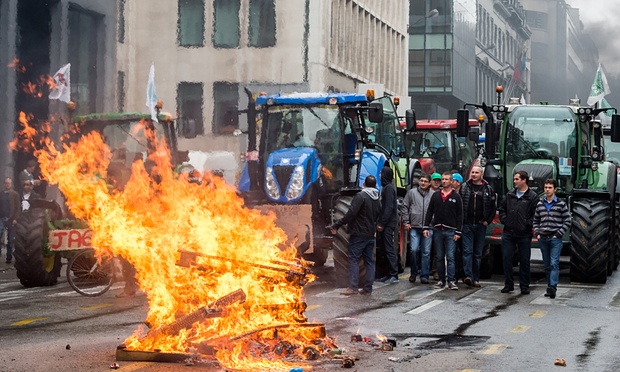
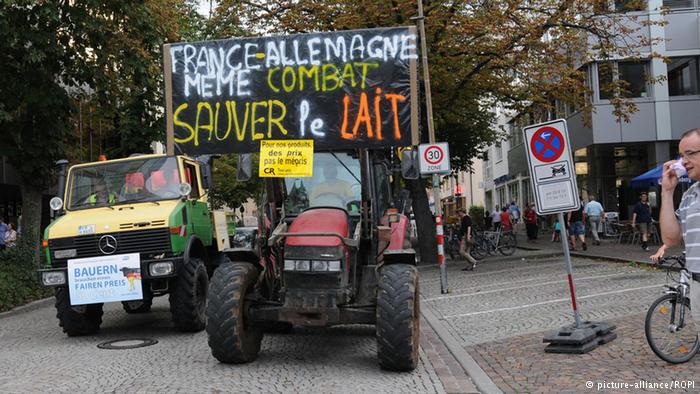
On 7th September, around 5000 European farmers demonstrated on the streets of Brussels due to falling dairy and meat prices. The demonstrators demand, amongst others, a review of the intervention system on the milk market, temporary reinstallation of milk quotas, some early direct payments to solve liquidity problems and a marketing fund assisting to sell agricultural products outside the EU.

While reading the news, an agricultural economist might have the following fundamental questions in his/her head.

1. The end of the quota system, an issue on the European policy agenda for many years, has resulted in limitless production, especially in countries with comparative advantages. However, it seems this crisis was very much unexpected at the Commission despite their economic studies dealing with the post-quota European milk market. Why are we so shocked about the simple fact that increasing supply decreases prices?

2. Farmers are complaining that the price of milk has just fallen dramatically and they are producing loss.… Read the rest

Lessons from the 2009 EU dairy market crisis

The EU dairy market is now recovering from the severe drop in milk prices in 2009. Perhaps the clearest sign of this recovery is the setting of export refunds on dairy products to zero since mid-November, as world market prices for dairy products have strengthened in recent months.

It is thus an opportune time to evaluate the EU’s response to the crisis, and to see what lessons might be drawn for how the Union can address similar problems in other farm sectors in the future. My view is that there is a lot to be learned from the dairy crisis, and that the outgoing Commissioner deserves credit for the way she handled it.

EU milk prices improving

Let us first review the evidence that the milk market is improving. The trends in the EU market prices (proxied by the German price and represented by the blue line) and the EU intervention price (the red line) for butter and skim milk powder (SMP) have been graphed by CLAL.it… Read the rest