Karl Falkenberg’s reflections on the CAP

Karl who, you might well ask? Well, Mr Falkenberg has just published a reflections paper setting out a European vision for sustainability which goes into some detail about his views on the future of EU agricultural policy. Indeed, one-fifth of his relatively short document is devoted to this topic. You might well shrug that yet another viewpoint added to the hundreds of others (including those aired on this blog) discussing how Europe’s Common Agricultural Policy should be reformed after 2020 is hardly worth getting exercised about. But Mr Falkenberg’s views may deserve more attention than most.

After all, Mr Falkenberg spent more than six years as Director-General in DG ENVI after a distinguished career in the Commission civil service including a stint as Deputy Director-General in DG TRADE. Perhaps more important, he was appointed in September 2015 as a Senior Advisor for Sustainable Development to the President of the European Commission, Jean-Claude Juncker.… Read the rest
Does farm size matter?

On October 20th next I will take part in a workshop organised by DG AGRI at the Milan EXPO on the subject “Structural realities in EU agriculture: Does farm size matter?” The aim of the workshop is to discuss the challenges and opportunities brought about by the structural change of the EU agricultural sector for a) the up- and downstream industries, b) EU rural areas and c) the sustainability of agricultural production in Europe.
The debate on farm size
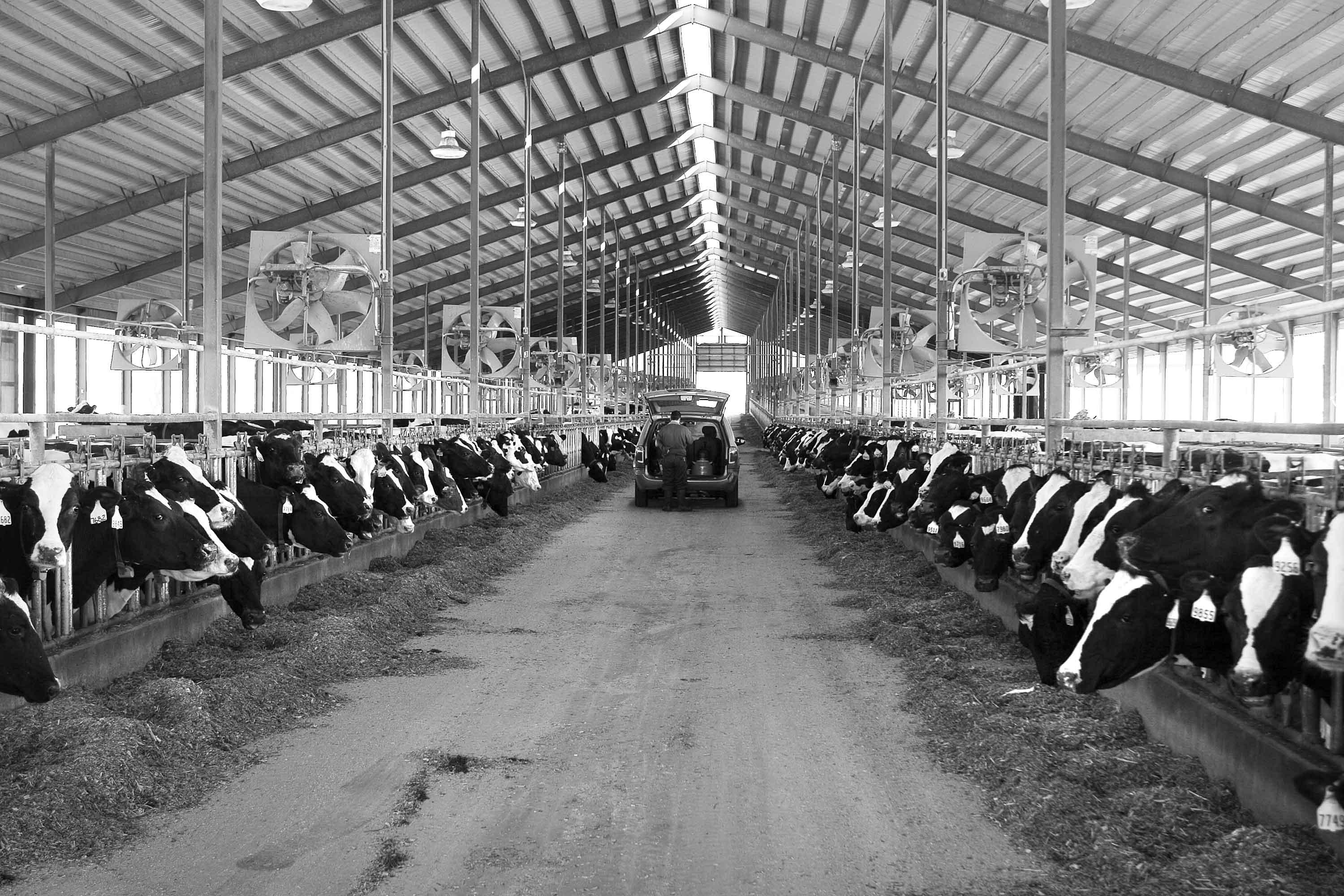
There is a long history in Europe of interest in the structure of agricultural holdings. Many European countries have had land legislation in place with the objective of maximising the number of farm holdings or limiting the maximum farm size. In recent decades, many of these restrictions have been removed, although rules limiting foreign investment in land still exist in a number of countries, particularly in the new member states. Nonetheless, the issue of farm size remains a controversial and emotional issue, as seen in the opposition to so-called ‘mega-dairies’ in a number of member states, and the introduction of the ‘redistributive payment’ option in Pillar 1 of the CAP permitting member states to make higher payments per hectare to smaller farms.… Read the rest

Food Wise 2025 agri-food strategy launched in Ireland

Last week the Irish government launched the latest in a series of rolling ten-year strategies for the Irish agri-food sector called Food Wise 2025 (FW2025). The report follows in the footsteps of Agri Food 2010 (published in 2000), Agri Vision 2015, Food Harvest 2020 (full disclosure: I was a member of the committees that drafted those two reports) and now Food Wise 2025. In this post, I review the latest strategy and comment, in particular, on its environmental implications.
While Food Harvest 2020 (FH2020) contained a number of detailed sectoral targets, Food Wise 2025 avoids this level of quantification and contains just four headline aspirations:
• increase the value of agri food exports by 85% to €19 billion,
• increase value added to the sector by 70% to €13 billion,
• increase the value of primary production by 65% to €10 billion.
• In turn, achieving these targets is expected to deliver a further 23,000 jobs in the agri food sector by 2025.… Read the rest

Delivering environmental benefits through agri-environment schemes

Downloaded from http://www.flickr.com/photos/13847552@N03/3906560447/ under Creative Commons licence

The ‘big idea’ in the Commission’s legislative proposals for the reform of the CAP post-2013 is greening, to be implemented by requiring all farmers in receipt of the basic payment to adopt three measures – crop diversification, ecological focus areas and the maintenance of permanent pasture – as appropriate. While there is a broad acceptance that the CAP should focus more on environmental objectives, there is still huge debate on the size of this shift and on the efficacy and relevance of the Commission’s proposals.
One of the main criticisms from member states has been the inflexibility of the proposals which are designed in a ‘one size fits all’ manner (for example, see the recent speech by UK Minister Caroline Spelman on the Commission’s greening proposals). Member states are seeking greater flexibility in the greening practices to be implemented, either in the form of a menu approach or through automatic qualification of farms following approved management practices as in organic farming, the so-called ‘green by definition’ approach.… Read the rest

The cost of flat-rate agri-environmental measures

The Commission’s proposals to require shallow, one-size-fits-all, green measures across the EU as a whole in return for a green payment in Pillar 1 have been widely criticised as overly prescriptive, yielding limited environmental benefits (‘greenwash’), administratively complicated for member states and unnecessarily costly in terms of the trade-off with food production.

I reviewed these criticisms in a recent note for the European Parliament’s COMAGRI (link to appear when the note is published shortly). In the note I favoured a continuation of the past CAP reform trajectory in which a larger share of the CAP budget would be shifted to Pillar 2 in order to allow more ambitious and targeted agri-environmental measures (AEM). The apparent unwillingness of the Council of Ministers to countenance a larger Pillar 2 budget (presumably because of the difficulties created by the need for co-financing as well as due to political opposition from farm groups) is the biggest political obstacle to this approach.… Read the rest

What is the likely cost of greening Pillar 1?

The Commission’s proposals for the design of direct payments after 2013 include a greening component which, according to the draft legislative proposal (yet to be released on 12 October next and thus subject to change) will be mandatory for farmers in receipt of the basic income payment – thus becoming what I called in an earlier post a form of super-cross-conditionality.

In the impact assessment to be released with the legislative proposal the Commission has made some estimates of the cost of implementing these green measures. In this post, I examine these costs using information in the draft version of the impact assessment (Annex 12 Impact of Scenarios on the Distribution of Direct Payments and Farm Income).

This version was completed before June 2011 and the favoured proposal in the draft regulation now differs somewhat from the version examined in June. In particular, the obligation to maintain a green cover during winter has been dropped, but on the other hand the area to be setaside under the ecological focus requirement has been increased from 5% to 7% (see this post for a summary of the draft direct payments regulation).… Read the rest

CAP Reform Conversations: Ariel Brunner, BirdLife International

In the second in a series of in-depth conversations with leading figures in the debate on the future of the European Union’s common agricultural policy, Jack Thurston speaks with Ariel Brunner, Head of EU Policy at BirdLife International.

BirdLife International is “a global partnership of conservation organisations that strives to conserve birds, their habitats and global biodiversity, working with people towards sustainability in the use of natural resources. BirdLife Partners operate in over one hundred countries and territories worldwide.”

Anyone who has been in and around Brussels policy circles over the past few years will know that Ariel Brunner is among the most knowledgeable and persuasive advocates for radical reform of the CAP. Recently been promoted from his role in charge of the agriculture policy brief, he is now BirdLife’s Head of EU Policy. Despite the new portfolio that includes big issues like climate change, he is certain to be in the mix at the crunch moments over the next year or two as the EU decides the future of the CAP.… Read the rest

Le Monde debates the CAP

Last Friday, Le Monde, the leading French daily newspaper, devoted a double-page spread on its comment pages to the common agricultural policy. Along with José Bové, Michiel A. Keyzer and Jean-Christophe Bureau I was invited to contribute an article to the debate. You can read it in French on the Le Monde website. I’ve posted an English version below.

Farming should protect Europe’s environmental resources not use them up

In 2009, farm incomes fell across the whole of the EU, not least in France. Dairy farms have been hardest hit with average prices down twenty per cent. This is despite the EU spending 55 billion euro on the common agricultural policy, one of whose aims is to ensure farmers a fair standard of living.

Not long ago the lists of who gets what from farm subsidies were considered ‘state secrets’. No wonder. They reveal that far from supporting small family farms, as the public might suppose, the CAP is lining the pockets of Europe’s biggest landowners and agri-businesses.… Read the rest

German call for reform of CAP payments

The German Council for Sustainable Development has just published a report highlighting the environmental damage caused by intensive agriculture and calling for a reform of the CAP direct payments system. It proposes a three-fold structure of payments: an environmental basic payment, a series of targeted agri-environmental payments for farmers who accept higher obligations, and a series of payments for high nature-value areas where the continuation of agricultural production is desirable but threatened on economic grounds.

For the environmental basic payment, it suggests that eligibility would be conditional on farmers turning over at least 10% of their area to environmentally-friendly husbandry with a view to maintaining a high level of biodiversity in the agricultural landscape throughout the EU.

The Council explicitly argues against the idea that farmers should be remunerated for fulfilling their statutory obligations with respect to the environment, animal welfare and food safety (cross compliance). It also justifies full EU financing of most of the payments “so long as these are directed to fulfilling EU objectives”, thus apparently advocating that some of the existing co-financed agri-environmental payments in Pillar 2 might be moved to Pillar 1 at least as far as financing modalities are concerned.… Read the rest