CAP support levels reach new high

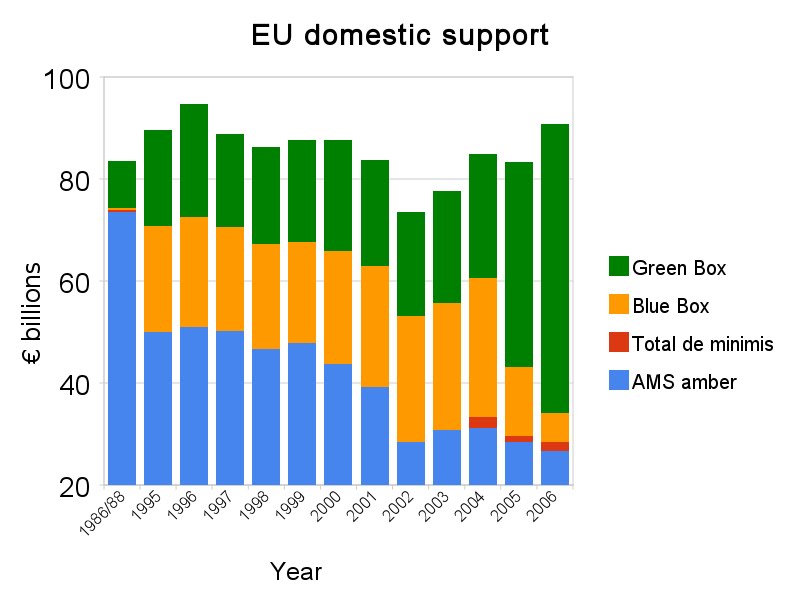
CAP subsidies as reported to the WTO reached a ten-year high of over €90 billion in the 2006/07 marketing year, but conveniently most of them have been parked in the allegedly non trade distorting green box, something that has provoked disquiet in Geneva. The EU notified €90.7 billion of support to the global trade body for 2006/2007 – up from €75.6 billion in 2002, when support was at its lowest in the last fifteen years.

More from ICTSD.… Read the rest

Le Monde debates the CAP

Last Friday, Le Monde, the leading French daily newspaper, devoted a double-page spread on its comment pages to the common agricultural policy. Along with José Bové, Michiel A. Keyzer and Jean-Christophe Bureau I was invited to contribute an article to the debate. You can read it in French on the Le Monde website. I’ve posted an English version below.

Farming should protect Europe’s environmental resources not use them up

In 2009, farm incomes fell across the whole of the EU, not least in France. Dairy farms have been hardest hit with average prices down twenty per cent. This is despite the EU spending 55 billion euro on the common agricultural policy, one of whose aims is to ensure farmers a fair standard of living.

Not long ago the lists of who gets what from farm subsidies were considered ‘state secrets’. No wonder. They reveal that far from supporting small family farms, as the public might suppose, the CAP is lining the pockets of Europe’s biggest landowners and agri-businesses.… Read the rest

Keeping an eye on the sugar market

Sugar did not experience the massive price spike in 2007-08 of other commodities, but has been making up for this with a tremendous increase in prices in 2009, driven by poor harvests in Brazil (the world’s largest producer) and strong import demand in India (the world’s largest importer). Raw sugar prices have risen from around 10 USc/lb in May 2008 to over 27 USc/lb currently, and market analysts expect further increases in the coming months.

The increase in world prices means that world prices are now above the (much reduced after the recent sugar reform) EU reference price. Recent price trends are shown in the following figure, reproduced from the SugarTraders website

sugarprices

Despite the very tight global market, EU sugar beet supplies have moved in the opposite direction. The EU expects a bumper sugar beet harvest this year, with beet yields among the best in years. Combined with imports from developing countries which now have free access to the EU market, the EU will have a considerable surplus over its domestic needs.… Read the rest