
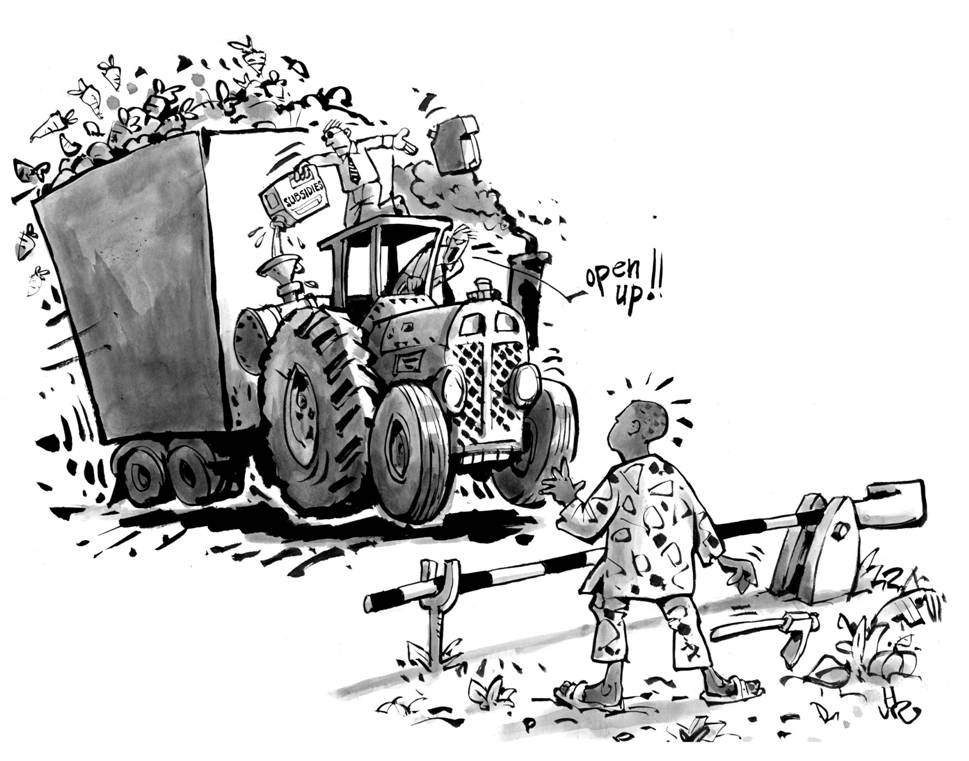
As long as I have been commenting on the CAP, its most criticized feature has been its use of export subsidies, also called export refunds. In the late 1980s and early 1990s, the EU was spending €10 billion a year on export subsidies, almost one-third of the CAP budget, in order to allow traders to get rid of the EU’s growing export surpluses by paying the difference between the EU’s high internal prices and lower world market prices.
Export subsidies allowed EU exporters to grab market share in import markets from competing exporters, put downward pressure on the level of world market prices, and competed unfairly with local producers in many developing countries. The damages caused were brilliantly highlighted and analyzed in a series of powerful reports and pamphlets by development NGOs such as Oxfam (Stop the Dumping! How EU Agricultural Subsidies are Damaging Livelihoods in the Developing World, 2002; Dumping on the World: How EU Sugar Policies Hurt Poor Countries, 2004); Aprodev (No More Chicken, Please, 2007; Preventing Unfair ‘Dumping’ of EU Subsidized Food, 2011); ActionAid (Milking the Poor; How EU Subsidies Hurt Dairy Producers in Bangladesh, 2011) and Brot für die Welt (Milk Dumping in Cameroon: Milk powder from the EU is affecting sales and endangering the livelihoods of dairy farmers in Cameroon, 2009).… Read the rest