Strengthening the role of young farmers in the future CAP

The European Council of Young Farmers (CEJA) has recently launched a campaign “Future Food Farmers” to raise public awareness of the impending age crisis in European agriculture. The aim of the campaign is to achieve progress on generational renewal in the agricultural sector in the future CAP.

The issue is highly relevant these days as only 6% of agricultural holders in the EU are below the age of 35, while one third are over 65. However, Member States show a great diversity in this issue as Poland has the highest share of young farmers in Europe (12%), while Portugal has the lowest (2%), according to Eurostat data. Neither figure is promising for the future, though.

The ‘young farmers problem’ affects European agriculture in many different ways. Just to mention a few, food security, biodiversity, rural job creation as well as productivity and competitiveness are at stake. Young farmers are faced with significant entry barriers (access to land and credit, investments, etc.),… Read the rest

MFF baton passes to Van Rompuy: further cuts proposed compared to Commission proposal

The President of the European Council Herman Van Rompuy has now tabled his proposal for expenditure and financing in the EU’s MFF for the 2014-2020 period for discussion. The document will be tabled at the next General Affairs Council scheduled for 20 November. It is then not clear if Van Rompuy will have time to rework the numbers before the 22-23 November European Council which will convene solely to discuss and, if things go according to plan, agree on the Council’s view on the new MFF.

The draft starts with the last version of the MFF negotiating box developed by the Cyprus Presidency but revises the numbers, again in a downward direction. This post takes a look at the main changes proposed in the headline numbers and in the proposals for agriculture contained in the Van Rompuy proposal.

Overall MFF expenditure

First, the ballpark figures. In evaluating the proposal it is necessary to be clear about what is being compared to what.… Read the rest

The US Farm Bill: Lessons for CAP Reform ?

The current CAP reform debate and the US Farm Bill debate have been taking place in parallel for several months. There are some interesting contrasts between the two procedures, which are explored in a note for the European Parliament. The note also describes the current situation of the Farm Bill negotiations, based on the proposals tabled by the Senate and by the Committee of Agriculture of the House of Representatives (not endorsed by the House as a whole, so far).

It is difficult to compare the proposed €370 billion for 7 years in the CAP (a crude estimate based on recent budget proposals) with some US$ 690 billion, i.e €523 billion budget projected in the US Senate Farm Bill proposal for an equivalent period of time (1). Indeed, almost 80 percent of the US Farm Bill budget is devoted to nutrition programs such as food stamps and school lunches that benefit primarily to the urban poor and the unemployed.… Read the rest

The nitty-gritty of CAP reform: the case of new entrants

David Barnes is the Scottish Government’s Deputy Director for Agriculture and Rural Development. He sits with his Minister around the Council of Agricultural Ministers’ table as the negotiations on the shape of the CAP2020 take place and, more interestingly, he blogs about it. His blog gives an insider’s view and a personal perspective on what is going on during the course of the negotiations.

Not surprisingly, his posts give some fascinating insights into the process.

The complexity of the CAP 2020 fineprint was demonstrated in one of his recent posts which addressed issues for new entrants that might arise under the Commission’s proposal for the allocation of entitlements under a new direct payments scheme. Written from the Scottish point of view, it illustrates the intricacies of developing legislation to cover all eventualities across all member states.

For example, the specific measure giving rise to the first difficulty he mentions for new entrants, the requirement that farmers receiving entitlements in 2014 should have activated at least one entitlement in 2011, was inserted into the Commission proposal at the last minute under pressure from the Irish.… Read the rest

European Parliament postpones vote on CAP reforms

COMAGRI and the European Parliament have decided to delay their voting on the Commission’s CAP reform proposals until the New Year, according to a report in the UK Farmers’ Guardian today. The new timetable means that it is unlikely that the new regulations can be agreed between the Council and the Parliament until late in the Irish Presidency in the first semester next year.

The latest CAP reform timetable is:

December 15

    – deadline for compromise amendments to be presented to Agriculture Committee.

January 23/24, 2013

    – CAP vote in Agriculture Committee.

March 2013

    – plenary vote in Parliament.

March 2013 onwards

    – trilogue negotiations between EU Commission, Parliament and EU Ministers.

Whether this means that the new CAP regulations can come into force on 1 January 2014 or not is unclear. In the press report quoted above, the NFU calls on the Agriculture Commissioner to prepare transitional rules on the presumption that this is unlikely to happen.… Read the rest

Cyprus Presidency issues second revised MFF negotiating box

The Cyprus Presidency yesterday circulated its second revision to the MFF negotiating box, this time inserting some figures for the individual MFF headings for the first time.

It is a cautious document in its attempts to balance the very different interests of the member states as they try to reach agreement on the MFF at the special November European Council meeting. Agricultural spending escapes lightly in the Presidency proposal which shows where budget reductions in the proposed 2014-2020 MFF might fall.

The preamble to the document states that it presents savings across all Headings of the MFF amounting to at least €50+ billion (this is in comparison to the Commission’s revised MFF proposal in July 2012). However, it goes on to note:

According to the assessment of the Presidency this is a starting point for delegations in order to reflect on the effects of reductions. More sizeable reductions are needed in order to reach a compromise.

Read the rest

October Agricultural Council continues CAP debate

Agricultural Ministers continued to grind through their discussions on CAP2020 issues under the Cypriot Presidency at the Agricultural Council meeting on 22 and 23 October earlier this week. Three issues were on the agenda: internal convergence, support for young farmers in Pillar 1, and a strengthened role for producer organisations. The background note prepared by the Presidency is here, and the conclusions of the meeting are reported here. The discussions took place on the basis of two questionnaires circulated by the Presidency on internal convergence and young farmers, respectively.

Internal convergence

Many member states applying the Single Payment Scheme (SPS) have voiced concerns about the difficulties in achieving a uniform level of distribution of direct support at national or regional level (internal convergence) by 2019. The Commission has indicated its openness to address these concerns and to consider suggestions for some flexibility in the rhythm and methodology of progress, without prejudice to the principle of achieving internal convergence.… Read the rest

What potential agroforestry holds for the future CAP?

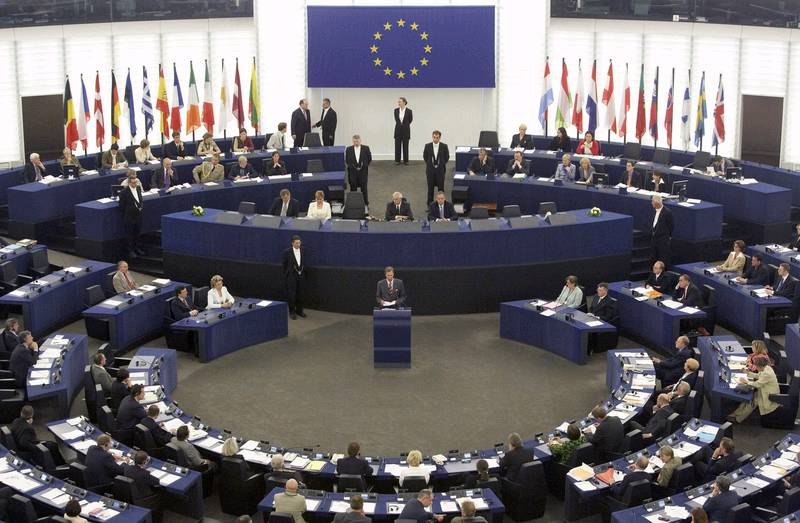
More than 80 policy makers, farmer’s representatives, NGOs and scientists got together on Wednesday this week in the European Parliament in Brussels to discuss the potential agroforestry holds for the future CAP. The event, entitled “Agroforestry: Trees for a Sustainable European Agriculture”, was organised and chaired by MEP Gaston Franco with the aim of promoting and supporting agroforestry at the European level. The programme (see agenda and presentations here) has brought together many speakers with various backgrounds and perspectives, resulting in a demonstration of a diverse and sophisticated picture of the field.

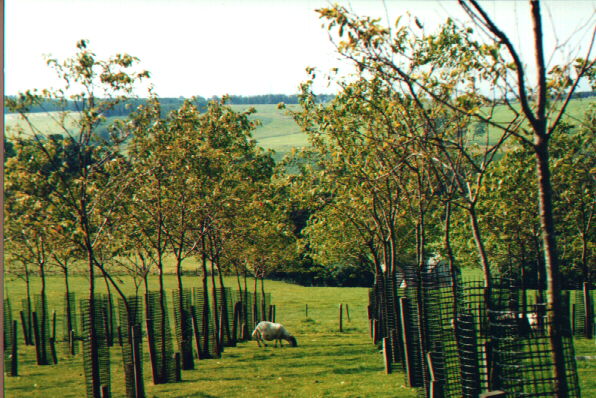
Agroforestry combines production and environmental protection in an innovative way, said Alain Canet – President of the French Agroforestry Association. It allows optimising the use of natural resources and produces biomass and biodiversity as well as it “offers innovative solutions to modern challenges of rural development,” argued Christian Dupraz, Researcher and President of the European Agroforestry Federation (EURAF).… Read the rest

Farmer-friendly ideas on greening

COPA-COGECA leaders are currently presenting their new detailed position on greening and green growth at the Congress of European Farmers, organised in Budapest on October 1?3, 2012. The theme of the Congress  is “The Future Common Agricultural Policy (CAP): How European Farmers can ensure Food Security Innovatively and Profitably”.

COPA-COGECA is largely against the greening proposals tabled by the Commission last year, saying that they make farmers do a lot more for less money, thereby leading to higher costs, higher food prices and more dependence on imports. They would also increase bureaucracy, of course. Therefore, the farmers’ organisation produced a list of six alternative measures to tackle the problem of greening in a farmer-friendly way: crop diversification (of rotated crops), a certification scheme (food), permanent grasses, replacement of EFAs by uncultivated land, break crops, protein crops.

These items, serving as an extended list of greening measures for farmers, reflects the diverse nature of European agriculture and allowing farmers to make choices more flexibly, based on their own farm situation – says COPA-COGECA.… Read the rest

How close is the EU to agreement on spending one trillion euro?

The negotiations on the 2014-2020 multiannual financial framework (MFF) are critical to the current CAP reform process. These negotiations will determine the size of the financial envelope as well as many of the key parameters which will decide the future shape of the CAP.

I have previously commented on the slow progress of the MFF negotiations (see here and here). In principle, these negotiations need to be completed under the Cypriot Presidency by the end of this year, to allow the negotiations on the future CAP regulations to be completed under the Irish Presidency in the first half of next year, so that the necessary supplemental legislation as well as member state rural programmes can be passed and approved by the end of 2013.

The official view remains that the negotiations are on track to reach a conclusion by the end of November (a special meeting of the European Council will be held on 22-23 November solely to discuss the MFF, with some suggestions that the meeting could be extended into the weekend if necessary).… Read the rest