Is a level playing field an argument for continued support to UK agriculture after Brexit?

We are pleased to publish this guest post by David Blandford (Penn State University) and Berkeley Hill (Imperial College London).

The President of the National Farmers Union (NFU) of England and Wales told the Food Manufacture Group’s Business Leaders’ Forum (Feb 14, 2017) that the NFU is currently actively lobbying the UK government to ensure that British farmers are not disadvantaged with respect to their main competitors in Europe following Brexit. The fear seems to be that cuts in the £3 billion of direct aid, which seem highly likely when Britain leaves the EU and its CAP, will result in a non-level playing field in which UK farmers are put at a competitive disadvantage. Thus, there will be a claim for government support to address the issue. This claim is of obvious importance to the shape of future national agricultural policy in the UK and should therefore be examined closely.… Read the rest
The CAP and agricultural employment

Phil Hogan, the EU Commissioner for Agriculture and Rural Development, has promised a Communication on modernising and simplifying the CAP before the end of 2017. One of the six broad objectives for the CAP set out in the Commission’s inception impact assessment is to “encourage a vibrant rural economy by fostering growth and jobs in rural areas and encouraging generational renewal”.
This builds on one of the three objectives for Pillar 2 rural development spending in the 2014-2020 period which is “achieving a balanced territorial development of rural economies and communities including the creation and maintenance of employment” (Art. 4, Regulation (EU) No 1305/2013).
It also follows on Commission President Juncker’s mission letter to the incoming Commissioner in October 2014 which highlighted the importance of the Commission’s jobs, growth and investment agenda. Hogan was asked to ensure “that rural development spending is well integrated into jobs- and growth-generating investment strategies at national and regional level”, to implement the recently agreed CAP reform “so as to maximise its contribution to our jobs and growth agenda”, and to contribute to the 2016 review of the Multiannual Financial Framework “by identifying ways of further increasing the focus of the CAP on jobs, growth, investment and competitiveness”.… Read the rest

COMAGRI co-rapporteur proposes Omnibus Regulation amendments

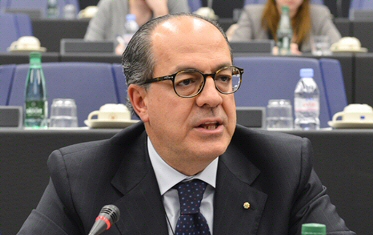
We are pleased to bring you this guest post by Paolo de Castro MEP who is a co-rapporteur for the European Parliament’s AGRI Committee on the so-called Omnibus Regulation which proposes to amend the CAP basic acts with a view to their simplification. Mr de Castro introduced his draft report at the AGRI Committee last Monday 13 March, and it is now open for amendment by other AGRI Committee members until March 21st. The following is an edited version of his remarks.

The Omnibus proposal represents, despite its significant management and administrative complexity, an important opportunity to improve and solve the major issues that our farmers have been facing over the first three years of application of the new CAP. We welcome such initiative from the European Commission, but I believe the Parliament has the duty to make the Commission’s proposals more ambitious, while complying with the two main objectives of the overall text, which are procedural simplification and red tape cutting.… Read the rest

The viability of EU farms

Economic sustainability is usually taken to be one of the three legs of the sustainability concept (the others being environmental and social sustainability – hence the phrase ‘people, planet, profit’). But what do we know about the economic sustainability of EU farming and how to measure it? A recent paper by researchers (Cathal O’Donoghue, Simon Devisme, Mary Ryan, Ricky Conneely, Patrick Gillespie and Hans Vrolijk) participating in the FLINT project have now used a pilot dataset collected at farm level in 8 Member States to focus attention on this issue.
The FLINT (Farm Level Indicators for New Topics) research project investigates the feasibility of providing policy-makers and the agro-food industry with farm-level indicators on sustainability and other relevant new issues. The project established a pilot network of around 1100 farms already participating in the FADN network in nine Member States to investigate the feasibility of collecting these indicators. Having demonstrated the feasibility of collecting a set of relevant indicators on these pilot farms, the project is recommending that the FADN sample should be reduced from 85.000 to 75.000 farms to have capacity for sustainability data on 15.000 farms.… Read the rest

AGRIFISH Council meeting underlines pressures to reverse CAP reform

Agricultural Ministers had a round table discussion on the future of the CAP at yesterday’s AGRIFISH Council meeting in Brussels. This was based on an orientation paper prepared by the Maltese Presidency.
The orientation paper identified six CAP priorities. These included the three previously identified by the Commissioner – building resilience, responding to environmental challenges, and generational renewal – and three others – investing in rural viability and vitality, maintaining a market orientation and strengthening farmers’ position in the food chain. Ministers were invited to answer the following questions:

    In your view, what would be most effective way to address the CAP priorities?
    Without prejudice to the overall financing of the CAP, do you think that a rebalancing exercise should take place between the first and the second pillar of the CAP in order to deliver on these priorities?

The round table was held in closed session, and little information was provided at the subsequent press conference on the range of views expressed by individual Ministers.… Read the rest

COMAGRI rapporteur’s draft amendments to Omnibus Regulation

The COMAGRI rapporteur on the agricultural articles of the Omnibus Regulation Paolo de Castro (the other proposed co-rapporteur Albert Dess having at least temporarily dropped out of sight) has now circulated his Draft Opinion containing proposed amendments to the Committee to be debated later this month. The Omnibus Regulation (which is actually a proposal for a Regulation on the financial rules applicable to the general budget of the Union but as well amends a number of sectoral regulations) is the first opportunity to make changes to the CAP basic acts since the 2013 CAP reform was concluded.
In this previous post, I reported on the contributions made during the first debate on the Omnibus Regulation in COMAGRI in December last year. Here, the tone from the principal political group spokespersons was sober and measured, with speakers emphasising that the Committee should adopt a narrow interpretation of its powers to amend the proposal, keeping in mind that its purpose is to deliver simplification of the CAP both for managing authorities and for farmers.… Read the rest

Britain’s policy for agriculture post-Brexit

We are pleased to carry this guest post by Professor Berkeley Hill, Emeritus Professor of Policy Analysis at the University of London.
The surprise win by the Conservative Party in the 2015 General Election left it with the unwelcome obligation to carry out a referendum on UK membership of the EU. Political insiders believe this was one of the Conservative Party election manifesto proposals included to placate the right wing of the party, which David Cameron was intending to sacrifice in order to bring the Liberal Democrats into a renewed coalition government under his Premiership.
However, the Conservative Party won sufficient seats to enter government on its own. Added to this, the result of the referendum of June 2016 was contrary to the expectations of the Conservative government. So it was not surprising that the government departments responsible for agriculture in the UK (domestic policy is a devolved responsibility for the separate administrations in England, Wales, Scotland, and Northern Ireland) had no ready-made national policy plans on their desks which could be made operational in time for Brexit in, say, 2019 or 2020.… Read the rest

What can we expect following the CAP public consultation?

DG AGRI launched its 12-week public consultation on modernising and simplifying the CAP on 2 February last. The publication of the on-line consultation was accompanied by an inception impact assessment to support the preparation of a Commission Communication on modernising and simplifying the CAP which is expected late this year, possibly in November.

According to the Q&A memorandum prepared by DG AGRI which accompanied these documents, the stakeholder consultation is expected to provide opinion-based information. “It is an opportunity to take into account societal demands in the policy discussions on the future of the CAP and adapt it to better integrate the new political priorities in an inclusive and comprehensive manner.” The impact assessment, on the other hand, proceeds on an evidence basis. “It identifies challenges, outlines objectives, and draws up policy options to achieve them. Impacts of these policy options are then assessed, considering economic, social and environmental dimensions.Read the rest

GMO decision-making and the potential impact of Brexit

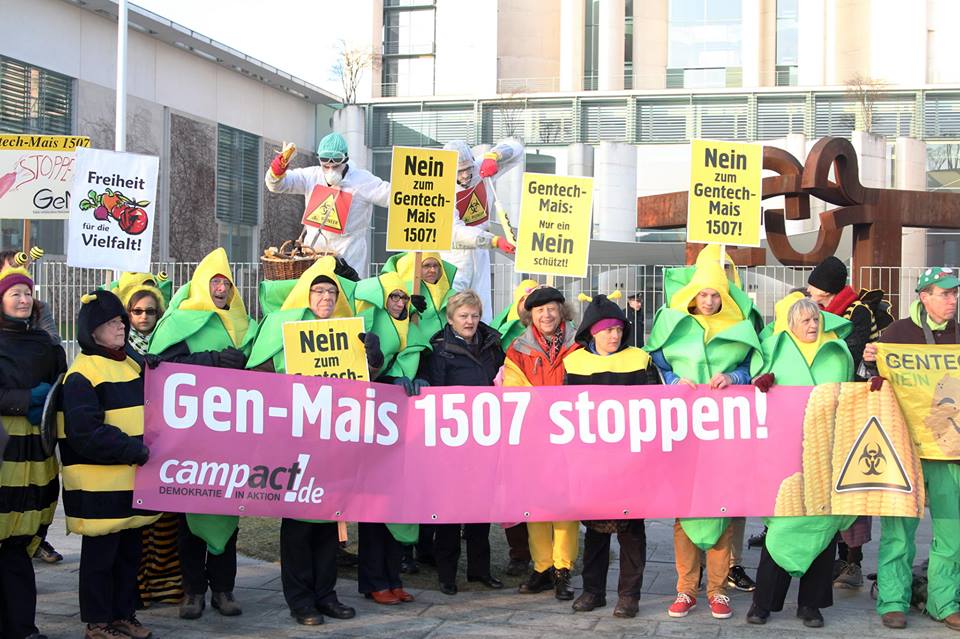
The EU’s paralysis with respect to decision-making on genetically-modified crops was illustrated once again at last Friday’s (27 January 2017) meeting of the Standing Committee on Plants, Animals, Food and Feed when the committee failed to reach a qualified majority either for or against the renewal of the cultivation licence for the GM maize MON810 (currently the only GM crop licensed for cultivation in the EU) as well as on authorisations for cultivation of two other GM varieties ‘maize 1507’ and ‘Bt11’.

This is despite the fact that 19 Member States have excluded all or part of their territory from the cultivation of these three GMOs, pursuant to the provisions of Directive (EU) 2015/412 (the ‘cultivation opt-out’ directive).

The Commission’s expectation that allowing countries to ‘opt out’ of cultivation of an approved GM crop would soften their opposition to allowing other countries to proceed with cultivation if they so wished has only been partially fulfilled.… Read the rest

Establishing the UK’s non-exempt limit on agricultural support after Brexit

One of the issues the UK must address in establishing its WTO schedule of commitments post-Brexit is the limit it will have on certain types of domestic support it can provide to its farmers. This limit will, in turn, have implications for the way in which the UK and its devolved administrations can design their post-Brexit agricultural policies, assuming that they might wish to continue to provide some support to their farmers.

Domestic support in the WTO is measured as an Aggregate Measurement of Support, or AMS. Countries which provided non-exempt domestic support in the base period (1986-88) for commitments under the Uruguay Round Agreement on Agriculture (AoA) entered a Total AMS commitment in Part IV of their WTO schedules of commitments (their Bound Total AMS or BTAMS). This sets the maximum limit on their allowed non-exempt support (often referred to as the Amber Box or, inaccurately, as trade-distorting support).

Where no Total AMS commitment exists in Part IV of a Member’s Schedule, a WTO Member is not allowed to provide support to agricultural producers in excess of the relevant de minimis levels (Art 7, AoA).… Read the rest