During the next two days (14-15 September) the Luxembourg Presidency invites agricultural ministers to an informal Council meeting which had been intended to focus on agriculture and climate change. Because of Commissioner Hogan’s absence through illness from last week’s Council meeting it seems that a good part of the meeting will be devoted to continuing discussions on the EU response to low milk prices. The time available for the discussion on how agriculture can best address the challenges of mitigating climate change will thus be curtailed.
However, the Luxembourg Presidency has prepared a very useful background paper intended to set the scene for discussions between the Ministers in three working groups. This paper, entitled Towards Climate-Smart Agriculture, does a very good job in setting out the context and in describing some of the options open in moving to a climate-smart agriculture.
What the Presidency paper on climate-smart agriculture does not discuss
However, there are a few striking omissions in the Presidency paper. One is the absence of any indication of the scale of the future challenge facing the agriculture sector (and the agriculture ministers). The projections in the Commission’s report Trends to 2050: Reference Scenario 2013 based on the GAINS model (discussed further in this post) suggest that almost no change will occur in agricultural emissions between 2005 and 2030 under a business-as-usual scenario. This compares to the -30% reduction target set by the European Council last October for emissions in all sectors outside the Emissions Trading Scheme (non-ETS sectors) which include agriculture.
Now agriculture accounts for just 17% of EU non-ETS emissions on average (although for some countries, such as Ireland, this share is much higher at 45%). This means that agriculture in many member states could get a ‘get out of jail free’ card provided greater efforts are made in the other non-ETS sectors such as transport, waste disposal and energy use by households, small industries and the commercial sector. Nonetheless, it is interesting that the Presidency paper does not try to quantify the scale of the challenge facing agriculture in contributing to the EU’s mitigation efforts in the period to 2030.
This omission may be due to the fact that parallel negotiations are taking place among climate ministers on how agriculture and the land use sector should be integrated into the EU’s overall climate policy framework for 2030 (see my discussion here). The outcome of these negotiations will determine what agriculture is asked to do in terms of mitigation in the next decade.
The main source of agriculture’s emissions is linked to animal production and specifically ruminants. However, the Presidency paper accepts that it is difficult to reduce GHGs emitted during enteric fermentation. It therefore concludes that “The largest impact that can realistically be achieved to reduce agricultural GHG emissions in the EU is to tackle manure management and manure valorization (26% of the agricultural emissions).” The absence of any discussion of demand-side measures which might seek to influence the composition of what we eat, while not surprising in a forum of agriculture ministers, is a second omission which should be underlined.
A third omission is the very limited discussion of how to design policy incentives and levers to encourage agriculture to become more climate-efficient. The Presidency paper mentions incentives only in the context of promoting rapid coverage of manure storage and small-scale co-digestion biogas plants. However, Working Group 3 at the informal Council, which is to look at how awareness of the impact of agricultural activity on climate change can be translated into action to mitigate climate change, may encourage agricultural ministers to address this question.
Excessive greenhouse gas emissions occur because of a market failure; the cost to society of agricultural emissions and/or sequestration is not reflected through the price mechanism in the cost of agricultural production. How to overcome this market failure in agriculture is highly contested both because of the technical difficulties (how to measure and monitor emissions and sequestration on millions of farms) and political economy issues (should carbon emissions be treated like other pollutants as a cost that farmers and, ultimately, consumers should bear through higher prices, or should farmers be incentivised through subsidies to reduce emissions so that the cost of mitigation is ultimately borne by the taxpayer).
In practice, under present UNFCCC accounting rules, emissions are counted where food is produced and not where it is consumed. Internalising the cost of emissions, for example, through tighter regulations or some form of carbon levy, would raise the cost of production for farmers but without necessarily passing this cost on to consumers unless all competing products including imports are subject to the same rules.
As the Presidency paper notes: “At constant demand levels for agricultural products, a decrease in production in the EU would actually lead to a geographic transfer to non-EU countries of production as well as of GHG emissions, which in turn would lead to a global rise in emissions from agricultural production.” This ‘carbon leakage’ argument is mobilised as a powerful argument against any attempt to introduce dissuasive measures to limit carbon emissions from agriculture, so that only self-financing measures (which lead to increased farm productivity and thus increased carbon efficiency) and subsidies are deemed acceptable mitigation measures.
Fleshing out the policy context in the case of Ireland
In an address to the Irish Agricultural Science Association Annual Conference last week, I tried to tease out some of these issues in the specific context of Irish agriculture which has ambitious targets for growth set out in its latest ten-year strategy Food Wise 2025. Because agricultural emissions in Ireland make up 45% of its non-ETS emissions, a ceiling on non-ETS emissions is a much more binding constraint on agricultural production in Ireland than it is in other EU member states. I suggest it acts as a de facto quota because, to the extent that the ceiling is exceeded, it will require the purchase of credits from other member states or, as a temporary measure, the payment of a fine to the EU Commission.
There are various options to allow agricultural expansion in Ireland while staying within the country’s non-ETS ceiling. First, the ceiling itself has still to be finalised in the Brussels negotiations and in setting the ceiling there is scope for recognising the difficulties in reducing livestock emissions. Second, although agriculture makes up almost half of Irish non-ETS emissions, it shares this ceiling with emissions from transport, the waste sector and energy emissions from households, small industries and the commercial sector. To the extent that emissions from these sectors can be reduced even more quickly, it leaves scope for greater emissions from agriculture, but the converse is also the case.
Third, the agriculture and land use sectors are unique in that they can act as carbon sinks as well as sources. To the extent that agriculture and land use can get credit for increased sequestration through increases in soil carbon, biomass and forestry, this will enlarge the scope the emissions from activities such as livestock rearing and the use of fertilisers.
Fourth, and the focus of the Luxembourg Presidency paper, there is great scope for increasing the carbon efficiency of Irish agriculture by reducing the amount of carbon per unit of output. Many of these measures will help farmers ‘to produce more with less’, and will directly contribute to improving farm productivity and thus farm income.
However, the question remains how to incentivise farmers to make the necessary decisions either to change their land use or to improve carbon efficiency within their existing enterprises. Knowledge transfer and creating an awareness of the opportunities to both increase income and reduce carbon emissions is obviously essential.
But, on its own, greater awareness is unlikely to be adequate to reduce Ireland’s agricultural emissions sufficiently to stay within the country’s overall non-ETS ceiling after 2020. We also need a policy environment which sends the right signals to farmers to incentivise them to make the necessary changes. Policy signals can take the form of targeted subsidies, standards set by private sector buyers (supermarkets, processors) seeking to reduce the carbon footprint of their entire supply chain, or dissuasive instruments such as regulations or a carbon levy.
In my remarks, I discuss some of the challenges to putting such a policy environment in place. Although the context relates specifically to Ireland, the issues have a wider relevance also in other EU member states. I hope in the comments section that readers will be encouraged to submit their own observations on the issues raised.
The extended version of my ASA remarks on the challenge of agricultural expansion in a carbon-constrained world can be downloaded here.
This post was written by Alan Matthews.
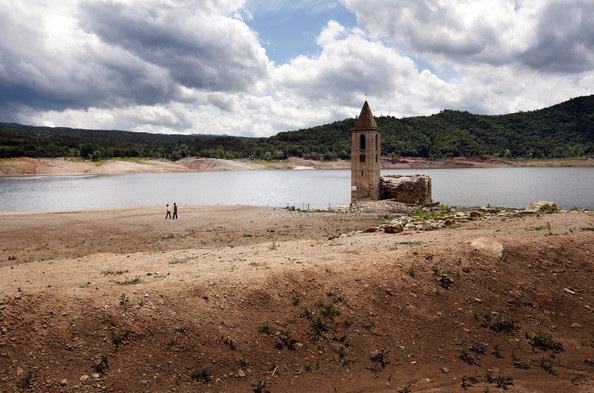
Photo credit: Zimbio Drought in Spain
Agriculture in the 2030 Climate and Energy Package
The European Council comprising the EU Heads of State and Government will meet at the end of this week 23-24 October to take a final decision, among other issues, on the EU’s new climate and energy policy framework. The plan is to agree on the target level of GHG emission reductions for 2030 so that the EU can submit its contribution for the conclusion of a global climate agreement in Paris at the end of next year at the latest by the first quarter of 2015, in line with the timeline agreed by the UNFCCC. However, according to the EUObserver, there are still significant differences of view on the targets between member states, and deadlock at the meeting is not ruled out.
The state of play
The Commission Communication presenting the climate and energy framework was published in January this year and contained the following elements:
- – a greenhouse gas emissions reduction target of 40% below 1990 levels, to be achieved only through domestic measures (without the use of international credits);
- – this overall target to be met through a reduction of 43% in emissions from the ETS sector and a reduction of 30% in emission from the non-ETS sector, both compared to 2005.
- – a renewable energy target of at least 27% of energy consumption binding on the EU but not on the individual Member States, which would have the flexibility to set their own national objectives;
- – an acknowledgement that energy efficiency will be a key component of the 2030 framework while postponing setting a target until its review of the energy efficiency directive was concluded later in 2014.
- – no new targets for renewable energy or the greenhouse gas intensity of fuels used in the transport sector or any other sub-sector after 2020 would be set.
The European Parliament in a resolution in February 2014 called for three EU targets: to reduce greenhouse gas emissions by at least 40% compared to 1990 level, a binding energy efficiency target of 40% based on shared national efforts, and a binding minimum of 30% renewable energy consumption. The Parliament also wanted to keep the Fuel Quality Directive, which sets targets for reducing the carbon intensity of transport fuels, which the Commission’s proposal would see scrapped by 2020.
This vote of the previous Parliament was a divided one, and the resolution was adopted by 341 votes to 263, with 26 abstentions. The amendment to make the renewables target binding on a national level was carried by a narrower 347 to 308 votes. The majority was formed by the liberal, green, and social democratic parties, with the no-votes made by the conservative groups, including the Parliament’s largest group – the European People’s Party. How the new Parliament with its changed composition will react to the Commission’s eventual legislative proposals cannot be known at this time.
In July 2014 the Commission proposed an indicative 30% target for energy efficiency (evaluated against a baseline for projected energy consumption) in its Energy Efficiency Communication. Prior to this seven member states had written a letter to the Commission calling for a binding energy efficiency target for 2030.
The latest leaked draft (dated 13 October 2014) of the proposed European Council conclusions supports the Commission proposals, i.e. 40% overall GHG reduction target, 27% binding EU target for renewable energy and an indicative 30% target for energy efficiency savings. More ambitious member states want higher and binding targets, while less ambitious member states want lower targets. Ministers in the Polish government, for example, have threatened to veto an agreement which commits to an overall 40% GHG emission reduction target. Update 20 Oct 2014: Euractiv has a very nice table summarising member state positions on the targets going into the European Council meeting.
Apart from the targets, another bone of contention is the size of the investment aid package to help countries in central and eastern Europe to modernise their energy and industrial sectors and to meet whatever targets are agreed.
Where agriculture fits in
The EU’s climate strategy has a heavy focus on energy use. The European Council discussions are likely to reflect this, with uncertainty over Russian gas supplies weighing heavily, and will deal mainly with measures to decarbonise the energy sector by moving away from fossil fuels, further measures aimed at enhancing Europe’s energy security and on specific 2030 interconnection objectives.
Agriculture, and non-CO2 emissions in general, are not likely to figure prominently in the discussions, despite the fact that agriculture contributes over 10% of total EU28 emissions and 18% of emissions in the non-ETS (Emission Trading Scheme) sector governed by the Effort Sharing Decision (ESD).
Agriculture will also be affected by the decisions taken, through the implications of the agreed targets on the cost of energy to agriculture and on the likely demand for bioenergy (both solid biomass for heating and energy and liquid biofuels for transport) to be supplied by agriculture, as well as through the implied level of ambition for mitigation in the agricultural sector.
It is important to stress that there is not currently a specific reduction target for agricultural emissions. Agriculture is part of the non-ETS sector where each member state has binding national emission ceilings for this sector under the 2009 Effort Sharing Decision (we will refer to these as ESD sectors and ESD ceilings in this post although ESD ceilings for the non-ETS sector have been set at the EU level only since 2013). Thus, the emphasis given to reducing agricultural emissions can and will differ in each member state although, under current climate legislation which will probably be rolled over, no sector can be a priori excluded from reduction obligations.
The extent to which each member state will want to reduce its agricultural emissions will depend on the current importance of its agricultural emissions in its overall ESD sector, on the nature of those agricultural emissions (which will determine the technical difficulty of making reductions and thus affect the marginal abatement cost of reducing emissions in agriculture relative to other sectors), and on its overall required reduction in ESD emissions (which is determined by a burden-sharing formula).
In the following table, I have ranked EU member states according to a ‘pain index’ which measures the degree of difficulty each country will face in meeting its projected 2030 ESD ceiling due to its agricultural emissions. The projected 2030 ESD ceiling for each country is based on a burden-sharing formula that has not yet been formally approved, but which was contained in a leaked version of the European Council draft conclusions dated 1 September 2014.
The first element entering the index is the required reduction in ESD emissions in each member state between 2012 and 2030.
The second element entering the index is the projected share of agricultural emissions in total ESD emissions in 2030, assuming that agricultural emissions in 2030 are the same as in 2012 as a proxy for a ‘business-as-usual’ scenario.
The third element is the share of agricultural emissions from enteric fermentation which is used as a proxy for the degree of technical difficulty facing each country in reducing agricultural emissions. Further details on the construction of the ‘pain index’ are given in the Technical Note at the bottom of this post and the raw data are provided in this workbook.

In looking at the ‘pain index’ rankings, Ireland stands out in a league of its own as the country facing the biggest challenge, followed by Denmark and France. Ireland stands at the top of the rankings because (a) it is the country with the largest projected share of agricultural emissions in total ESD (non-ETS) emissions in 2030 if agricultural emissions are held stable at the 2012 level (b) because it has the highest share of enteric fermentation emissions in its agricultural emissions of any EU country, while (c) its projected reduction in its ESD emissions over the 2012-2030 period is close to the EU average.
Denmark and France follow at the head of the table because of their projected high shares of agricultural emissions in their ESD ceilings in 2030, while their share of enteric fermentation emissions is around the EU average. However, their projected reduction in their overall ESD emissions over the period 2012-2030 is at the higher end of the range, which will pose a challenge to their agricultural sectors, although not to the same extent as in Ireland.
A general conclusion from the table is that the challenge of reducing agricultural emissions in the years to 2030 will be very different from country to country if the European Council adopts the proposed targets.
The treatment of agriculture in the 2030 GHG emission targets
Not surprisingly, the Irish have been most active in arguing that emissions from agriculture should receive special (favourable) treatment when setting EU climate targets for 2030, or at least that Ireland should be treated as a special case because of the high share of agricultural emissions in its total ESD emissions (see this article and this article from the Irish Times).
The Commission’s January 2014 Communication seemed to recognise that agricultural emissions needed special treatment:
The agriculture, land use change and forestry sectors serve multiple objectives such as the production of food, feed, raw materials and energy, raising environmental quality and contributing to climate mitigation and adaptation. The combined sectors both emit and remove greenhouse gases from the atmosphere. For example, emissions are associated with livestock production and fertilizer use while grassland management or agro-forestry measures can remove CO2 from the atmosphere.
Currently these emissions and removals are treated in different parts of the EU’s climate policy. Non-CO2 emissions from agriculture are treated in the Effort Sharing Decision while CO2 emissions and removals related to land-use and forestry are excluded from the EU’s domestic reduction target but are accounted for under international commitments. To ensure that all sectors contribute in a cost-effective way to the mitigation efforts, agriculture, land-use, land-use change and forestry should be included in the GHG reduction target for 2030. Further analysis will be undertaken with the aim of assessing the mitigation potential and most appropriate policy approach which could, for example, use a future Effort Sharing Decision governing the non-ETS GHG emissions or an explicit separate pillar, or a combination of both. Accompanying policy measures should also build on the experiences from “greening” under the Common Agricultural Policy and ensure coherence with other Union policies.
The leaked draft of the European Council conclusions from 1 September 2014 contained the following statement:
The EC recognises specific circumstances in the Member States, in particular as regards limited possibilities to reduce emissions in some sectors and agrees that countries with exceptionally high emissions in the agriculture sector [i.e. aver 40%] should be allowed to offset these emissions with the reductions from afforestation.
However, it seems that other member states may have baulked at this rather obvious concession to Ireland. This rather firm commitment has been removed in the latest draft of the European Council conclusions dated 13 October 2014, which now reads:
the multiple objectives of the agriculture and land use sector should be acknowledged, as well as the need to ensure coherence between the EU’s food security and climate change objectives. The European Council invites the Commission to examine the best means of encouraging the sustainable intensification of food production, while optimising the sector’s contribution to greenhouse gas mitigation and sequestration.
Update 21 October 2014. In a more recent draft of the European Council conclusions, dated 16 October 2014, the paragraph on agriculture has been strengthened again, with a more specific commitment to include LULUCF in the 2030 framework before 2020.
the multiple objectives of the agriculture and land use sector should be acknowledged, as well as the need to ensure coherence between the EU’s food security and climate change objectives. The European Council invites the Commission to examine the best means of encouraging the sustainable intensification of food production, while optimising the sector’s contribution to greenhouse gas mitigation and sequestration. Policy on how to include Land Use, Land Use Change and Forestry into the 2030 greenhouse gas mitigation framework will be established before 2020.
If this wording is confirmed at the European Council meeting at the end of this week, then the ball is returned to the Commission and we will have to wait for its legislative proposals. Whether agriculture requires special treatment in elaborating the EU’s GHG reduction targets for 2030 and, if so, how best to achieve this, remains an open question. Thus, it will remain unclear for some time just exactly how agriculture will be treated under EU climate change targets for 2030. However, an important first step will be taken if the European Council succeeds in agreeing 2030 emission reduction targets at its meeting later this week.
Update 24 October 2014. The text agreed at the European Council meeting on 23 October reads as follows:
the multiple objectives of the agriculture and land use sector, with their lower mitigation potential, should be acknowledged, as well as the need to ensure coherence between the EU’s food security and climate change objectives. The European Council invites the Commission to examine the best means of encouraging the sustainable intensification of food production, while optimising the sector’s contribution to greenhouse gas mitigation and sequestration, including through afforestation. Policy on how to include Land Use, Land Use Change and Forestry into the 2030 greenhouse gas mitigation framework will be established as soon as technical conditions allow and in any case before 2020.
Technical Note
The ‘pain index’ measures the degree of difficulty a country will face in meeting its 2030 ESD ceiling due to its agricultural emissions. The index is constructed for each country by modifying the projected share of its agricultural emissions in its 2030 ESD ceiling by the degree to which the share of enteric fermentation emissions in its agricultural emissions is above or below the EU28 average, and by the degree to which its projected ESD emissions reduction requirement between 2012 and 2030 differs from the EU average reduction requirement.
Formally, the index is calculated as (Share of agricultural emissions in the 2030 ESD ceiling) * (1 + percentage point deviation from EU28 average figure for share of enteric fermentation emissions in agricultural emissions in 2012) * (1 – percentage point deviation from EU28 figure for required ESD emissions reduction between 2012 and 2030). This means that the agricultural sector will be more affected by the 2030 ESD targets agreed for each country:
• the larger the expected share of agricultural emissions in total ESD emissions in 2030 assuming a business-as-usual scenario (here defined as assuming the same level of agricultural emissions in 2030 as in 2012)
• the larger the share of agricultural emissions coming from ruminant livestock
• the more onerous the ESD emissions reduction target agreed under the burden-sharing formula.
Each country’s projected ESD ceiling in 2030 has been calculated by applying the burden-sharing formula for the period 2020-2030 in the 1 September 2014 leaked draft of the European Council conclusions to base year 2005 non-ETS emissions.
As these 2005 base year non-ETS emissions do not appear to be published, I have derived them from the 2009 Effort Sharing Decision by applying the burden-sharing formula (to base year 2005) agreed for the 2013-2020 period to the 2020 ESD ceiling for each country.
Agricultural emissions are primarily methane from enteric fermentation and manure management, and nitrous oxide emissions from manure management and agricultural soils (there can also be emissions from rice cultivation and from the burning of agricultural stubbles, but these are tiny sources in the EU).
While technical options exist to reduce emissions from manure management and agricultural soils, feasible technical options do not yet exist to reduce enteric fermentation emissions (apart from general efficiency increases which can reduce emissions per unit of output). There are proposals to reduce methane emissions from enteric fermentation by altering, for example, the genetic make-up of ruminants or the composition of their feed, but these do not seem to be cost-effective in the short-run and these emissions are thus particularly difficult to tackle. Therefore, I have used the share of agricultural emissions from enteric fermentation as a proxy for the degree of technical difficulty facing each country in reducing agricultural emissions.
As in any multi-dimensional index, it is possible to argue whether the implied weights given to the three dimensions are appropriate. Weighting the required reduction in ESD emissions more heavily, for example, would alter the country rankings. It would also have been interesting to include each country’s projected growth rate in agricultural production in the index: those countries where production is expected to remain stable or to fall will have less concern about reducing agricultural emissions than those countries, such as Ireland, projecting positive growth. Lack of reliable projection data at the country level meant that this is not possible.
This post was written by Alan Matthews.
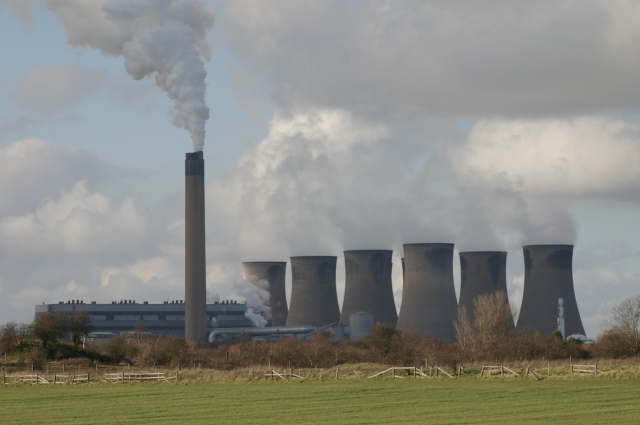
Photo credit: © Copyright Mr T and licensed for reuse under this Creative Commons Licence.