An extraordinary meeting of the Agriculture Council will be held tomorrow Monday 7 September to discuss the difficult situation on agricultural markets. The Luxembourg Presidency has floated a number of ideas for discussion to address problems in the dairy, pork and fruit and vegetable markets, and the Commissioner is expected to table a package of measures.
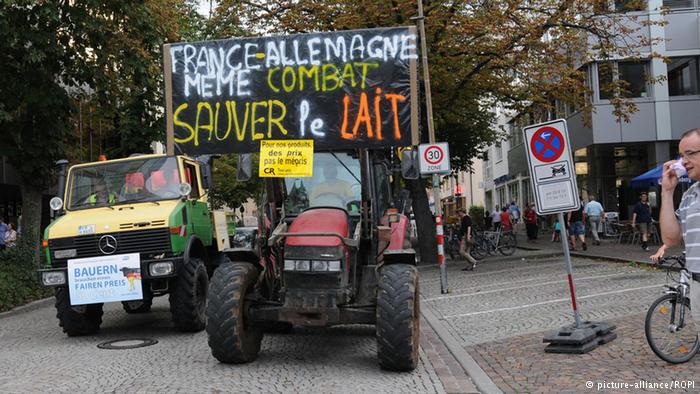
Farmers will be out in force in Brussels to make their case for further assistance to the sector. In this post, I look at the options being discussed to address the dairy situation in particular. In a separate post, I examine the background to the milk market situation to explain why farmers will be protesting in Brussels tomorrow.
The Presidency proposals of particular relevance to dairy farmers include:
• Returning “at least part of the funds collected by way of the 2014/15 milk super levy to the sector to ease its situation”.
• Enhancing promotion measures
• Extending safety net measures such as private storage aids
• Temporarily increasing the intervention price for dairy products.… Read the rest
Intervention arrangements in the new CAP
Growing price volatility on agricultural markets has renewed focus on the role of market support instruments. In successive CAP reforms, the role of market instruments has changed from essentially determining the market price received by producers to providing a market safety net. Intervention prices are set at low levels which ensure that they are only used in times of real crisis.
The graph below illustrates the extent of support price reductions which have taken place for different sectors. These price cuts allowed the drastic decrease of public stocks in the EU between the early 1990s and recent years, which has in turn reduced the budget pressure stemming from overproduction.

However, intervention measures have not been abolished. The available market measures were used in the dairy market from January 2009 to beginning 2010 to limit the drop in EU prices. The purchase of public stocks provided a buffer to mitigate the downward path of prices, although their accumulation also had the effect of delaying the pace of price recovery to some extent.… Read the rest
Lessons from the 2009 EU dairy market crisis
The EU dairy market is now recovering from the severe drop in milk prices in 2009. Perhaps the clearest sign of this recovery is the setting of export refunds on dairy products to zero since mid-November, as world market prices for dairy products have strengthened in recent months.
It is thus an opportune time to evaluate the EU’s response to the crisis, and to see what lessons might be drawn for how the Union can address similar problems in other farm sectors in the future. My view is that there is a lot to be learned from the dairy crisis, and that the outgoing Commissioner deserves credit for the way she handled it.
EU milk prices improving
Let us first review the evidence that the milk market is improving. The trends in the EU market prices (proxied by the German price and represented by the blue line) and the EU intervention price (the red line) for butter and skim milk powder (SMP) have been graphed by CLAL.it… Read the rest