An uncommon CAP?

The European Court of Auditors has released an Opinion on the draft CAP and CMO Regulations proposed by the Commission. It is a welcome analysis as it moves the discussion on the CAP in the next programming period 2028-2034 beyond the budget and governance issues that have dominated the debate to date, and provides an analytical examination of the changes proposed by the Commission for the CAP interventions themselves. There are many useful insights in the Opinion.

The one interpretation that I found puzzling was the ECA’s discussion of crisis payments for farmers (Article 38 of the Fund proposal). Box 5 in the Opinion appears to suggest that, in the event of natural disasters, access to exceptional measures funded by the EU Facility would only take effect after crisis payments to farmers had been established. My reading of Article 34(9) suggests that it excludes financing crisis payments to farmers in the event of natural disasters by the EU Facility, although why that should be the case is not explained or justified, but it does not require such payments before Member States can seek additional aid from this Facility. Additional insight on how to interpret this paragraph would be welcome from readers.

In this post, I want to focus on one of the key messages in the Opinion:

The greater flexibility granted to member states, while allowing for a more tailored approach, should not put at risk the ‘common’ elements of the CAP, as that could lead to an uneven playing field for farmers and negatively affect fair competition and the functioning of the internal market. To mitigate this risk the Commission will need to play its strengthened steering role effectively.

This fear that the Commission proposal removes the ‘C’ from the CAP is one of the most frequent criticisms made of the proposal. The proposal is seen as leading to the renationalisation of the CAP and to risk disrupting the level playing field that is the bedrock on which the single market depends. COPA-COGECA’s petition calling for a dedicated and increased budget for the CAP has as its second point “Preserve the “C” from CAP: Reject the renationalisation of agricultural policy ! The “C” of the Common Agriculture Policy (CAP) must be preserved! Further renationalisation, would fragment the single market, deepen inequalities between Member States, and destabilise rural communities and farmers’ incomes.”

I agree that this is a risk, but it needs to be deconstructed and examined and not simply asserted. We need to keep several issues in mind.

The CAP and a level playing field

The Commission in its Vision for Agriculture and Food, building on the experience of the current CAP Strategic Plans, noted that the current complexity of the CAP called for a more streamlined approach. Its solution was to propose that “The future CAP for post-2027 will rely on basic policy objectives and targeted policy requirements, while giving Member States further responsibility and accountability on how they meet these objectives”.  

There is broad agreement that the agricultural challenges that Member States face are not the same, and that flexibility is needed under the CAP to allow these differences to be addressed. For some Member States, the key priority remains modernisation of agricultural structures and raising productivity, for others it is generational renewal, for others it is a desire to support traditional farming structures in vulnerable rural areas, while for yet others it may be addressing the environmental footprint of intensive agricultural systems. For this reason, Member States themselves demand greater flexibility.

Nor has the CAP ever been implemented uniformly across Member States. The level of Pillar 1 direct payments per hectare in Member States partly reflects historic differences in the intensity of market price support, but also the negotiating outcomes of the accession processes in 2004/2007 and later. Despite successive efforts at external convergence over the last two CAP reforms, differences in the level of payments per hectare continue in the current CAP.

The level of Pillar 2 payments per hectare are even more skewed, in part deliberately as rural development funding, seen also as an element of structural funding, plays a cohesion role as well as being part of CAP.

Total CAP pre-allocated receipts in 2027 per hectare of Potentially Eligible Area are shown in Figure 1. Even leaving aside Malta (where each hectare of its 6,644 ha PEA will receive an average of €3,703 in CAP receipts in 2027), there is significant variation, ranging from Greece with receipts of €630/ha PEA to Latvia with receipts of €273/ha PEA. This variation could also be demonstrated by expressing CAP receipts per ha Utilised Agricultural Area. This figure is close to the Potentially Eligible Area for direct payments in many Member States but significantly larger in some Member States such as Spain, France, Italy, Bulgaria and Romania which would lower the figures shown for these countries in this chart. Nor are hectares the only basis for comparison. One could also express the differences per person or per Annual Work Unit of the farm labour force, per holding or as a share of value added or farm income.

Figure 1. Distribution of CAP pre-allocated amounts for Pillar 1 and Pillar 2 in 2027, expressed per hectare of Potentially Eligible Area in 2022.
Sources: Commission, Budget pre-allocations web page;  Commission, Summary report on the implementation of direct payments (exc. Greening) Claim Year 2022, Table 1.1.

Differences in the way the CAP is perceived by farmers in different Member States are not confined just to the monetary amounts received. Member States have considerable flexibility to define the standards for conditionality that farmers must meet for eligibility for payments. In some Member States, a significant share of direct payments is paid as coupled payments which clearly distort competition in the single market, in other Member States almost none. Some Member States have designed their eco-schemes as almost pure income transfers, in that most farmers were able to qualify without any change in their farm practices. Other Member States set a higher bar, requiring farmers to adopt specific (and costly) measures to be eligible for payment. And so on. The current CAP is far from the ideal level playing field that is sometimes imagined.

How the Commission proposal might exacerbate differences in support

Still, there are reasons why the Commission proposal could exacerbate these differences, as the Court of Auditors and others have pointed out. The minimum ring-fenced CAP amounts for income support are based on the Member State shares in CAP receipts in 2027 and thus will replicate the disparities that are illustrated in Figure 1. However, on top of that, Member States have the option to add to these amounts from the unearmarked portion of their overall allocation under the National and Regional Partnership Fund. It can be expected that Member States will top up their minimum CAP allocations by different proportions, in part because the financial scope to do so is more restricted in some Member States than others (see my calculations here in this blog post), and in part because of differing political priorities in Member States.  

Member States will also have greater flexibility in the allocation of the CAP funds that they receive, due to the elimination of specific minimum ring-fencing requirements (for example, for agri-environment-climate actions or for the amount to be allocated to the redistributive payment) or the increase in maximum ceilings. Particularly the increase in the maximum ceiling for coupled payments should be underlined, as this payment is the most distorting of the level playing field in the single market. The increase in this ceiling comes as a result of sustained pressure from many Member States. Indeed, those Member States critical of the Commission proposal for renationalising the CAP are sometimes those who themselves have contributed most to this renationalisation.

There are other areas where the Commission proposal could lead to a less common CAP. The Court of Auditors highlights that the lack of a clear common framework for definitions such as ‘active farmer’ or ‘small farmer’ could create an uneven playing field for farmers. Member States have even greater flexibility to define the protective practices under farm stewardship as compared to the GAEC standards under conditionality. Member States would also have the possibility but not the obligation to compensate farmers for the cost of implementing these protective practices, and it can be envisaged that some will do so and others not.

These considerations raise several questions. Given that Member States desire flexibility in the implementation of the CAP, and that considerable differences in implementation already exist, how much more damaging would some additional flexibility be in practice?  Is flexibility like an elastic band, where you can stretch it so far without creating difficulties, but there comes a point where the elastic just snaps and no longer functions?  How close are we to this breaking point at present? Is there an objective way to establish where this breaking point lies? I am not aware of academic research that attempts to throw light on this question.

Another question is whether greater flexibility undermines the ability of the CAP to provide real EU added value. The Court of Auditors in its Opinion notes that EU value added depends on the CAP being used to fund interventions that address EU-wide challenges which could not be addressed as effectively by national funding alone. It provides a list of main challenges as follows:

  • a system of fair competition and consistent rules for farmers in an open single market;
  • a common framework for agricultural support that does not distort or fragment the internal market, and a strategic use of financial resources focused on ensuring fair income for farmers;
  • a strengthened and guaranteed food-security system, even in the event of crises;
  • a coordinated protection of the environment, climate and biodiversity, and of know-how in the area of food supplies.

The danger lies in too much flexibility that allows Member States to design their agricultural policies solely on national criteria, so that the CAP becomes purely a financial transfer mechanism between net contributors and net recipients without any real EU value added. It is clear that such an outcome would not be sustainable in the longer term.

The solution in the Commission’s proposal to address this second question is the Commission steering mechanism (Article 22(2)(b) of the Fund proposal and Article 2 of the CAP proposal).  I do not discuss this mechanism in this post and whether it is likely to be effective. The AGRIFISH Council will devote part of its next meeting on 23 February 2026 to this topic, on the basis of a background note prepared by the Cyprus Presidency. This policy debate will give greater insight into how Member States would like to see this mechanism working.

Variability in the new DABIS payment

Interestingly, there is one area where the Commission claims that it is limiting rather than increasing flexibility although this is not evident at first sight.  This concerns the minimum and maximum limits proposed for the new degressive area-based income support (DABIS) payment per hectare. The planned average aid per hectare for DABIS should be not less than €130 and not more than €240 for each Member State (Article 35(3) of the Fund Regulation). This wide range suggests the potential for even more divergence between Member States than observed under the present CAP.

However, the Commission argues that this range is actually narrower than the range in payments in place under the current CAP.  Indeed, this seems to be the case (Table 1). In the following, we consider only the average ‘DABIS’ payment in Member States, ignoring the requirement in Article 6(2) of the draft CAP Regulation that Member States are required to differentiate this payment by groups of farmers or geographical areas, on the basis of objective and non-discriminatory criteria.

Table 1. Distribution of ‘DABIS’ payments per hectare in 2027 by CAP Strategic Plan.
Notes: ‘DABIS’ payment in 2027 is defined as the sum of BISS, CRISS and CIS-YF payments. For Belgium, where there is little overall difference in PEA and UAA hectares, the PEA hectares for the two regions for which data are not available are assumed to be the UAA hectares for which there are data. I have chosen to use data for FY2027 which refers to claim year 2026 for direct payments as the source shows significant changes in payments in FY 2028 for a few countries as well as an overall increase in payments which I find hard to explain as it lies outside the 2021-2027 MFF programming period.
Sources: Data for the BISS, CRISS and CIS-YF payments are obtained from the DG AGRI workbook ‘Planned financial allocations by type of intervention under the 2023-2027 CAP’. PEA data for 2022 from Commission, Summary report on the implementation of direct payments (exc. Greening) Claim Year 2022, Table 1.1. UAA data for 2027 are from the JRC CSP Master file August 2023.

To construct Table 1, we first assume that the DABIS payment will replace three payments in the current CAP – the BISS, CRISS, and CIS-YF. I have summed the amounts that each Member State allocates to these three payments in 2027. In column (1), I have expressed these amounts per hectare of Potentially Eligible Area. I have used 2022 data for PEA as in Figure 1 because I have not found reported data for the new CAP programming period 2023-2027. There could be minor changes in the PEA areas with the introduction of the new CAP, so the figures in column (1) should be seen as best approximations of the 2027 outcome.

The choice of the PEA as the denominator could be contentious as this is left unspecified in the draft Fund Regulation. Article 35(3) simply specifies a minimum and maximum DABIS amount “per hectare”.  How to define this hectare is not specified. In the definitions Article in the draft Fund Regulation, there is guidance for how Member States should define an “eligible hectare” (Article 4(22)c). If it were intended that the DABIS payment limits should be interpreted as per eligible hectare, then this should be stated for legal clarity.

As it is, there is uncertainty how the Commission intends these limits to be defined. In column (1), I have assumed that the Commission has intended “eligible hectare” as the denominator. I redo the calculation in column (2) using UAA hectares as the denominator. The UAA figures are taken from the JRC CAP Strategic Plans Master file prepared in August 2023 and refer to the year 2027. There are differences in the ranking of Member States between the two columns where there are significant differences between PEA and UAA areas in these countries.

Based on PEA areas in column (1), the range for the ‘DABIS payment’ (that is, the sum of BISS, CRISS and CIS-YF) in 2027 will lie between €115 for Latvia to €261 for Cyprus (for this purpose I leave Malta aside because it is very much an outlier, as indicated in Figure 1). On this rather crude comparison, we can say that the Commission proposal to limit the range to €130 to €240 per hectare represents a narrowing.

If we assume that the proposed range for the DABIS payment were based on UAA areas, then the case for narrowing is even stronger. Here, the projected range in 2027 will be from €86 in Romania to €274 in Cyprus (again leaving Malta to one side) (column (2)). 

Looking only at the proposed ranges overlooks a potentially significant outcome of the Commission proposal. The possibility for Member States to choose an average DABIS payment anywhere between €130 and €240 per hectare opens the possibility for those Member States that currently (or, more accurately, are projected to receive in 2027) have low ‘DABIS’ payments to significantly increase these payments. Poland, for example, which currently has a ‘DABIS’ payment of €156/PEA hectare (€148/UAA hectare) could increase this to €240 per hectare. Similarly, Spain with a 2027 ‘DABIS’ payment of €144/PEA hectare (€125 per UAA hectare) could do likewise. On the other hand, farmers in Denmark who currently receive a ‘DABIS’ payment of €224/PEA hectare (€220/UAA hectare) could in principle see these payments reduced to €130 per hectare under the Commission proposal. This speculation is not intended to suggest that these countries will make these changes, but it does indicate the scope for a very different landscape of direct income support for farmers under the draft Regulations.

Conclusions

There is a widespread concern that the increased flexibility for Member States in the Commission’s proposal for the CAP 2028-2034 will lead to greater differences in support to farmers and further undermine the idea of a level playing field for farmers within the single market. This concern should be taken seriously.

However, in this post I suggest that the debate needs to be more nuanced. I point out that there is widespread recognition that the CAP cannot have a ‘one size fits all’ architecture and there is considerable pressure from Member States for greater flexibility. The debate should also consider the considerable lack of uniformity that currently exists in the way the CAP is implemented in different countries. Further, I point out that, with respect to the level of the DABIS payment which is where most of the concern is focused, there is evidence that the Commission proposal reduces the extent of differentiation compared to the current CAP, something that has not been highlighted previously in the debate. There is much less concern and angst among farmers about differences in the budgets available for agri-environment-climate action between Member States (at least under present rules where payments are limited in principle to costs incurred and income foregone – this could change if these payments shift to become more of an income top-up).

Various measures have been proposed to limit the extent of flexibility with the objective of minimising potential distortions to the level playing field. The most popular call is to reintroduce minimum ring-fencing requirements (for young farmers, for agri-environment-climate actions). The limitation with this approach is that quantitative budgetary allocations say little about the level of ambition of these payments, as we see currently with eco-schemes.

But it is clear that drastically reducing the maximum ceiling for coupled supports (I would make an exception for protein crops) should be an obvious priority, as these are the most distorting payments (by contrast, differences in decoupled DABIS payments largely impact the structure of agriculture by slowing the exit of smaller farms rather than increasing the average income of those farmers who remain in farming in the longer term). But those who criticise the Commission proposal most loudly for risking the renationalisation of the CAP are also those who call for the maintenance and even increase in coupled payments (see the European Parliament resolution of 10 September 2025 on the future of agriculture and the post-2027 common agricultural policy (2025/2052(INI)), paragraph 19).

The bigger question, I suggest, is how to ensure, in spite of giving Member States needed flexibility in the implementation of the CAP, that the CAP can continue to deliver European value added. In the absence of demonstrable European value added, the CAP becomes just a financial redistribution mechanism without long-term prospects. There is a huge weight of expectation on the Commission steering mechanism to fulfil this role, which I fear it will be unable to bear. This is an area where academic research could play a really important and significant role.

This post was written by Alan Matthews.

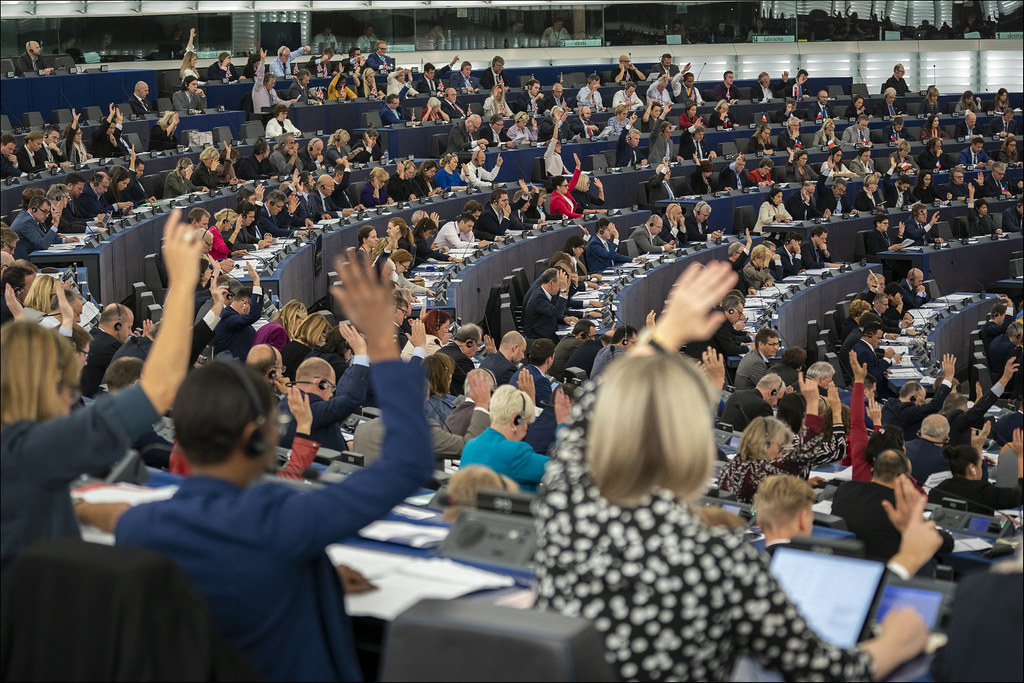
Photo credit: European Parliament, used under a CC BY 2.0 licence.

Update 26 Feb 2026. The paragraph referring to the ECA Opinion’s discussion of crisis payments to farmers has been amended, and a typo referring to Article 34(9) was corrected.

Level playing field provisions in the EU-UK TCA

My previous post discussed the general background to the EU-UK Trade and Cooperation Agreement (TCA) and specifically its provisions on tariffs and non-tariff barriers.  An innovative part of the Agreement concerns what are called ‘level playing field’ provisions in various areas including state aids, taxation, competition policy, labour standards, and environmental protection and climate change.

By demanding that the Agreement address these issues, the EU wanted to avoid a situation where the UK could use government subsidies, a more beneficial tax regime or more lenient regulatory standards to give its producers an advantage in competing with EU producers in the tariff-free free trade area which might be seen as unfair.

The Agreement includes reciprocal commitments not to reduce the level of environmental or climate protection or fail to enforce laws in a manner that affects trade or investment (the so-called ‘non-regression’ clause). Both sides have the right, in certain circumstances, and subject to arbitration, to take countermeasures if they believe they are being damaged by measures taken (or not taken!) by the other party in subsidy policy, labour and social policy, or climate and environment policy. These provisions go further than in any previous EU trade agreement although their practical significance remains to be tested (for a deep dive, see this presentation by René Repasi of the Erasmus School of Law Rotterdam to a webinar organised by Green MEPs).

The notion that countries have the right to protect themselves against unfair trade is well recognised in WTO rules. Countries can resort to trade remedies to protect against imports that are subsidised or dumped (sold below their normal price), or if a rapid rise in imports threatens serious injury to domestic production (safeguard clause), provided certain procedures are followed. Pressure has been growing to add other justifications such as social or environmental dumping to these economic factors justifying the use of trade remedies.

The United States recently circulated a text for a draft WTO Ministerial Decision on ‘Advancing sustainability goals through trade rules to level the playing field’. This would recognise that failure of a government to adopt, maintain, implement and effectively enforce laws and regulations that ensure environmental protections at or above a threshold of fundamental standards shall constitute an actionable subsidy which could trigger countervailing duties by a country adversely affected.

The level playing field provisions with respect to environmental protection in the TCA set this ‘threshold of fundamental standards’ for future EU-UK trade at the existing level of protection at the end of the transition period (the non-regression clause) but also go beyond this minimum standard by seeking to limit the extent of future regulatory divergence between the two parties.  

For UK and EU farmers, these are not abstract issues. Regulatory divergence is bound to emerge in the future. Already at this year’s Oxford Farming Conference, the Defra Minister George Eustice announced a public consultation on easing the regulatory framework for gene-editing at least in England. We may also see a situation where pesticides that are banned in the EU may be permitted for use by arable farmers in the UK if the authorities there take a different interpretation of the scientific evidence. One could equally well imagine a scenario in which UK farmers face higher animal welfare standards or more demanding greenhouse gas emission reduction targets. The level of agricultural subsidies might also diverge over time, giving rise to complaints about an unlevel playing field.

Against this background, this post reviews the TCA level playing field provisions particularly for environmental and climate protection and agricultural subsidies and considers how they might work in practice.

Comparison of level playing field provisions

To assess the significance of the level playing field provisions addressing environmental and climate protection in the TCA, the following table compares such provisions in four different trade arrangements: the European Economic Area as the trade arrangement with the greatest level of integration, and the standard provisions in the Trade and Sustainable Chapter in the EU’s free trade agreements as the lowest level of integration.

In between, we have the provisions in the TCA. These are compared to the text of the so-called ‘backstop’ in the abortive draft Withdrawal Agreement agreed with UK negotiators under the Theresa May premiership which in some respects were more far-reaching. The backstop was intended to come into play if negotiations on a free trade agreement failed to deliver a solution that would prevent the need for a border on the island of Ireland. It would have required the UK to have remained within a customs union with the EU until such an agreement was reached. As we know, this draft Agreement was voted down three times in the UK House of Commons, perhaps in part because the level playing field provisions were seen as going too far. The draft Political Agreement attached to the May Withdrawal Agreement in November 2018 stated that the level playing field provisions in the future trade relationship would build on that Agreement. This reference was removed in the Political Agreement attached to the Johnson Withdrawal Agreement in October 2019, which simply stated that “The precise nature of commitments should be commensurate with the scope and depth of the future relationship and the economic connectedness of the Parties.

Each of these trade arrangements is compared under two headings (a) the scope of the provisions and (b) the mechanisms for enforcement and dispute settlement, and with respect to  two dimensions (i) provisions regarding non-regression and (ii) provisions regarding future alignment.

The environmental and climate level playing provisions in different trade arrangements

Trade arrangement and coverageScopeEnforcement and dispute settlement
Single market (e.g. European Economic Area)
Non-regression clauseCovered by environmental legislation with single market relevanceEnsured by the EFTA Surveillance Authority and ultimately the EFTA Court.
Future alignmentRegulatory alignment through adoption of relevant EU laws, agreed by unanimity in Joint CommitteeEnsured by the EFTA Surveillance Authority and ultimately the EFTA Court.
Environmental backstop November 2018 draft Withdrawal Agreement
Non-regression clauseCommitment that level of environmental protection should not be reduced below the common standards applicable within the EU and UK at end of transition period, no link to trade or investment.Not subject to dispute settlement, but effective domestic enforcement required. Ultimately, EU could take remedial measures where it believed UK non-compliance threatened equal conditions of competition within the single customs union, subject to arbitration
Future alignmentNo provisionsNot relevant
EU-UK TCA Level playing field provisions
Non-regressionCommitment not to weaken or reduce, in a manner affecting trade or investment between the Parties, its environmental levels of protection or its climate level of protectionDispute settlement applies to provisions on the right to regulate, precautionary principle and access to scientific and technical information. Other commitments are not subject to standard dispute settlement. Temporary remedies are available in case of non-compliance, subject to arbitration.
Future alignmentCommitment to continue to strive to increase their respective environmental levels of protection or their respective climate level of protection.If significant divergences in future environmental and climate policies emerge with material impacts on trade or investment, either Party can take rebalancing measures.
EU ‘standard’ FTA Trade Sustainable Development (TSD) chapter
Non-regression clauseParties should not weaken levels of protection afforded in domestic environmental or labour law with the intention of encouraging trade or investment  Not subject to standard dispute settlement. Disputes to be resolved through consultation and arbitration panel can be asked for recommendations. No provision for trade remedies in event of non-compliance.
Future alignmentNo provisions  Not relevant
Source:  Own construction.. The TSD Chapter in the EU-Mercosur draft free trade agreement is taken as the case study for the TSD provisions.

The EEA model.  The EEA model represents the highest level of integration and maintenance of a level playing field apart from EU membership itself. Environmental legislation that affects competitiveness within the single market is deemed to have ‘EEA relevance’ and should be transposed into national law in the EEA countries. Not all environmental legislation is deemed to be relevant (see this list reproduced in the House of Commons report The Future of the Natural Environment after the EU Referendum, 2016). Enforcement is ensured by the EFTA Surveillance Authority which plays the role that the Commission plays within the EU. The Authority can take infringement proceedings against an EEA State that does not implement EEA rules or does so incorrectly, which may ultimately be adjudicated by the EFTA Court. New EU standards are adopted by the EEA countries through a process of regulatory alignment, where a decision on ‘EEA relevance’ is made by a Joint Committee through consensus.

The TSD chapter model. The Trade and Sustainable Development (TSD) chapter in EU free trade agreements is the lowest level of integration and guarantees little by way of a level playing field, apart from a commitment to non-regression. Parties should not weaken the levels of protection afforded in, or fail to effectively enforce, domestic environmental or labour law with the intention of encouraging trade or investment. There is no requirement to raise standards in line with a greater level of ambition in the other party. Other environmental commitments are generally best endeavour commitments to, inter alia, implement the Paris Agreement on climate change and multilateral environmental agreements to which it is a party, tackle illegal trade in wildlife, implement measures to combat illegal logging and illegal fishing, and support responsible management of supply chains. All these commitments are excluded from dispute settlement (meaning that trade sanctions cannot be applied in case of non-compliance). Instead, the EU’s FTAs emphasise a cooperative approach relying on softer measures such as pressure from civil society groups in the other party and recommendations from a panel of experts to bring about compliance. Nonetheless, the Commission insists that the commitments in the TSD Chapter are legally binding. Even if a breach does not necessarily render the Agreement invalid, it is up to the parties to consider whether the Agreement is considered to be invalid and to terminate it.  

There is a vigorous academic debate whether the sanctions or cooperative approaches are more effective at ensuring compliance. The US has introduced sanctions in some of its FTAs for specific issues including labour standards. However, in a well-known case it took against Guatemala, the panel found against the US not on the grounds that Guatemala had fulfilled its obligations under the FTA (where the US claimed it failed to enforce its labour laws) but because the US could not prove that this failure materially affected trade and investment. This can also be an issue in the TCA, as we will see in a moment.

The backstop provisions. Before looking at the TCA text, we first take a look at the provisions in the backstop agreement (set out in Annex 4 to the Northern Ireland Protocol in the November 2018 draft Withdrawal Agreement). The scope of the legislation covered by the no-regression clause is striking, not only because it covers nearly all environmental legislation (including nature and biodiversity legislation which is not covered in the EEA) but also because it is the substantive legislation itself regardless whether it affects trade and investment that is covered. There is no need to show an effect on trade. Furthermore, targeted commitments were made in three areas: the reduction of national emissions of certain atmospheric pollutants; a maximum sulphur content of marine fuels; and minimum commitments for best available techniques, including emission limit values, for industrial emissions.

Among the other environment commitments was the standard one to implement effectively the multilateral environmental agreements to which they are party. Both parties agreed to respect the following principles in their environmental legislation: (a) the precautionary principle; (b) the principle that preventive action should be taken; (c) the principle that environmental damage should as a priority be rectified at source; and (d) the “polluter pays” principle. Both parties also agreed to take the necessary measures to meet their respective commitments under the Paris Agreement, while the UK undertook to implement a system of carbon pricing with at least the same effectiveness and scope as the EU ETS.

Of interest also is the mechanism for monitoring and enforcement. Dispute settlement provisions would not apply. Instead, the draft Agreement provided for domestic enforcement through (a) an independent and adequately resourced body, (b) by ensuring that administrative and judicial proceedings are available to public authorities and members of the public against violations and c) by providing for effective remedies and sanctions that are effective, proportionate and dissuasive and have a real and deterrent effect. This mechanism again reappears in the TCA.

Significantly, the EU (but not the UK) was given the right to take appropriate remedial measures where the EU deemed that UK non-compliance with these obligations threatened to undermine equal conditions of competition between the parts of the single customs territory. The UK could appeal this decision to an arbitration panel whose decision would be binding.

The environmental and climate level playing field in the Trade and Cooperation Agreement. The level playing field provisions are set out in Title XI of Part Two of the Agreement. The non-regression text does not go beyond the standard provision in the TSD chapter of the EU’s FTAs. Specifically, parties commit not to “weaken or reduce, in a manner affecting trade or investment between the Parties, its environmental levels of protection or its climate level of protection” and this applies to protections as they stood at the end of 2020. This explicitly includes specific environmental targets that may be included in environmental legislation at the end of the transition period. As drafted, this clause would prevent environmental regression in the UK only if it affects trade and investment. It also does not require the UK to maintain the same legislation that it has inherited from the EU, only that changes to this legislation should not weaken the overall level of environmental protection in a way that affects trade or investment.

The other environmental commitments also include standard text on trade and sustainable development, including sections dedicated to multilateral environmental agreements, forests, fisheries, biodiversity and responsible supply chains. Each Party reaffirms its ambition of achieving economy-wide climate neutrality by 2050. There is a specific commitment to cooperate on carbon pricing and to give ‘serious consideration’ to linking their respective carbon pricing systems.

Disputes over non-regression and other environmental and climate commitments should be resolved through consultation and dialogue including through the Trade Specialised Committee (TSC). If no satisfactory resolution is reached, a Panel of Experts can be established to make recommendations considering the commitments in the level playing field Chapter. The TSC Committee will follow up recommendations and a complaining party can ask the panel of experts to review the measures taken by the responding party if it deems these insufficient.

Temporary remedies are available in case of non-compliance. Temporary remedies can take the form of an offer of compensation requested by the complaining party from the responding party if the latter claims that it is not possible to comply with a ruling of the arbitration body. Alternatively, the complaining party can suspend the application of obligations under the Agreement. The suspension of obligations should not exceed the level equivalent to the nullification or impairment caused by the violation, and this amount can also be subject to arbitration. The obligations suspended (in the case of violation of level playing field commitments) are not confined to commitments in the same area but can be any obligation under the TRADE heading, e.g. suspension of tariff concessions. Temporary remedies do not apply to the net zero by 2050 commitment, although it is subject to standard dispute settlement.

The rebalancing mechanism in the TCA. One of the more contentious areas of the negotiations was the extent to which the agreement would bind the UK to future changes in EU rules. To address this, while underlining the sovereignty of each party, they have agreed to “continue to strive to increase their respective environmental levels of protection or their respective climate level of protection”. If the future divergences are significant and have a material impact on trade or investment, then either Party can have recourse to ‘rebalancing measures’. These would be similar to the temporary remedies that can be introduced in the case of non-compliance with the non-regression principle, although subject to special conditions. “Such measures shall be restricted with respect to their scope and duration to what is strictly necessary and proportionate in order to remedy the situation. Priority shall be given to such measures as will least disturb the functioning of this Agreement. A Party’s assessment of these impacts shall be based on reliable evidence and not merely on conjecture or remote possibility.” The complaining Party must first seek consultations. If these are unsuccessful, the complaining Party can introduce the measures unless the responding Party seeks arbitration. The findings of the arbitration panel will be binding.

This rebalancing mechanism is a far cry from the regulatory alignment that the EU originally sought, but it is an innovative element that may help to give a push to raise standards in the Party that is seen as lagging behind. How it will work in practice remains to be seen. It would only apply where there is ‘significant divergence’ in standards that have actually caused a material impact on trade or investment. The complaining Party will have to persuade a neutral tribunal that this is the case. And the measures taken must be strictly necessary and proportionate in order to remedy the situation. Given these constraints, it may be difficult to prosecute a successful rebalancing measure.

However, the Parties themselves envisage that it could be effective. Either frequent recourse to the rebalancing mechanism by either or both Parties, or if a measure that has a material impact on trade or investment between the Parties has been applied for a period of 12 months, can lead to a review of the TRADE heading in the Agreement even before four years of its entering into force. The review would address whether the Agreement delivers an appropriate balance of rights and obligations between the Parties, in particular within the TRADE Heading and whether, as a result, there is a need for any modification of the terms of this Agreement. If consultations on amending the Agreement sought by one Party are not successful, then that Party can terminate the TRADE heading of the Agreement (with consequential termination of the clauses affecting road transport and, under certain circumstances, aviation as well).  

Agricultural subsidies

The TCA contains an extensive section on state aid disciplines as part of the level playing field obligations. However, these disciplines explicitly do not apply “to subsidies that are subject to the provisions of Part IV or Annex 2 of the Agreement on Agriculture” (Part IV refers to domestic support commitments usually referred to as the Amber Box and Annex 2 refers to measures usually referred to as the Green Box).  This implies that the limits on UK support to its farmers are those set in its Schedule of Concessions notified to the WTO and there are no additional constraints foreseen in the TCA.

This is a very different situation to that envisaged for agricultural subsidies in the backstop in the November 2018 version of the Withdrawal Agreement. Disciplines would apply to state aid in general, but that draft Agreement exempted from these disciplines agricultural subsidies up to a determined maximum overall annual level of support, provided that a determined minimum of that exempted support complied with the provisions of Annex 2 (the Green Box) to the WTO Agreement on Agriculture. The maximum exempted overall annual level of support and the minimum percentage would be determined by the Joint Committee established under the Agreement.

Specific guidance on setting these thresholds was laid down. The initial maximum exempted overall annual level of support would be informed by the annual average of the total amount of CAP expenditure in the UK under the Multi-Annual Financial Framework (MFF) 2014-2020. The initial minimum percentage would be informed by the design of the United Kingdom’s agricultural support scheme as well as by the percentage to which the overall CAP support complied with the WTO Green Box. The Joint Committee could adjust these thresholds to any variation in the overall amount of support available under the CAP in each future MFF.

Two things are notable about that draft text. The first is that the UK’s allowed level of support was linked to its actual level and use of support under the CAP in the MFF 2014-2020, and not to its WTO obligations in its Schedule of Concessions notified to the WTO. This was a much stricter provision intended to keep support to UK farmers in line with support in the EU. A second feature is that the text embodied a commitment to dynamic alignment with EU support levels in the future. It implied that if support to EU farmers increased in a future MFF, the corresponding thresholds in the UK would also increase, but also vice versa. If the EU CAP budget were reduced in a later period, this would also require a reduction in support to UK farmers. There was no reciprocal obligation.

The November 2018 backstop text no longer has any relevance, but it is worth recalling simply to highlight that the provisions on agricultural support in the TCA do not constrain UK support beyond what it has committed to in its WTO obligations. As a result, the UK has greater flexibility to alter (increase) its agricultural support, including trade-distorting support. Even if such support caused a material impact on EU exports, the EU cannot retaliate with rebalancing measures as agricultural support within the UK’s WTO obligations is not covered by the level playing field provisions. Conversely, the UK cannot complain about EU agricultural support levels, again provided that the EU remains within its WTO commitments.

Conclusions 

The level playing field provisions in the TCA of most interest to farmers are those covering environmental and climate protection. The Agreement does not require both parties to have harmonised standards, and divergence in regulations can be expected over time. If regulations are weakened below the 2020 baseline in a way that affects trade or investment, then the other party can have recourse to temporary remedies, subject to arbitration, if consultations fail to bring about a satisfactory solution.

If higher standards in the future in one party create a ‘significant divergence’ that ‘results in’ a ‘material impact’ on trade or investment, then that party can have recourse to rebalancing measures, subject to arbitration, if consultations fail to bring about a satisfactory solution. These measures must be ‘strictly necessary and proportionate’. In either case, the complaining party would be entitled to seek compensation or to suspend equivalent obligations if the arbitration panel upheld its complaint. Rebalancing measures cannot be applied to counterbalance agricultural support that is consistent with either party’s WTO commitments.

There are various hurdles to be crossed to gain authorisation for sanctions and how high these hurdles will prove to be in practice remains to be seen. Nonetheless, these procedures appear to be modelled closely on the procedures already approved for use in the case of existing trade remedies under WTO rules.

The level playing provisions were an offensive interest of the EU in the trade agreement negotiations with the UK. The implicit presumption has been that the UK would use its new-found regulatory freedom to create a bonfire of regulations and turn itself into ‘Singapore on the Thames’. However, at least with respect to climate protection, protection of natural capital, and animal welfare, it could well be the case that the UK is a leader rather than the laggard. It would surely be ironic if in the first case taken under the rebalancing provision of the TCA it was the UK that was the complainant.

This post was written by Alan Matthews

Image credit: Image by Conolan, via Pixabay licence.

Update 19 Jan 2021: The statement that the US claim against Guatemala in the original post was its failure to sign relevant international conventions was corrected to note that the US claim was that Guatemala failed to effectively enforce its labour legislation. In addition, it is noted that the net zero emissions by 2050 commitment, although not subject to enforcement under the level playing field provisions, is covered under the standard dispute settlement (see Lydgate et al., 2021).

Is a level playing field an argument for continued support to UK agriculture after Brexit?

We are pleased to publish this guest post by David Blandford (Penn State University) and Berkeley Hill (Imperial College London).

The President of the National Farmers Union (NFU) of England and Wales told the Food Manufacture Group’s Business Leaders’ Forum (Feb 14, 2017) that the NFU is currently actively lobbying the UK government to ensure that British farmers are not disadvantaged with respect to their main competitors in Europe following Brexit. The fear seems to be that cuts in the £3 billion of direct aid, which seem highly likely when Britain leaves the EU and its CAP, will result in a non-level playing field in which UK farmers are put at a competitive disadvantage. Thus, there will be a claim for government support to address the issue. This claim is of obvious importance to the shape of future national agricultural policy in the UK and should therefore be examined closely. In this post we investigate the validity of this claim.

The context

First, it is necessary to clarify what it means to be competitive. This often-used term is surprisingly difficult to pin down. In its simplest form, being competitive implies the ability of a firm to continue in business indefinitely given prevailing market conditions. In turn this means that the firm’s costs of production are such that, when deducted from revenue, the residual profit is adequate to compensate for the risks involved (that is, ‘normal’ profits will be earned on the assets owned by the firm). Anything less will cause production to be cut back or terminated, and eventually the firm will exit the market.

Changes in costs or revenues will affect the ability to remain competitive. Typically farms produce more than one commodity, so remaining competitive also involves the ability to switch and rebalance among these. In the longer term it also reflects the ability of the firm to increase efficiency, e.g., by adopting new technology, in order to reduce costs per unit of output.

Because of differences in cost structure, management ability and other factors, the agricultural industry at any given time will comprise a mix of farms, some of which are not competitive under prevailing conditions, some which are, and yet others who earn profits large enough to enable them to expand. Discussions of Brexit and competitiveness have to be capable of considering all these aspects (and more).

Second, which direct aid is being considered for cuts? According to Agriculture in the United Kingdom 2015 (Defra, 2016) direct payments in 2015 totalled some £2,841 million, of which the largest component (£2,176 million) was Basic Payments.

The remainder largely comprised support under agri-environment schemes that deliver environmental services. Most of these services (e.g., protection of wildlife habitat) are public goods without market prices, and a market-failure rationale can be applied for their continuation post-Brexit, providing that the payments are actually targeted to the provision of the public goods. Another component is special payments for farming in disadvantaged (hill) areas, though these are confined to Scotland and Northern Ireland and claim to be justified on environmental and social grounds.

It is the Basic Payments component that is most likely to be culled, most of which go to farmers in England (£1,400 million) with much smaller total amounts going to farmers in Wales (£190 million), Scotland (£348 million) and Northern Ireland (£238 million). The Basic Payments have been criticised for generating little if any public benefit in exchange for their cost. If their aim is to alleviate any persistent poverty found among UK farmers , the lack of targeting based on income means that they are a highly inefficient way of achieving this.

The Basic Payments Scheme and competitiveness

To put the threatened Basic Payments in context, in 2015 they represented about 8.2% of all the money accruing to the UK agricultural industry from selling marketed output plus all subsidies (figures from Defra (2016)); the market accounted for the overwhelming majority. The Basic Payments’ percentage would be somewhat lower if earnings from other gainful activities (such as jobs taken outside the farm), investment earnings and pensions were taken into account (currently not part of the Economic Accounts for Agriculture).

It is worth recalling the following:

• Basic Payments are the latest manifestation of a process that introduced direct payments for farmers in 1992 as compensation for a switch away from supporting incomes by intervening in commodity markets to support prices, increasingly recognised as having many negative characteristics (impact on trade, on consumers etc.). For political reasons, the compensation was not time-limited. Consequently, direct payments later became interpreted as a permanent form of income support to the farming sector.

• Direct payments (from 2005 the Single Payment and from 2015 the Basic Payment) were designed to be decoupled from agricultural production. Though linked to parcels of agricultural land and historical entitlements, it has not been necessary to produce any actual farm commodities to receive them. In theory, therefore, they should not affect production decisions including those that determine competitiveness, which are intended to be based solely on market conditions.

• Before Brexit, the wide differences between Member States in their levels of direct payments were not raised as a substantive issue affecting national competitiveness in the Single Market applying throughout the EU. Rather, the case for reducing these differences (‘external convergence’) was based primarily on equity rather than considerations of economic efficiency.

It follows that, if Basic Payments are truly decoupled, their removal should have no impact on the competitiveness of British farmers – their presence or absence should be irrelevant.
There are, however, reasons to think that Basic Payments (and their immediate predecessors) have had an indirect or secondary impact on production decisions and competitiveness:

• Because Basic Payments have been linked to land occupancy/ownership, they have influenced land prices, probably increasing these compared to a situation in which this link did not exist. Largely because of the land link, Basic Payments are likely to have impeded structural change, reducing the international competitiveness of UK agriculture by limiting gains in efficiency associated with increases in farm size.

• By providing producers with a zero-risk income stream, there will have been a change in attitudes towards risk mitigation that, in turn, will have been influenced production patterns and, indirectly, competitiveness.

• Farmers have engaged to some degree in self-subsidisation of their production activities. This last point needs some amplification.

Impact on the farm household unit

Farm households, the form of economic institution that is numerically dominant in UK agriculture, combine the roles of units of production and units of consumption (unlike corporations). When faced with circumstances that indicate that production is no longer competitive, some farmers may have chosen to use their Basic Payments to subsidise their agricultural production. As a result, they continue to generate output that market conditions alone could not justify; without this self-subsidy, they may be forced eventually to exit the industry.

The cessation of Basic Payments would bring such self-subsidisation to an end. While farm output would be expected to decline (at least in the short-run) this would really be the result of the exposure of production that was essentially non-competitive to market realities.

Whether or not self-subsidisation takes place, any loss of Basic Payments as a resource flowing to the household would obviously be unwelcome to the individuals involved, and potentially more painful to living standards for some households than others. These losses represent private costs of a benefit withdrawn, and in this respect would be little different from a cut in pensions or any other welfare payment.

The issue is to facilitate change in an equitable way, which may justify the use of transitional mechanisms to reduce the short-term impact, such as by the provision of advice on business restructuring, tax concessions, or even time-limited income payments. However, history shows that farmers as a group have remarkable abilities to absorb policy changes (such as by altering cost structures and production patterns and embracing diversification into non-agricultural activities) if adequate notice is given (and even if it is not). This ability has often been under estimated by policymakers.

If, as expected, land prices declined after the cessation of Basic Payments, this would result in a capital loss to farm households that owned land. It would probably push some households with heavy borrowing into leaving farming. However, a reduction in the cost of land could facilitate structural adjustment by allowing expansion by the most competitive farmers. It could also impact the costs of farming, as rents would be expected to fall and the interest charges on loans for the purchase of (cheaper) land to decline.

Competitiveness post-Brexit and the national interest

After this discussion we now return to the level playing field issue. The nub of the matter is whether, post-Brexit, it would be to the UK’s benefit for the government to step in on a permanent basis to address any apparent disadvantage to UK farmers from leaving the CAP. While UK farmers would be operating without Direct Payments, competitor farmers in the rest of the EU would, presumably, still be in receipt of them.

We are concerned not with transitional aid to facilitate resulting adjustment (which may take a variety of forms, can be justified on market-failure grounds, and to which UK ministers seem already to have agreed) but with the justification for longer-term support, implied by the NFU.

In this context, a distinction must be made between the national interest and that of the UK agricultural sector. Basic Payments in the rest of the EU would enable farmers there, if they so chose, to self-subsidise their production, which could undercut UK farmers. The playing field is not level, in the sense that imports will be produced with a cost structure not available in the UK.

However, this will not necessarily be against the national interest, as commodity prices in the UK will be lower than otherwise, and consumers and other users will benefit, in particular through lower food prices. In effect, resources would be transferred from EU taxpayers and farmers to UK consumers.

As long as this is a sustained process (that is, the arrangement is long-term and not just a disruptive short-period phenomenon), then it is in the interest of the UK economy as a whole to profit from this. True, there would be some private cost to UK farmers through selling less to the market, but this would be difficult to distinguish from the fall in their household income resulting from the cessation of Basic Payments; any poverty resulting from either could be addressed by welfare policy. UK farmers should be encouraged, even assisted, to adapt to the new commercial environment, in the same way that they would to the opening up of trade with a new competitor that has comparative advantage on their side.

If, as seems likely, the UK will eventually enter into trade agreements with major agricultural producing countries outside the EU, the resulting competitive pressure could be intense. It makes sense for the adjustment process to be working well before UK agriculture comes under a more severe competitive test in a post-Brexit economic environment.

This post was written by David Blandford and Berkeley Hill.

Photo credit: © Copyright P L Chadwick and licensed for reuse under a Creative Commons Licence.