
It is frequently asserted in Brussels agricultural policy discussions that European farmers over the past few years are barely surviving, buffeted by unprecedented price collapses, the unwillingness of supermarkets to pay decent prices, the closure of external markets and tightening regulations. Commissioner Hogan spent much of the first half of his term of office bringing forward one emergency financial package after the other as taxpayers pumped more money into a sector supposedly on its last legs.
This picture of an industry in crisis is naturally promoted by the well-oiled publicity machine maintained by the farm lobbies in Brussels and national capitals. But is it true? In this post, we examine the statistics on farm income trends to investigate this issue.
Eurostat produces the official figures on farm incomes in the EU. Preliminary estimates for 2016 (the first forecast) should be released towards the end of December of the relevant year, with the second updated forecast released the following March.… Read the rest
Is the producer price of milk too low?
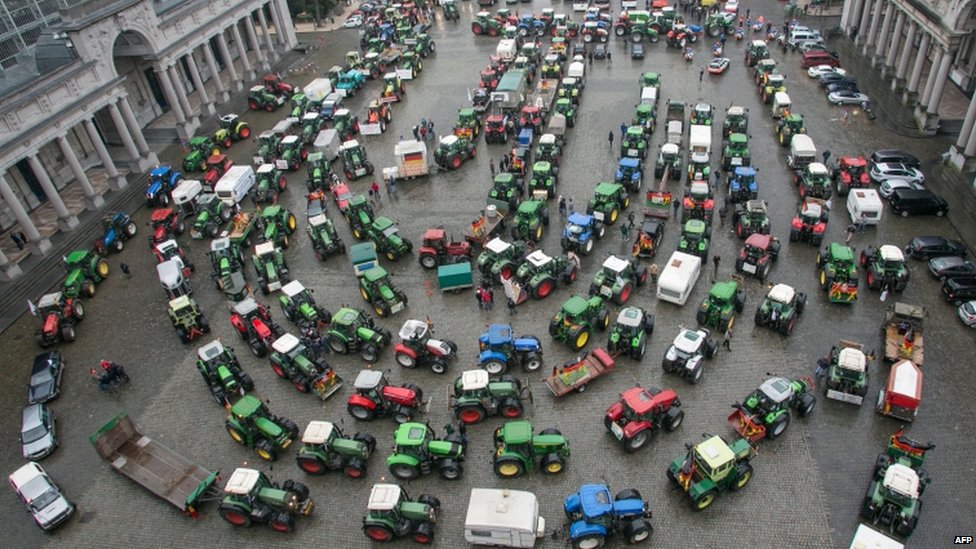
How serious is the current dairy market situation? Are prices really below costs of production? In this post, I examine recent dairy market trends to throw light on these questions. The Agriculture Council meeting tomorrow (see this post for a preview) is expected to agree a package of aid for dairy farmers, but why should this be necessary? The Milk Market Observatory now provides detailed and up-to-date information on milk market trends and I make extensive use of its data and charts in this post.
What is happening to milk prices?
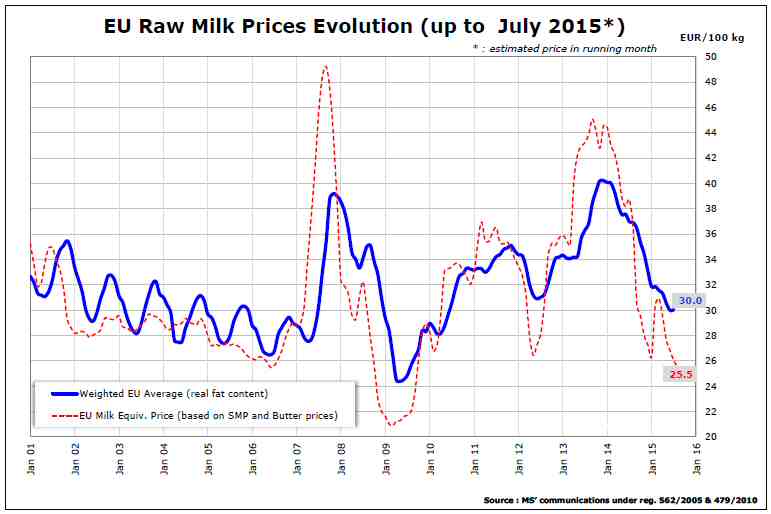
The trend in milk prices shown in the chart above can be divided into two periods: a downward trend in the years to 2007 (driven by the reduction in intervention prices and export subsidies due to CAP reform), and an upward trend since then but with great volatility. The peak price was reached in Nov-Dec 2013 when the weighted EU average milk price reached €40.21/100 kg.… Read the rest
The EU as a destabilising force in world grain markets
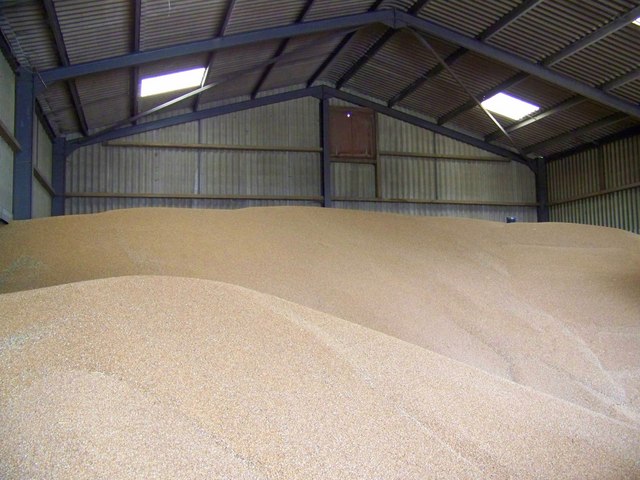
I have argued before on this blog that the EU’s policy during the food price spike of 2007-08 in lowering applied tariffs on staple foods may have helped to mitigate the impact of higher food and feed prices on livestock producers and, to some extent, on consumers, but at the expense of exacerbating the global price increases facing other countries, including developing countries.
The EU’s policy of varying applied tariffs within its bound rates contributed to destabilising world market prices just as did the export restrictions applied by other countries, and undermines its moral authority, in the G20 and elsewhere, in seeking strengthened WTO disciplines on export restrictions as a way to enhance global food security.
In a paper [requires library access] published in the American Journal of Agricultural Economics in January this year, Philip Abbott of Purdue University provides some quantitative evidence of this effect. His methodology is straightforward. He compares the evolution of producer prices for staple commodities with the trend in retail food prices over the 2006-2008 period, distinguishing between major grain exporters which left borders open and major grain exporters which restricted exports.… Read the rest
How the CAP contributes to world market food price volatility
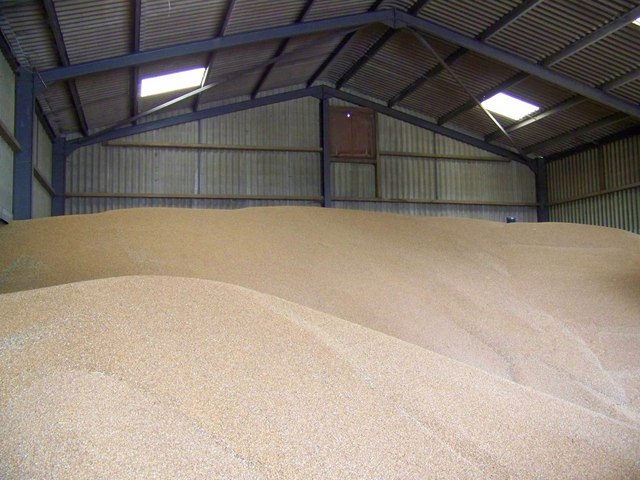
The contribution of export bans to the world food price spike in 2008 is now well-established, particularly for commodities such as rice (for example, see Abbott, 2012 and Sharma, 2011). Martin and Anderson (2012) have calculated that over the 2005-2008 period more than 45 per cent of the explained change in the international price of rice was due to changes in border restrictions that countries used in an attempt to insulate themselves from the initial increases in price.
Countries resort to export bans in an attempt to keep down the price of food to domestic consumers. When undertaken by countries whose level of trade is big enough to influence the world market price, then an export ban also has ramifications for other countries.
Not only does an export ban, such as the Russian grain export ban in August 2010, by restricting supplies to the world market have an immediate impact on world prices.… Read the rest