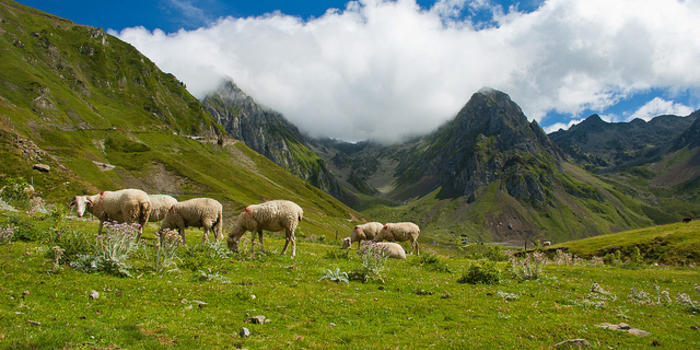
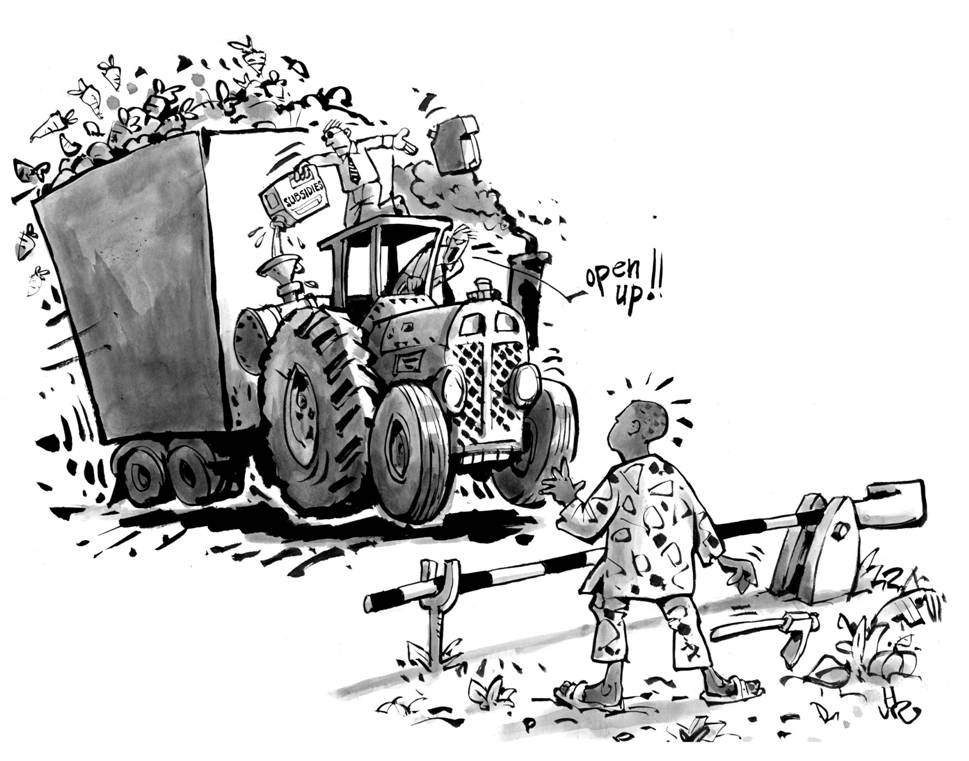
The EU has finally agreed to eliminate export subsidies…three cheers!

As long as I have been commenting on the CAP, its most criticized feature has been its use of export subsidies, also called export refunds. In the late 1980s and early 1990s, the EU was spending €10 billion a year on export subsidies, almost one-third of the CAP budget, in order to allow traders to get rid of the EU’s growing export surpluses by paying the difference between the EU’s high internal prices and lower world market prices.

Export subsidies allowed EU exporters to grab market share in import markets from competing exporters, put downward pressure on the level of world market prices, and competed unfairly with local producers in many developing countries. The damages caused were brilliantly highlighted and analyzed in a series of powerful reports and pamphlets by development NGOs such as Oxfam (Stop the Dumping! How EU Agricultural Subsidies are Damaging Livelihoods in the Developing World, 2002; Dumping on the World: How EU Sugar Policies Hurt Poor Countries, 2004); Aprodev (No More Chicken, Please, 2007; Preventing Unfair ‘Dumping’ of EU Subsidized Food, 2011); ActionAid (Milking the Poor; How EU Subsidies Hurt Dairy Producers in Bangladesh, 2011) and Brot für die Welt (Milk Dumping in Cameroon: Milk powder from the EU is affecting sales and endangering the livelihoods of dairy farmers in Cameroon, 2009).… Read the rest
Gainers and losers from the CAP budget

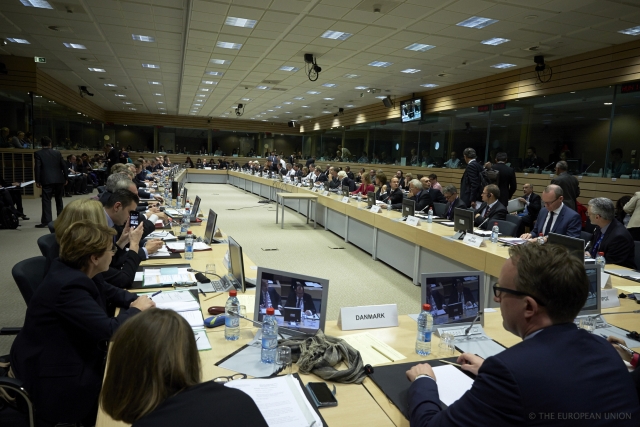
In thinking about the prospects for a future CAP reform, one of the relevant factors is the political economy of member states’ negotiating positions, which in turn is heavily influenced by their net position as a contributor to or a beneficiary from CAP expenditure. Countries are more likely to defend a high level of CAP expenditure if they are likely to benefit from it. The net transfers arising from the CAP budget are thus an important predictor of a country’s stance on CAP reform.

These net transfer positions are not routinely published, although DG Budget provides the raw data in its annual calculation of the ‘operating budgetary balances’ of member states. A member state’s operating budgetary balance is the difference between allocated operating expenditure (excluding administration) and its ‘national contribution’ to the EU budget.

A member state’s ‘national contribution’ represents its contribution to the EU budget’s ‘own resources’ apart from the traditional own resources of customs duties and sugar levies.… Read the rest

Will there be a CAP reform in 2017?

On Friday last, I took part in a panel discussion at the Centre for European Policy Studies in Brussels on the theme “Will there be a mid-term review in 2017? And, if so, what should it do?” My contribution focused on the timing and procedural issues which will influence the prospect of a substantive early review of the CAP basic acts. Other speakers on the panel (Allan Buckwell from IEEP, Rolf Moehler formerly of DG AGRI and Paolo de Castro MEP from the Socialists and Democrats Group in the European Parliament) addressed what the contents of such a review might or should be.
The purpose of the event was to formally launch the book The Political Economy of the 2014-2020 Common Agricultural Policy: an Imperfect Storm which has been edited by Johann Swinnen and published by CEPS together with Rowman & Littlefield International. This book is a fascinating series of essays on the story behind the 2013 reform but also includes three chapters looking ahead to the future by three of Friday’s panellists, including one which I contributed.… Read the rest

The CAP and biodiversity

Two weeks ago I gave a talk at a biodiversity conference organised by Teagasc, the Irish Agriculture and Food Development Authority. The proceedings of this conference can be downloaded here. The title for my talk was ‘Could European agricultural policy do more to promote biodiversity?‘ In today’s edition of the Irish Farming Independent I have a short article which summarizes the talk. I reproduce the article below and also the presentation accompanying the talk.
***********************************************************************************
The 2013 CAP reform had three overall objectives: viable food production; sustainable management of natural resources and climate action; and balanced territorial development. The emphasis on sustainable management in the second objective was a response to the growing awareness that the twin issues of land abandonment and agricultural intensification lead to severe environmental problems which required an EU policy response.
Among these environmental problems is the growing loss of farmland biodiversity. The recent mid-term review of the EU’s 2020 Biodiversity Strategy concluded that the EU was making no progress towards its target to bring about a measurable improvement in the conservation status of species and habitats that depend on or are affected by agriculture.… Read the rest

The intervention logic of the CAP

One of the innovations in the 2013 revision of the CAP Basic Acts was to extend a formal system of monitoring and evaluation of the CAP’s performance beyond Pillar 2 rural development, where it had been long-established, to also cover Pillar 1 direct payments and market management. This Common Monitoring and Evaluation Framework (CMEF) was set out in Article 110 of the Horizontal Regulation. This requires the Commission to measure and assess the combined impact of all CAP instruments in relation to three common objectives set out in this Article.
The three objectives set out for the CAP (which essentially ‘reinterpret’ the objectives contained in Article 39 of the Lisbon Treaty) are:
• viable food production, with a focus on agricultural income, agricultural productivity and price stability;
• sustainable management of natural resources and climate action, with a focus on greenhouse gas emissions, biodiversity, soil and water;
• balanced territorial development, with a focus on rural employment, growth and poverty in rural areas.… Read the rest