

A new structural framework for rural resilience and global competitiveness in the face of the Mercosur challenge
By Pablo Palencia Garrido-Lestache
Pablo Palencia Garrido-Lestache is a veterinarian and consultant with over 25 years of experience in One Health and agrifood strategy. He served as the Regional Minister for Rural Development, Livestock, Fisheries, and Food in Cantabria, Spain. Throughout his career, he has led the development of strategic projects for cooperatives and the establishment of PGI (Protected Geographical Indication) frameworks, focusing on integrating living heritage and ecosystem services into legal structures to ensure the resilience of livestock production systems. info@iberap.com
_________________________________________
Europe faces a silent but structural crisis in agriculture: generational renewal is failing. Across many EU regions, more than half of farm holders are over 55, while only a small fraction of young people enters the sector. In many rural areas, when a farmer retires, the farm simply disappears.
For decades, the Common Agricultural Policy (CAP) has been the backbone of European agriculture. It has provided income stability, supported food production and contributed to territorial cohesion. However, the CAP was designed to sustain production, not to guarantee generational continuity or to fully recognise the strategic, cultural and territorial value of farming. The CAP keeps farms operating; it does not ensure their long-term succession.
The Mediterranean Paradox: Protecting the Recipe, Ignoring the Farmer
A clear example of the current legal inconsistency is the Mediterranean Diet, recognized by UNESCO as Intangible Cultural Heritage since 2010. While the UNESCO protection shields the ‘recipe’ and the cultural ritual, the primary producers who provide the essential ingredients—such as traditional olive groves, dehesas, and transhumant livestock—remain unprotected. We must move from protecting the ‘outcome’ to protecting the ‘source’. Ensuring a legal and fiscal shield for these living production systems is the only way to safeguard the Mediterranean Diet as a functional reality rather than a historical memory.
This calls for a change of perspective. The objective is not to replace the CAP, but to complement it with a long-term structural vision. European legal frameworks already allow for the protection of living practices, not only buildings or monuments. Recognizing extensive grazing systems, traditional dairy farming, or territory-based agriculture as Living Heritage means acknowledging them as public goods essential for territorial balance and food systems.
One Health and Results-Based Policy
This approach aligns closely with the One Health framework, which recognizes that human health depends on functional ecosystems and economically viable food systems. In this context, territory-based agriculture should be understood as a policy lever with direct implications for public health and climate adaptation.
One of the most relevant shifts implied by this approach is the move from compliance-based policies towards results-based frameworks. Rather than focusing exclusively on prescribed practices, policy should value outcomes: soil conservation, biodiversity enhancement, wildfire risk reduction, and population retention. This paradigm shift allows the CAP, heritage policies and climate strategies to be aligned around measurable and durable results.
The Mercosur Challenge: Sovereignty through Differentiation
The ratification of the EU-Mercosur agreement imposes an unprecedented competitive pressure that threatens the definitive ‘commoditization’ of the European primary sector. In this scenario, recognizing territorial agriculture and livestock as Living Heritage is not a protectionist measure, but an indispensable strategy for sovereign differentiation.
By shifting the regulatory framework from production-based subsidies toward results-based remuneration for public goods, this proposal legally shields economic support within the WTO ‘Green Box’. It grants producers the status of stewards of a state asset, securing the viability of generational renewal through structural fiscal incentives and offering a unique value proposition rooted in cultural excellence and climate resilience—factors that industrial-scale imports from third countries simply cannot replicate.
This leads us to a fundamental question: Is it time for a new European Living Heritage Label? While existing PDO and PGI marks protect the ‘product,’ a Heritage Label would protect the ‘system’—the stewards who maintain the landscape and biodiversity that third-country imports cannot replicate. If we already shield our architectural landmarks and industrial intellectual property, should we not ask ourselves if the true vanguard of the CAP lies in branding our rural soul as a strategic asset? Is Europe prepared to transform its farmers from subsidy recipients into certified custodians of a collective legacy, or are we willing to let our rural heartlands become empty postcards?
Conclusion: A Future for the Next Generation
From a fiscal perspective, this approach opens the door to tools that remain underused: targeted tax incentives, facilitation of family succession and the mobilisation of private investment. When agricultural activity is recognized as a form of heritage, young farmers cease to be perceived merely as subsidy recipients and instead become custodians of a collective asset.
Generational renewal is not only an agricultural challenge. It is a strategic issue for Europe’s territorial balance and food security. Without farmers, there is no food system. And without a credible future for the next generation, no agricultural policy can succeed.
This post was written by Pablo Palencia Garrido-Lestache.
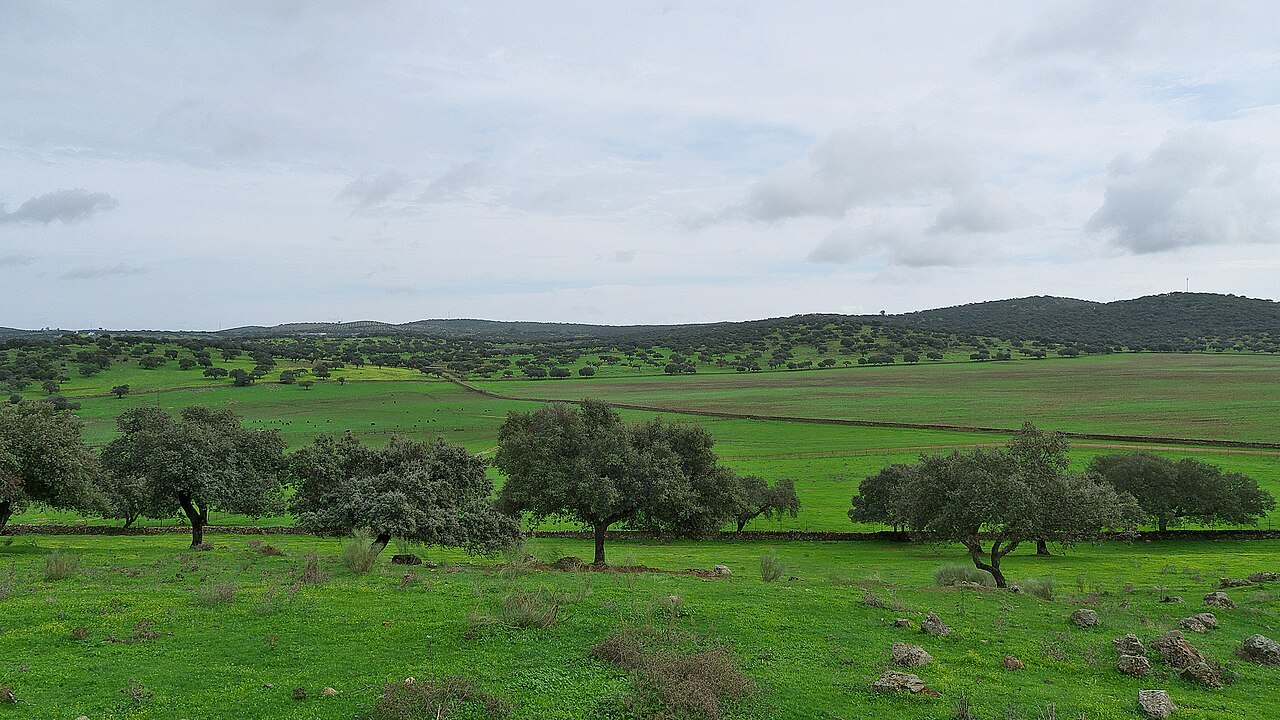
Photo credit: Dehesa en Extremadura, España via Wikipedia Commons licensed under the Creative Commons Attribution 3.0 Unported license.

