
Revamped website

Regular readers will have noticed a lull in activity on the capreform.eu website in the last couple of months. Just before Christmas 2018 the site was hacked and spam posts were mailed out to subscribers. I decided to take the opportunity to rebuild the site with greater security and in the meantime to cease activity. I did write a few posts on a temporary blog which I have now transferred to this site. Those who subscribe to the site and receive posts by mail will have noticed a resumption of activity in the past two days as older posts have been mailed out (sometimes in duplicate, for which I apologise). There may well be some teething problems but I hope the site is now up and running normally and that visitors can access and read all posts.

All of the content on the capreform.eu site has been retained and you are welcome to review the Archives which go back to 2006.… Read the rest
UK announces proposed applied tariff schedule in event of no deal Brexit

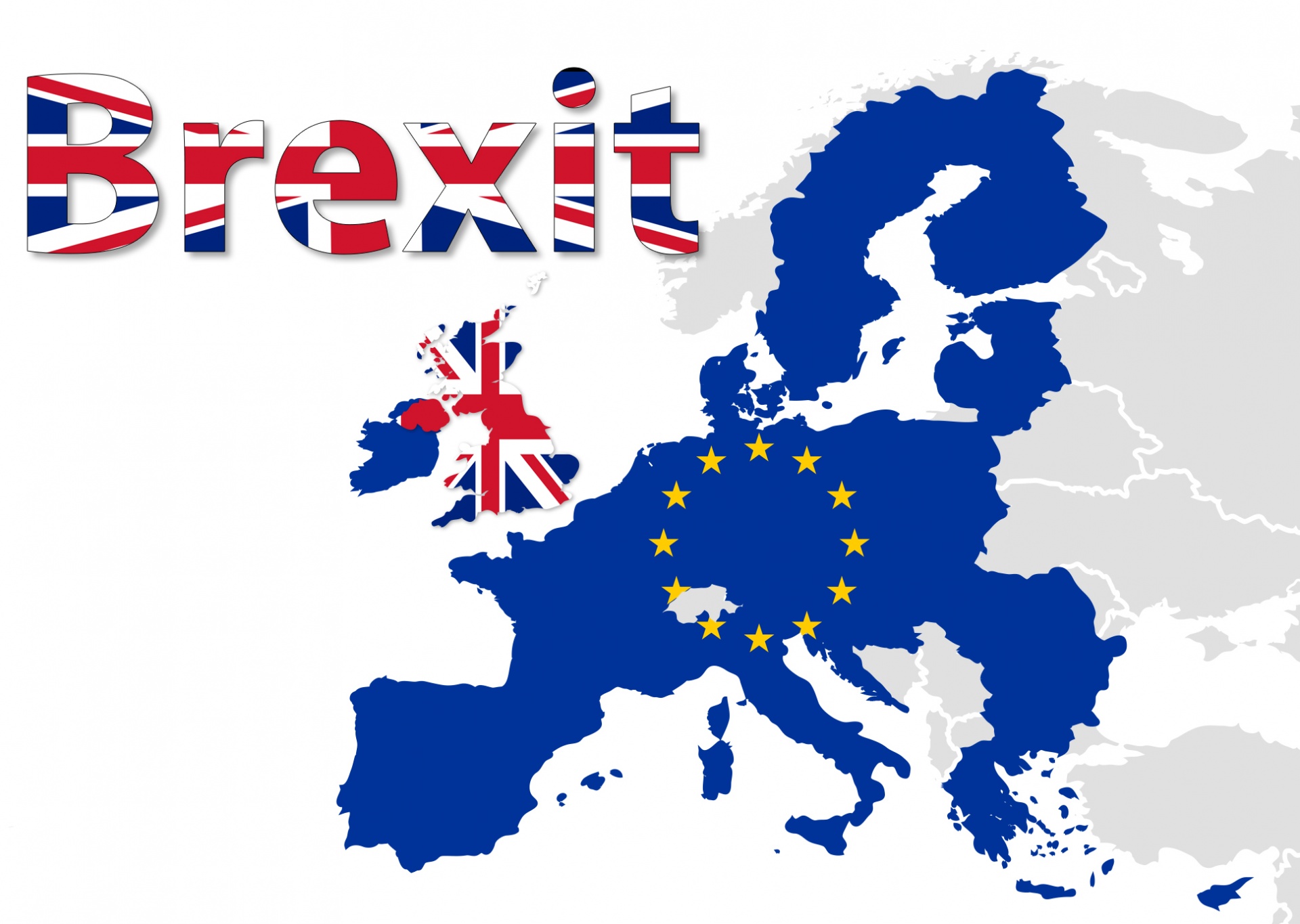
The UK today announced the tariff schedule it would intend to apply in the event of a no-deal Brexit after 29 March 2019. As far as agricultural tariffs are concerned, Gail Souter, the UK National Farmers’ Union Chief EU Exit and International Trade Advisor, described it in a tweet as “Quite possibly the greatest example of overnight trade liberalisation of an agricultural market ever”. There has been a lot of speculation in the press and social media about what the new arrangements might mean, and particularly the proposed temporary arrangements on the border between Ireland and Northern Ireland. This post sets out the key sources of information and guidance published by the UK government today. In a later post, I hope to explore the implications for agricultural tariffs and trade, and evaluate the implications of the proposed arrangements for the intra-island of Ireland border.

Sources of information

The relevant documents are mainly found on the UK Department of International Trade (DIT) website, with some additional information (press releases) on the GOV.UK… Read the rest

Hogan addresses COMAGRI on environmental ambition in CAP

Commissioner Phil Hogan gave a presentation last week (Jan 24th) on the proposed environmental and climate architecture in the Commission’s legal proposal for the CAP post 2020 to the AGRI Committee of the European Parliament (the video session can be reviewed here). Today Monday (Jan 28th) the Commissioner gives a similar presentation to the AGRIFISH Council.

There are of course technical issues to be clarified around the Commission’s proposals. How will the proposed eco-schemes in Pillar 1 relate to agri-environment-climate measures (AECMs) in Pillar 2? How will Member States’ level of environmental and climate ambition in their CAP Strategic Plans be evaluated, and how will the level of effort across Member States be compared by the Commission when it approves these Plans? How will double funding be avoided, and what measures will Member States be able to fund in their eco-schemes?

However, the Parliament rapporteurs and the Member State representatives on the Working Party on Horizontal Agricultural Questions (CAP reform) under the AGRIFISH Council have ample opportunity to raise these technical issues with the Commission.… Read the rest

Measuring farmers’ dependence on public payments

There is considerable interest in the amount of support that farmers in the EU receive through public payments. The Commission in its MFF proposal in May 2018 proposed a reduction in the CAP budget (partially offset by increased co-financing contributions from Member States). Member States in the AGRIFISH Council and farm unions as well as the European Parliament have pushed back against this reduction.

A French Memorandum presented to the June 2018 meeting of the AGRIFISH Council asserts that “this decrease on both pillars would undoubtedly threaten the viability of European farms, the income of farmers and their ability to meet the citizen requirements for a healthy, sustainable, affordable and quality food as well as protection of environment and adaptation to climate change”.

To assess whether this is likely to be the case or not, we need factual information on the current importance of CAP payments in farm incomes.… Read the rest

How to improve the CAP’s environmental performance post 2020

We are pleased to welcome this guest post by Faustine Bas-Defossez, IEEP Head of agriculture and land management program, and Kaley Hart, IEEP Senior fellow, who summarise the findings of a recent IEEP report CAP 2021-27: Proposals for increasing its environmental and climate ambition.

Although the CAP is the key EU funding mechanism to support environmental and climate action in the EU agricultural and forest sectors, efforts so far to green this strategic policy have not been sufficient to outweigh the pressures facing the farmed environment. As the EU just published its long term strategy for a climate neutral economy, emissions of greenhouse gasses from agriculture, including the livestock sector, are stubbornly high. Furthermore farming itself depends heavily on healthy soils and water supplies, on pollinators in sufficient abundance and on well managed natural resources.

Yet paradoxically the environment usually has been relegated to a second order issue during the political wheeling and dealing that has preceded a succession of CAP reforms.… Read the rest

Update on the budgetary framework for the CAP post 2020 negotiations

As with the 2013 reform, the legislative process for the Commission’s CAP post 2020 proposal runs parallel to the discussions on its Multi-annual Financial Framework (MFF) proposal. This parallel process creates three complications for the CAP post 2020 negotiations.

The first is that the timing of the agreement on the MFF influences the timeline for concluding the CAP negotiations (let us call this the sequencing issue).

The second is that the size of the CAP budget is not known when the details of the CAP legislation are being negotiated (I refer to this as the budget issue). Uncertainty over the budget may bias the negotiations towards a more conservative CAP, in the sense of one with a lower level of environmental and climate ambition. However, I express scepticism that a higher budget would lead to a greater level of environmental and climate ambition, unless this is specifically mandated in the European Council conclusions on the MFF.… Read the rest

State aid rules and the CAP 2020 legislation

State aid rules play an important role in the management of the single market. State aid is defined as any advantage granted by public authorities through state resources on a selective basis to any organisations that could potentially distort competition and trade in the EU. Unless otherwise permitted, State aid is viewed as incompatible with the single market and is prohibited. However, the Treaty leaves room for the granting of State aid in respect of several policy objectives, considering the possibility of market failures and the need for a well-functioning and equitable economy. For example, of relevance to the agricultural sector and forestry, the Treaty considers aid to make good the damage caused by natural disasters or exceptional occurrences as compatible with the single market. It may also consider State aid to promote the economic development of the agricultural and forestry sectors and of rural areas compatible with the single market, provided that it does not adversely affect trading conditions.… Read the rest

Market and trade effects of the next CAP reform

It is not possible to be definitive about the market and trade effects of the next CAP reform, for two reasons. One is that the Commission’s legislative proposal published in June 2018 is just that, a proposal, that may well be altered, even quite radically, before the new CAP regulations are agreed. The other is that, under the Commission’s proposal, Member States are given significantly more flexibility than they have at present to craft their own agricultural policy interventions in the context of their CAP Strategic Plans. Until these Plans are approved, it is not possible to predict, inter alia, the level of environmental and climate ambition that EU farmers will be asked to meet after 2020, the extent of targeting and redistribution of Pillar 1 direct payments, or the use that will be made of coupled payments.

Nonetheless, some guidance on the likely scale and direction of the market and trade effects is available from the Impact Assessment (IA) that accompanied the Commission’s legislative proposals.… Read the rest

Member State CAP allocations and progress on the MFF

The Commission’s presentation of its CAP legislative proposals in June 2018 includes Annexes setting out the Member State allocations both for Pillar 1 direct payments (Annex IV of the draft CAP Strategic Plan Regulation) and Pillar 2 rural development (Annex IX of the same draft Regulation). In its draft legislative proposals for the 2013 CAP reform, the Commission had also included an Annex setting out the Pillar 1 Member State allocations (based on the external convergence formula that it had put forward in its MFF proposal a couple of months previously).

But this was not the case for Pillar 2 allocations. Here, the draft Regulation specified that the annual breakdown by Member State would be decided by the Commission by means of an implementing act taking into account (a) objective criteria linked to the three objectives for rural development policy set out in the draft Regulation, namely, competitiveness of agriculture, sustainable management of natural resources, and climate action; and balanced territorial development of rural areas; and (b) past performance.… Read the rest

Evaluating the legislative basis for the new CAP Strategic Plans

The main novelty in the Commission’s legislative proposals for the CAP after 2020 is the New Delivery Model (NDM) which has been described by Commissioner Hogan as representing a shift from a compliance-based to a performance-based or results-based governance system for the CAP.

As set out in a recital to the CAP legislation: “In the CAP based on delivery of performance (‘delivery model’), the Union should set the basic policy parameters, such as objectives of the CAP and basic requirements, while Member States should bear greater responsibility as to how they meet the objectives and achieve targets. Enhanced subsidiarity makes it possible to better take into account local conditions and needs, tailoring the support to maximise the contribution to Union objectives.”

The key instrument designed to underpin the NDM will be the requirement for each Member State to draw up a Strategic Plan setting out its assessment of needs, the specific CAP objectives it intends to address, its intervention strategy including the targets it intends to achieve with respect to these objectives, and the interventions it plans to use.… Read the rest