With the ink barely dry on the Council of Ministers’ final compromise deal on the health check, leading members of the European Parliament are laying into each other after a day of chaotic voting on the Parliament’s approach to the CAP. In a podcast interview yesterday, Paulo Casaca MEP (Socialist Group) told me that the Parliament was ‘lost’ and suffering from a lack of political leadership, something he thought could come from the Commission or from within the Parliament itself. Meanwhile Neil Parish MEP, chairman of the Agriculture Committee and a senior member of the right-leaning European Peoples Party – European Democrats grouping, voted against his own committee’s report and against the EPP-ED position. … Read the rest
Parliament’s health check recriminations begin
With the ink barely dry on the Council of Ministers’ final compromise deal on the health check, leading members of the European Parliament are laying into each other after a day of chaotic voting on the Parliament’s approach to the CAP. In a podcast interview yesterday, Paulo Casaca MEP (Socialist Group) told me that the Parliament was ‘lost’ and suffering from a lack of political leadership, something he thought could come from the Commission or from within the Parliament itself. Meanwhile Neil Parish MEP, chairman of the Agriculture Committee and a senior member of the right-leaning European Peoples Party – European Democrats grouping, voted against his own committee’s report and against the EPP-ED position. … Read the rest
Podcast: Paulo Casaca MEP on the chaos of Parliament's farm policy
In the second of today’s podcasts from the European Parliament, Paulo Casaca MEP gives his immediate reaction to a series of votes on the CAP health check that saw many MEPs break ranks from agreed party lines, evidence of the passions that are aroused when the Parliament debates food and farming. He argues that the Parliament has lost its way on the CAP and must come up with a new vision for the future of the policy. Mr Casaca is a Portuguese member of the Socialist Group and represents the Azores. He sits on the Budget Committee and chairs the pro-CAP reform Land Use & Food Policy Intergroup.… Read the rest
Podcast: Paulo Casaca MEP on the chaos of Parliament’s farm policy
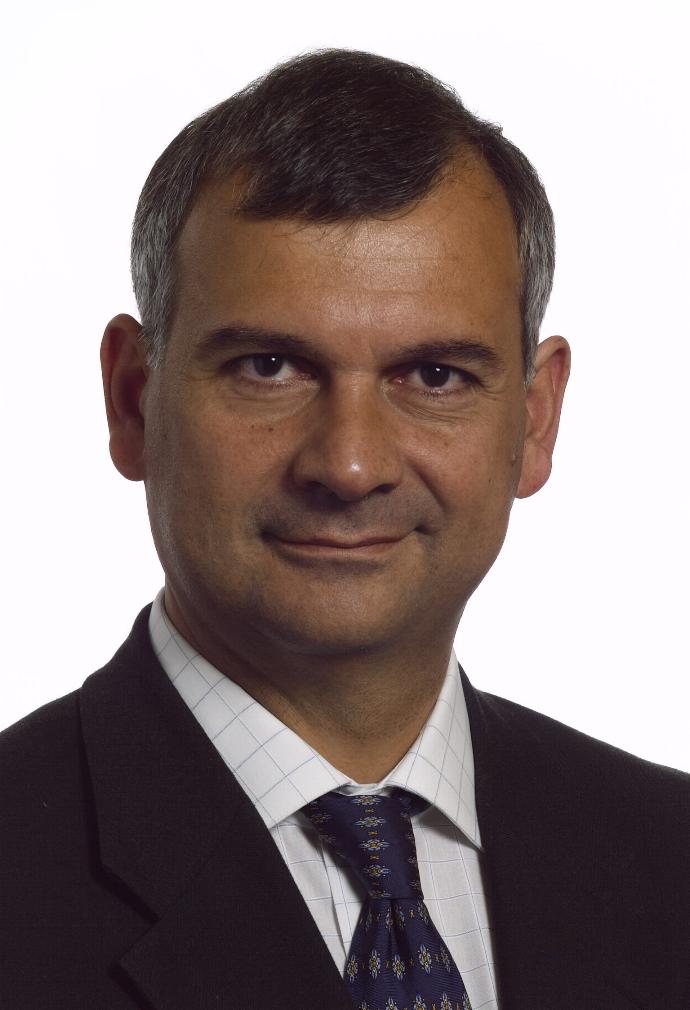 In the second of today’s podcasts from the European Parliament, Paulo Casaca MEP gives his immediate reaction to a series of votes on the CAP health check that saw many MEPs break ranks from agreed party lines, evidence of the passions that are aroused when the Parliament debates food and farming. He argues that the Parliament has lost its way on the CAP and must come up with a new vision for the future of the policy. Mr Casaca is a Portuguese member of the Socialist Group and represents the Azores. He sits on the Budget Committee and chairs the pro-CAP reform Land Use & Food Policy Intergroup.… Read the rest
Podcast: Neil Parish MEP on today's health check vote
The European Parliament today votes on the CAP health check. I spoke with Neil Parish MEP (pictured right), who represents the largely rural constituency of South West England and is a farmer himself. He also chairs the Parliament’s agriculture committee, which drafted the report that is being voted on today. Perhaps unusually for a committee chairman, Neil will be voting against his own committee’s report. We discuss the key issues in the health check end-game and the role of the Parliament, the prospects for the CAP reform in the EU budget review and the positive effect of the fall of sterling for UK farmers.… Read the rest
Podcast: Neil Parish MEP on today’s health check vote
The European Parliament today votes on the CAP health check. I spoke with Neil Parish MEP (pictured right), who represents the largely rural constituency of South West England and is a farmer himself. He also chairs the Parliament’s agriculture committee, which drafted the report that is being voted on today. Perhaps unusually for a committee chairman, Neil will be voting against his own committee’s report. We discuss the key issues in the health check end-game and the role of the Parliament, the prospects for the CAP reform in the EU budget review and the positive effect of the fall of sterling for UK farmers.… Read the rest
Cross compliance: is the Court of Auditors being gagged?
As Wyn Grant has observed, the Court of Auditors annual report on the 2007 EU budget published on Monday identified a clutch of weaknesses associated with the controls on spending on EU farm policies. The Court observes that “Some 20 percent of payments audited at final beneficiary level and revealed incorrect payments, a limited number of which had a high financial impact.” It concludes that farm subsidies remained “affected by a material level of error of legality and/or regularity”.
Strangely absent from the Court’s report was an evaluation of cross compliance – the environmental and animal health and welfare conditions that are required of all recipients of CAP direct payments: public expenditure which totals some 36 billion euros a year (28 billion euros of which is spent under the Single Payment Scheme). Could this be because the Court has just adopted a separate special report on this very subject? But that the report is being held back until the health check is concluded?… Read the rest
Auditors' report makes for sobering reading
The very complexity of the CAP opens it to scams of various kinds. These may not be fraudulent in the criminal sense of the term (although such instances have occurred) but they do represent a use of loopholes to divert public money to line the pockets of individuals.… Read the rest
Podcast: Roger Waite on the health check end-game
As we head into the end-game of the health check, Roger Waite, editor of Agra Facts, analyses the big five outstanding issues:
1. Dairy quotas – how to ensure a smooth transition to a free market in milk within the EU.
2. Article 68 – targeted policies or recoupling via the backdoor?
3. Modulation – how to move money from old-style farm subsidies, especially to Europe’s largest farms, to fund rural development and farmland conservation.
4. Co-financing – will the health check require hard-pressed member state treasuries to find more nationally-funded spending for the CAP?
5. The future of common market organisations – an end to intervention?
Roger also gives his views on the likely successor to Mariann Fischer Boel, whom he expects to stand down as Agriculture Commissioner in 2009. … Read the rest
Commission perspectives on agriculture and rural development
For most of its life, DG Agriculture has been concerned with managing agricultural markets, increasing farm productivity and guaranteeing European farmers a good income. In the 1990s, under the leadership of Commissioner Franz Fischler, it began paying more attention to broader economic development and environmental concerns in rural areas. This new interest led to the establishment of the Rural Development Reguation, a suite of new policy instruments (a ‘second pillar’ of the CAP) that comprised a set of mostly farm-based subsidy schemes designed to run alongside the traditional farming policies of the EU’s common market organisations (the ‘first pillar’ of the CAP). The Commission recently held a big rural development conference in Cyprus and this was accompanied by the publication of a short paper looking at the role of agriculture in rural economies across the EU and a large dataset of rural development statistics and indicators.… Read the rest