
Conversation with a chatbot on the Common Agricultural Policy

Artificial intelligence (AI) has been described as the fourth industrial revolution, following the invention of the steam engine, electric power, and the internet. AI tools can rapidly synthesize large amounts of data and detect patterns. AI tools are increasingly used in business but also in the provision of public services in activities such as risk profiling, the delivery of medical care, and traffic management.

There is growing interest in the interface between AI and public policy. This is a relationship that works both ways. On the one hand, there are concerns about how best to regulate the use of AI in society. AI is not a risk-free option. Its algorithms—the engines that generate intelligence out of raw data—can reinforce existing discriminatory practices. And its tools, such as facial recognition, can violate privacy protections. On the other hand, there is interest in making use of AI capabilities to improve public policy, for example, through data-driven policy making.… Read the rest
2022: a record year for farm income

2022 was a challenging year for farming in the EU. Buffeted by weather extremes, disease outbreaks and rising input costs due partly to the lifting of COVID-19 restrictions but particularly following the Russian invasion of Ukraine in February, there was a sharp drop in agricultural production. Yet despite the predictions of doom and gloom, 2022 was a record year for EU farm income.

We had effectively the converse situation to the farmer in Shakespeare’s Macbeth who ‘hanged himself on the expectation of plenty’. Shakespeare’s farmer had hoarded grain in order to sell it later, when prices went up. But when prices went down instead due to a good harvest, he goes bankrupt and hangs himself in despair. In 2022, EU production went down but the rise in prices more than compensated, and farmers in aggregate had a very good year. This post looks at the outcome at year end, based on the preliminary Eurostat figures published in mid-December.… Read the rest

Regulating the most polluting livestock farms is justified

This post was first published in Acid News No. 4, December 2022 and is reproduced here with permission.

In April 2022 the Commission proposed to amend the Industrial Emissions Directive (IED) to increase its effectiveness in reducing emissions of industrial pollutants that are harmful to human health and the environment.

The Directive seeks to ensure that installations operate using Best Available Practices. Installations covered by the IED are required to operate in accordance with a permit which sets conditions in line with the principles of the IED.

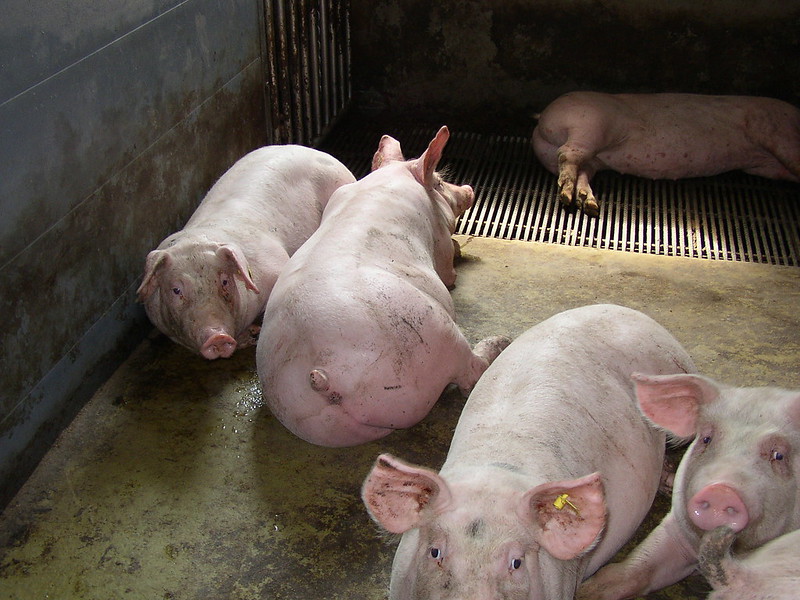
Around 52,000 installations are currently covered by the IED, of which 23,000 are large pig and poultry farms. One of the revisions proposed by the Commission is to extend the scope of the IED to include large cattle (dairy and beef) farms and to lower the size threshold for the inclusion of pig and poultry farms.

With a proposed threshold of 150 Livestock Units (LSU), this would increase the number of farms covered by the IED to around 185,000.… Read the rest

Tracking structural change in EU agriculture

Let me welcome you to the first blog post on capreform.eu since I last posted in July. The long absence was due to two reasons. First, the blog was hacked which prevented me from accessing the back end where I construct the posts. And second, a series of commitments over the summer and autumn meant that I did not have the time (or skills) to work out how to regain access to the blog. Fortunately, the blog posts themselves remained available for those who wanted to read them.

I have now found a way around the block. The site will need a bit more work to fully stabilise it and secure it against future hacking attempts but at least I am able to post again. And for this first post after the enforced break I thought to look at what the recent publication of the Agricultural Census 2020 results on the Eurostat website can tell us about the changing structure of EU agriculture.… Read the rest

EU throws hand grenade into global agri-food trade

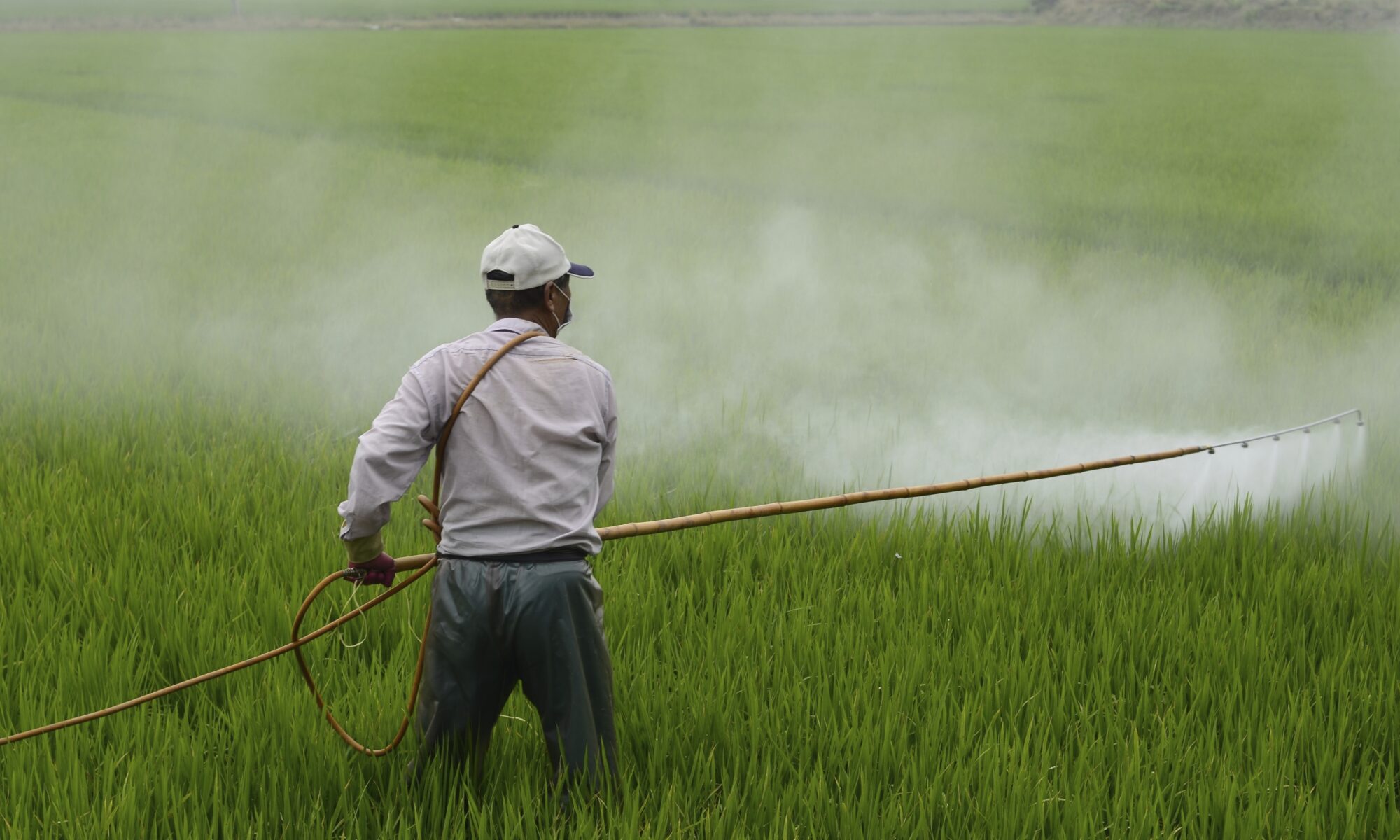
On 6 July 2022 the EU circulated to WTO Members its proposed revisions to Maximum Residue Limits (MRLs) for two neonicotinoid insecticides clothianidin and thiamethoxam (the documents include the formal notification to the TBT Committee, the proposed draft Commission Regulation, and a comparison of existing and proposed MRLs by agricultural product).

Under WTO rules, this is a necessary step when changes in MRLs are proposed. Other Members now have 60 days in which to provide comments on the proposed changes. These comments are then considered by the Standing Committee on Plant, Animal, Food and Feed, the EU body consisting of Member State representatives that decides on pesticide issues, before final approval is given to the proposed Regulation.

While such notifications of changes in MRLs are routine, this particular notification stands out because it is the first time that the EU, or indeed any WTO Member, has proposed to set MRLs on the basis of the global environmental impact of the specified pesticides rather than on the basis of good agricultural practice (GAP) while ensuring protection of consumer health.… Read the rest

Taking developing country interests into account when designing Green Deal trade policies

Today I gave a presentation on the implications of the European Green Deal  for agri-food trade with developing countries to a webinar organized by the European Landowners’ Organisation (ELO) (the presentation can be downloaded here and you can also listen to the presentation itself as well as the webinar as a whole at the following link). The presentation was based on a paper I am preparing on this topic commissioned by the ELO and the issues raised at the webinar will feed into the final version of the paper.

The urgent need to address the challenges that face our food system, to provide healthy and adequate nutrition for all and ensure decent livelihoods while remaining within planetary boundaries, is not in question. The European Green Deal and Farm to Fork Strategy requires that food placed on the market should not only be safe but also sustainable and contribute to better health outcomes.… Read the rest

Antibiotic legislation as a mirror clause

The first priority of the French EU Presidency in the first half of 2022 under the ‘Agriculture and forestry’ heading is to ‘encourage Council discussions on reciprocal environmental and health production standards for European products and products imported from third countries with the aim of subjecting imported products to certain production requirements applied in the European Union where necessary, to strengthen the protection of health or the environment on the largest possible scale, in keeping with World Trade Organization rules (“mirror clauses”)’.

One of the issues on the French Presidency agenda will be the completion of the outstanding legislation necessary to fully implement the Veterinary Medicinal Products (VMP) Regulation (EU) 2019/6. This legislation came into actual effect last Friday 28 January 2022. It can be seen as the first example of the use of a mirror clause for the protection of health. It imposes additional restrictions on the use of antibiotics for animal production in the EU and extends certain of these restrictions to imported animals and animal products.… Read the rest

Price formation in the market for organic products

The Dutch Authority for Consumers and Markets (ACM, the competition authority) has recently published the second of a series of reports intended to examine if there are market failures that would hinder the development towards sustainable agriculture. Both the 2020 Agro-Nutri Monitor and the 2021 Agro-Nutri Monitor contain an English language summary on which this post is based. The reports are based on research undertaken by Wageningen Economic Research on behalf of ACM.

The reports focus on the markets for organic products, while recognising that there are other sustainability labels in the Dutch retail sector. Given the ambition in the Farm to Fork Strategy to increase the area under organic agriculture to 25%, the question asked by the ACM is of wider European interest.

Food markets are generally either oligopolistic (a small number of suppliers) or oligopsonistic (a small number of buyers). Farmers often have only a small number of processors to choose between, while retail sales are dominated by a small number of purchasing organisations, which potentially gives these organisations pricing power.… Read the rest

Trade impacts of Brexit

Trade data on trade between the EU and the UK for the first six months of this year confirm what economists had predicted would happen as a result of the additional trade barriers put in place once the transition period following Brexit came to an end on 31 December 2020. Even allowing for COVID-19 and temporary transitional effects, trade flows have reduced as companies have restructured their supply chains on either side of the English Channel.

What is less expected is that the impact on trade flows has not been symmetrical. According to an analysis by Jonathan Portes using UK trade statistics, UK exports of goods to the EU have now recovered roughly to their pre-COVID-19 levels. But imports from the EU are down substantially, by about 10% compared to two years ago, partly offset by an increase in imports from the rest of the world. Some of the fall in imports can be explained by an increase in imports before the end of the transition period as UK firms stockpiled goods in anticipation of Brexit-related disruption, but UK imports from the EU have yet to regain earlier levels.… Read the rest

Future agri-food export promotion policy

DG AGRI organised a two-day conference on its forthcoming agri-food promotion policy review on 12-13 July 2021. The conference was part of a comprehensive consultation process, which also included an open public consultation, designed to feed into an ongoing review of agricultural promotion policy in DG AGRI. The review was announced in an inception impact assessment in February 2021 and follows the publication of a Commission evaluation in January 2021 which, in turn, was based on an external evaluation of promotion policy including an earlier public consultation. Further details on the EU’s agricultural promotion policy are provided on the relevant Commission web page.

The purpose of the review is to enhance the contribution of promotion policy to sustainable production and consumption, in line with evolving diets, while maintaining or even increasing the policy’s effectiveness in supporting the agrifood sector’s competitiveness. It identified two problems to be addressed. The first is the need to refocus the policy’s objectives.… Read the rest