What ‘common’ agricultural policy?

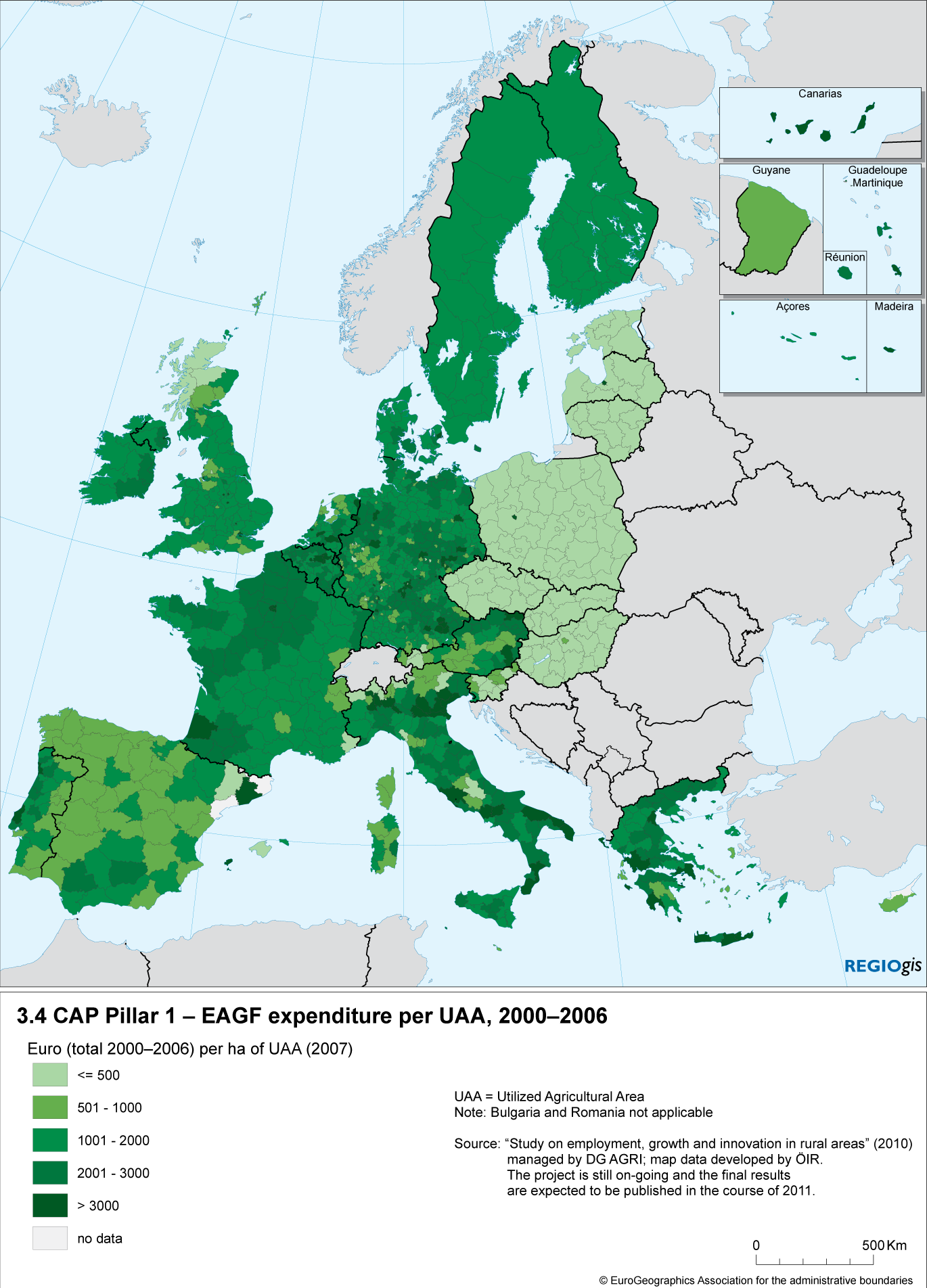
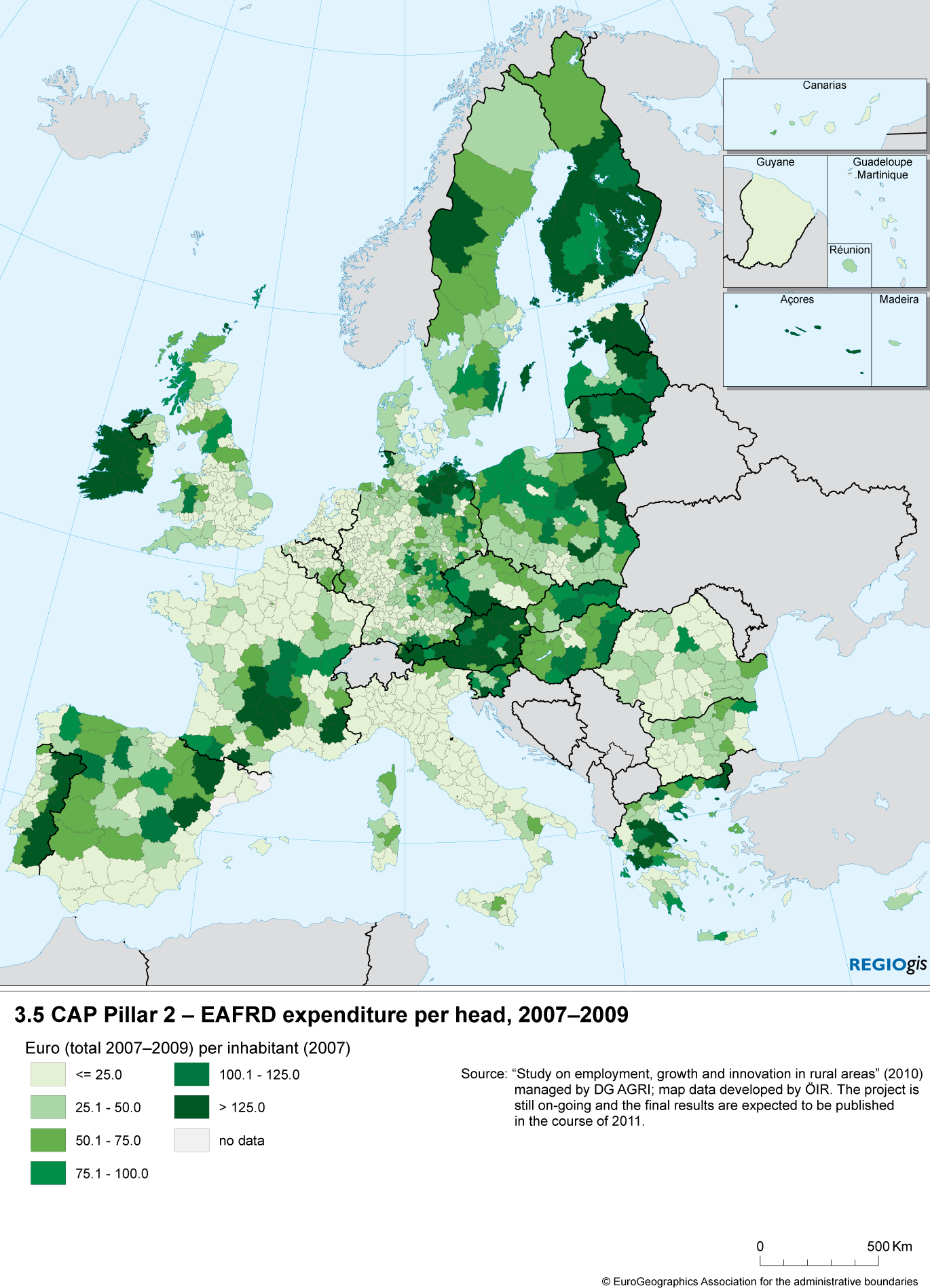
DG Regio’s compendious Fifth Report on Economic, Social and Territorial Cohesion contains a pair of maps looking at CAP expenditure by region.

The first shows the level of Pillar 1 spending per hectare of farmland in in each EU NUTS-3 region over the period 2000-2006.

The second shows the level of Pillar 2 spending per inhabitant in each region between 2007 and 2009.


What do the maps tell us? The first map shows the uneven distribution of direct aids among EU regions of the EU-15. Spain seems to do relatively badly on this score and there is a striking east-west divide in Portugal. Italy resembles a green patchwork quilt, indicating that payments vary considerably among regions. Since the map shows spending from 2000 to 2006, it doesn’t tell us much about the CAP in the new member states, which only joined the EU in 2004.

The second map shows that Austria gets a large amount of EU rural development funding per inhabitant, reflecting a funding formula that takes into account previous national commitments to farmland conservation measures.… Read the rest
What 'common' agricultural policy?

DG Regio’s compendious Fifth Report on Economic, Social and Territorial Cohesion contains a pair of maps looking at CAP expenditure by region.
The first shows the level of Pillar 1 spending per hectare of farmland in in each EU NUTS-3 region over the period 2000-2006.


The second shows the level of Pillar 2 spending per inhabitant in each region between 2007 and 2009.


What do the maps tell us? The first map shows the uneven distribution of direct aids among EU regions of the EU-15. Spain seems to do relatively badly on this score and there is a striking east-west divide in Portugal. Italy resembles a green patchwork quilt, indicating that payments vary considerably among regions. Since the map shows spending from 2000 to 2006, it doesn’t tell us much about the CAP in the new member states, which only joined the EU in 2004.
The second map shows that Austria gets a large amount of EU rural development funding per inhabitant, reflecting a funding formula that takes into account previous national commitments to farmland conservation measures.… Read the rest

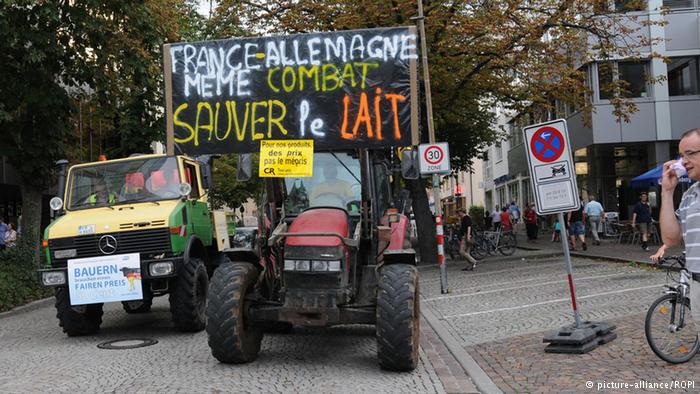
Lessons from the 2009 EU dairy market crisis

The EU dairy market is now recovering from the severe drop in milk prices in 2009. Perhaps the clearest sign of this recovery is the setting of export refunds on dairy products to zero since mid-November, as world market prices for dairy products have strengthened in recent months.

It is thus an opportune time to evaluate the EU’s response to the crisis, and to see what lessons might be drawn for how the Union can address similar problems in other farm sectors in the future. My view is that there is a lot to be learned from the dairy crisis, and that the outgoing Commissioner deserves credit for the way she handled it.

EU milk prices improving

Let us first review the evidence that the milk market is improving. The trends in the EU market prices (proxied by the German price and represented by the blue line) and the EU intervention price (the red line) for butter and skim milk powder (SMP) have been graphed by CLAL.it… Read the rest