
Ariel Brunner is Head of EU Policy at Birdlife Europe
Earlier this month saw the European Council give the final rubberstamp to the reform of the CAP. It is now time to assess what has happened to Commissioner Ciolos’ promise of a green, fair and simple policy. Unfortunately any remotely honest evaluation of the new CAP must acknowledge that the original promise has been betrayed by Member States and the European Parliament.
In terms of the use of public money, we see a CAP where targeted Pillar 2 measures have been disproportionally reduced, while the bulk of the budget remains in completely untargeted, entitlement based payments that are not linked to any real policy objective. Cross compliance has been hollowed out by dropping much needed obligations and weakening controls and sanctions, making it even easier for law breakers and polluters to enjoy public subsidies – you can even be caught killing a bird of prey red-handed and still receive your full payment, even though the Birds Directive still forms part of the cross compliance system.… Read the rest
The Ciolos CAP reform
The CAP2013 reform ended with a whimper yesterday as the Agricultural and Fisheries Council adopted the revised regulations as an A item without discussion following a first reading agreement with the European Parliament. Today the President of the Council ratified the documents in the presence of the ministers from Denmark, Cyprus and Ireland and the vice-minister from Poland. This concludes the legislative process for the 2013 CAP reform. For the first time, we now have a clean version of the four main regulations, as follows.
Direct payment regulation
Rural development regulation
Horizontal regulation
Single CMO regulation
The extended Council press release announcing the Council’s approval has a useful annex summarising the main changes which will be introduced by this reform.
Factors shaping this reform
The 2013 CAP reform will be known as the Ciolos reform although whether it really is a reform or not will be debated for some time. This blog has expressed its disappointment that the reform was not a more ambitious one.… Read the rest
"Habemus consilium rusticarum"
White smoke eventually emerged from the Brussels CAP negotiations on Tuesday evening last 24 September to indicate that the final elements of the CAP regulations for the period 2014-2020 had been agreed between the Council, Parliament and Commission. The Ciolos reform has been concluded. The outstanding elements concerned those issues related to the CAP which were left in ‘square brackets’ in the June political agreement because they had been included in the European Council’s MFF conclusions in February this year.
For the Parliament it was a matter of principle that issues which would be addressed in the CAP regulations should be negotiated through the co-decision procedure and not decided unilaterally by the Council, even the European Council. It wanted to establish the principle that all outstanding issues were open to negotiation even if, in the final compromise, only some of the Council conclusions were modified.
But that even some of the February European Council conclusions were modified was underlined in the Parliament’s press conference this morning as an important outcome in the inter-institutional battle, as indeed it was.… Read the rest
CAP reform implementation consultations begin
The most defining characteristic of the political agreement reached on CAP reform in June 2013 in hindsight may not be the greening of Pillar 1 payments or the move towards greater ‘fairness’ in the CAP as a result of external and internal convergence, but rather the re-nationalisation of some aspects of agricultural policy with the devolution of much greater flexibility to member states in how the new CAP can be implemented.
This flexibility may be seen as a consequence of trying to manage a single CAP in an increasingly heterogeneous agricultural landscape in Europe following successive enlargements to an EU of 28 member countries. Or it might be seen as the price of reaching agreement on a complex political package in which each member state had particular political interests to defend, leading to a self-service menu of CAP reform options.
Flexibility in implementing the CAP can be a desirable feature if it results in a better alignment of agricultural policy with the needs of individual countries and regions – this has been the traditional argument behind the menu approach which is now a well-established feature of Pillar 2.… Read the rest
A triumph for the Irish Presidency – a damp squib for CAP reform
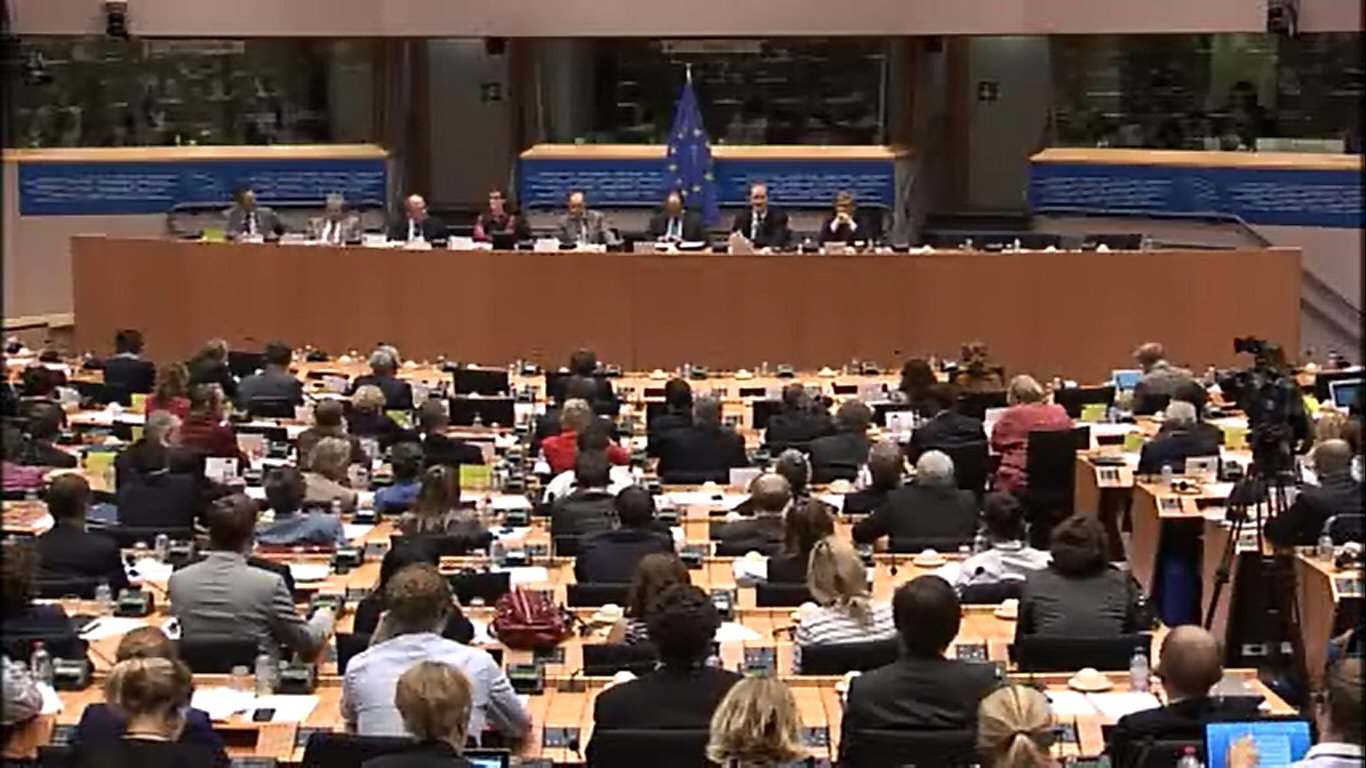
Yesterday morning (Wednesday 27 June), in a final trilogue, the Irish Presidency reached a political agreement with the European Parliament negotiating team on remaining outstanding issues on the CAP reform dossiers. In the afternoon the deal was discussed in a relaxed COMAGRI meeting.
Although no formal vote was taken, Paolo de Castro, the COMAGRI chair, concluded that there was broader support among the Parliament’s political groups for the final outcome than there was for the vote on the negotiating mandate in March. The Presidency had secured a more flexible negotiating mandate at the June Agricultural Council meeting earlier in the week, so although there is as yet no formal reaction from agricultural ministers it seems clear this agreement will also be supported by the Council. The main points of the deal are summarised in this Commission press release.
To cap this success for the Presidency, there was the further announcement this morning of a political agreement between the three Presidencies (Council, Commission and Parliament) on the MFF.… Read the rest
The June Agricultural Council issues paper
Last Friday the Presidency circulated an issues paper which sets out its views on the potential landing zones on some of the key issues in the CAP reform negotiations. There are some 22 issues on the list; the paper warns that this list is not comprehensive and that other issues are still under negotiation, underlining the scale of the challenge in reaching a political agreement in the trilogue process over three days this week.
The 22 issues are:
-
• Implementing financial discipline to finance the crisis reserve and/or to avoid breaches of the financial sub-ceiling;
• Active farmer definition;
• MFF issues including capping and degression;
• Internal convergence options for basic payments;
• Observance of greening on land not covered by entitlements;
• Defining Ecological Focus Areas for the greening payment;
• Equivalence, baseline and double funding of greening practices;
• Greening penalty;
• Treatment of young farmers:
• The percentage ceiling for coupled payments;
• Treatment of small farmers;
• Ending of sugar quotas;
• Vine planting rights;
• New definition of areas of natural constraints;
• Financial provisions in the rural development regulation, including co-financing rates and mandatory minimum spend on agri-environment/climate measures;
• Obligation on MS to pay interest on late payments;
• Suspension of monthly payments for failures of key controls;
• Suspension of monthly payments for non-submission of control statistics;
• Recovery of undue payments;
• Harmonisation of payment dates.
The June Agricultural Council
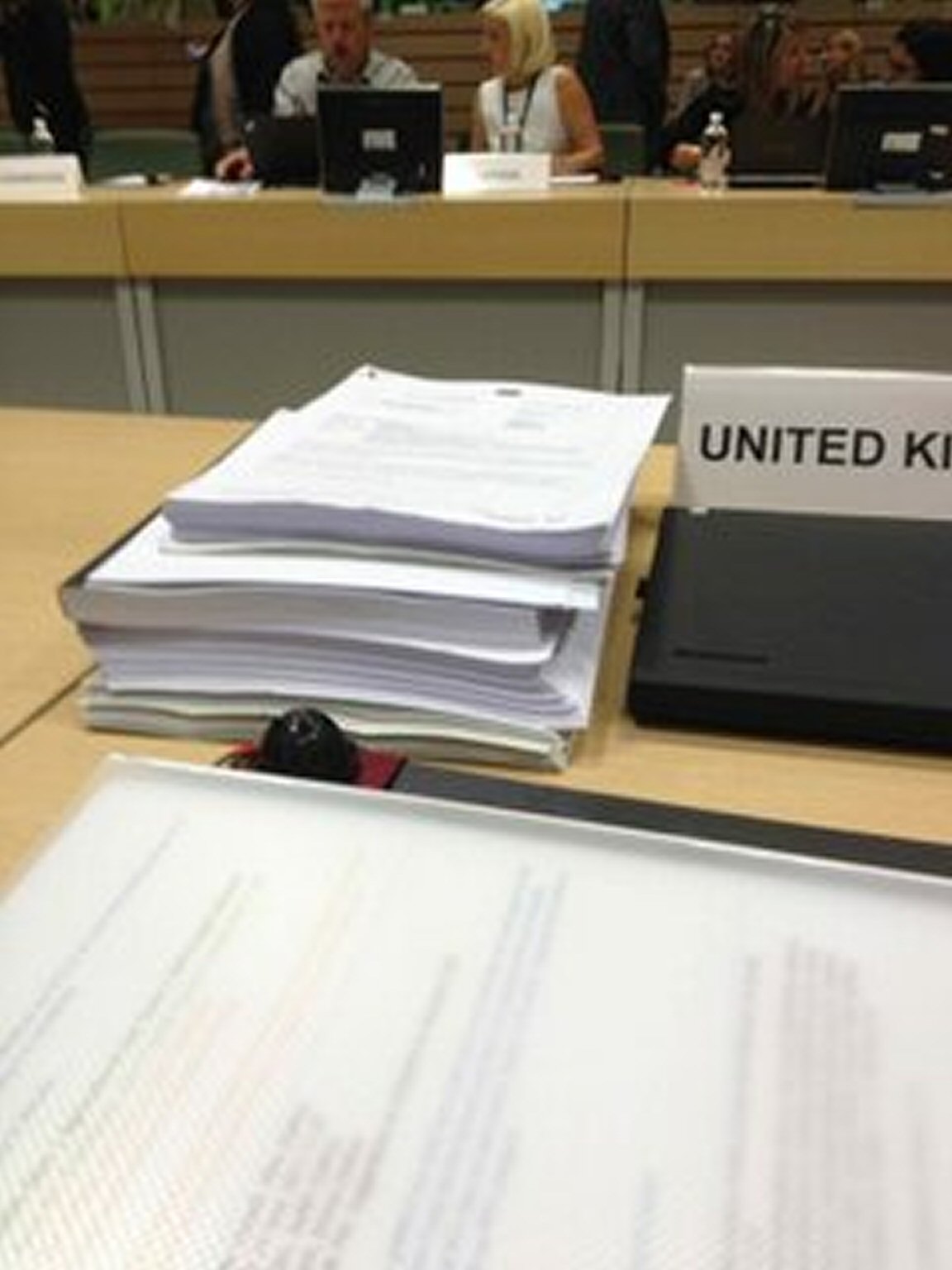
All roads lead to Luxembourg this weekend where agricultural Ministers begin to gather on Sunday for individual trilaterals with the Irish Presidency and the Commission prior to the formal opening of the Agricultural Council meeting on Monday next. The schedule for the following few days is set out in this post from Alistair Driver of the Farmers Guardian.
Monday morning is set aside for a formal Council discussion with a view to revising the Presidency’s mandate for the trilogue negotiations with the Parliament. Parallel trilogues with the Parliament’s negotiating team on the four regulations will then take place on Monday afternoon. Tuesday the Council will discuss the remaining issues of contention in a bid to find common ground and on Wednesday the Presidency returns to Brussels for what is hoped will be the final trilogue with the Commission and Parliament in the bid to reach a political agreement on the revision of the CAP regulations for the 2014-2020 period.… Read the rest
Where stand the CAP reform negotiations?
Last week I participated in a session on the state of the CAP reform negotiations at the annual conference of the Italian Association of Agricultural and Applied Economics in Parma.
There were four presentations in the session, including an overview of the state of play in the negotiations by Giovanni Anania; a review of the CAP greening proposals by Jean-Christophe Bureau; an examination of the proposed changes in the rural development regulation by Francesco Mantino; and a discussion of how co-decision is influencing the outcome of these negotiations by myself.
Because the presentations might be of more general interest, with the permission of the presenters I plan to link to them over the next few days. This post links to the presentations of Giovanni Anania and Jean-Christophe Bureau.
Giovanni Anania’s (University of Calabria) presentation here in his well-known technicolour style is in two parts. The first part consists of the actual presentation (time was short, so the number of slides which could be covered was limited).… Read the rest
A race against time
Two important meetings as part of the process of agreeing a CAP reform took place earlier this week – the Agricultural Council on Monday and the Ecofin Council on Tuesday. The Agricultural Council meeting was notable for the success of the Irish Presidency in getting agreement on a compromise mandate on the Common Fisheries Policy reform after 36 hours of negotiations which it is hoped will be the basis for a political agreement with the Parliament before the end of the Irish Presidency in June.
We are not yet at the same point with the CAP reform dossier (see this recent update to the Irish Parliament by Simon Coveney, the Irish Minister representing the Council in the trilogue negotiations and this view from Mairead McGuinness, one of the shadow rapporteurs in the European Parliament). Both the Irish Presidency and the Agriculture Commissioner continue to make bullish pronouncements (as indeed they must) that an overall CAP package also acceptable to the European Parliament negotiators will be agreed at the next Agricultural Council in June.… Read the rest
A short bibliography on CAP greening

As this was a relatively quiet week for news on CAP reform, I thought it might be useful to gather together in one place some references to the debate that has taken place on CAP greening since the publication of the Commission’s proposals in October 2011. This remains one of the knottiest issues to resolve in the CAP trilogues. These papers provide a guide to the general issues in this debate. There is also an emerging literature which attempts to estimate the impact for particular regions and farming systems of implementing the greening measures which I do not cover here. The papers are presented in rough chronological order and include a number of my own contributions so there is a certain amount of repetition.
Alan Matthews, Environmental Public Goods in the New CAP: Impact of Greening Proposals and Possible Alternatives, 2012, Brussels, European Parliament.
This note prepared for the European Parliament’s COMAGRI discusses the greening component of direct payments in the Commission’s legislative proposals of October 2011 for the Common Agricultural Policy in the period after 2013.… Read the rest