
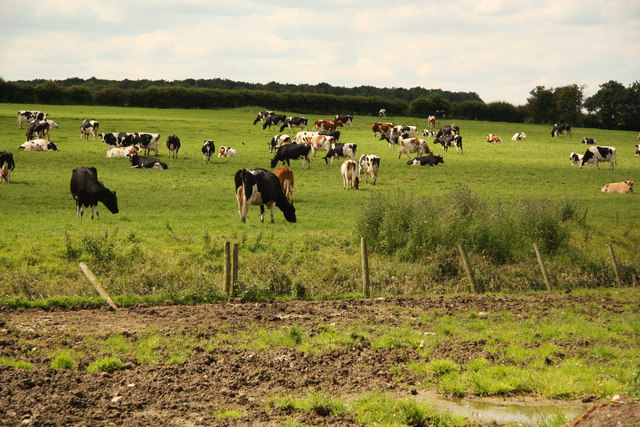
Milk policy in the EU – a case of policy incoherence

While milk producers in the EU struggle with low milk prices, the EU and its member states struggle to come up with a coherent policy to address the issue. Milk prices will not recover until there is a better balance between supply and demand. I have previously written a number of posts (here and here) in which I have described the policy responses introduced in response to the sharp fall in milk prices since their record high in early 2014.

These responses include measures designed to reduce supply. Specifically, the Commission has activated Article 222 of the CMO Regulation which suspends competition law in the case of producer organisations, co-operatives and inter-branch organisations and allows them to voluntarily limit supply with a view to raising the price of milk. The Commission has also indicated that it is prepared to approve higher levels of state aid to individual farmers who voluntarily freeze or reduce production compared to a reference period in the dairy, pigmeat and fruit and vegetable sectors.… Read the rest

Two steps forward, one step back: coupled payments in the CAP

One of the success stories in the evolution of CAP reform has been the change from supporting the product to supporting the producer by moving, first, from market price support to coupled payments, and then by decoupling these payments.
The 2013 CAP reform has reversed this process. Coupled aids have started to grow again, from a projected €2.7 billion in 2014 to a projected €4.8 billion in 2015, an increase of nearly 75%. Their share of total direct payments will rise from 6.7% in 2014 to 11.6% in 2015. This step backwards was one of the negative outcomes of the recent CAP reform. The limited data available raise the question whether the new coupled payments fully comply with the criteria set out in the new direct payments regulation.
Coupled payments in successive CAP reforms
The decoupling of CAP direct payments started in the 2003 Fischler reform (implemented from 2005), continued with the subsequent reforms of individual commodity regimes and reached its high point in the 2008 Fischer Boel Health Check.… Read the rest