Some weeks ago I discussed the prospects for a Doha Round mini-package at the next WTO Ministerial Council meeting in Bali in December, and I explained the proposals making up the agricultural elements of that mini-package. A recent paper produced jointly by the Geneva-based International Centre for Trade and Sustainable Development (ICTSD) and the Food and Agriculture Organization (FAO) also provides a useful introduction to the agricultural issues at stake in the Bali talks.
Since then, the Chair of the agricultural negotiations has provided a status update on the progress towards agreement on this mini-package. It makes for tortuous reading as the negotiators get into mind-numbing detail on aspects of the proposals. At the same time, the new WTO Director-General, Roberto Azevêdo, has warned that the count-down to Bali has begun and, despite his determined optimism in his report to the informal meeting of the WTO Trade Negotiations Committee (which oversees the negotiations) earlier this month it is clear there is still some way to go if concrete results are to be achieved at this meeting.… Read the rest
The distribution of CAP payments by member state
The Scottish Government is currently waging a campaign for a higher share of the UK national envelopes for Pillar 1 and Pillar 2 of the CAP. It claims that Scotland is almost certain to find itself at the bottom of the EU per hectare league table in terms of both Pillar 1 and Pillar 2 support by the end of the next CAP period because, as a region, it could not directly benefit from the ‘external convergence’ formula used to increase payments in those countries with currently low payments per hectare.
As part of its campaign, the Scottish Government has prepared two tables showing the levels of payment per hectare for both Pillar 1 and Pillar 2 in each member state currently and on average over the 2014-2020 MFF period to bolster its case. As the tables will be of more general interest, I reproduce them below.
Pillar 1 direct payments
The comparison of Pillar 1 payments per hectare is shown in Table 1.… Read the rest
Budget impasse creates uncertainty over December farm payments
All eyes have been focused on the US government shutdown from October 1 through 17 after Congress failed to enact appropriations for the fiscal year 2014, and the simultaneous threat of a US default due to the inability to get a political majority to raise the debt ceiling until Congress finally agreed at the last moment yesterday. Less attention has been paid to the warning given by Financial Programming and Budget Commissioner Lewandowski some weeks ago, and repeated by the Director-General of that Directorate at the European Parliament Budget Committee yesterday, that the EU Commission will find itself unable to pay its bills by the middle of November unless additional appropriations are made available to fund the 2013 budget. The inability of the Commission to pay its bills (mainly reimbursements to member states) has of course a much smaller economic impact than the US case, but it is symptomatic of a different type of political gridlock.… Read the rest
Did we really need the Milk Package?
On 25 September last, the Commission organised a dairy conference in Brussels with 400 stakeholders to discuss the evolution of the EU dairy sector after the end of dairy quotas at the end of March 2015. In his opening speech, Commissioner Ciolos noted that the conference was taking place in a favourable context in terms of the milk market but raised the question whether the market management toolbox now available under the CAP post-2013 proposals is sufficient to enable the sector to adequately anticipate and react to crises in the future.
Commissioner Ciolos referred back to the 2009 milk crisis which led to the establishment of the High Level Expert Group on Milk and ultimately to the introduction of the Milk Package in 2012. This has been incorporated into the revised single Common Market Organisation regulation now waiting for approval by Council and Parliament.
What the 2012 ‘Milk Package’ does
The Milk Package contained two mandatory elements and three optional elements for member states.… Read the rest
"Habemus consilium rusticarum"
White smoke eventually emerged from the Brussels CAP negotiations on Tuesday evening last 24 September to indicate that the final elements of the CAP regulations for the period 2014-2020 had been agreed between the Council, Parliament and Commission. The Ciolos reform has been concluded. The outstanding elements concerned those issues related to the CAP which were left in ‘square brackets’ in the June political agreement because they had been included in the European Council’s MFF conclusions in February this year.
For the Parliament it was a matter of principle that issues which would be addressed in the CAP regulations should be negotiated through the co-decision procedure and not decided unilaterally by the Council, even the European Council. It wanted to establish the principle that all outstanding issues were open to negotiation even if, in the final compromise, only some of the Council conclusions were modified.
But that even some of the February European Council conclusions were modified was underlined in the Parliament’s press conference this morning as an important outcome in the inter-institutional battle, as indeed it was.… Read the rest
Distributing farm payments in Ireland
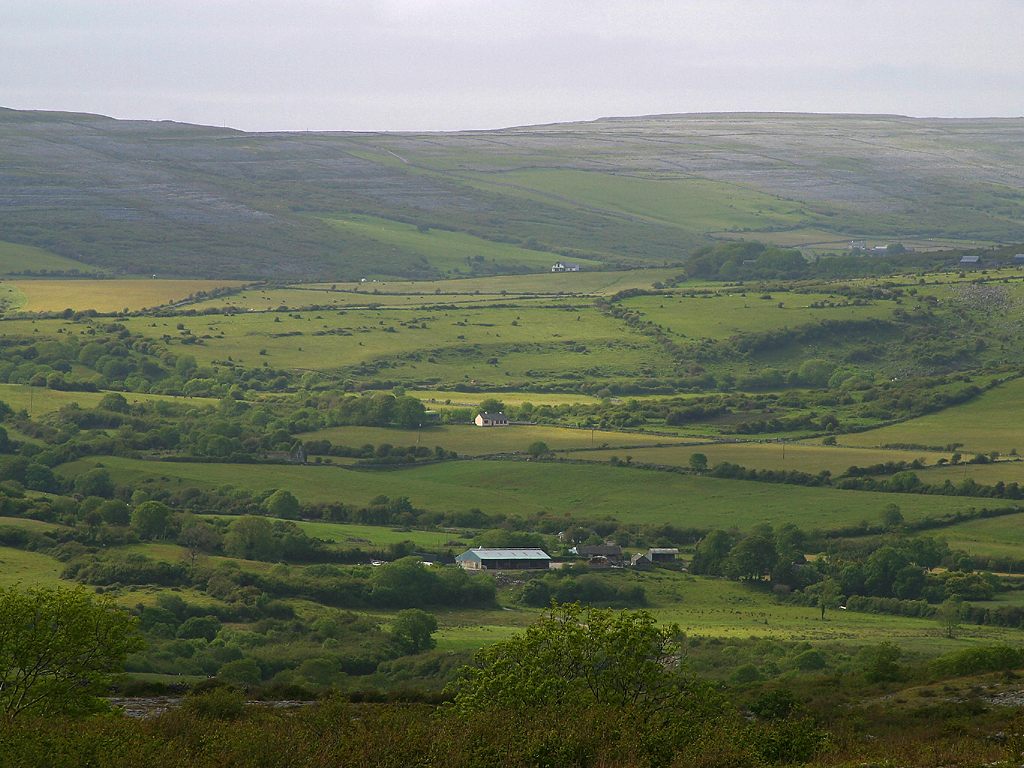
The Irish Department of Agriculture, Food and the Marine’s consultation on how to implement the new Direct Payments Regulation in Ireland closed last Friday. Ireland is an interesting case study in moving from the historic payment model because of its predominantly grassland-based agriculture and the high dependence of Irish farm incomes on direct payments (the single farm payment alone contributes 50% of Irish farm income). There are significant differences across farms in both the value of payment entitlements per hectare as well as in stocking densities per hectare (the best measure of the intensity of land use in grassland farming), which has given rise to a lively debate on how direct payments should be distributed in future. Those interested will find my submission to the consultation here.
Picture credit: Jon Sullivan… Read the rest
OECD Agricultural Policy Monitoring and Evaluation Report 2013
Today the OECD published its annual update of trends in producer and consumer support to farmers (measured as the Producer Support Estimate, PSE and the Consumer Support Estimate, CSE, respectively). It shows overall support levels rising in 2012, following the historical low recorded in 2011.
For the OECD countries the share of support in farm receipts is 19%, up from 18% the previous year. There are sharp divergences behind these figures with the highest support countries recording increases (Japan 56%, Korea 54%, Norway 63% and Switzerland 57%) while relatively low support countries fell further (Israel 11%, Mexico 12%, United States 7%). The EU mirrors the overall OECD trend with a rise from 18% to 19%.
Some emerging economies which are key players in agriculture continued to increase support to their farmers – for China, the share of support in producer receipts is now 17%, for Indonesia 21% and for Kazakhstan 15%.… Read the rest
The end of export subsidies?
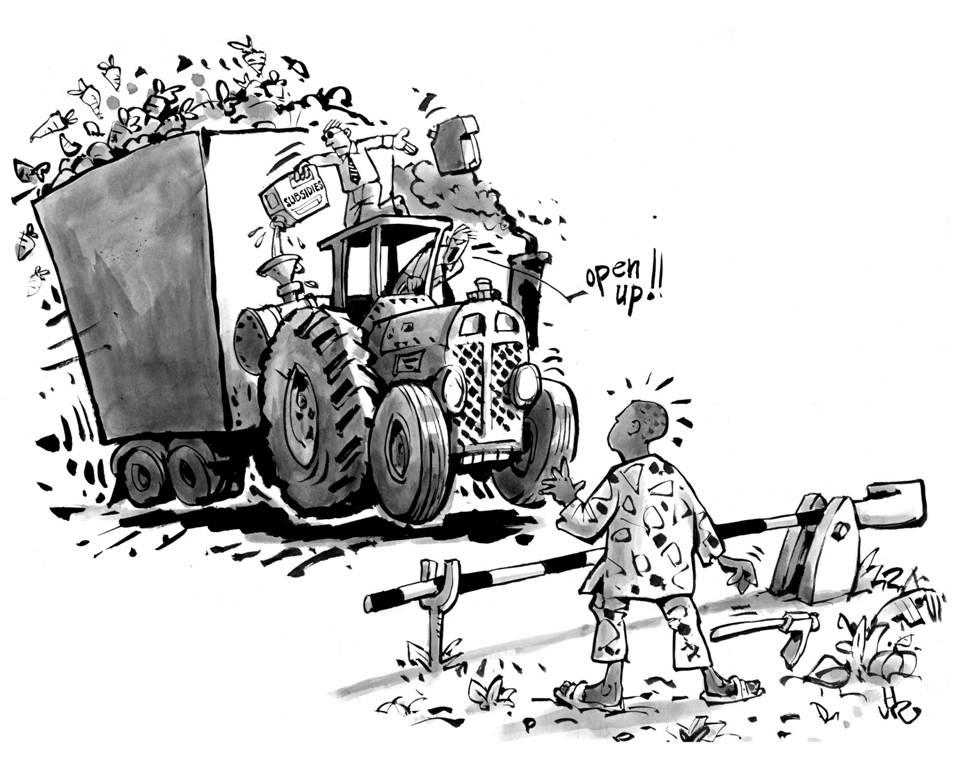
Well, not quite. But with the publication of the final texts of the CAP political agreement last week we can now scrutinise the detail and fine print. Changes to the language on export subsidies in the single Common Market Organisation regulation go further than before in limiting the future use of export subsidies, without quite taking the final step of eliminating them altogether.
I previously discussed the EU’s use of export subsidies in this post last year. I highlighted both the sharp fall in the use of export subsidies by the EU, the high cost to taxpayers and citizens of using this instrument to support market prices and farm incomes and the growing political support for their abolition.
I argued in the post that the EU should use the opportunity of the revision of the CMO regulation to eliminate export subsidies, while recognising that a less satisfactory outcome would be a self-denying ordinance by the Council and the Parliament not to make use of the instrument after 2013.… Read the rest
EU budget negotiations and farmers’ 2013 single farm payment
The value of SFP payment entitlements (and the SAPS payment in the new member states) that farmers will receive later this year will be based on current eligibility rules (as set out in Council Regulation (EC) 73/2009 agreed following the CAP Health Check) but on the budgetary amounts set aside for 2014 under the new Multiannual Financial Framework (MFF) regulation for the coming period 2014-2020. This is because the 2013 direct payments are paid out of the 2014 EU budget which runs from 1 October this year.
This means that, even without the new CAP regulations agreed in June 2013 coming into force (which are now delayed to 1 January 2015), what farmers will receive in direct payments in 2013 will differ from what they were paid in 2012 for two main reasons:
• The overall budget for direct payments agreed for 2014, taking into account the additional demands on this budget arising from the phasing in direct payments in the new member states plus the provision for the new crisis reserve, is lower than before.… Read the rest
The Doha Round Bali ‘mini-package’ in agriculture

In the previous post, I discussed the process leading up to the forthcoming Bali Ministerial Conference of the WTO and the prospects for progress on a Doha Round ‘mini-package’. This ‘mini-package’ is planned to consist of three components: trade facilitation, some development/LDC issues and some agricultural elements (with the possibility of including other elements such as the dispute settlement review and the Information Technology Agreement if progress allows). In this post I discuss the issues being negotiated as part of the agricultural strand of this package.
The agricultural consultations have focused around three proposals tabled so far:
• a G-20 non paper which proposes an understanding on tariff rate quota (TRQ) administration provisions. This proposal envisages tighter disciplines for administering tariff-rate quotas, and how to deal with the possibility that the methods used might impede trade.
• a G-33 proposal on some elements of the draft modalities text on agriculture for early agreement to address food security issues.… Read the rest