
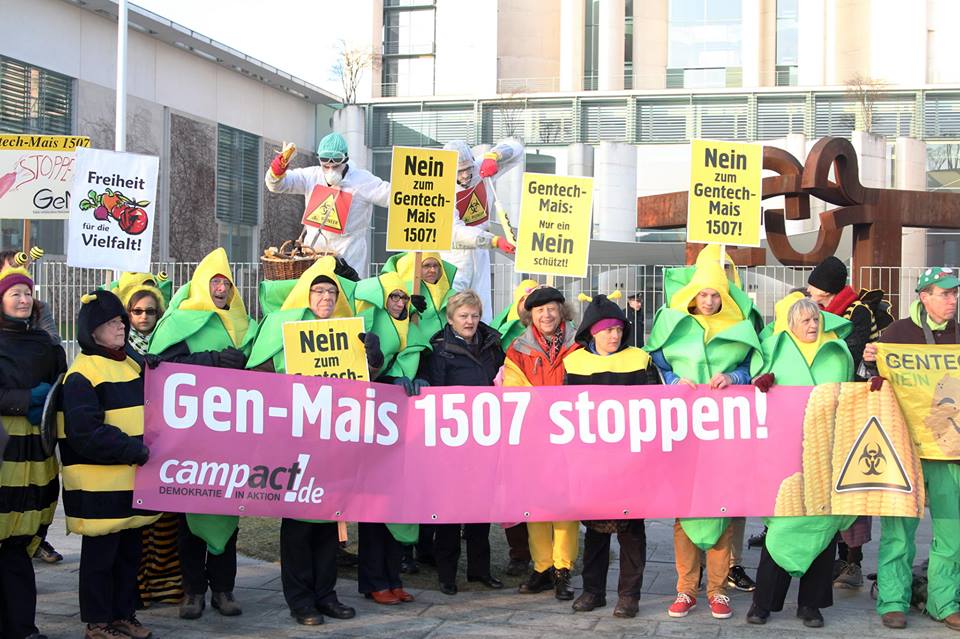
GMO decision-making and the potential impact of Brexit

The EU’s paralysis with respect to decision-making on genetically-modified crops was illustrated once again at last Friday’s (27 January 2017) meeting of the Standing Committee on Plants, Animals, Food and Feed when the committee failed to reach a qualified majority either for or against the renewal of the cultivation licence for the GM maize MON810 (currently the only GM crop licensed for cultivation in the EU) as well as on authorisations for cultivation of two other GM varieties ‘maize 1507’ and ‘Bt11’.

This is despite the fact that 19 Member States have excluded all or part of their territory from the cultivation of these three GMOs, pursuant to the provisions of Directive (EU) 2015/412 (the ‘cultivation opt-out’ directive).

The Commission’s expectation that allowing countries to ‘opt out’ of cultivation of an approved GM crop would soften their opposition to allowing other countries to proceed with cultivation if they so wished has only been partially fulfilled.… Read the rest
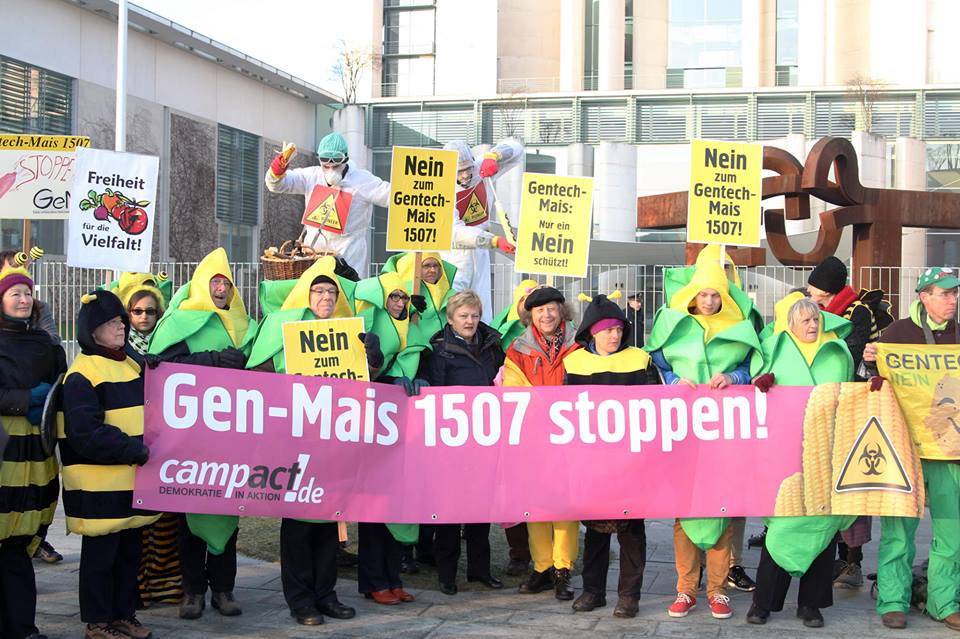
Overcoming the deadlock on cultivation of GM crops in EU countries

EU policy on genetically-modified organisms (GMOs) for use in food and agriculture has been deadlocked for a number of years as member states, industry stakeholders and non-governmental organisations remain conflicted about the use of agricultural biotechnology. Three examples of the policy differences and contradictions that characterise this dossier include the following.

  • The risk assessment procedures in the authorisation process are criticised by opponents of the use of GM plants, food and feed as too lax, but on the other hand as too long-drawn-out and unnecessarily complicated by the biotech industry.
  • Member states are so divided that there is neither a sufficient majority in the Council for or against a decision to approve GM events for cultivation or food and feed use, leaving the Commission by default to take the final decision. Most recently, at the General Affairs Council last February, 19 of 28 EU countries voted against granting approval for the cultivation of a GMO maize variety, Pioneer 1507, developed by DuPont and Dow Chemical.
  • Read the rest

    Global area under biotech crops continues to grow while EU policy struggles

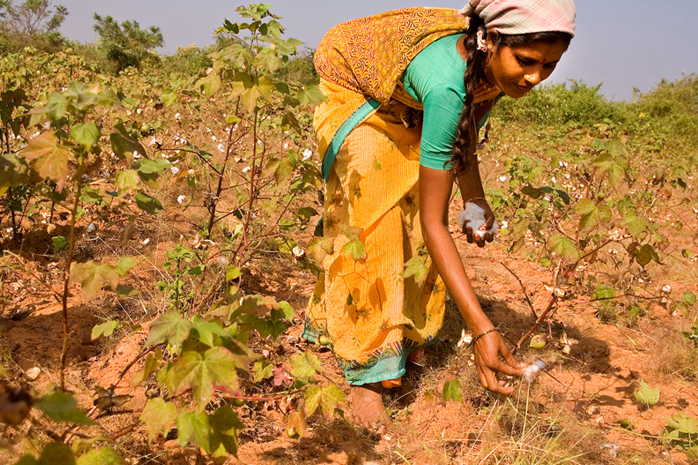
    While the EU struggles to define its policy on the cultivation of GM crops, the area under GM varieties globally continues to grow. Recent data from the ISAAA show that the total global area planted to biotech crop varieties in 2013 reached 175 million hectares for the first time. As 1996 was the first year in which genetically-modified crops were commercialised on a significant scale (the first GM crop planted was tomatoes in 1994), supporters of the technology point out that this rate of expansion makes biotech crops the fastest adopted crop technology in recent history.
    Of the 27 countries which planted biotech crops in 2013, 19 were developing and 8 were industrialised countries. Latin American, Asian and African farmers collectively grew 94 million hectares or 54% of the global 175 million biotech hectares compared with industrialised countries at 81 million hectares or 46% of the total.

    Just four major GM crops dominate the market: soybean, cotton, maize and canola (rape).… Read the rest