Five leading European farming and environmental NGOs, who between them boast several million members, have jointly published a blueprint for a new Common Agricultural Policy. In an unusual and very modern step, they have published a draft proposal and opened it for consultation. They will produce a final version in 2010. The proposal, which runs to 28 pages, is for a radical reorientation of the CAP away from a productivist and income support model towards a ‘public money for public goods’ ethos.… Read the rest
Fischer Boel's 'last feather' plucked
Earlier in the month I wrote that Agriculture Commissioner Mariann Fischer Boel was holding the line against protesting dairy farmers and a clutch of national agriculture ministers looking for more aid for their troubled farmers. It looks as though I spoke too soon. At this month’s farm council, Commissioner Fischer Boel found a further 280 million euro from the 2010 budget to give to dairy farmers, in addition to measures announced last month.… Read the rest
Fischer Boel’s ‘last feather’ plucked
Earlier in the month I wrote that Agriculture Commissioner Mariann Fischer Boel was holding the line against protesting dairy farmers and a clutch of national agriculture ministers looking for more aid for their troubled farmers. It looks as though I spoke too soon. At this month’s farm council, Commissioner Fischer Boel found a further 280 million euro from the 2010 budget to give to dairy farmers, in addition to measures announced last month.… Read the rest
Tackling the new (old) productivism
This afternoon I did a pre-recorded interview with BBC Radio 4’s Farming Today programme. The subject was the House of Lords report on the 2010 EU budget, which says too much money is being spent on agriculture. The first question I was asked by the presenter shows how deeply the new (old) productivism has taken root over the past year. I was asked something along the lines of “Given the fears about food security, don’t we need a well-funded agriculture sector?”.… Read the rest
Fischer Boel golden goodbye: "Because I'm worth it"
The anti-EU agitprop outfit Open Europe has been huffing and puffing over the golden goodbyes that await those European Commissioners who will be put out to pasture when the current Commission’s five year mandate comes to an end later this year. Among their number is thought to be our own Agriculture Commissioner, Mariann Fischer Boel who, after five years of service in Brussels stands to receive approximately 270,000 euros of ‘transition money’ before her 43,000 euro a year pension kicks in.
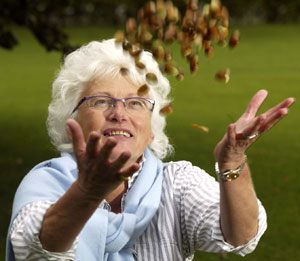 The 66-year old Dane, who sports a trademark shock of snow white hair, has invoked the spirit of Hollywood actress Jennifer Aniston in the L’Oréal commercials, insisting the payout is entirely justifiable “because I’m worth it”. It’s just as well that the Commission scheme is so generous since Fischer Boel, who together with her husband owns several large livestock farms, is too old to qualify for the EU-funded early retirement scheme for farmers, which pays out a maximum of €18,000 a year to farmers who quit before turning 55.… Read the rest
Fischer Boel golden goodbye: “Because I’m worth it”
The anti-EU agitprop outfit Open Europe has been huffing and puffing over the golden goodbyes that await those European Commissioners who will be put out to pasture when the current Commission’s five year mandate comes to an end later this year. Among their number is thought to be our own Agriculture Commissioner, Mariann Fischer Boel who, after five years of service in Brussels stands to receive approximately 270,000 euros of ‘transition money’ before her 43,000 euro a year pension kicks in.
The 66-year old Dane, who sports a trademark shock of snow white hair, has invoked the spirit of Hollywood actress Jennifer Aniston in the L’Oréal commercials, insisting the payout is entirely justifiable “because I’m worth it”. It’s just as well that the Commission scheme is so generous since Fischer Boel, who together with her husband owns several large livestock farms, is too old to qualify for the EU-funded early retirement scheme for farmers, which pays out a maximum of €18,000 a year to farmers who quit before turning 55.… Read the rest
Vision for the future of the CAP
The influential Land Use Policy Group will be launching their vision for the future of the CAP after 2013 in Brussels on March 30th. This will be an important event in the long-term effort to clarify thinking about future policy so that it delivers benefits to the environment and rural communities.… Read the rest
The Estonian vision
A charming young Estonian woman greeted me at the European Parliament yesterday when I went to give evidence to the Agriculture and Rural Development Committee (of which more in due course). Of broader significance Estonia is probably the only new member state with a clear concept of how the CAP should evolve. This is outlined in an Agra Focus interview with farm minister Helir-Valdor Seeder.… Read the rest
20:20 vision
With the health check done and dusted, European agriculture policymakers turn to the bigger questions of the future of the CAP after the current EU financial perspective, which ends in 2013. Ever since the Chirac-Schroeder deal of 2002, which fixed the overall CAP budget and allocation of direct payments for the subsequent eleven years, there has been no serious debate about whether agriculture policy should continue to consume upwards of 50 billion euros a year and whether the current instruments are able to meet current and future challenges. To help shed light on the debate, the Institute for European Environment Policy has this week launched a new website, called CAP2020. … Read the rest
Tangermann's parting shot
Later today Stefan Tangermann will step down as Director of the OECD Trade and Agriculture Directorate, a post he has held since 2002. The OECD has a strict ‘retire-at-65’ rule and it may surprise some to learn that the tall and spritely German, invariably sporting one of his trademark bow-ties, has reached such an age. Professor Tangermann has been a colossus among European agriculture policy analysts for at least two decades. Before taking the job at the OECD he was professor of agricultural economics at the University of Göttingen, having been appointed to that position in 1980.… Read the rest