
Potential increase in CAP funding in next MFF

The figures in Table 1 have been slightly revised since the original post to calculate the flexibility amount as 25% of a country’s NRPF financial allocation less its minimum ring-fenced amount for CAP income support (from which the allocation for CAP investment supports for farmers and foresters should be deducted). In the original post I had based the calculation on the NRPF general allocation.

Commission President von der Leyen sent a letter to the Cypriot Presidency of the Council and to the President of the European Parliament yesterday 6 January 2026, in which she proposed to make additional resources available as of 2028 to address the needs of farmers and rural communities (with thanks to Politico Europe for the link).

This letter was sent on the same day as the Cyprus Presidency invited all Agriculture Ministers to a meeting also attended by the Commissioners for agriculture, trade and health to provide reassurances to Italy and other Member States to sign up to the contentious EU-Mercosur free trade agreement on Friday. The proposal in the letter would be a form of side-payment to bring the wavering countries on board.

The formal part of the proposal, in an annex to the letter, proposes to add a new sub-paragraph to Article 14 of the National and Regional Partnership Fund Regulation which sets out how the resources made available under the so-called General Allocation of the Fund can be used.  Specifically, the following text would be added to Article 14.

When submitting or amending its plan before the midterm review, Member States may use up to two thirds of the amount available for the midterm review for interventions referred to in Article 35(1) or for measures dedicated to rural areas.”

The flexibility amount

As this paragraph is pure legalese, I provide some context in this section. We first need to understand the notion of a flexibility amount. This is defined in Article 14(2) as money that is available to a Member State under its NRP Fund in the 2028-2034 period but which cannot be programmed immediately and which must be held in a flexibility reserve.

This flexibility amount is significant. It amounts to 25% of the financial allocation in the NRP Fund less an amount that is broadly the ring-fenced amount for CAP income support. The financial allocation is the sum of the NRPF general allocation plus the minimum ear-marked amount for migration, security and home affairs, as set out in Article 10(2)a of the NRPP Regulation.

In calculating the size of the flexibility amount, I say that the deduction from the NRP Fund financial allocation is broadly equivalent to the ring-fenced amount for CAP income support. This is because the amount that Member States allocate to investment support for farmers and foresters will be excluded when calculating the deduction and thus the size of the flexibility amount.

The use of the flexibility amount is strictly regulated in the NRP Regulation. One-fifth of the amount can be used by Member States to provide assistance in the case of natural disasters, adverse climatic events, and animal diseases in the first three years of the programming period 2028-2030.

Another three-fifths (plus any unused amount from the first fifth) is available for programming at the Mid-term Review which should be completed by 31 March 2031. While the Mid-term Review provides an opportunity for a Member State to revise its targets and instruments, the intention of the Commission is that the flexibility amount means that Member States will also have additional resources available to address any new challenges that might have arisen between agreement on the NRP Plan and 2031. Part of this reserve can be brought forward and used for programming at the request of a Member State “in duly justified and exceptional circumstances”.

This leaves the remaining fifth of the flexibility amount which can then be requested as of 2031, again to provide assistance in the event of crises. If there is still an unused amount as of June 2033, it can be made available at that point for programming for any amendment of the Plan.

Neither the general objectives for the NRP Fund (Article 2) nor its specific objectives (Article 3) specify that the Fund can be used to provide assistance for natural disasters or climatic crises, although this is provided for in Article 34 of the NRP Regulation.

The 45 billion euro question

Against this background, we can interpret the significance of the Commission proposal presented yesterday. The reference to Article 35(1) refers to the full list of CAP interventions and all are eligible for support.

The Commission has consistently presented the ring-fenced amount for CAP income support as a minimum amount, which Member States could add to from the unearmarked amounts in their NRP Fund allocations (minimum amounts are also earmarked for fisheries, less developed regions and for migration, security and home affairs). A big constraint on Member States being able to programme additional amounts for the CAP, apart from political battles within Member States on the priority to be given between the CAP and cohesion spending, is the Commission proposal to freeze the programming of the flexibility amounts until at the earliest the Mid-term Review.

The Commission proposal is that (a) two thirds of the flexibility amount reserved for the Mid-term Review can now be programmed from the start of the programming period but (b) only if this forwarded amount is used for CAP spending or for measures dedicated to rural areas. The attraction for Agriculture Ministers is that this not only unfreezes resources and makes them available for programming from the start of the programming period, but it locks in that these unearmarked resources have to be used for the CAP or rural areas.

Critics will correctly point out that this amount is not guaranteed additional spending. It does not increase the mandatory ring-fenced amount for CAP income support. But it will give Agriculture Ministers a stronger negotiating hand within their Member States. They will now be able to point out to their Finance Ministers that if the amount is drawn down immediately from the EU budget and used for the CAP or rural areas, the money becomes available to the Member State from 2028 instead of having to wait until 2031 to unfreeze these amounts. In addition, if 20 Member States decide to make use of the option but 8 do  not (counting Belgium as 2), there will be significant additional pressure within the 8 countries to follow suit.

Any funding additional to the minimum ringfenced funding for the CAP will require national contributions from Member States depending on the appropriate co-financing rates set out for the specific type of region where the expenditure takes place. There are no requirements set on the types of CAP interventions that Member States can support with this additional funding. But as using these funds for cohesion or other objectives will require a similar level of co-financing, this is not in itself a disincentive to use this opportunity.

Given the lack of minimum ringfencing within the CAP budget for agri-environment-climate actions, a case could be made that additional funds made available for the CAP in this proposal should be confined to these environmental interventions. However, given the political purpose which this side- payment is intended to achieve, expecting this kind of fine-tuning was always going to be unrealistic.

The additional text proposed by the Commission allows the unfrozen flexibility amounts to also be used for measures dedicated to rural areas. To the extent that Member States favoured rural development measures, this would reduce the additional funding that would directly benefit farmers.

The CAP through its Pillar 2 always included measures designed to support rural development, including LEADER and rural business support schemes. In its November 2025 non-paper to the Parliament, the Commission had already proposed to amend the NRP Regulation to include a dedicated target for rural areas. It had proposed that at least 10% of the NRP Fund financial allocation (again after deducting the minimum amount for CAP income support) should be dedicated to rural areas, calculated by using the code 02 in the Performance Regulation. This refers to any expenditure that takes place in a rural area and is thus a much wider definition of rural development expenditure than traditionally associated with the CAP.

In this way, expenditure traditionally funded by cohesion policy can also be funded from the unfrozen flexibility amounts. This will please advocates of cohesion policy who otherwise have been dismayed by the apparent ability of farm groups to ‘jump the queue’ in accessing unearmarked resources under the NRP Fund. However, for the same reason, this broader remit for the use of the unfrozen resources may limit the extent to which farmers will benefit.

There is also a strong possibility that at least some of this additional CAP and rural area spending will not be additional. The minimum ringfenced amount for the CAP only refers to income support interventions. This term covers more than direct payments, it refers to all those payments (including investment aids) that are received by individual farmers. There are other CAP interventions, such as LEADER, support for knowledge sharing, and territorial and local cooperation initiatives, which are not counted as CAP income support. But the proposed CAP Regulation makes it mandatory for Member States to allocate funding to these interventions in their NRP Plans (in the case of territorial and cooperation initiatives, this only refers to EIP-AGRI operational groups). Funding these interventions will in any case require allocating money from the unearmarked amount in the NRP Fund.

One assumes, if these interventions are mandatory, they will have to be programmed from day one of the NRP Plans. So at least a portion of the unfrozen flexibility amount which can be brought forward is likely to be used to finance mandatory CAP interventions which would have to have been financed in any case. As a result, the net impact of the Commission proposal will be somewhat smaller than the headline amount.

A final element in the Commission proposal confirms that farmers will still be able to access the unprogrammed amounts in the Flexibility Amount for assistance in case of natural disasters, adverse climate events and animal diseases. The sums are substantial, amounting to 10% of the NRPF Fund financial allocation to each Member State less broadly the ringfenced amount for CAP income support.

Impacts will differ across Member States

If all Member States made use of this option in designing their NRP Plans, and if expenditure on rural areas were limited to interventions, such as LEADER, traditionally funded from the CAP budget, it would add a further €45 billion to the minimum CAP ringfenced budget of €293.7 billion, or an additional 15% (my estimate in Table 1 of €48.5 billion differs a little from the Commission’s estimate) . By highlighting also the doubling of the agricultural crisis reserve in the new Unity Safety Net, and as well the possibility of benefiting from borrowing under the Catalyst Europe fund (an option which I highlighted in my previous post on this blog), the Commission concludes that

“the combination of these policy and budgetary tools will provide the farmers and rural communities with an unprecedented level of support, in some respects even higher than in the current budget cycle...”.

However, there will be very different impacts across Member States (Table 1). In this table, I have calculated the maximum potential impact the Commission proposal would have on the CAP budget available per Member State. There is an extraordinarily consistent pattern. All recently-acceded countries would gain more than the EU average in additional spending (for example, Slovakia 40%, Poland 36%, Hungary 28%). On the other hand, all older Member States (except for Portugal and Greece) would receive a smaller increase in their CAP budgets compared to the EU average. While the increases for Italy (16%) and Spain (12%) are significant, the increases for France (7%), Austria (5%) and Ireland (4%) are hardly so.

From a Mercosur perspective, Giorgia Meloni handsomely succeeded in her objective to gain additional support for Italian farmers, while other major opponents (France, Austria and Ireland) fared less well.

Table 1. Impact of Commission proposal on minimum budget available for the CAP 2028-2034
Note:  The flexibility amount is calculated as 25% of the difference between a country’s NRPF financial allocation and its minimum CAP ring-fenced amount for income support. This slightly underestimates the flexibility amount as CAP investment aids to farmers and foresters should be excluded from the CAP income support amounts that are deducted, but these allocations will not be known until the approval of the CAP chapters in the National Plans. The table assumes that all of the unfrozen flexibility amount will be used for CAP interventions rather than expenditure generally dedicated to rural areas.
Source:  Commission Fact Sheet, Europe’s Budget Member States allocation, 2025

This post was written by Alan Matthews.

Update 7 Jan 2026. Add paragraph on possible substitution between the unfrozen flexibility amounts and mandatory non-CAP income support expenditure in the NRP Plans. Corrected €45 million to €45 billion.

Update 27 Jan 2026. I have corrected Table 2 to reflect that the 25% flexibility amount will be calculated based on the full NRP Fund financial allocation to Member States and not only its general allocation, less the relevant ring-fenced amounts for the CAP.

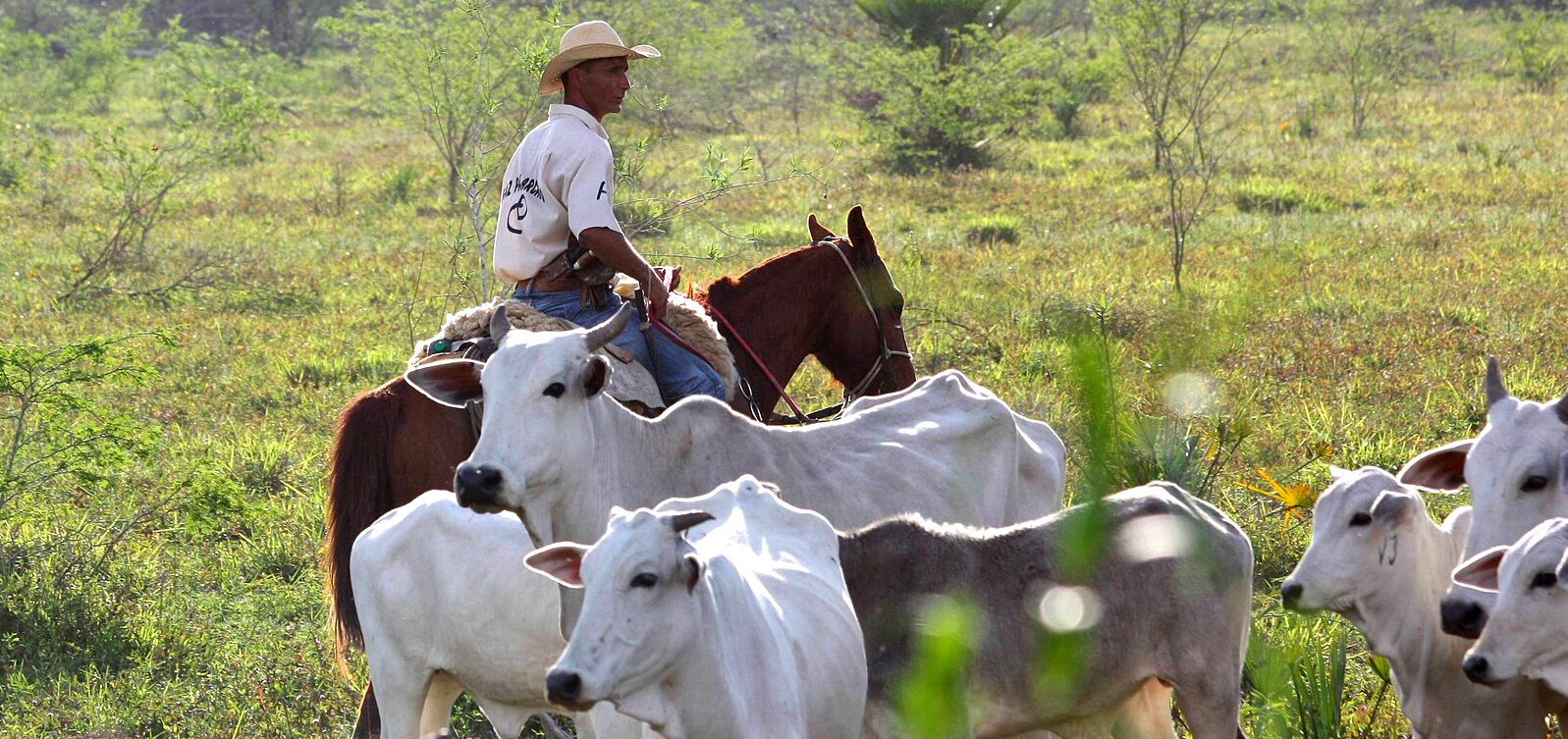
Photo credit: stevepb and used under a Pixabay content licence.

The looming Mercosur tragedy

Weak political leadership in Europe looks likely to doom the EU-Mercosur free trade agreement in a vote among EU Member States later this week. Denmark, as current Council President, has indicated it intends to schedule a vote at Ambassador level (COREPER II) to take place either Thursday or Friday this week. To be approved, the Agreement must gain the support of 55% of Member States (currently, 15 out of 27) representing at least 65% of the EU population. The Agreement can be blocked by a blocking minority which requires at least 4 countries representing at least 35% of the EU population. If a country abstains, its vote does not count either for the proponents or opponents.

As the thresholds are calculated against the total EU membership, and not just those who cast a yes/no vote, an abstaining country makes it more difficult both for proponents to gain a qualified majority and for opponents to form a blocking minority. If neither proponents nor opponents reach the required thresholds, then the proposal automatically falls. Therefore, in a tight contest, an abstaining country tends to tilt the outcome towards the ‘no’ side. Even if the blocking minority does not reach its required threshold, it can still prevent the proponents from reaching their QMV threshold, thus effectively scuppering the proposal.

By coincidence, the European Parliament will be voting separately tomorrow Tuesday 16 December on its position on the Commission proposal to strengthen the bilateral agricultural safeguards mechanism as a complementary measure to the Agreement. This measure was proposed by the Commission to provide additional reassurance to those countries that fear the Agreement will have catastrophic consequences for livestock farmers, and notably beef producers.

The Parliament’s vote tomorrow would lose any significance if Member States a couple of days later fail to vote in favour of the Agreement itself. In this case, the largely symbolic visit of President von der Leyen and European Council President Costa to the Mercosur Summit on December 20th for a signing of the Agreement would fall through (largely symbolic, because even if the Council were to approve the Agreement, it still cannot come into force without the agreement of the European Parliament which would not hold a vote until 2026, and where the outcome also is not a foregone conclusion).

This blog has recognised that the concessions to Mercosur on sensitive agricultural products in the Agreement would imply some additional competition for EU livestock farmers (see this blog post in January 2025 and this post in October 2025). But it has argued that the impacts will be minimal and far from the catastrophic fears fanned by its opponents.

This is primarily because the trade concessions for sensitive agricultural products are confined to limited additional tariff rate quotas (TRQs) which are only gradually phased in over time. In the case of beef, because of the existence of over-quota imports that currently pay the full MFN tariff, the increase in imports that will result from implementing the Agreement will be even smaller than the nominal TRQs.

Because the Agreement will lead to a higher EU GDP, higher incomes for EU consumers will give a boost to domestic beef consumption, the size of which will depend on whether this is accompanied by additional employment or not. This will further help to offset the impact of some of the increase in Mercosur imports. More generally, any losses to livestock farmers must be weighed against the overall benefits of the agreement, both in economic and geopolitical terms.

The current state of play regarding voting intentions

What we know about the voting intentions of countries is that France, Poland, Italy and Ireland intend to vote against, Austria and Hungary will join them, while Belgium will abstain for technical reasons.

France has traditionally been opposed to a deal with Mercosur. At the Paris Agricultural Show in February 2025, President Macron emphasised that France continued to oppose the Agreement in the form that it was signed and was working to form a blocking minority in the Council. It was this stance that led the Commission to subsequently propose the legislation on bilateral agricultural safeguards. However, clearly this has not been sufficient to change opinion in France. President Macron personally appealed to Commission President von der Leyen to delay the process. The French Prime Minister backed this up yesterday urging a delay in the vote. The French position has not been helped by the emergence of extensive farmer protests in south-west France over the weekend over government policy on dealing with an outbreak of nodular dermatitis (lumpy skin disease).

Poland made its opposition clear back in June 2025 when the Polish Agriculture Minister on a visit to Paris stated that the Polish Government did not accept the Mercosur Agreement in its present form. In September 2025, after meeting President Macron, Prime Minister Tusk confirmed that Poland would join France in voting against the Agreement.

Italy has taken a more cautious route to opposition. Italian industry favours ratification and there is significant investment by Brazilian interests in the Italian meat industry which would benefit from the Agreement. But the Minister for Agriculture along with the Italian farm union Coldiretti opposed the Agreement. When the Commission safeguards proposal was announced in September 2025, the Italian Prime Minister’s office welcomed the move and announced that it would “assess the effectiveness of the additional guarantees provided … and consequently whether or not it can support the final approval of the EU-Mercosur Agreement”. However, Reuters reported today that Italian Prime Minister Giorgia Meloni and French President Emmanuel Macron have agreed on the need to delay a final European Union vote on the Mercosur trade deal. Meloni’s desire not to antagonise U.S. President Trump who no doubt would be delighted to see the EU-Mercosur Agreement fail presumably has played a role in this decision.

Ireland is also officially against ratification of the Agreement. The governing coalition, in its Programme for Government following the last election, explicitly stated Ireland would “work with like-minded EU countries to stand up for Irish farmers and defend our interests in opposing the current Mercosur trade deal”. Ireland had been making ambiguous noises by saying that how it would vote would depend on whether a blocking minority was likely or not. The Irish Minister for European Affairs is quoted today as saying she was uncertain whether a vote would take place this week or not and claimed that Ireland was still assessing the situation. The clear movement of Italy into the no camp would make it impossible for Ireland to do anything other than vote against the Agreement.

In Austria, the parliament there has passed resolutions obliging the government to reject ratification of the Agreement and the government has consistently opposed the Mercosur deal. Hungary also opposes the Agreement on agricultural grounds.

Belgium’s abstention for technical reasons was confirmed by the federal Agriculture Minister in early December and stems from irreconcilable differences between the federal and regional ministries. Whereas Wallonia opposed the deal outright, the Flemish and federal coalition parties were divided. Because unanimity among Belgium’s governments is required to adopt a national position, the country defaulted to abstention.

Conclusions

When these dissenting voices are added up, a blocking minority seems to exist and a vote later in the week would reject ratification of the Mercosur Agreement. Various scenarios could emerge:

  • The Danish Presidency may well have calculated that the arithmetic was stacked against ratification but decided to go ahead anyway to bring the painful process to a definitive conclusion. In principle, following a negative vote on a proposal, the proposal could be sent back to COREPER for further compromises or clarifications, or the Presidency could canvas for adjustments to build a sufficient majority for a future vote. Although the dissenting countries appear not to claim to oppose ratification, they call for it to be delayed to allow for further safeguards to be added. But what further safeguards might be offered by the Commission without re-opening the Agreement is not clear. And the Mercosur countries that have already made significant concessions in the Agreement to European interests are unlikely to want to do this.
  • The Danish Presidency could decide to postpone the vote and leave it to the next Presidencies to try to sort out the issues. That would seem a fruitless exercise, not only for the reasons just stated, but also because subsequent Presidencies (Cyprus and then Ireland) are unlikely to want to prioritise the issue. Calling for a delay is therefore effectively to end the prospect of any Agreement.

The EU-Mercosur Agreement would create the world’s largest free trade area, with around 720 million inhabitants and accounting for around one-fifth of the world’s GDP. The Agreement would eliminate tariffs on around 91% of goods traded between the blocs. It would create a political partnership which would greatly benefit the EU at a time when it really does need to create alliances.

Stronger political leadership would have made the case for ratifying the Agreement for these reasons. Instead, it looks likely that Europe will throw away this opportunity and sink further into irrelevance in an increasingly geopolitical world.

This post was written by Alan Matthews.

Photo credit: Wikipedia, licensed under the Creative Commons Attribution 2.0 Generic license and slightly cropped.

The EU-Mercosur Partnership Agreement will have a minimal effect on the EU beef market and should be ratified

The European Commission finally put forward the EU-Mercosur Partnership Agreement concluded in December 2024 for ratification on 3 September 2025. The Commission adopted proposals for Council decisions on the signature and conclusion of two parallel legal instruments: the EU-Mercosur Partnership Agreement (EMPA) and the interim Trade Agreement (iTA). The iTA will be repealed and replaced by the EMPA once the latter is fully ratified and enters into force. 

Livestock farmers continue to protest and to mobilise against ratification of the Agreement, arguing that it will open the EU market to a flood of South American imports and decimate the EU beef sector. But for beef and poultry, the tariff concessions are limited to relatively small increases in tariff rate quotas. These additional imports will result in lower prices for EU farmers compared to what otherwise they might expect, but recent empirical research suggests that the effect will be very muted.

In a recently-published paper with Alex Gohin, we estimate that if the EU had fully liberalised its beef tariffs with Mercosur countries in 2017 (the latest year for which all the relevant data for the analysis was available), beef farmers would have suffered a significant negative impact on their income of more than -5%. Because the tariff concessions are limited to two tariff rate quotas (for fresh and frozen beef, respectively), we estimate that the negative impact effect would be reduced to -0.3%. This takes into account the fact that the (small) increase in overall EU household income due to implementation of the Agreement will have a (small) positive effect on beef consumption, which will offset the direct impact of additional imports on beef prices. Indeed, if we think that the Agreement might lead to additional employment in the EU, the overall impact on beef farmers’ prices and incomes would be close to zero.

This analysis is supported by further analytical work undertaken by DG TRADE and published at the same time as the announcement of the commencement of the ratification process. This paper uses a different modelling approach, using a dynamic framework incorporating international capital mobility and capital accumulation. It projects a baseline based on population and GDP projections up to 2040 and examines the potential impact of the Agreement in that year, whereas we use a comparative static model focused on 2017. The DG TRADE paper does not adjust the impact of the proposed TRQs for MFN imports (see below) and thus exaggerates the potential impact of the Agreement on the beef market. Still, its estimate that the Agreement might lead to an increase in beef imports equivalent to 0.3% of EU beef consumption in 2040 confirms that the impact is likely to be minimal.

Despite these empirical estimates, the Commission has responded to the fears of farmers by proposing an additional legal act to operationalise the bilateral safeguard elements of the Agreement in Union law. The Commission has made a series of political commitments on how it will make use of the rights that the Union has reserved in the EMPA bilateral safeguards chapter. These include a commitment to launch investigations when imports under preferential terms increase by at least 10% year-on-year or import prices decrease by more than 10% year-on-year, provided these TRQ imports are sold at prices at least 10% lower than domestic prices.

In assessing the impact of the EU beef offer, it is important to understand how much additional beef will enter the EU market from South America when the Agreement is fully implemented. The amount is limited by the size of the additional tariff quotas but even these quotas over-estimate the likely impact. As I outlined in a previous post on the beef offer in the Mercosur Agreement, “… opening (or increasing) a TRQ does not automatically lead to an equivalent increase in imports. It depends totally on the prevailing market situation…”.

Specifically, the impact of the EU’s TRQ offers for fresh and frozen beef depends on the TRQ offered relative to the existing level of MFN imports in these sectors (for the explanation of this, see the previous post and the references given there). Given that Mercosur exporters successfully export significant quantities of fresh beef to the EU while paying the full MFN duty, our estimate based on 2024 data was that the EU’s tariff quota offer might lead to an additional 50,000t of imports rather than the full size of the two tariff quotas of 99,000t.

The beef market in 2025 has been flying. In August 2025, the FAO global price index for beef reached its highest level ever. Supply shortages in major exporting countries due to drought and high feed costs have combined with continued strong import demand from countries like China to push global beef prices to extraordinary levels (Figure 1). EU beef prices have followed (Figure 2), in part pulled up by the increase in global prices, but also due to a decline in EU output (estimated at -1.3% in the DG AGRI Summer Short-term Outlook 2025). The Outlook, perhaps surprisingly given the increase in retail prices for beef, expects EU beef demand to remain robust. The Outlook therefore projects a decrease in EU beef exports and an increase in imports in 2025.    

Figure 1. World beef prices
Source: DG AGRI, Meat Market Observatory, 18 Sept 2025
Figure 2. EU beef prices, R3 steers
Source: DG AGRI, Meat Market Observatory, 18 Sept 2025

In this post, I present data tracking beef imports from Mercosur countries to date in 2025 which show a further increase from these countries. Paradoxically, if the projected level of 2025 imports were to continue into the future, this would mean that EU beef farmers would have even less reason to be concerned with the impact of the EU-Mercosur Agreement beef quotas as their impact on EU market prices would be even smaller than hitherto estimated. This is because the increased imports, which are (mostly) paying the full MFN tariff, will substitute into the Mercosur tariff quotas as they are implemented, meaning that the incremental exports from Mercosur will be even less than feared.  

The overall evolution of beef imports

Table 1 shows imports for fresh and frozen beef from all sources into the EU over the period 2017 to the latest week in 2025 at the time of writing. These data are based on DG TAXUD weekly import statistics of agricultural products based on the “Surveillance” System of the Taxation and Customs Union DG. This is a different data source to the Eurostat COMEXT trade statistics (see my previous post for a discussion). One advantage is that they are almost instantaneous. They also provide a breakdown of imports by trade regime – either Most Favoured Nation (MFN) imports that pay the full tariff, Tariff Rate Quota (TRQ) imports where a limited quantity of imports benefit from preferential access, and other Preferential imports where imports benefit from preferential tariffs under free trade agreements.

DG TAXUD data are based on customs statistics. The UK is no longer a Member State of the European Union, however until the end of the transition period on December 2020 it was still part of the EU Customs Union. The DG TAXUD trade data therefore also include the UK as long as it was part of the Customs Union. This impact of Brexit needs to be kept in mind in comparing import statistics up to 2020 and those after 2020.

I described the various Tariff Rate Quotas and the beneficiary countries in the previous post. Preferential imports since 2021 come largely from the UK under the EU-UK Trade and Cooperation Agreement. There are also traditional imports from Southern African countries (Namibia, Botswana, South Africa) and some imports from Chile under the EU FTA with that country.

Table 1 shows imports of fresh and chilled beef, and frozen beef, as these are the products for which Mercosur tariff quotas will be opened. The other major category of beef imports is beef preparations (such as corned beef) as well as minor imports of live animals, beef offals, beef fats and salted and dried beef. The figures for 2025 cover the period up to Week 39 (end of September). I have projected total 2025 imports on the assumption that the average weekly rate in the first nine months will continue for the remaining three months of the year, thus ignoring any possible seasonal effects.

Table 1. Total EU imports of fresh and frozen beef in carcase weight equivalent (cwe). Figures up to and including 2020 include the UK as part of the EU customs union. The 2025e figures are estimates for the full year assuming that the average weekly rate in the first 39 weeks will continue for the remainder of the year.
Source: DG TAXUD, Weekly imports, on the DG AGRI Agri-food data portal.

There are four main messages from Table 1:

  • There has been a steady increase in beef imports between 2021, the first post-Brexit year, and 2024 and this continues into 2025 though at a slower rate. This confirms the projection in the DG AGRI Summer short-term outlook for 2025 that, despite the fall in EU production and the very high prices, EU consumption has remained rather robust and imports have somewhat increased to fill the gap.
  • This increase is entirely due to increased imports of frozen beef. Total imports of fresh beef dropped in 2020 due to Covid when restaurants were closed, but recovered again in 2021 even though the UK is no longer included in the figures. For the three years 2022-2024 total fresh beef imports have stabilised at just over 180,000t cwe. 2025 imports of fresh and chilled beef are projected to be slightly lower than in 2024, which would reflect some consumer response to higher beef prices.
  • Although frozen beef imports also fell in 2020 due to Covid, there has been a steady increase since then, with 2025 projected to show the largest annual increase. Looking at the classification by trade regime, these increases reflect increases in both MFN and TRQ imports. The increase in MFN imports reflects the high world market prices and the fact that most EU protection consists of a specific tariff. At the world prices prevailing in the early 2020s, EU protection amounted to a prohibitive ad valorem tariff equivalent of 60% (see previous post). The result was almost no MFN imports of frozen beef (see Table 1). With higher world market prices, these tariffs are less prohibitive and MFN imports have increased. For TRQ imports, there has been no increase in TRQ ceilings in 2025 so the explanation for higher TRQ imports must be that the tariff quotas have been better utilised.
  • For fresh and chilled beef imports, the breakdown by trade regime is especially interesting. While projected total 2025 imports are projected to fall slightly, this reflects entirely a fall in preferential imports, which in turn is due to a fall in imports from the UK where the beef herd has been declining. Fresh beef imports under TRQs, which unlike frozen beef TRQs are generally well used, do not show any change. However, projected MFN fresh beef imports in 2025 show a further increase compared to 2024. Again, it is likely that the lower effective protection due to higher world market prices has contributed to this increase.

Beef imports from Mercosur countries

Before looking at the trends in beef imports from Mercosur countries, the destination of these imports tells an important story (Figure 3). For fresh and chilled beef, almost half is imported into the Netherlands and a further one-third into Germany. Imports into the Netherlands may be an example of the ‘Antwerp-Rotterdam’ effect where imports are consigned to importers based in the Netherlands but are subsequently distributed to other EU countries.

The destinations for frozen beef are quite different. Here, Italy alone accounts for nearly 60% of such imports, with the Netherlands accounting for a further one-quarter. Italy’s famed bresaola della Valtellina (PGI) is made from air-dried, salted beef. It requires lean, high-quality cuts, which is mostly sourced from zebu cattle raised in South America. Italian and EU beef production cannot meet the volume or price point needed for industrial bresaola production. Some sources suggest that 90% of the beef used for this production comes from South American zebu cattle, mostly from Brazil and Uruguay. The bresaola della Valtellina PGI designation requires strict adherence to quality standards, but it does not mandate a specific origin for the meat itself, allowing for the use of meat from South American zebu. Imported beef is also used in salami, carpaccio, and other cured or cooked beef products. Brazilian meat firms such as JBS have invested heavily in Italy for the manufacture of these products in order to have a smooth supply chain and consistent quality.

Figure 3. Main EU import destinations for Mercosur beef, average 2022-2024
Source: DG TAXUD, Weekly imports, on the DG AGRI Agri-food data portal.

Against this background, we now present the figures for beef imports from Mercosur countries in Table 2, using the same distinction between MFN and TRQ imports (there are no preferential imports from these countries as no FTA is in place).  Overall, there is projected to be a significant further increase in beef imports from Mercosur in 2025 even compared to 2024, from around 175,000t to just over 200,000t. What is interesting is the breakdown of these projected imports.

Table 2. EU imports of fresh and frozen beef from Mercosur countries in carcase weight equivalent (cwe). Figures up to and including 2020 include the UK as part of the EU customs union. The 2025e figures are estimates for the full year assuming that the average weekly rate in the first 38 weeks will continue for the remainder of the year (note one week less compared to Table 1 as this table was completed a few days previously).
Source: DG TAXUD, Weekly imports, on the DG AGRI Agri-food data portal.

Looking first at fresh beef, projected 2025 imports show a significant increase. As there is only a minor increase in their exports under the fresh beef TRQs, virtually all of this increase represents an increase in MFN imports which are projected to increase from just over 44,000t in 2024 to almost 53,000t in 2025. While imports from Argentina and Brazil are projected to increase by around 1,000t each, the big increase is in fresh beef imports from Uruguay, which are projected to increase by more than 7,000t.

Turning to frozen beef, an even greater increase in imports is projected, from 68,000t to 89,000t. This time, most of this increase will come from an increase in imports under existing TRQs, reflecting higher utilisation rates. But a significant increase in MFN imports is also projected, reflecting the easier access to the EU market when world beef prices are high.

When assessing the likely impact of the EU offer to Mercosur in the Partnership Agreement, it is the MFN imports we need to keep an eye on. The theory of tariff quotas demonstrates that opening a TRQ only increases imports to the extent that the TRQ is greater than the level of imports that enter under MFN tariffs. In our empirical analysis quoted earlier, we assumed a level of MFN imports when the TRQs were phased in of around 45,000t. We also noted that some Argentinian exports currently entering under the Hilton beef quota would be reallocated to the Mercosur quota as that quota was redirected to US imports. This was the basis for our assumption that the opening of the two TRQs would lead to additional imports of around 50,000t.

Projected 2025 MFN imports of fresh and chilled beef already exceed the fresh beef TRQ of 54,500t offered to Mercosur countries. If the Mercosur countries were to maintain this level of fresh beef exports up to the time when the TRQ is fully phased in five years after ratification, it means there will be no additional beef imports from Mercosur under this TRQ.

The frozen beef TRQ offered to Mercosur is 44,500t. Projected MFN frozen beef imports from Mercosur exporters in 2025, despite the increase, will still be quite limited, at around 11,500t. Assuming no further increase between now and five years after ratification when the TRQ is fully open, we might expect this TRQ to lead to an increase of around 33,000t of beef. Taking the fresh and frozen beef quotas together, the likely additional imports of 33,000t from Mercosur countries is only one-third of the size of the quotas that are opened.

 Conclusions

 Fears have been fanned, not least in France, that the EU-Mercosur Agreement will open the floodgates to South American beef imports and lead to a collapse in the EU beef market. On September 26, 2025, farmers from Île-de-France gathered in front of the Château de Versailles with tractors and banners reading “The peasant revolt resumes in Versailles,” echoing the revolutionary spirit of 1789. On October 14, the Confédération Paysanne is organising a large-scale demonstration with tractors in the capital, coinciding with the trial of two union members arrested during a previous protest, adding symbolic weight to the event.

The purpose of this blog post is to highlight that these fears are greatly over-estimated and exaggerated. The EU offer is not for full liberalisation of beef imports, but is limited to specific tariff quotas for fresh beef and frozen beef together amounting to 99,000t compared to EU consumption of 6 million tonnes. When compared with existing imports of beef from Mercosur countries which pay the full MFN duty, and which would switch into the TRQ category when the Agreement is ratified, the expected increase in imports could be as little as one-third of this amount, or 33,000t. Further, all of this increase will be in the form of frozen beef imports which does not compete with European beef in supermarkets and restaurants, but is mainly destined for manufacture into meat products like bresaola or sausages in Italy and other countries.

The analysis in this blog post has some caveats. It is based on trade figures up to the end of September, so the figures for 2025 are projections and actual imports could turn out to be different. High world beef prices have lowered the effective protection for EU beef producers and encouraged additional MFN imports. These high prices will not last, but on the other hand prices are unlikely to fall back to the ‘normal’ levels of recent years as grazing lands around the globe become increasingly exposed to droughts and other climate extremes. European farmers may well experience increased competition from Mercosur exporters. But this will be due to changes in relative competitiveness arising from issues such as changes in real exchange rates (what value will the Argentinian peso have in seven years’ time?) and the removal of export taxes on beef exports in Argentina.

In this context, the likely impacts of the Mercosur Agreement for beef farmers will be hardly noticeable, but the gains for the European Union from ratification in an increasingly turbulent goe-political world will be significant. The EU-Mercosur Partnership Agreement should and must be ratified.

This post was written by Alan Matthews.      

Photo credit: Own photo, Copenhagen.

Limited impact of Mercosur Partnership Agreement on the EU beef market

The EU reached a negotiated agreement on the final texts of what is now called the EU-Mercosur Partnership Agreement on 6 December last (for details see this Commission web page). They include the texts agreed in June 2019, plus the political and cooperation components of the deal agreed in June 2020, as well as additional elements resulting from negotiations between March 2023 and December 2024.

The agreed texts have led to major upheavals within the EU. Several Member States, including France, Ireland, Austria and Poland, have come out to oppose ratification of the agreement over concerns about the deal’s potential impact on both European agriculture and the Amazon rainforest. Italy appears to be sitting on the fence and could go either way. These positions reflect opposition to the deal from farmer organisations as well as from environmental organisations in these countries and at EU level.

Much of this opposition has focused on the perceived negative impacts of the concessions the EU has made in the beef sector. A recent empirical analysis by the Institut de l’Elevage was commissioned by the Greens/EFA political group in the previous European Parliament political cycle. It claimed that the agreement “represents a major threat to European cattle producers’ revenues” though it did not provide any estimate of the magnitude of this impact.

In this post, I argue that this assessment exaggerates the likely impact of the Mercosur Partnership Agreement on the EU beef market. I conclude that, when the Agreement is fully implemented in six years’ time, any additional beef imports induced by the Agreement (which will be much less than the size of the preferential tariff rate quotas opened by the EU for Mercosur imports) might at most depress EU producer prices for beef by around 2%. While it is understandable that producers would prefer this not to happen, in the context of the normal volatility of beef prices, it is certainly not a major threat.

I first set out the provisions of the beef offer to Mercosur in the Agreement. The most contentious element is the opening of two Tariff Rate Quotas (TRQs) for fresh/chilled and frozen beef, respectively. I discuss the circumstances in which new TRQs can lead to additional trade. I then go on to estimate the likely increase in beef imports that might arise following the opening of these TRQs, and I conclude by estimating the market impact of these additional imports.

The beef provisions in the Mercosur Partnership Agreement

There are several elements in the EU’s beef offer in the Mercosur Agreement. Beef is treated as a sensitive product. Although some tariff lines are liberalised, standard Most Favoured Nation (MFN) tariffs on the principal imports of fresh and frozen beef are not reduced (see Appendix to Annex 2-A Tariff Elimination Schedule). Instead, the EU has offered two TRQs. One is for fresh beef of 54,450 tonnes CWE (BF1, covering 6 tariff lines in CN class 0201 where CN is the Combined Nomenclature used to classify goods into different sub-headings to determine which rate of customs duty applies). The other is for frozen beef of 44,550 tonnes CWE (BF2, covering eight tariff lines in CN class 0202) (CWE carcass-weight equivalent; conversion factors see Section E of Annex 2-A to the Tariff Elimination Schedule). These two quotas will be phased in over six years in accordance with the schedule set out in Table 1. The in-quota tariff rate applied will be 7.5%.

Table 1. Schedule to open beef TRQs for Mercosur countries. TRQ imports will enter the EU at a 7.5% duty rate.
Source: Annex 2-A, Tariff Elimination Schedule, Section B.

There are several other relevant provisions. The in-quota tariff rate on imports under the so-called Hilton beef quota (see below) will be reduced from 20% to 0%. Imports of prepared beef products (for example, corned beef) and for live cattle will be fully liberalised four and 10 years respectively after ratification of the Agreement. A bilateral safeguard clause can be applied in case increased imports from Mercosur cause – or even only threaten to cause – serious injury to relevant EU sectors including beef. An annex to the ‘Trade in Goods’ chapter disciplines the use of export taxes but, apart from taxes on the export of hides and skins, other beef products are not affected. This post focuses on the two new TRQs as these are expected to have the greatest impact and have received the most attention.

Understanding the impact of a Tariff Rate Quota on additional imports

For many agricultural products the EU’s Common External Tariff sets a high tariff (the Most Favoured Nation or MFN tariff) on imports. The EU frequently uses Tariff Rate Quotas (TRQs) as a way to liberalise trade for sensitive products. A TRQ is a quota for a volume of imports at a preferential tariff rate. Once the quota is filled, the higher MFN tariff is applied on additional imports. A TRQ has three components: an in-quota tariff (which may be zero); a quota defining the maximum volume of imports charged the preferential in-quota tariff; and a method of quota administration.

The crucial insight underlying this post is that opening (or increasing) a TRQ does not automatically lead to an equivalent increase in imports. It depends totally on the prevailing market situation (the original analysis can be found in Skully, 2001 and it is reproduced in an understandable way in Kume et al, 2010). For example, suppose a country has opened a TRQ for 50,000t of beef at zero duty, and now proposes to increase that to 80,000t. If exports within the TRQ are only 30,000t, this implies that exports are constrained by the absence of demand rather than by the TRQ. Increasing the TRQ in this market context will have no impact and there will be no increase in imports.

If, however, the TRQ is fully utilised but there are no over-quota imports, this suggests that the MFN tariff is prohibitive and that there is pent-up demand for additional imports at the in-quota tariff rate. In this market situation, we can surmise that increasing the TRQ from 50,000t to 80,000t would indeed lead to a corresponding increase in imports of 30,000t (though this conclusion also assumes that the demand for imports at the in-quota tariff is sufficient to absorb all of this amount).

Furthermore, when the import quota is binding, this implies that the domestic market price will be set by the size of the MFN tariff. The domestic price will be the world market price increased by the amount of the MFN tariff. As the TRQ beneficiary benefits from a lower preferential tariff rate (which may be zero), this gives rise to a quota rent. This equals the value of exports within the binding quota, multiplied by the difference between the MFN and in-quota tariff rates. This quota rent is a critical element in tariff quota negotiations as it can provide an element of compensation to the exporting country for the continued restriction of their exports in comparison to full MFN tariff liberalisation. The way in which the TRQ is administered together with the relevant market structure determines the distribution of the quota rent between exporting and importing countries and between the private economic actors and the government in each country (for example, if an importing country auctions the right to preferential access, a portion of the quota rent will be transferred to that country’s government rather than to the exporter). In our hypothetical example where a binding TRQ is increased from 50,000t to 80,000t, the exporting country benefits both from being able to sell a larger amount to the importing country and potentially also from the additional quota rent it can obtain on these additional exports.

Another implication of the quota rent is that an exporting country can maximise its value by exporting its highest priced (and thus highest quality) products within the TRQ. This is why we observe the Mercosur countries using their existing TRQs to export high-value boneless ‘other cuts’ rather than lower-priced and lower value parts.

A third situation is where the TRQ is fully utilised but there are also over-quota imports at the MFN tariff. In this situation, the volume of imports is controlled by the MFN over-quota tariff rate. There are two possible cases. In the first case, the additional quota does not exceed the existing over-quota imports. There is therefore no increase in the total amount demanded. However, some of the over-quota imports will now take advantage of the lower preferential tariff for the increased TRQ amount. There will be no increase in the volume of exports, but the exporting country can benefit from an increase in the quota rent on the additional TRQ exports depending on the TRQ administration method used and the prevailing market structure.

The second case is where there are existing over-quota imports but the increase in the TRQ is greater than the volume of these over-quota imports. This is the relevant situation for the two beef TRQs opened under the Mercosur Agreement. In this case, there will be again a switch of over-quota imports into the TRQ to take advantage of the lower preferential in-quota tariff, but there will also be additional imports equal to the difference between the additional TRQ and the existing volume of over-quota imports. Again reverting to our example, suppose that total imports amounted to 70,000t so there were 20,000t of over-quota imports prior to the increase in the TRQ. The TRQ is now increased to 80,000t. We can expect this TRQ increase to lead to additional imports of 10,000t, not 30,000t, as the other 20,000t increase will be absorbed by switching the existing over-quota imports to the TRQ.

As a final observation, assuming a downward-sloping demand curve for beef, this additional beef supply will lower the price on the domestic market. This lower price will reduce the value of the quota rent received by the exporting country not only on the additional exports but also on its existing TRQ exports. It is a priori inconclusive whether the exporting country benefits from an increased TRQ depending on the balance between the value of increased exports and the loss in the value of the existing quota rent.

Given this theoretical background, our task is to determine the existing level of over-quota imports from Mercosur countries and thus the additional imports potentially generated by the two Mercosur TRQs, as well as the potential impact of these additional imports on the beef producer price within the EU.

Existing beef imports from Mercosur

We start by looking at the trend in beef imports from Mercosur countries over time in Figure 1. Beef meat imports are of three kinds: fresh and chilled, frozen, and beef preparations (such as corned beef). There are in addition imports of live animals, beef offals (including thick and thin skirt) and beef fats as well as salted and dried beef, but these are either insignificant or intended for industrial rather than food use (e.g. beef fat for tallow). Figure 1 covers the three bovine meat categories, highlighting the trend in fresh/chilled and frozen beef imports where the Mercosur Partnership Agreement TRQs will be opened.

Figure 1. Trend in bovine meat imports from Mercosur countries in carcase weight equivalent (CWE). The 2024 figures only include imports up to October 2024. Imports are reported under Statistical Regime 4 which includes inward processing.
Source: DG AGRI Agri-food data portal, Beef trade based on Eurostat COMEXT data.

The overall picture suggests that beef meat imports from Mercosur countries have not been growing over time. Indeed, average imports in 2015-2019 were higher than in recent years, even allowing for the impact of Covid on import demand in 2020 and 2021. Partly this is because imports of beef preparations (not shown separately in Figure 1) have been falling, from around 22,000 tonnes in 2015 to 10,000 tonnes in 2024. Imports of fresh/chilled beef fell significantly in 2020 and have only slowly recovered. They amounted to 110,000 tonnes in 2023 and may well reach that total also in 2024. This is the same as the average for the first five years of the period but still less than in 2018 and 2019. Imports of frozen beef have remained rather stable throughout the period.

There is also a specific pattern in the origin of Mercosur beef imports (Figure 2). In tonnage terms, Brazil is the main exporter, accounting for 41% of total tonnes exported to the EU in the period 2020-2024, followed by Argentina with a 34% share. When distinguishing between fresh/chilled and frozen imports, the origins are very different. Argentina is the dominant supplier of fresh beef, accounting for 53% of the total, followed by Uruguay with 26% of the total. Brazil accounts for only 20% of Mercosur fresh beef exports to the EU. Brazil, however, dominates frozen beef exports with 71% of the total in the 2020-2024 period, followed by Uruguay with 19% while Argentina only accounts for 6%. Argentina is thus the dominant exporter of fresh beef and Brazil the dominant exporter of frozen beef to the EU.

Figure 2. Imports of fresh/chilled and frozen beef by origin from Mercosur countries, average 2020-2024, carcase weight equivalent.
Source: DG AGRI, Agri-food data portal, Beef trade based on Eurostat COMEXT data.

The different types of imported beef also follow different trade channels in the EU. Germany is the main import market for fresh beef, followed by the Netherlands, although some of the beef landed at harbours in these countries (Hamburg and Rotterdam) will be distributed to other EU member states. For frozen beef, the main markets are in southern Europe, dominated by Italy followed by Spain, with imports into the Netherlands also playing a role. This frozen beef is largely used for the manufacture of processed beef products (e.g. bresaola in Italy and various types of sausages and cured meats in Spain) which are then distributed as ready-to-eat products across the EU. Many of the plants manufacturing these products are owned by the large Brazilian meat companies such as JBS S.A. and Marfig Global Foods. Imports of frozen beef thus compete in a very different market to imports of fresh/chilled beef destined for restaurants and supermarket chill cabinets.

Tariff rate quotas play an important role in facilitating imports

Beef imports into the EU are subject to extraordinarily high tariffs, which should be kept in mind when there is a call for a level playing field with imports. Tariffs on the principal cuts of beef, both fresh and frozen, are shown in Table 2. The tariff is a combination of a percentage and a fixed amount. Because of the fixed amount, the ad valorem equivalent tariff rate varies according to the world market price for beef which can vary over time as well as by origin and by the type of cut. In practice, beef in these categories is primarily imported from Mercosur countries as boneless ‘other cuts’ consisting of high value beef cuts such as rump and loin. These tariffs can be converted to their ad valorem equivalents by relating them to the unit value of imports. In the case of fresh meat, Argentina is the main exporter to the EU and the unit value for its exports of boneless other cuts per kg of product weight averaged over 2021-2023 (taken from the Eurostat COMEXT database) was €10,735. The EU tariff works out at 41%. For frozen beef where Brazil is the largest exporter to the EU, the unit value for frozen other boneless cuts was €6,471 which implies a tariff equivalent to 60%. The difference in unit value between fresh and frozen cuts underlines that they compete in different segments of the EU market.

Table 2. Most favoured nation (MFN) tariffs applied to selected beef imports
Source: TARIC.

Given these extraordinarily high tariffs, much of the beef that enters the EU market from outside the EU enters under Tariff Rate Quotas (TRQs) that provide more favourable market access but for limited quantities. Beef TRQs comprise several WTO quotas comprising both country-allocated and erga omnes (open to all WTO Members) quotas and covering both live animals and meat products. In addition, the EU has opened TRQs for beef in its bilateral free trade agreements as well as an autonomous High Quality Beef quota opened in 2009 as a resolution of the US-EU beef hormones dispute. Mercosur exports benefit specifically from three of these TRQs.

GATT Frozen beef quota. The quantity which may be imported under the GATT frozen beef quota is 54,875 tonnes of frozen beef and veal (expressed as boneless product weight), falling within CN codes 0202 and 0206 2991 with an in-quota preferential customs duty of 20% ad valorem. This is an erga omnes quota which means that the quota is not pre-allocated to individual countries but is managed by first allocating import rights to importers who apply and subsequently issuing import licences. The relevant legislation was Commission Regulation (EC) No 431/2008, which has now been superseded by Commission Implementing Regulation (EU) 2020/761 (Annex VIII) as updated.

Hilton High Quality Beef (HQB) quota. The Hilton quota is for 66,826 tonnes of beef on a product weight basis with quantities allocated on a country-specific basis plus two quotas for buffalo meat for Australia and Argentina, respectively. The Hilton beef quota was originally granted by the European Economic Community during the Tokyo Round Multilateral Trade Negotiations in 1979 under the auspices of GATT, the General Agreement on Tariffs and Trade. As a result of the Uruguay Round Trade Negotiations, the European Communities converted the Hilton beef quota to a tariff rate quota listed in its schedule of WTO commitments. Over the years, both the beneficiaries and the TRQ amounts have changed, for example, as a result of successive enlargements of the EU. The legislative basis for the Hilton beef quota was Commission Implementing Regulation (EU) No 593/2013. The current import TRQ amounts are set out in Commission Implementing Regulation (EU) 2020/761.

The Hilton beef quota is specifically allocated for high-quality fresh, chilled and frozen beef, the specifications for which are set out in Regulation 593/2013. The quota covers selected cuts of boneless beef meeting certain age and conformation standards and, in the case of Mercosur beneficiaries, must have been exclusively fed through pasture grazing since weaning. Imports can enter under the CN codes 0201 30 00 (fresh boneless cuts), 0202 30 90 (frozen boneless other cuts), 0206 10 95 (fresh or frozen thick or thin skirt) or 0206 29 91 (thick or thin skirt intended for processing) (see Table 2 for MFN tariffs). The current in-quota tariff is 20% (except for Canada since September 2017 when the EU-Canada Free Trade Agreement went into effect under which the in-quota rate applicable to beef imports from Canada has been reduced to zero).

Table 3 shows all four Mercosur countries have specific allocations under the Hilton beef quota, with Argentina by far the largest beneficiary. The table also shows that Argentina, Uruguay and Paraguay generally make full use of their allocations, but Brazil only takes up around one-third of its allocated quota. Brazil’s beef exporters finishing animals in feedlot systems may have difficulty in sourcing sufficient animals with the specification that they are fully pasture-fed after weaning to be able to utilise all its Hilton beef quota.

Table 3. Allocation and usage of Hilton beef tariff rate quotas by Mercosur exporters (tonnes CWE converted from product weight by multiplying by 1.3).
Source: CIRCABC Beef TRQs

Grain-fed beef (High Quality Beef “Hormones”). In 2009, the EU and the US concluded a Memorandum of Understanding, revised in 2014, that provided a solution to a longstanding dispute in the World Trade Organization (WTO) regarding the use of certain growth-promoting hormones in beef production in the US. Under the agreement, a 45,000 tonnes (product weight) quota of non-hormone treated fresh, chilled or frozen beef was opened by the EU to qualifying suppliers, which included the United States. This is an autonomous quota referred to as the ‘EU 481 grain fed beef’ quota. Although managed on an erga omnes basis until now, only the United States, Canada, New Zealand, Australia, Uruguay and Argentina are recognised by the EU as eligible. Import quantities can enter under the CN codes 0201 (fresh bone-in or boneless), 0202 (frozen bone-in or boneless) or the 0206 CN codes for fresh or frozen thick or thin skirt).

Import quantities are allocated on a first-come, first served basis. Contrary to the requirement for Mercosur countries under the Hilton quota which is limited to beef derived from solely pasture-fed animals, eligibility for the grain-fed beef quota requires that the beef cuts are obtained from carcasses of heifers and steers less than 30 months of age at slaughter which have only been fed a diet, for at least the last 100 days before slaughter, containing not less than 62% of concentrates and/or feed grain co-products on a dietary dry matter basis. The in-quota tariff is zero per cent.

Only Argentina and Uruguay among the Mercosur countries can access this quota. Over the years, the US share of imports under the grain-fed beef quota fell relative to other qualifying exporters. An agreement in August 2019 established that 35,000 tonnes of this erga omnes quota will now be specifically allocated to the US, phased in over a 7-year period, with the remaining amount (10,000 tonnes at the end of the 7-year phase-in period) left available for all other exporters. This means that some amount of Argentinian and Uruguayan beef currently exported under this quota will likely be displaced to the new Mercosur quota. The legislative basis for this quota was Commission Implementing Regulation (EU) No 481/2012, which has now been superseded by Commission Implementing Regulation (EU) 2020/1988 as updated. The TRQ under which Argentinian and Uruguay beef is exported to the EU is usually fully subscribed. As this is an erga omnes TRQ, individual suppliers are not identified, and nor is the breakdown between fresh/chilled and frozen beef imported under this TRQ readily available.

Table 4 summarises current Mercosur access under the main beef TRQs. For management purposes, each of the TRQs is given an Order Number by the European Commission which is shown in the second column. Finally, the table notes the usage of these TRQs in recent years.

Table 4. Size and utilisation of beef TRQs relevant for Mercosur exporters.
Notes:
* TRQ tonnage amounts are generally expressed in product weight. Product weight is converted to carcase weight equivalent (CWE) by multiplying by 1.3.
** There is a further GATT frozen beef (A & B) TRQ intended for processing of 63,703 tonnes, bone-in (or carcass weight). Two types of products are distinguished for duty purposes: ‘A’ products include meat intended to produce cooked beef products and ‘B’ products are meat intended to be used to produce smoked and salted products. 50,000 tonnes are reserved for A products (order number 09.4057) and the remaining 13,703 tonnes is intended for the manufacture of B products (order number 09.4078). The in-quota tariff rate for A products is 20% and an additional specific levy is added for B products. The quota is managed on an erga omnes basis. The relevant EU legislation is Commission Regulation (EC) No. 412/2008 as updated. As almost no use is made of these quotas, they are not included in this table.
*** Until the EU-US agreement in August 2019 (USTR 2019), all eligible exporters could compete for this quota. Under that agreement, an initial volume of 18,500t product weight increasing to 35,000t over a seven-year transition period will be reserved for the US. The share of the remaining beneficiaries will thus be reduced to 10,000t product weight from 2026 onwards.

Role of tariff rate quotas in existing beef imports from Mercosur countries

Different estimates of total imports. There is some uncertainty over which countries get to make use of the erga omnes TRQs shown in Table 4. However, the overall breakdown between in-quota and out-of-quota beef imports from Mercosur countries is available from DG TAXUD data in the Trade and Quotas section of the DG AGRI Agri-food data portal. The data are taken from the Customs Surveillance System maintained by DG TAXUD and provide recent data, up to the day before the daily update of the visualisations. The Info note explains that the data are based on customs declarations and are subject to change without notice.

To avoid confusion, we can note that the overall trade flows reported by DG TAXUD on the DG AGRI Agri-food data portal are considerably different to the trade flows reported by the Eurostat COMEXT system on the same portal and which are reported with a two-month delay to assure data quality and consolidation. The Eurostat data were used to report trends in beef imports from Mercosur countries in Figure 1 above. To show the differences , I report both sets of data in Table 5 below. It can be seen, both for fresh and frozen beef, that the Eurostat figures report higher figures for total imports than do DG TAXUD (the exception is the year 2024, but this is because the DG TAXUD figures already include the figures up to end December 2024 while the Eurostat figures are only up to end October).

The reason is that the Eurostat COMEXT figures are provided according to Statistical Regime 4, which represents total trade, including goods imported or exported temporarily for further processing. Beef imported under inward processing rules and subsequently re-exported is not subject to tariffs, so does not show up in the TAXUD data. The DG TAXUD figures are used for our purposes here, as these data provide the breakdown between in- and out-of-quota imports for domestic consumption in the EU.

Table 5. Comparison of beef imports from Mercosur countries using COMEXT and TAXUD data, tonnes in carcase weight equivalents.
Sources: Eurostat COMEXT data from the Beef Trade section and DG TAXUD data from the Weekly TAXUD Report section in the DG AGRI Agri-food data portal. Fresh beef covers CN 0201 codes, frozen beef CN 0202 codes. COMEXT data include imports under inward processing arrangements which is subsequently re-exported from the EU.
*COMEXT data only up to October 2024. TAXUD data include all 2024 imports.

Impact of the Mercosur fresh/chilled beef tariff rate quota. We look first at the figures for fresh/chilled beef imports (Table 6). As noted previously, there has been a small recovery in these exports since the low point during the 2020 Covid year. TRQ in-quota imports have fluctuated somewhat from year to year but, as we would expect, show no overall trend. These TRQ imports reflect primarily the Hilton beef quota (where some of the variability comes from the low and varying take-up by Brazil of its country quota) and also imports under the hormone beef quota (where the variability is due to the fact that this is administered on a first-come, first-served basis among the eligible exporters so export amounts for individual countries are not guaranteed).

The increase in overall fresh beef imports reflects an increase in out-of-quota imports, from around 29,000 tonnes in 2020 to over 45,000 tonnes in 2024. Closer examination of the individual country figures shows that this increase is almost entirely due to greater out-of-quota exports from Argentina and to a much lesser extent, Uruguay. There has been no change in overall exports or the breakdown of exports between TRQ and out-of-quota exports for Brazil and Paraguay.

Table 6. In- and out-of-quota fresh/chilled beef imports from Mercosur countries, tonnes in carcase weight equivalents.
Source: DG TAXUD data from the Weekly TAXUD Report section in the DG AGRI Agri-food data portal.

We now discuss the implications of opening an additional 54,450t CWE quota for fresh/chilled beef from Mercosur countries which will be phased in over a six year period (Table 1). This is the TRQ that most concerns EU beef farmers as these imports of high end beef cuts (what the Institute pour L’Elevage in its analysis of the Mercosur agreement calls the ‘noble cuts’ and which it estimates contribute nearly one third of the value of the beef carcase despite only accounting for 18% of the meat) are most likely to compete with high end EU production in supermarkets and restaurants.

The first point to make is that this does NOT imply an additional 54,450t of South American beef will enter the EU market. When over-quota imports exist, the first adjustment to a new TRQ will be to switch as much of those over-quota imports as possible to the TRQ. It is only the excess of the new TRQ above the over-quota imports that can potentially create additional imports. Based on 2024 import figures, the likely maximum additional imports of fresh/chilled beef would be not 54,450t but approximately 9,400t (54,450t – 45,058t).

Even this figure is likely to be an over-estimate of the impact of the Mercosur agreement. In 2024, the Mercosur countries shared a hormone beef quota of 19,240t CWE with Australia, Canada and New Zealand and this is reflected in their 2024 import figures. In 2026, this quota will be reduced to 13,000t tonnes CWE as part of the deal to give a larger share to the United States. Some portion of the new Mercosur quota will simply substitute for the loss of a portion of the hormone beef quota. This could reduce the volume of additional fresh/chilled imports by a further 3,000t CWE or so, assuming that the Mercosur countries use around half of this quota (and by more, if they usually obtain a larger share as suggested by the figures for the 2020/2021 marketing year in Annex 1 in the Institut de l’Elevage report).

Potentially working in the opposite direction is the reduction in the in-quota tariff rate for the Hilton beef quota from 20% to 0%. This will have no impact on the quantities exported from Argentina, Paraguay and Uruguay that already fill their quota. The question is whether it will give a greater incentive to Brazil, which currently only fills one-third of its quota, to increase its in-quota exports of fresh beef. Our assumption in this post is that the main constraint that limits Brazil’s ability to export more within this quota is not the in-quota tariff but its inability to provide beef of the required quality, i.e. finished completely on grass. We thus do not anticipate increased exports as a result of this tariff concession. The incentive for Brazilian exporters will also depend on movements in the real exchange rate between the euro and the Brazilian real. I discussed trends in this real exchange rate in a previous post. If the Brazilian real were to depreciate in real terms against the euro, this would make Brazilian beef more competitive and potentially give exporters a greater incentive to make use of this Hilton beef quota.

A final point is to look at the baseline scenario for out-of-quota fresh beef imports from Mercosur when the Mercosur TRQ is fully phased in which will not be before 2030. We have already observed that out-of-quota fresh beef imports are growing, and this is largely due to Argentina. Where Brazil once had the largest share of the out-of-quota imports from Mercosur, it has now been overtaken by Argentina. There are good reasons to believe that Argentina will increase its out-of-quota exports even further by the end of this decade if it continues with its radical agricultural policy and macroeconomic reforms.

Argentina has a history of macroeconomic instability and policy volatility (this paragraph is based on the Argentina chapter in the OECD Agricultural Policy Monitoring and Evaluation 2024 report). Following a financial crisis in 2001, the country introduced a combination of export taxes and quotas on the export of several agricultural commodities including beef. After 2015 the government began gradually to remove restrictions. Export taxes and quotas were removed, and the peso was allowed to find its own exchange rate against the dollar. There was a further change of course following another financial crisis in 2018-2019. Export taxes were reintroduced as well as exchange controls, which resulted in a widening gap between the official exchange rate and other market exchange rates. Inflation escalated, to reach an annual rate of 211% at the end of 2023.

What matters for Argentinian competitiveness in the EU market is the movement of the real exchange rate of the peso against the euro. Given varying exchange rates and accelerating inflation, it is hard to form a consistent view of the path of the real exchange rate. The nominal value of the peso has depreciated against the euro, especially on the unofficial (blue) market, but whether this was sufficient to offset rising domestic inflation is hard to determine.

The introduction of export taxes has meant that Argentinian producers have faced negative policy support during this period equivalent to around a 7-8% tax in the years 2018-2023 as measured by the OECD’s Producer Support Estimate. The new Argentinian government reduced the beef export tax in 2024 and has announced plans to further reduce or eliminate export taxes on agricultural products. With more favourable economic returns, the competitiveness of Argentina’s beef farmers will improve and thus the potential for additional over-quota exports. The implication again is that the small amount of additional exports that might be ascribed to the opening of the Mercosur fresh beef TRQ will likely absorb exports that would anyway enter the EU, albeit paying the full over-quota tariff rate.

We conclude that a very high-end estimate of the additional imports due to opening the Mercosur fresh/chilled beef quota would be 9,400t. There are good reasons to think the actual volume will be rather less once the further loss of access to the hormone beef quota is considered. If Argentinian beef were to gain in competitiveness between now and 2030 due to domestic policy reforms, leading to additional over-quota imports even in the absence of the Mercosur agreement, the potential increase in imports due to the fresh/chilled beef TRQ could even be zero.

Impact of the Mercosur frozen beef tariff rate quota. The story for frozen beef imports from Mercosur shown in Table 7 is quite different. The table shows that over-quota imports are rare in the case of frozen beef, with only Brazil able to export small amounts over the quota. This is expected, as it reflects the much higher ad valorem tariff equivalent on frozen beef compared to fresh beef (see the discussion on Table 2 above). TRQ imports of frozen beef reflect the amounts available under the GATT frozen beef quota, although this is an erga omnes quota and the export amounts are not guaranteed. So in this instance, opening an additional 44,550t TRQ for frozen beef will likely attract an additional 40,550t of frozen beef imports (taking account of the almost 4,000t of over-quota frozen beef imported in 2023 and 2024). Although the beef imported under the GATT TRQ is also high-end beef cuts, much of this beef is intended for manufacturing purposes and will not directly compete with premium beef sales to supermarkets and restaurants in the EU.

Table 7. In- and out-of-quota frozen beef imports from Mercosur countries, tonnes in carcase weight equivalents.
Source: DG TAXUD data from the Weekly TAXUD Report section in the DG AGRI Agri-food data portal.

Market price impacts

We can make an estimate of the impact of the additional Mercosur TRQ beef imports on EU beef farmers’ prices and revenue by making some plausible assumptions regarding several market parameters. For our purposes, we make the following assumptions:

  1. The additional imports facilitated by the Mercosur TRQs amount to a maximum of 49,950t CWE (made up of 9,400t fresh beef and 40,550t frozen beef). This estimate is likely to be on the high side for fresh beef for the reasons explained above.
  2. Total supply of beef on the EU market (production plus imports) in 2024 is estimated to be 6,733 thousand tonnes (DG AGRI, EU Agricultural Outlook 2024-2035, figures). The additional Mercosur imports will add 0.74% to total EU beef supply.
  3. We assume that the price elasticity of demand for beef at retail is -0.75 (Bouyssou, Jensen and Yu, Food Policy, 2024).
  4. We assume that the share received by the farmer for beef in the final retail price is 50% (France AgriMer 2024).
  5. The relationship between the price elasticity of demand at retail and producer level depends on the behaviour of the marketing margin. Assuming that the margin is a constant, absolute amount, the elasticity at producer level can be derived from the elasticity at retail level by multiplying by the ratio between the producer and retail prices. This gives an estimated price elasticity of demand at producer level of -0.375.
  6. To estimate the change in price for a given change in beef supply, we use the relationship that the percentage change in price is given by the percentage change in the quantity supplied divided by the price elasticity of demand at the producer level. This gives us an estimated producer price change of 2%.
  7. We take the estimated value of beef output in 2024 of €38 billion (Eurostat, Economic Accounts for Agriculture). A price cut of 2% would amount to a loss in beef farmer revenues of €752 million.
  8. To put this amount in context, the price of steer R3 beef carcases in the EU in November 2024 was 11.1% higher than in November the previous year (Meat Market Observatory, December 2024). Given the price volatility that beef farmers experience, a price fall of 2%, while regrettable for the farmers concerned, cannot be considered a major upheaval.
  9. As a sensitivity analysis, halving the estimated price elasticity of demand at retail would double the estimated producer price impact to -4.0%, while doubling it would reduce the producer price impact to -1%.
  10. The analysis makes some simplifying assumptions. It implicitly assumes that the price reduction has no impact on EU beef supply (i.e., assumption of zero price elasticity of beef supply) while assuming an infinite supply elasticity for Mercosur beef. While the latter assumption is very plausible (Mercosur exports to the EU are a very small share of total Mercosur beef production of 14-15 million tonnes CWE), taking account of supply side adjustments in the EU market might slightly increase the anticipated loss of revenue. With a demand elasticity at producer level less than -1, any reduction in beef supply in the EU would be more than compensated by the corresponding price adjustment. To take account of these market equilibrium effects would require the use of a simulation model.

In a previous analysis (see Implement Consulting Group, Appendix C), I constructed a small partial equilibrium model of the EU beef market which took account of fears that, because Mercosur imports consist primarily of high-end beef cuts, they would have a disproportionate impact the EU beef market. That analysis gave a very similar price impact of 2%. I now think that fear of a disproportionate impact is exaggerated as most of the additional imports will be in the form of frozen cuts which compete in a different market segment to the premium market for fresh beef. The above analysis thus does not distinguish between different qualities of beef.

Conclusions

The impact of additional beef imports from Mercosur countries as a result of the EU-Mercosur Partnership Agreement is likely to be marginal. The analysis shows that the additional imports induced by the new TRQs for fresh/chilled and frozen beef will be significantly smaller than the headline TRQ figures might suggest. This is due to the high levels of existing over-quota imports, particularly for fresh/chilled beef, and the fact that much of the new TRQ allocation will simply replace current out-of-quota imports. For frozen beef, the low level of existing over-quota imports means that the additional TRQ allocation will likely result in a larger increase in imports. Nonetheless, the aggregate increase in imports relative to total EU beef production remains modest. As a result, the impact on beef producer prices in the EU will also be limited.

For fresh/chilled beef, the maximum estimated additional imports attributable to the Mercosur TRQ is approximately 9,400 tonnes CWE annually. Even this estimate may overstate the impact, given that Argentina and Uruguay will lose access under the HQB hormones quota, and the possibility that policy reforms in Argentina will strengthen its competitiveness and increase its ability to export over-quota beef over the period during which the Mercosur TRQ will be phased in.

For frozen beef, the situation is different. The very high tariff rate and the low level of over-quota imports means that the new TRQ allocation could result in additional imports closer to the full 44,550 tonnes CWE. Much of the frozen beef imported from Mercosur countries is destined for industrial use, such as processed meat production, which competes in a different segment of the market than premium fresh/chilled beef cuts. As such, the competitive pressures on EU beef farmers producing high-quality beef cuts will be less pronounced in this case.

The aggregate impact of the additional Mercosur TRQ beef imports on EU producer prices is estimated to be a reduction of around 2%. While this price decline represents a loss of revenue for EU beef farmers, it is modest when viewed in the context of the normal volatility of beef prices. Indeed, beef prices in the EU have experienced annual increases and decreases far exceeding this range in recent years, suggesting that the additional imports from Mercosur are unlikely to cause a major disruption.

These figures for additional imports are in line with those in the Institut de l’Elevage report commissioned by the Greens/EFA in 2023. It projected in its Scenario 1 (assuming that 100% of former over-quota MFN imports would be incorporated into the new TRQs as we have also assumed here) that total beef imports would increase by 46,200t CWE, which is even slightly less than what I have estimated. Unfortunately, although it claimed that this increase would be a major threat to EU beef producers, it did not quantify what this impact would be. Instead, it made a general comment to the effect that all of these imports would be high value cuts which are the main driver of the beef price in the EU and thus “the EUM-FTA is likely to have effects on the EU market and on EU cattle farmer’s revenues”. I have shown that most of the additional beef imported will be frozen cuts which are of considerably lower value and which do not compete directly with premium beef cuts sold by EU producers in supermarkets and restaurants. I therefore discount this argument when estimating the likely impact on the EU beef producer price.

The Institut de l’Elevage also proposes a Scenario 2 where the additional TRQs are assumed to lead to an increase in imports of the same magnitude, which it estimates would lead to an increase in imports of 103,100t CWE. This scenario assumes that medium-term outlooks estimate strong growth in Mercosur beef exports at MFN duties to the EU even if the Mercosur FTA is not implemented. The study notes explicitly that this growth cannot be attributed to the Mercosur free trade agreement. In this post, I have also noted the potential for Argentinian exports particularly to increase in coming years as negative taxes on beef exports in that country are removed. Any such potential ability to increase above-quota exports automatically diminishes the impact of a TRQ – recall that a TRQ can only increase imports in the presence of over-quota imports if the TRQ is greater than the over-quota imports at the time when the TRQ is implemented.

Other arguments are also made in the Institut de l’Elevage report to warn against increased imports from Mercosur countries, including different food safety and animal welfare standards as well as the potential incentive for deforestation. My view is that these arguments are equally thin and not strong arguments against ratifying the Agreement. Particularly when put against the economic and geo-political arguments in favour of ratification.

This was recognised by former Commissioner for Agriculture Phil Hogan who was the Commissioner when the Mercosur deal was first negotiated in 2019. Hogan recognised that there was worry among farmers and environmentalists about the deal and that the EU was on the defensive when it came to trade in beef with Mercosur. Nonetheless, he was clear that even that earlier agreement “was a fair and balanced deal, with opportunities and benefits on both sides, including for Europe’s farmers” (interview in the Irish Farmers’ Journal 28 June 2019). In making this assessment, Hogan also claimed that he had secured €1 billion in financial support and common market organisation support in the event of a market disturbance when [the agreement] is implemented” (Irish Times, June 29 2019). Interestingly, this idea of financial compensation appears to been resurrected in recent Commission thinking (according to this Politico report from 16 October 2024). However, my analysis suggests this will hardly be needed (as was also the case with the Brexit reserve as the Politico article points out). We must hope that Commissioner Hansen can step into Commissioner Hogan’s shoes and will make the case why ratification of this Agreement is in the EU’s overall interest, while ensuring that side effects are carefully monitored.

The EU beef market is characterized by significant structural challenges, including declining per capita consumption, high production costs, a significant contributor to greenhouse gases, and strong competition from alternative protein sources. These factors, rather than the limited additional imports from Mercosur, will be the primary determinants of market outcomes for EU beef farmers in the coming years.

This post was written by Alan Matthews. I want to acknowledge help from FS in pointing me to relevant data sources as well as helpful comments from FS and AG. Any errors remain mine.

Photo credit: Menu of the Köd high-end beef restaurant in Copenhagen (making a play on the Danish word for meat, kød), own photo.

Update 6 Jan 2025. I now use the estimated value of cattle output in 2024 to estimate the loss of revenue for beef farmers rather than the approximation I used originally. This gives a slightly higher revenue loss of €192 million annually for all EU.

Update 8 Jan 2025. I have corrected an error I made in the original post in converting the retail price elasticity to the producer price elasticity where I had divided rather than multiplied the retail price elasticity by the producer share in the retail price . This gives a higher market price effect of additional Mercosur imports under the two TRQs of 2% compared to the figure in my original post of 0.5%. My apologies to readers for this error. The estimated overall loss of revenue to EU beef producers is also higher. My thanks to KH for pointing out the error.

Update 20 Jan 2025. The post has been revised to take account of the fact that the higher level of reported beef imports from Mercosur shown in Table 5 is because these imports are reported under Statistical Regime 4 which includes beef imported under inward processing arrangements which is subsequently re-exported out of the EU. Such beef imports are not relevant to estimating the likely impact of an increase in TRQs under the Mercosur Agreement.