
Temporary supply management for milk offers no solution

The agenda for Ministers meeting at the Agriculture Council meeting tomorrow Monday 14th March includes a discussion of the difficult market situation facing a number of agricultural sectors, including dairy, pigmeat and fruits and vegetables. Ministers will assess the adequacy and effectiveness of the market support measures currently in place, and whether additional measures could be envisaged.

At last month’s February Council, member states were invited to submit concrete proposals on possible additional measures, on top of the €500 million aid package adopted by the Council last September (extraordinarily, only 10 out of 28 member states have so far introduced schemes to spend this money). More than 100 initiatives and measures were submitted, which have been summarised by the Dutch Presidency under five headings:

• Extension or reactivation of existing measures, like storage
• Flexibility in implementing the current regulatory framework, for instance as regards the recovery of penalties
• Accelerating already launched initiatives, like addressing unfair trade practices in the food supply chain
• Preparatory and supporting actions like studies or setting up monitoring bodies
• New measures, such as support to producers who voluntarily reduce their milk production.… Read the rest
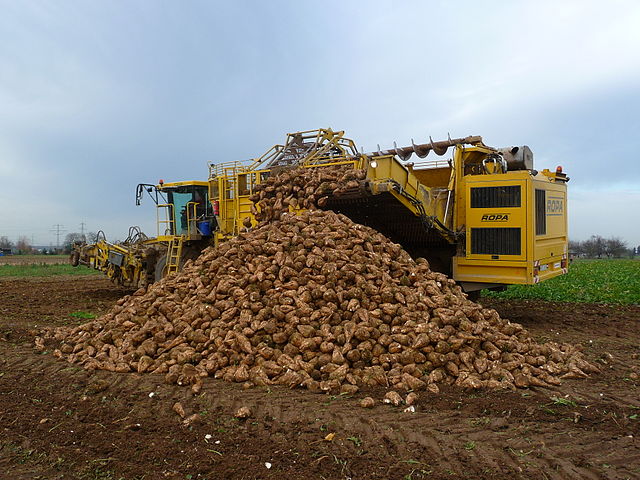
EU sugar beet prices to fall by 22-23% when quotas eliminated

After much lobbying the Council and Parliament finally agreed that sugar quotas (including quotas on isoglucose) would be extended until the end of the 2016/17 season but would be abolished with effect from October 2017. In January this year, the EU’s Joint Research Centre (JRC) Institute for Prospective Technological Studies published its assessment of what might happen to the EU sugar market as a result of the abolition of sugar quotas. It is worth examining this report in some detail both for its substantive conclusions but also for some insight into the factors likely to affect the EU sugar market balance in the years after 2017.
The JRC study was completed at end-2012. It compares two alternative scenarios in the year 2020 – one scenario assuming that sugar quotas continued (the reference scenario) and one scenario in which sugar quotas are assumed eliminated in 2015. In the latter scenario, three alternatives are simulated with different assumptions regarding the share of isoglucose in the EU sweetener market.… Read the rest

Commission projects unchanged sugar market following quota elimination

Further details on the Commission’s expectations for the EU sugar market following the end of sugar quotas in 2015 are contained in its market outlook to 2020 publication published last month.

This medium-term outlook for the EU sugar market is based on a status quo assumption for agricultural and trade policy. The Commission notes that its CAP towards 2020 legislative proposal confirms the existing provisions on expiry of the regime after the marketing year 2014/15. Thus it argues that the policy assumption on the expiry of sugar quotas is in conformity with existing legislation.

In my own review of the legislative proposals I argued that the Commission’s decision not to propose an extension to the sugar quota regime after 2014-15 is a part of the 2013 CAP reform, on the grounds that this was the first time that the Commission had made its intentions clear. But formally the Commission is correct that the current legislation expires in September 2015 and would require a positive decision to extend it.… Read the rest