Target-compatible Environmental Payments under the CAP – Economic Requirements and Legal Scope

This guest post is contributed by Prof. Dr. Rudolf Mögele and Prof. Dr. Martin Scheele. Prof. Dr. Rudolf Mögele is Honorary Professor at the University of Würzburg; previously, he was Deputy Director General at the European Commission, DG Agriculture and Rural Development, responsible for three Directorates (Legal Affairs, Audit and Assurance and Markets). Prof. Dr. Martin Scheele is Honorary Professor at the Thaer-Institute, Humboldt University, Berlin; previously, he was Head of Unit at the European Commission, DG Agriculture and Rural Development, responsible for conception and coherence of Rural Development.

Agri-environmental payments reflecting costs incurred and income forgone

In the discussion on the CAP, more and more attention is given to the importance and functioning of environmental and climate-related payments. Such payments are established by Article 37 of CAP-Regulation (EU) 2021/2115 under the name “eco-schemes”: Article 31(7)(a) provides that eco-schemes may take the form of “green” top-ups to direct payments while Article 31(7)(b) states that they may also be granted as compensation for additional costs incurred and income foregone.… Read the rest

Antibiotic legislation as a mirror clause

The first priority of the French EU Presidency in the first half of 2022 under the ‘Agriculture and forestry’ heading is to ‘encourage Council discussions on reciprocal environmental and health production standards for European products and products imported from third countries with the aim of subjecting imported products to certain production requirements applied in the European Union where necessary, to strengthen the protection of health or the environment on the largest possible scale, in keeping with World Trade Organization rules (“mirror clauses”)’.

One of the issues on the French Presidency agenda will be the completion of the outstanding legislation necessary to fully implement the Veterinary Medicinal Products (VMP) Regulation (EU) 2019/6. This legislation came into actual effect last Friday 28 January 2022. It can be seen as the first example of the use of a mirror clause for the protection of health. It imposes additional restrictions on the use of antibiotics for animal production in the EU and extends certain of these restrictions to imported animals and animal products.… Read the rest

Prospects for progress on the WTO agricultural agenda

The WTO General Council recently decided that the next WTO Ministerial Council meeting would be held in November this year in Geneva, rather than in June in Kazakhstan as had been planned. Although normally WTO Ministerial Conferences are held every two years, MC12, as it is called, will be the first Ministerial Cfonference since MC11 in Buenos Aires in December 2017.

That Conference was notable for its failure, for the first time, to agree a ministerial declaration affirming the continued importance of the WTO to the global trading system.  Specifically, on agriculture, there were no agreed outcomes and no agreed work programme for the future. While many countries, particularly developing countries, wanted negotiations to continue based on the Doha Round Declaration in 2001 and a single undertaking, other countries such as the US argued that this declaration was out-dated and no longer relevant.

One element of Sustainable Development Goal 2 to end hunger, achieve food security and improved nutrition and promote sustainable agriculture agreed by world leaders as part of the 2030 Agenda for Sustainable Development is a commitment to “Correct and prevent trade restrictions and distortions in world agricultural markets, including through the parallel elimination of all forms of agricultural export subsidies and all export measures with equivalent effect, in accordance with the mandate of the Doha Development Round.Read the rest

The protective effect of EU agricultural tariffs

The 2019 EU Trade Policy Review was recently published by the World Trade Organisation (WTO). The trade policy review process takes place every two years for major economies and is an important transparency tool. The country under review produces a policy report summarising major trade policy developments since the last review. A second report is written independently by the WTO Secretariat. These reports are then discussed by the full membership in the WTO’s Trade Policy Review Body. Indeed, the EU received more than 1,600 written questions from other WTO members on these reports to which it has provided written answers (unfortunately, the latter files are restricted and not publicly available on the WTO website).

The Secretariat’s report is a useful source of data and includes a section on agricultural tariffs. Most of the attention to agricultural policy in the EU in the past two years has been directed to domestic support in the context of the proposed changes to the CAP framework for the period after 2022.… Read the rest

The looming EU- US WTO Spanish ripe olives dispute

An agenda item on the AGRI Committee’s last meeting in this Parliamentary term yesterday dealt with a presentation by DG AGRI’s Director for International Affairs John Clarke on the agricultural component of ongoing trade negotiations and other relevant issues of trade policy (starts at 16:23 on the meeting video). Amid a chorus of complaints from AGRI MEPs about poultry imports from Ukraine, tomato imports from Morocco and potential Brazilian tariffs on EU exports of garlic, Mr Clarke gave a robust and trenchant defence of the Commission’s role in managing international agricultural trade relations.

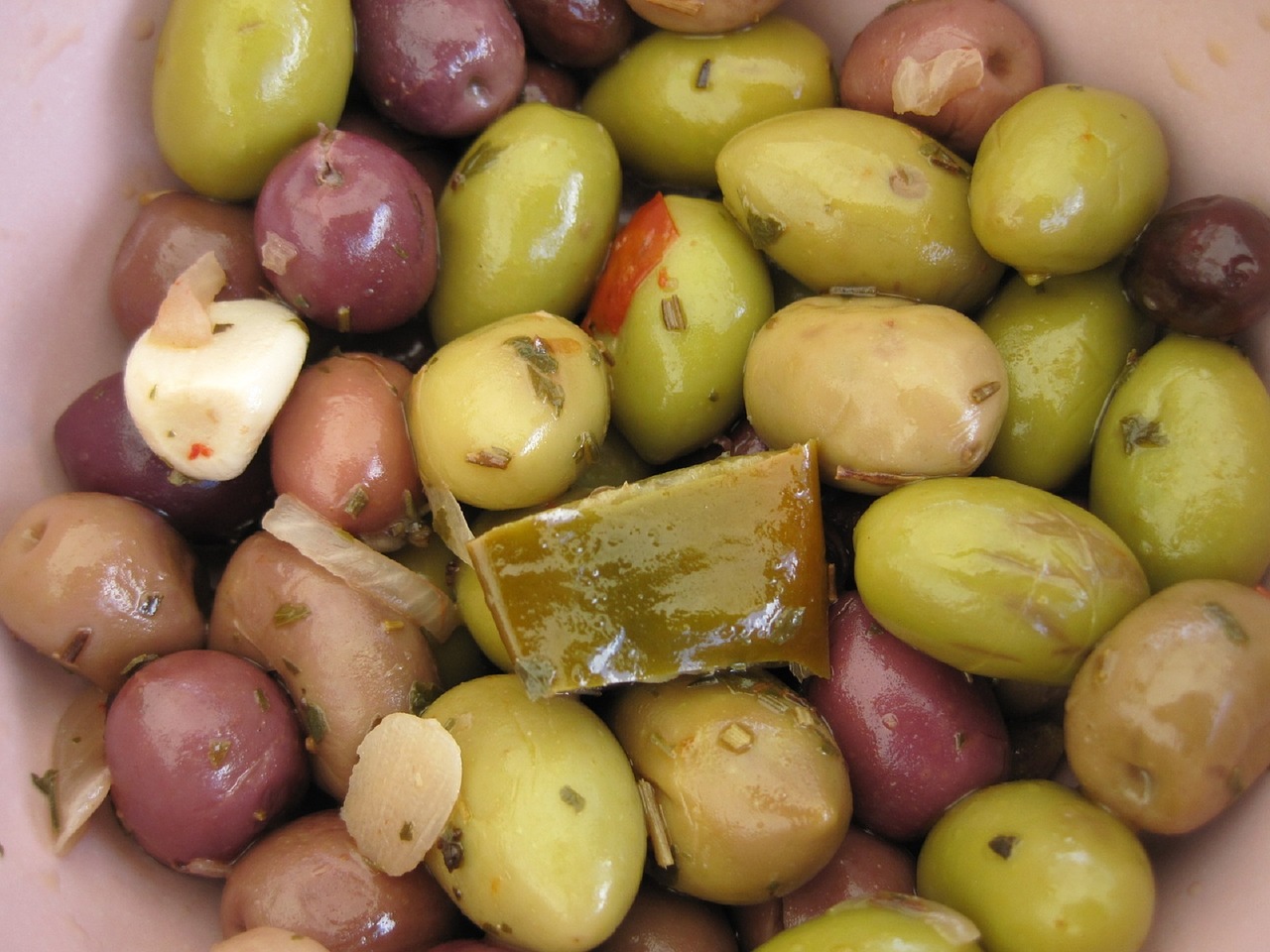
Among the items he covered was the EU response to the US imposition of countervailing and anti-dumping duties in 2018 on the import of Spanish ripe olives, confirming earlier preliminary determinations to impose provisional duties. The US action was in response to a complaint by domestic producers of ripe olives that Spanish ripe olives were unfairly subsidised because olive growers received CAP subsidies in the form of direct payments as well as through several other measures.… Read the rest

Recent trends in EU WTO domestic support notifications

The EU submitted its latest domestic support notification to the WTO for the 2015/16 marketing year on 23 August last. This notification is interesting because it covers the first full year of operation of the new CAP in 2015, as the new direct payments architecture was first implemented in that year. This post examines the trends in domestic support in this and recent notifications, and speculates on how the figures might be affected by the Commission’s legislative proposals for the CAP announced on 1 June last.

Trend in overall domestic support

The broad trends in domestic support provided to EU agriculture according to the WTO classification is shown in the Figure below. Domestic support under the WTO Agreement on Agriculture is the sum of (a) expenditure on general services that provide benefits or services to agriculture and the rural community, (b) support (expressed in monetary terms) provided for agricultural products that benefit agricultural producers, as well as (c) non-product-specific support provided in favour of agricultural producers in general.… Read the rest

Two indicators, little in common, same name: Market Price Support

We are pleased to welcome this guest post by Lars Brink, who is an independent advisor working from Canada.

This post examines the concepts and calculations of the two different agricultural policy indicators called Market Price Support (MPS): the one is used by the Organization for Economic Cooperation and Development (OECD) in its measurement of producer support in its Producer Support Estimate (PSE) indicator, and the other is identified in the Agreement on Agriculture (AA) of the World Trade Organization (WTO) as part of the measurement of the Aggregate Measurement of Support (AMS) indicator.

Once the United Kingdom (UK) has withdrawn from the European Union, the UK by itself will be the entity for which support to agriculture is measured under the practices or rules of international organizations such as the OECD and the WTO.

As a non-EU member of the OECD, the UK is assumed to participate in the measurement of the OECD’s PSE.… Read the rest

Does the WTO discipline really constrain the design of CAP payments?

This post is contributed by Jean-Christophe Bureau who is professor of of economics at AgroParisTech, Université of Paris-Saclay, and heads the joint research team in public economics of INRA, the National Institute for Agricultural Reseach in France.

The idea that the definition of CAP instruments has been (and still is) heavily constrained by World Trade Organisation rules is widespread. In debates on the post 2020 CAP, the issue of compatibility with WTO disciplines is raised each time coupled payments, countercyclical payments, support to production in less favoured areas, risk management or income stabilization schemes are discussed. An issue of particular interest (which this post focuses on) is environmental payments.

It is often stressed that WTO discipline imposes strict limitations in this area; in particular, that payments to farmers for environmental services need be limited to compensation of the additional costs experienced. This has important consequences for the design of the future CAP.… Read the rest

EU-Brazil WTO proposal on domestic support

On 17 July last week the EU and Brazil, supported by Columbia, Peru and Uruguay, put forward a proposal at the WTO in Geneva in an effort to build momentum to reach agreement on revisions to agricultural domestic support disciplines and on a resolution of the public stockholding issue at the upcoming WTO Ministerial Council meeting in Buenos Aires in December (I will refer to this as the EU-Brazil proposal in what follows). This follows a similar joint initiative by these two WTO members to eliminate export subsidies in the run-up to the last WTO Ministerial Council meeting in Nairobi in December 2015, which resulted in the Nairobi Ministerial Decision on Export Competition. What is the prospect that last week’s proposal might meet with similar success?
The negotiating context

At the end of last year in November 2016 Ambassador Vangelis Vitalis provided an overview of the state of play of the agriculture negotiations at a meeting of the Committee on Agriculture in Special Session (CoA-SS) .… Read the rest

How external influences have shaped the CAP

When the external impact of the Common Agricultural Policy (CAP) is discussed, it is often in the context of evaluating the CAP’s impact on world markets and third countries. For example, there is a substantial literature which looks the coherence of the CAP with the EU’s development co-operation objectives by examining its impact on developing countries (see my 2014 review chapter here).

In a new study for the AGRI Committee of the European Parliament, Professor Alan Swinbank of the University of Reading turns this traditional focus on the impact of the CAP on world markets on its head. His study The Interactions between the EU’s External Action and the Common Agricultural Policy instead looks at how the external dimension of the EU – including trade policies pursued through the WTO and other international obligations and its development co-operation activities with neighbouring states and developing countries – have influenced the evolution of the CAP.… Read the rest