
I wrote a post last January on the agricultural implications of a British withdrawal from the EU (Brexit) for agriculture in the rest of the EU. Following submission of evidence to an Irish Parliamentary Committee on the implications of Brexit specifically for the Irish agri-food sector, I have developed the possible scenarios into a longer paper which can be downloaded here.
Although the discussion concentrates on the potential impact on the Irish agri-food sector, the early part of the paper discusses the possible alternative trade arrangements between the UK and the rest of the EU following a potential Brexit which might be of wider interest. Essentially, while I think there is a good possibility that free trade could continue, the UK would lose access to the single market which, over time, will imply higher trade costs between the UK and the rest of Europe compared to the situation where the UK would remain part of the EU.… Read the rest
Two steps forward, one step back: coupled payments in the CAP
One of the success stories in the evolution of CAP reform has been the change from supporting the product to supporting the producer by moving, first, from market price support to coupled payments, and then by decoupling these payments.
The 2013 CAP reform has reversed this process. Coupled aids have started to grow again, from a projected €2.7 billion in 2014 to a projected €4.8 billion in 2015, an increase of nearly 75%. Their share of total direct payments will rise from 6.7% in 2014 to 11.6% in 2015. This step backwards was one of the negative outcomes of the recent CAP reform. The limited data available raise the question whether the new coupled payments fully comply with the criteria set out in the new direct payments regulation.
Coupled payments in successive CAP reforms
The decoupling of CAP direct payments started in the 2003 Fischler reform (implemented from 2005), continued with the subsequent reforms of individual commodity regimes and reached its high point in the 2008 Fischer Boel Health Check.… Read the rest
TTIP and the potential for US beef imports
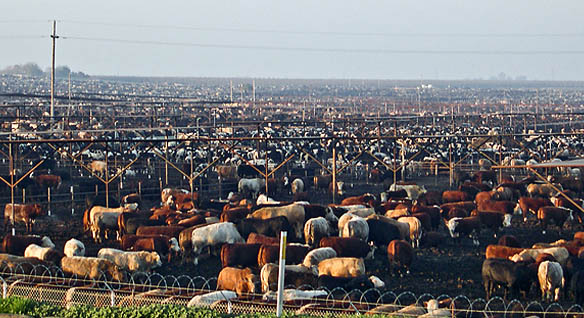
Beef is generally considered to be a sensitive sector in the EU-US negotiations on a possible Transatlantic Trade and Investment Partnership (TTIP) agreement. Currently, imports of beef from the US are limited by high tariffs and by the refusal of the EU to allow the import of beef produced with the aid of pharmaceutical technologies such as hormones and beta-agonists (a class of non-hormonal compounds that act to increase feed efficiency).
Nonetheless, EU imports of non-hormone-treated beef from the US have been increasing in recent years. Different views have been expressed about the likely consequences for the EU beef market if market access were further liberalised under a TTIP agreement. I examine the background to this issue in this post.
The WTO beef hormones dispute
Negotiations to increase US access to the EU market for beef as part of a TTIP agreement take place against the background of special trade concessions agreed following a complex series of disputes taken originally under the GATT and, subsequently, under the WTO’s dispute settlement process.… Read the rest
Forum for the Future of Agriculture 2015 – Remarks on EU agricultural trade policy
The 8th Forum for the Future of Agriculture (FFA2015) was held yesterday in Brussels. This annual meeting, organised jointly by the European Landowners’ Association and Syngenta, attracts around 1400 participants and has established itself as one of the principal fora for debate on the future of agricultural policy. What makes the event interesting is that it attracts a good number of participants from among farmers and the agri-business sector while also being open to environmental NGOs and others critical of current agricultural practices.
The theme for yesterday’s meeting was the UN Sustainable Development Goals and possible implications for EU agriculture, with contributions from both Commissioners Hogan (Agriculture) and Vella (Environment, Maritime Affairs and Fisheries). Sessions explored issues ranging from global food security (do we really need to produce more food?), developing a sustainable agriculture (is organic the only legitimate solution?), implications of the circular economy concept for jobs and growth (is there more to this concept than simply pricing in the value of externalities?)… Read the rest