Update on market crisis measures

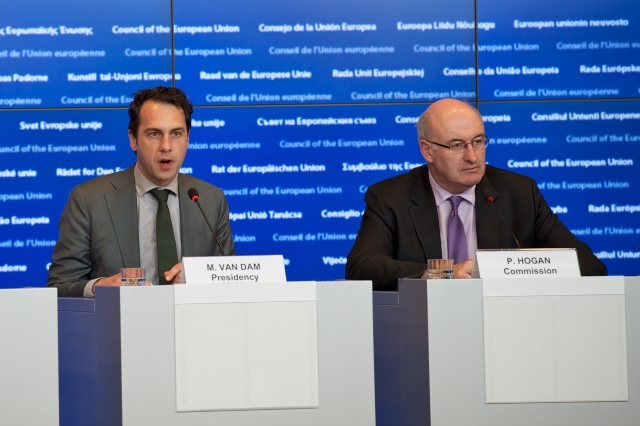
There were two occasions last week which provided an opportunity for an update on the market crisis measures taken by the Commission and member states. On Monday 11 April, the AGRIFISH Council was briefed by the Commissioner for Agriculture and Rural Development Phil Hogan on progress in implementation of the market support measures for those sectors that were agreed at its meeting on 14 March. The following day, Tuesday 12 April, the Commissioner addressed the plenary session of the European Parliament on the measures to alleviate the crisis in the European agricultural sector.

The measures taken at the March 2016 AGRIFISH Council were intended to be market-oriented and budget-neutral. They focused amongst others on: a voluntary and temporary regulation of milk production, under articles 222 and 219 of the CMO Regulation; the full use and improvement of existing market measures including a temporary doubling of the quantitative ceilings set out for the public intervention of skimmed milk powder and butter and private storage aid for pig meat; and more flexible state aid support.… Read the rest

Use of risk management tools in the CAP

It has long been recognised that greater price and income volatility would accompany the move to a more market-oriented Common Agricultural Policy (CAP). Already in the run-up to the Fischler Mid-Term Review (MTR) in 2003 which led to the decoupling of direct payments, the Commission published a working document on risk management tools for agriculture, with a special focus on insurance, in 2001. The Council MTR agreement mandated the Commission to study specific measures to address risks, crises and natural disasters that agriculture may face. This led to a Communication from the Commission in 2005 on risk and crisis management in agriculture which discussed different instruments that could be implemented in the CAP. Some tentative steps were taken in the 2008 Health Check to encourage member states to give greater attention to this issue.

Yet farmers, processors and policy-makers have struggled to respond. Risk management instruments supported by the CAP up to 2013 were not very successful.… Read the rest

Preparing for the MFF Mid-Term Review

The EU budget is under increasing pressure in the face of both new and unexpected expenditure demands. Already, in the first two years of this Multiannual Financial Framework (MFF) period 2014-2020, virtually all of the flexibility instruments which were put in place have been fully utilised, in part to fund the incoming Commission’s flagship project for a European Fund for Strategic Investments, and in part in response to the large number of arrivals of asylum-seekers, refugees and migrants as well as the terrorist attacks in Europe. In total, around €12 billion has so far been mobilised under the various flexibility instruments, leading one commentator to observe that “the EU budget had been flexed to the maximum”.

However, as a briefing note on the MFF Mid-Term Review by the European Parliamentary Research Service points out, “…..most of the adjustments made to the MFF so far do not increase the overall MFF ceilings; they merely shift amounts already allocated and will have to be offset in full against margins in future financial years.Read the rest

Further note on EU farm income trends

In my previous post, I discussed recent EU farm income trends based on recently-updated Eurostat data. Earlier this week, DG Agriculture and Rural Development released an update of its CAP Context Indicators. These are part of a set of CAP Indicators linked to output, results and impact which are aimed at measuring the effects of policy measures (the value of these indicators is discussed by Koester and Loy in this post).

The Context Indicators are intended to monitor general contextual trends in the economy, environment and society which may affect the performance of the CAP. There is a wealth of useful information in the short fact sheets which accompany each indicator. A particularly valuable feature is the ability to download the indicators as Excel files as well as pdfs for further analysis.

Two of the sectorial indices address farm income trends – C.25 Agricultural factor income and C.26 Agricultural entrepreneurial income.… Read the rest

Recent trends in EU farm incomes

Earlier this month, without any fanfare, Eurostat produced its estimates of farm income for 2015 (see its database domain aact_eaa06 under the Economic Accounts for Agriculture, EAA). Given the noisy campaign by the farm lobby in recent months for additional support to the sector, one would expect the figures to show a sector in dire straits, reeling from crisis. There are, of course, individual sectors in trouble. There are individual member states where farm incomes over the past two years have taken a very serious hit. And there are individual farmers in all sectors, particularly those who are heavily borrowed, who have run into financial difficulty. But, perhaps surprisingly, the sector as a whole seems to be holding up well in the face of recent market shocks.

According to the preferred Eurostat farm income indicator, farm incomes in 2015 were either 1% above the average for the previous five years or 2% below the average for the previous three years.… Read the rest

Council supports voluntary milk reduction scheme

Yesterday, the Agriculture Council agreed on a package of 13 measures to bring relief to agricultural markets in difficulty. Most attention has focused on the Commission’s willingness to invoke Article 222 of the CMO Regulation to permit producer organisations and recognised interbranch organisations in the dairy sector to introduce voluntary measures to reduce milk supplies, financed by member state funds. This attention is due more to the unusual nature of the measure rather than an assessment of its likely effectiveness.

The measure was put forward by Commissioner Hogan in his address to the Council. The agreement is summarised here in the Presidency Council conclusions and here in this DG AGRI press release following the meeting.

The legal basis

The legal basis for the measure will be Article 222 of the CMO Regulation which refers to agreements and decisions during periods of severe imbalance in markets. It permits the Commission to derogate from the normal competition rules which prevent producers from cooperating to influence supply and market prices under certain conditions.… Read the rest

Temporary supply management for milk offers no solution

The agenda for Ministers meeting at the Agriculture Council meeting tomorrow Monday 14th March includes a discussion of the difficult market situation facing a number of agricultural sectors, including dairy, pigmeat and fruits and vegetables. Ministers will assess the adequacy and effectiveness of the market support measures currently in place, and whether additional measures could be envisaged.

At last month’s February Council, member states were invited to submit concrete proposals on possible additional measures, on top of the €500 million aid package adopted by the Council last September (extraordinarily, only 10 out of 28 member states have so far introduced schemes to spend this money). More than 100 initiatives and measures were submitted, which have been summarised by the Dutch Presidency under five headings:

• Extension or reactivation of existing measures, like storage
• Flexibility in implementing the current regulatory framework, for instance as regards the recovery of penalties
• Accelerating already launched initiatives, like addressing unfair trade practices in the food supply chain
• Preparatory and supporting actions like studies or setting up monitoring bodies
• New measures, such as support to producers who voluntarily reduce their milk production.… Read the rest

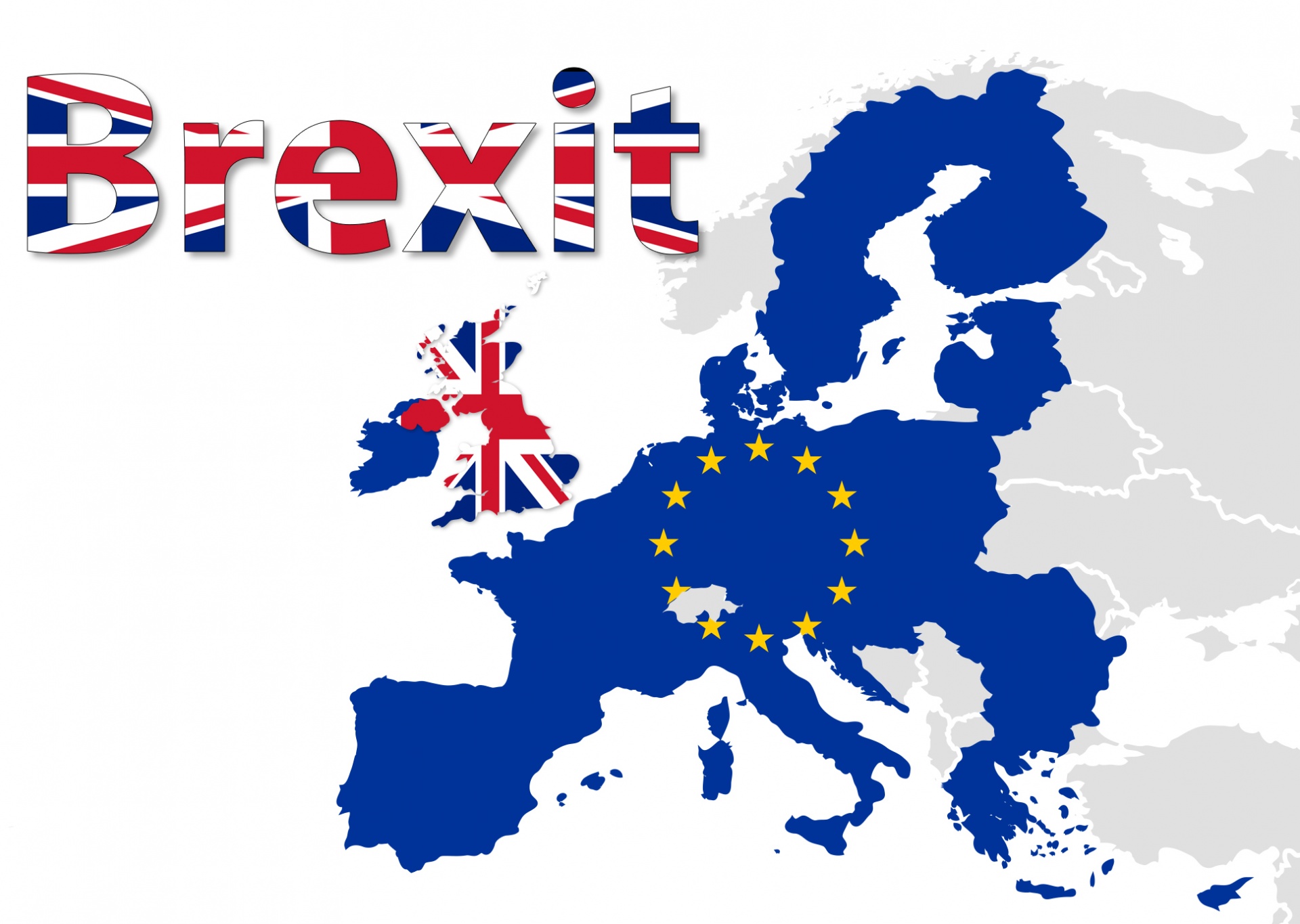
Agriculture in the debate over Brexit

The European Council meets this Thursday in the hope that it will agree on a package of measures that will satisfy the UK’s demand for a renegotiation of its relationship with the EU. The details of the package and the main stumbling blocks are spelled out in the Council President Donald Tusk’s invitation to leaders to the Council meeting. The mood music leading up to the summit meeting is constantly changing. Whether this is a careful choreography to persuade voters back home that what will be achieved is a significant deal, or whether the continuing objections will derail a deal will be clearer by the end of this week. If a deal is reached, there is heavy speculation that the referendum date itself could be 23 June.

UK opinion as captured by opinion polling is shown in the chart below. If we mark the official start of the Brexit debate as the date of the UK Prime Minister’s famous Bloomberg speech on 23 January 2013 (still one of the best arguments in favour of the European Union that I have read), those in favour of Leaving were reportedly ahead at that stage.… Read the rest

The 2016 mid-term review of the Multi-annual Financial Framework

Imagine a scenario where UK voters go to the polls later this year to vote on whether to remain in or leave the EU, while at the same time in Brussels a debate is in full swing over whether to increase the ceilings for the 2014-2020 Multi-annnual Financial Framework (MFF), and thus the UK contribution to the EU budget. This seems to be the nightmare scenario behind the story carried by Euractiv earlier this week based on the views of an anonymous EU official and which declared that “the major event in the calendar of the Juncker Commission, the midterm review of the European Union’s 7 year budget, has been effectively cancelled”.

The report goes on to explain:

EU officials are too scared to come up with policy recommendations to recalibrate the €960 billion EU budget until 2020 by mid-summer, as such proposals would most likely coincide with the Brexit referendum expected in June.

Read the rest

What endgame for GIs in the TTIP negotiations?

I have previously written on the importance that the EU places on extending protection for its geographical indications (GIs) in its negotiations with the US on a Transatlantic Trade and Investment Partnership (TTIP) agreement. In that post, I looked at how the protection of GIs was addressed in a number of recent EU free trade agreements, notably those with South Korea (EUKOR) and with Canada (CETA).

GIs remain one of the tough nuts to crack in the TTIP negotiations, for reasons I outline in this presentation. In a recent update on the outlook for the TTIP talks from Bloomberg, its report included GIs along with certain agricultural tariffs and sensitivities on government procurement and financial services as among the endgame issues where a resolution would only be expected as part of the political trade-offs at the end of the talks. The report noted that US and EU officials will convene a high-level working group in early 2016 to discuss GIs in an attempt to narrow the gap between the two sides.… Read the rest