Waking up to Brexit – two weeks on

In Charles Dickens’ Oliver Twist, nine-year old Oliver, fed up with the miserable gruel he and the other boys in the parish workhouse were given, walks up to the master and asks for more. The next day, there was an announcement on the workhouse gate offering five pounds to anyone willing to take Oliver off the hands of the parish.

The UK, it seems, also wants more from the European Union, not only access to the single market but also exemption from the free movement of labour. It has put not one, but two Olivers, to work on this request. Oliver Letwin is the government minister (yet another old Etonian at the top of the Conservative Party) who is responsible for a new unit (the ‘Brexit unit’) within the Cabinet Office. This unit will lead the civil service work for the Brexit negotiations and prepare options and advice for the new prime minister.… Read the rest

Supply management in milk policy

Over on the ARC2020 website, they are having a debate on the #MilkCrisis to which I was asked to contribute. Below is my contribution to that debate.

“The weighted average milk price for the EU-28 in May was 26.6 c/litre, a price last seen during the last trough in the price cycle in 2009 when the milk price bottomed out at 24.39 c/litre. The reasons for the current downturn are well known.

Global dairy product prices reached record levels in 2014. EU milk prices reached a record high of 40.2 c/litre in the winter of 2013/2014, averaging 37.3 c/litre over the 12 months in 2014. Milk supplies around the world responded to these high prices in the expectation of an inexhaustible demand for dairy products from China.

Increased supplies were facilitated in the EU by the removal of quotas in April 2015 although expansion had begun long before. EU production increased by more between the years ending April 2014/2015 when quotas were in place than it has done between the years ending April 2015/2016 after quotas were removed.… Read the rest

The UK opts for Brexit, what next?

The British people in their referendum yesterday expressed their wish to leave the European Union. It is a decision I deeply regret. I believe it will have negative consequences for the UK in terms of economic growth and possibly constitutional stability. For the EU, it is not possible now to foresee the longer-term consequences. At a minimum, it adds one more dossier to the already overloaded agenda of EU leaders.

The referendum result in itself has no legal power. A British withdrawal only begins when Article 50 of the Lisbon Treaty is activated. EU political leaders in their statement today called on the UK to activate this quickly in order to minimise the period of uncertainty. The UK Prime Minister, David Cameron, has indicated in his statement today that this should be left to a new Conservative Government under a new Prime Minister, who he has indicated should be in place by October.… Read the rest

When is enough taxpayer aid enough?

The article below was published in the Irish Farming Independent on Tuesday 17 May (the original article can be read by clicking on this link and choosing the ‘Continue to use Press Display’ option). The article addresses the high dependence of Irish agriculture on public support, but the question I raise has, I think, wider relevance for other EU member states as well. With expectations growing that the June Agricultural Council may announce yet another aid package for the agricultural sector, my question is whether there is a vision for European (and not only Irish) agriculture in which this heavy dependence on public support for income in the sector can be reduced.

“Farm incomes are back in the news again, with milk prices in particular having fallen from their record levels in early 2014. Although Teagasc economists were projecting a further growth of 5% in family farm income in 2016 at their annual Outlook conference last December, this figure will be revised downwards in the light of more disappointing milk returns than expected in the first half of 2016.… Read the rest

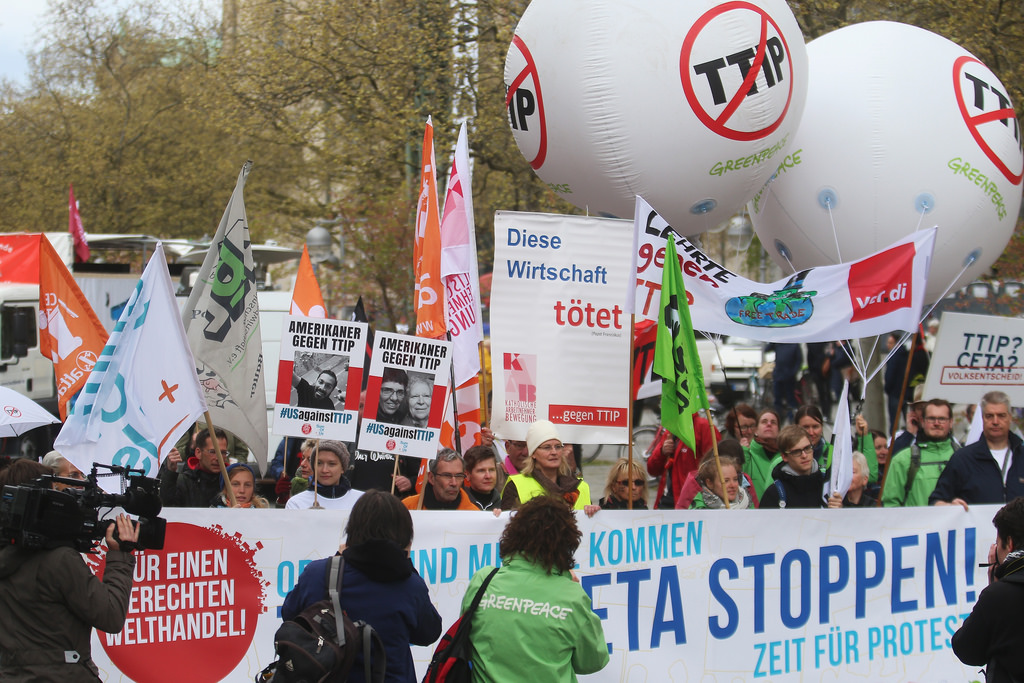
Much ado about nothing in TTIP leaks on food safety standards

Disputes over food safety standards – what in the language of trade policy are called sanitary and phytosanitary standards (SPS) – have been at the heart of many transatlantic trade rows between the US and the EU. We can think of the EU bans on the import of hormone-treated beef, or pork treated with growth-promoting additives, or poultry washed in antimicrobial rinses to reduce the amount of microbes on meat. As a result, the potential impact of the ongoing negotiations to reach a Transatlantic Trade and Investment Partnership (TTIP) free trade agreement between the US and EU on EU food standards has, rightly, attracted a lot of attention and no little anxiety.

However, much of the commentary has not been well-informed and has contributed to a hysteria surrounding the TTIP in which SPS issues have achieved a cult status. The basic refrain repeated ad nauseum is that “TTIP will sacrifice food safety for faster trade, warn NGOs” (quoted from a Euractiv report) or in the words of Compassion in World Farming bookletTTIP: a recipe for disaster” in part because it is deemed to threaten standards for healthy and safe food.… Read the rest

Milk policy in the EU – a case of policy incoherence

While milk producers in the EU struggle with low milk prices, the EU and its member states struggle to come up with a coherent policy to address the issue. Milk prices will not recover until there is a better balance between supply and demand. I have previously written a number of posts (here and here) in which I have described the policy responses introduced in response to the sharp fall in milk prices since their record high in early 2014.

These responses include measures designed to reduce supply. Specifically, the Commission has activated Article 222 of the CMO Regulation which suspends competition law in the case of producer organisations, co-operatives and inter-branch organisations and allows them to voluntarily limit supply with a view to raising the price of milk. The Commission has also indicated that it is prepared to approve higher levels of state aid to individual farmers who voluntarily freeze or reduce production compared to a reference period in the dairy, pigmeat and fruit and vegetable sectors.… Read the rest

The dependence of EU farm income on public support

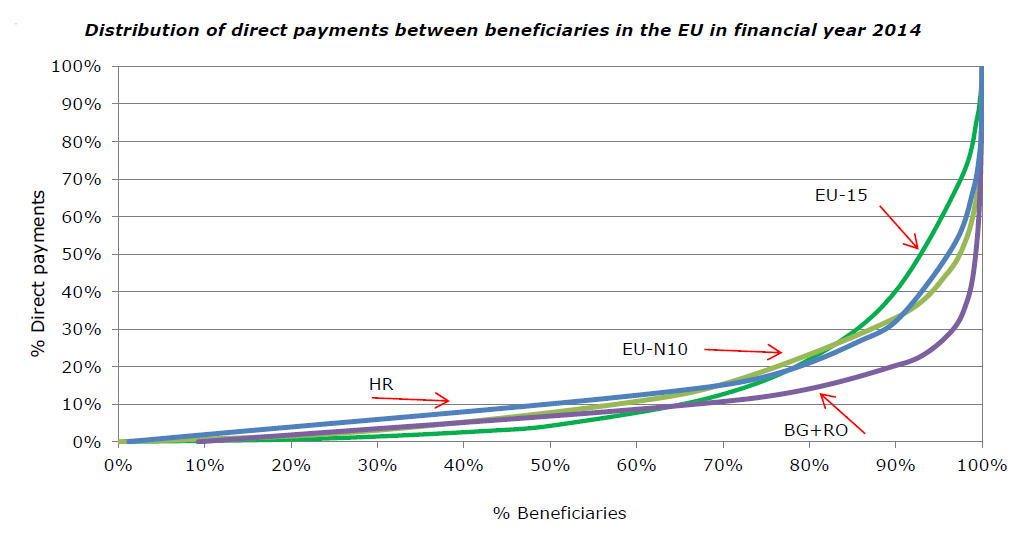
In spite of the substantial reforms in the structure of the CAP over the past two decades, EU agriculture remains hugely dependent on public support. The importance of public transfers, including direct payments, to EU farmers can be shown in various ways. One indicator is the importance of direct payments relative to the value of total output in the total revenue of farms (used by DG AGRI in this report on EU farm income). We can also focus more directly on the role that public transfers play in sustaining farm income. Here, there are two possibilities depending on the definition used for farm income – whether this is taken as factor income or entrepreneurial income (using the definitions in the Eurostat Economic Accounts for Agriculture, EAA).

Public support in agricultural factor income

DG AGRI on its website maintains a regularly-updated chart showing the dependence of agricultural factor income on public support from the EU budget ((e.g.… Read the rest

Update on market crisis measures

There were two occasions last week which provided an opportunity for an update on the market crisis measures taken by the Commission and member states. On Monday 11 April, the AGRIFISH Council was briefed by the Commissioner for Agriculture and Rural Development Phil Hogan on progress in implementation of the market support measures for those sectors that were agreed at its meeting on 14 March. The following day, Tuesday 12 April, the Commissioner addressed the plenary session of the European Parliament on the measures to alleviate the crisis in the European agricultural sector.

The measures taken at the March 2016 AGRIFISH Council were intended to be market-oriented and budget-neutral. They focused amongst others on: a voluntary and temporary regulation of milk production, under articles 222 and 219 of the CMO Regulation; the full use and improvement of existing market measures including a temporary doubling of the quantitative ceilings set out for the public intervention of skimmed milk powder and butter and private storage aid for pig meat; and more flexible state aid support.… Read the rest

Use of risk management tools in the CAP

It has long been recognised that greater price and income volatility would accompany the move to a more market-oriented Common Agricultural Policy (CAP). Already in the run-up to the Fischler Mid-Term Review (MTR) in 2003 which led to the decoupling of direct payments, the Commission published a working document on risk management tools for agriculture, with a special focus on insurance, in 2001. The Council MTR agreement mandated the Commission to study specific measures to address risks, crises and natural disasters that agriculture may face. This led to a Communication from the Commission in 2005 on risk and crisis management in agriculture which discussed different instruments that could be implemented in the CAP. Some tentative steps were taken in the 2008 Health Check to encourage member states to give greater attention to this issue.

Yet farmers, processors and policy-makers have struggled to respond. Risk management instruments supported by the CAP up to 2013 were not very successful.… Read the rest

Preparing for the MFF Mid-Term Review

The EU budget is under increasing pressure in the face of both new and unexpected expenditure demands. Already, in the first two years of this Multiannual Financial Framework (MFF) period 2014-2020, virtually all of the flexibility instruments which were put in place have been fully utilised, in part to fund the incoming Commission’s flagship project for a European Fund for Strategic Investments, and in part in response to the large number of arrivals of asylum-seekers, refugees and migrants as well as the terrorist attacks in Europe. In total, around €12 billion has so far been mobilised under the various flexibility instruments, leading one commentator to observe that “the EU budget had been flexed to the maximum”.

However, as a briefing note on the MFF Mid-Term Review by the European Parliamentary Research Service points out, “…..most of the adjustments made to the MFF so far do not increase the overall MFF ceilings; they merely shift amounts already allocated and will have to be offset in full against margins in future financial years.Read the rest