Does TTIP (and TPP) require TPA?

I suspect that many readers will find the acronyms in the title of this post puzzling, so let me explain. This is a post about trade policy, and especially about the dependability of the US as a negotiating partner in its negotiations with the EU on the free trade agreement known as TTIP – the Transatlantic Trade and Investment Partnership – billed on the DG Trade website as ‘the biggest trade deal in the world’ and due to be completed by December this year.
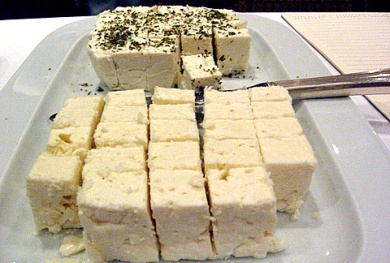
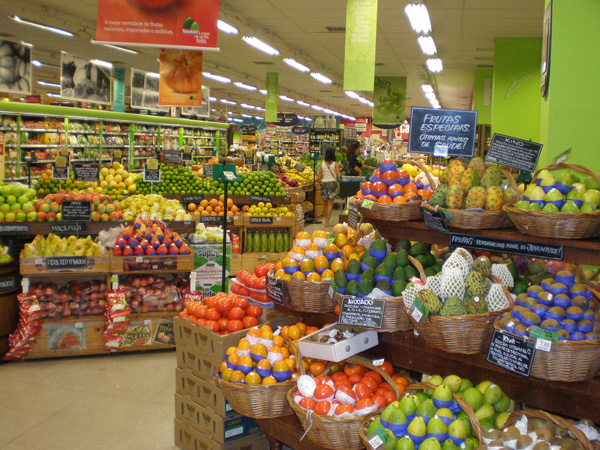
The TTIP talks also encompass food and agricultural products. The goal is to eliminate all tariffs on both agricultural and non-agricultural trade between the two counties. Europe is looking for greater market access for its high-end food exports such as wines, cheese, olive oil, high quality beef and pork-meat. Some European food products, such as apples and various cheeses, are currently banned from the US market; others are subject to high US tariffs – meat 30%, drinks 22-23%, and dairy products up to 139%.… Read the rest

Export refunds and Africa

Export subsidies on agricultural products are back in the news again following the somewhat surprising declaration by Commissioner for Agriculture and Rural Development Dacian Ciolos in his opening speech at the Green Week on Berlin earlier this month (16 January), of his readiness to stop the use of export refunds for exports to developing countries in Africa with which the European Union has an Economic Partnership Agreement (EPA). He stressed that this would be an important step in terms of coherence between EU agriculture and development policies. He said:

Since 1 January, EU legislation is also very clear: export refunds have ceased to exist as a means of systematically supporting a sector. Moreover, I would like to tell you this evening, in the framework of preferential partnership agreements with African countries: I am prepared to go one step further. I am ready to propose to stop, once and for all, the use of export refunds to those developing country destinations – even in times of crisis when this instrument can still be used.

Read the rest

Agriculture in the Commission’s climate policy to 2030

Yesterday, the European Commission published its proposed policy framework for climate and energy policy to 2030. It proposes two high-level goals while retreating from setting more specific targets for individual sectors and technologies. The over-arching goal is a greenhouse gas emissions reduction target for domestic EU emissions of 40% in 2030 relative to emissions in 1990. The proposal met with a mixed reaction and must still go through the legislative process in both the Parliament and the Council.
The Commission’s assessment is that the policies and measures implemented and envisaged by member states in relation to their current obligations to reduce greenhouse gas emissions, if continued after 2020 and fully effective, would deliver a 32% reduction relative to emissions in 1990. Therefore, it sees the 40% target as achievable with some additional effort. If a more ambitious target emerged from international negotiations, the Commission proposes that this additional effort could be balanced by allowing access to international credits.… Read the rest

The timeline for rural development programming

One of the innovations in rural development programming for the next multi-annual period is that there is meant to be much greater integration between EAFRD spending and spending through the other structural and investment funds. Trying to achieve this greater integration has been, and is, a fraught and time-consuming process, with implications for when member state and regional rural development programmes (RDPs) will get the green light to proceed.
I described how this process is intended to work in an earlier post. In a first step, the Commission has drawn up a Community Strategic Framework (CSF) which is intended to facilitate the sectoral and territorial coordination of union intervention under the CSF funds and with other relevant Union policies and instruments. The CSF Funds include the European Regional Development Fund (ERDF), the European Social Fund (ESF), the Cohesion Fund (CF), the European Agricultural Fund for Rural Development (EAFRD) and the European Maritime and Fisheries Fund (EMFF).… Read the rest

More on Pillar 2 allocations by member state

In a previous post I commented that a noteworthy aspect of the Ciolos CAP reform was that, unlike previous reforms, it explicitly proposed to redistribute CAP resources between the member states and between farmers within member states. In writing this I was thinking primarily of Pillar 1 payments. Pillar 2 allocations between member states have been more variable, although still largely influenced by historical amounts (Zahrnt discusses the evolution of Pillar 2 shares in this European Parliament paper).
Also on this occasion, the Commission proposed (in its MFF budget proposals) that the distribution of Pillar 2 rural development support should be based on objective criteria linked to the policy objectives taking into account the current distribution. However, the final allocation was once again largely determined by political bargaining, with some evidence that countries losing heavily from the proposed Pillar 1 redistribution were partially compensated through extra ‘sweeteners’ received in the Pillar 2 budget (see this post for a discussion of the Pillar 2 outcome).… Read the rest

The Ciolos CAP reform

The CAP2013 reform ended with a whimper yesterday as the Agricultural and Fisheries Council adopted the revised regulations as an A item without discussion following a first reading agreement with the European Parliament. Today the President of the Council ratified the documents in the presence of the ministers from Denmark, Cyprus and Ireland and the vice-minister from Poland. This concludes the legislative process for the 2013 CAP reform. For the first time, we now have a clean version of the four main regulations, as follows.
Direct payment regulation
Rural development regulation
Horizontal regulation
Single CMO regulation
The extended Council press release announcing the Council’s approval has a useful annex summarising the main changes which will be introduced by this reform.
Factors shaping this reform

The 2013 CAP reform will be known as the Ciolos reform although whether it really is a reform or not will be debated for some time. This blog has expressed its disappointment that the reform was not a more ambitious one.… Read the rest

Changing patterns of global agrifood trade

Publication of the latest United Nations International Trade Statistics Yearbook with comparative figures from 2000 to 2012 gives an insight into the important structural changes in patterns of global agrifood trade over the past decade. The figures underline the way in which developing countries have become the dynamic motor behind agrifood trade flows, a finding which has relevance when discussing the coverage of WTO trade rules.
During this period agrifood trade maintained and even increased its share of total merchandise exports. It share was 6.1% in 2000, but increased to 7.0% in 2009 following the sharp rise in global food prices in 2008-09. Its share has subsequently fallen to 6.5% in 2012, which is still ahead of the 2000 figure.
The UN figures define agrifood trade as the food, drink and tobacco (FDT) items covered by Chapters 0 and 1 in the Standard International Trade Classification (SITC). This definition excludes agricultural raw materials (SITC 22) as well as oilseeds and oils (SITC 4) but it does include fish (SITC 03).… Read the rest

EU agriculture: impacts of climate change

Using the CAP to promote a climate-friendly agriculture in Europe (or, as it is increasingly called, a climate–smart agriculture) was one of the stated objectives of the Commission in putting forward its CAP reform proposals in 2011. Agriculture both has a mitigation role to play in climate policy, and must also adapt to climate change.

Regarding mitigation, the Europe 2020 Strategy establishes the reduction of greenhouse gases as one of the EU’s five headline targets. Agriculture is both an emitter and a sink of greenhouse gases, and agricultural soils contain a large stock of terrestrial carbon in the form of soil organic matter. Agriculture can also play a role as a supplier of renewable energy whether in the form of biomass or biofuels, although there is controversy over how far to push this role in view of the additional competition for land that results for food production.

The modelling assessment made in the EU low carbon economy roadmap, based on the current CAP, concluded that the EU agricultural sector could decrease its GHG emissions by between 36 and 37% by 2030 and 42 and 49% by 2050 depending on the decarbonisation scenarios used.… Read the rest

Does national spending on agriculture follow a different path to the CAP?

In evaluating the pattern of budget transfers to agriculture, most of the focus is on the transfers through the EU budget. The negotiations on the Multi-annual Financial Framework (MFF) were closely followed because of their importance for the size of the CAP budget in the overall EU budget in the coming programming period.
However, in addition to EU transfers farmers also receive significant transfers from member state budgets. These take two forms: member state co-financing of CAP Pillar 2 expenditures (plus some allowed top-ups of Pillar 1 payments), and state aids paid by member states to their farmers. A proportion, but not all, of agricultural state aid represents member state spending on measures equivalent to rural development measures which would be eligible for funding under Pillar 2 if the national allocations were bigger, but which are funded instead by national exchequers.
The political economy of budget support to farmers is different at the EU and member state levels.… Read the rest

Family farming and the role of policy in the EU

Last week Dacian Ciolos welcomed the launch of the UN’s International Year of Family Farming 2014 and on Friday this week the Commission is holding a conference in Brussels on “Family farming: A dialogue towards more sustainable and resilient farming in Europe and in the world”.

The Commissioner emphasised that over 95% of farm holdings in the EU are family farms, and that “family farms are the foundations on which Europe’s Common agricultural policy was built. They continue to stay at the heart of European agriculture as robust generators of competitiveness, growth and jobs, of dynamic and sustainable rural economies.”

Others take a different view of structural developments in EU farming. The view taken by the Future Farmers in the Spotlight website run by a group of young Dutch agriculturalists would be shared by many NGOs:

The agricultural sector went in the last decades through an enormous structural transformation. Away from the small scale family farms towards large, capital intensive, fully mechanised and specialised industrialised farms.

Read the rest