The Danish Presidency has submitted its report to the Agricultural Council on the progress achieved during the first half of 2012 on CAP reform. The report indicates the main amendments suggested by the Presidency to the Commission proposals and on which the Presidency has noted broad support from delegations. The overview report contains a list of working documents in the Annex prepared by the Commission which provide further explanations of its proposals.
In addition to the overview report which notes the positions taken in the Council on the various elements of the Commission’s proposals, the report is accompanied by a series of revised draft regulations which include the specific amendments proposed by the Presidency. The Presidency proposals for the four main revised regulations are as follows.
Proposal for a Regulation of the European Parliament and of the Council establishing rules for direct payments to farmers under support schemes within the framework of the common agricultural policy (CAP Reform) – Presidency consolidated revised text
Proposal for a Regulation of the European Parliament and of the Council establishing a common organisation of the markets in agricultural products (Single CMO Regulation) (CAP Reform) – Presidency consolidated revised text
Proposal for a Regulation of the European Parliament and of the Council on support for rural development by the European Agricultural Fund for Rural development (EAFRD) – Presidency consolidated revised text
Proposal for a Regulation of the European Parliament and of the Council on the financing, management and monitoring of the common agricultural policy (the horizontal regulation) – Presidency consolidated revised text
An interesting parlour game for CAP watchers for the rest of the summer will be to compare the Presidency draft text for the four regulations with the COMAGRI rapporteurs’ draft texts which will be discussed in COMAGRI on 18-19 June.… Read the rest
COMAGRI draft report on rural development
As noted in a previous post, the draft reports by the COMAGRI rapporteurs on the four main CAP regulations were published last week. They include the reports on the future of direct payments and support for rural development by Mr Luis Manuel Capoulas Santos, the report on the single common market organisation by Mr Michel Dantin, and the report on the common provisions for financing, management and monitoring of the CAP by Mr Giovanni La Via. This post summarises the main changes proposed in the Capoulas Santos draft report on support for rural development after 2013.
Investments in physical assets. The draft report advocates that the provision in the current regulation providing for support for complying with new Community standards in the fields of environmental protection, public health, animal and plant health, animal welfare and occupational safety should be maintained, but limited to support of specific investments undertaken by farmers.… Read the rest
COMAGRI draft report on direct payments regulation
The draft reports by the COMAGRI rapporteurs on the four main CAP regulations were published last week. They include reports on the future of direct payments and support for rural development by Mr Luis Manuel Capoulas Santos, the report on the single common market organisation by Mr Michel Dantin, and the report on the common provisions for financing, management and monitoring of the CAP by Mr Giovanni La Via.
In addition, a number of the other EP committees have prepared draft opinions on the proposals – see the Environment Committee here, but also the Development Committee, the Budget Committee and the Regional Development Committee. The easiest way to keep track of these reports is by following the links on this European Parliament Legislative Observatory page to the individual procedure files.
The draft reports will be amended later, but they provide the first official indication of the thinking in the European Parliament on the Commission’s CAP post-2013 legislative proposals.… Read the rest
How the EU market looks to food exporters
In a recent post I looked at estimates of the overall level of protection to EU agriculture and how they compare to other countries. However, the EU trade regime is highly discriminatory. Different countries face different tariff regimes depending on the nature of any trade agreements they have with the EU or the preferential trade regime from which they benefit.
The average applied tariffs calculated in the MAcMap global tariff database I discussed in the previous post take account of these preferential tariffs. However, the published report only presents the overall EU average tariff. In this post, I make use of data from the WTO World Tariff Profiles to examine differences in the market access tariff barriers faced by different groups of exporting countries to the EU.
Few countries face the standard Most Favoured Nation (MFN) tariffs. They are the developed countries (for example, US, Australia, New Zealand, Canada) with whom the EU has not negotiated a preferential trade regime.… Read the rest
More thoughts on the European Innovation Partnership for Agriculture
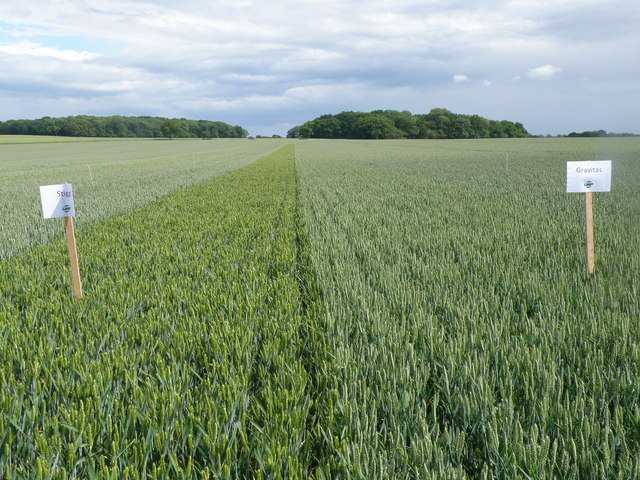
One of the more widely-welcomed elements of the Commission’s legislative proposals for the CAP post 2013 was a greater emphasis on promoting innovation. In an earlier post in January, I discussed the three main components of this strategic emphasis, namely:
• Continued Pillar 2 support for investment in physical assets and farm extension services.
• A new European Innovation Partnership instrument for agricultural productivity and sustainability (EIP-A) also in the Rural Development Pillar.
• Increased funding amounting to €4.5 billion for agricultural and food research under the Commission’s Horizon 2020 research programme for research and innovation on food security, the bio-economy, and sustainable agriculture.
Since that previous post two developments of note have taken place. The Commission published its Communication on EIP-A in February. And this week science ministers gathered in the Competitiveness Council, after long and hard negotiations, gave their backing to a general structure for the Horizon 2020 research programme.… Read the rest
Will the right tariff average stand up?
How heavily protected is EU agriculture by import tariffs? How does EU agricultural protection compare with other countries? To answer these apparently simple questions requires a huge amount of spadework, and we will see that there are different answers which can all lay claim to be ‘correct’. Fortunately, a joint team at the Centre d’Etudes Prospectives et d’ Informations Internationales (CEPII) in Paris and the International Trade Centre (ITC) in Geneva undertakes this necessary legwork and publishes their results every three years as the MAcMap-HS6 (Market Access Maps) global tariff database. MAcMap Version 3 covering tariff data for the year 2007 has just been published. It’s an impressive resource – the Version 2 database took up 8 GB of disk space! Hats off to the researchers involved, Houssein Guimbard, Sébastien Jean, Mondher Mimouni and Xavier Pichot.
A picture of global agricultural protection
A unique feature of MAcMap is to allow a meaningful average level of applied protection worldwide to be computed.… Read the rest
Macroeconomic conditionality and rural development funding
The European Commission has proposed to extend the principle of macroeconomic conditionality which currently exists for the Cohesion Fund to all the ‘CSF’ funds in the next MFF period. The CSF funds are those covered by the Common Strategic Framework and include the EAFRD rural development fund as well as the regional, social, cohesion and fisheries funds. The basic idea is that commitments agreed for a member state under its Partnership Contract could be suspended if a member state is not compliant with its macroeconomic guidelines. As the Commission explains:
… Read the restThe draft Regulation seeks to establish a much closer linkage between EU cohesion policy and economic governance, on the grounds that sound economic policies are essential to ensure that CSF Funds are spent effectively. So, for example, the Commission may ask a Member State to amend its Partnership Contract to bring it into line with recommendations issued within the framework of the EU’s broad economic or employment guidelines or excessive deficit procedure, and may suspend CSF payments if a Member State fails to do so.
The political economy of eliminating sugar quotas in 2015
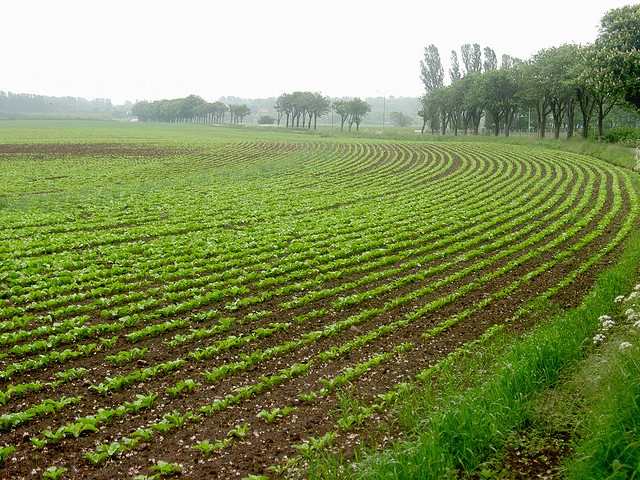
The Commission’s legislative proposals for the CAP after 2013 published in October 2011 include no proposal to continue the sugar production quota regime. An intense struggle is underway between EU sugar producers who want an extension to the quota regime and sugar users who support the Commission’s proposal. We review the political debate in this post.
Opponents of sugar quota elimination
The European Committee of Sugar Manufacturers (CEFS) (here and updated here) accepts that quotas will end in the long term, but supports the continuation of the quota system until 2020 rather than 2015. It argues that the EU sugar industry has actively engaged and invested to further improve its competitiveness and efficiency since the 2006 reform of the sugar CMO. It seeks an additional five years to enable the European sugar industry to continue this improvement process and to capitalise on long term infrastructure investments.
They highlight the stability of the strictly regulated EU market, arguing that there can only be losers from the volatility that a liberalised sugar market would entail.… Read the rest
Where stand the MFF negotiations on the CAP?
This post reviews the state of play regarding the MFF (multi-annual financial framework) negotiations in relation to the CAP budget and review of the CAP regulations post-2013.
The MFF negotiations take place in the General Affairs Council (GAC) attended by member states’ European Ministers or Secretaries of State on the basis of a ‘negotiating box’ paper drawn up by the Danish Presidency. This paper outlines the main elements and options for the MFF negotiations. It is updated as the negotiations move forward, and forms the basis for an agreement of the European Council. Once an agreement is reached, its content feeds into the legislative work on the different acts.
For those familiar with WTO agricultural negotiations, the negotiating box paper is similar to the draft modalities document presented by the Chair of those negotiations, filled with square brackets and alternative formulations for different paragraphs indicating areas of disagreement. The intention is to gradually remove the square brackets and reduce the number of alternative formulations over time as the negotiations proceed.… Read the rest
Achieving green growth in EU agriculture
In one month’s time the Rio+20 international conference on sustainable development will take place with a focus on the ‘green economy’ and environmental governance. Green growth is the pursuit of economic growth and development, while preventing environmental degradation, biodiversity loss and unsustainable natural resource use.
The European Commission has launched several initiatives under the Europe 2020 strategy to boost the green economy. A key aspect of this strategy is the Roadmap for a resource-efficient Europe, which sets out a strategic framework for the efficient use of natural resources in Europe. Other initiatives include the OECD’s horizontal strategy for Green Growth, while the UNEP recently introduced its Green Economy Initiative.
What makes the green growth concept attractive to policy-makers and businesses is the idea that taking account of environmental concerns is not just a burden, a constraint on growth, but can be a source of growth and new jobs. A number of EU member states have made greening the economy and creating new opportunities for green business a growth priority with a strong emphasis on sustainable growth, eco-innovation and cleantech industries.… Read the rest