What can we learn from New Zealand’s experience in introducing a scheme to price agricultural emissions?

The European Union is pondering the possible introduction of a pricing scheme for agricultural emissions as a way to accelerate the reduction in agricultural emissions on the way to net zero emissions by 2050. In the wake of criticism from the European Court of Auditors in its 2021 report on the climate performance of the CAP, and in light of the Court’s recommendation that the Commission should “assess the potential to apply the polluter-pays principle to emissions from agricultural activities, and reward farmers for long-term carbon removals”, the Commission has commissioned an exploratory study on pricing agricultural emissions and rewarding climate action in the land sector. A public consultation on several options designed by the consultancy team has just concluded, and the final report should be published before the end of this year.

Furthermore, the European Climate Law requires the Commission to propose a 2040 climate target in 2024. A first public consultation to gather views on what this target should be ended in June 2023.… Read the rest

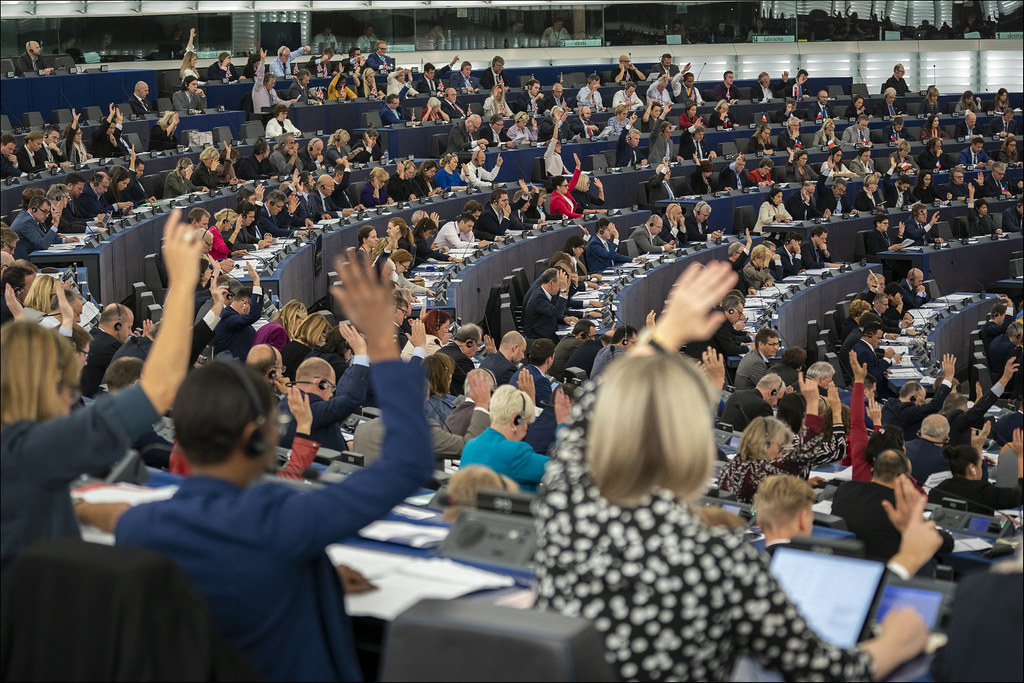
How might the political composition of the European Parliament change in the 2024 elections?

This post first appeared on LinkedIn on June 11, 2023 and is reproduced here without amendment. Since that date there have been national parliamentary elections in Greece and Spain which in many respects confirm the analysis presented here. Furthermore, it is now agreed to increase the number of seats in the European Parliament by 15, with additional seats going to France, Spain and the Netherlands (2 each) and 1 additional seat to Austria, Belgium, Poland, Slovenia, Slovakia, Finland, Latvia, Ireland and Denmark.

A couple of weeks ago the Council of the EU confirmed that the next elections to the European Parliament (EP) will take place from 6 to 9 June 2024. So in exactly one year’s time we will know the outcome of the election and the political composition of the next Parliament.

It seems as if political change is on the way. Right-wing parties have kept power or made gains in recent elections in Greece, Finland, the Netherlands, Hungary, Sweden, and Italy.… Read the rest

Food price inflation gathers pace

Overall inflation in the EU shows some tentative signs of moderating in the latest figures for the Harmonised Index of Consumer Prices (HICP) from Eurostat for February 2023. From a peak annual rate of inflation of 11.5% in October 2022, the annual rate fell to 9.9% in February 2023. This is entirely due to a fall in energy costs which also reached their peak in October 2022. Food price inflation, however, continues unabated and increased further in February 2023 to an unheard-of annual rate in recent decades of 19.1%. Unfortunately, this high rate of food price inflation looks set to continue for a further period.

Food price inflation in context

Food prices in the EU have risen dramatically in recent years (in this blog post, food prices include non-alcoholic beverages but exclude alcoholic beverages whose prices have risen at a slightly slower rate). In the EU as a whole food prices were 38% higher in February 2023 relative to the price level in 2015, while the overall price level rose by just 24% during this period.… Read the rest

The changing distribution of CAP direct payments over time

The distribution of CAP direct payments among farmers has been a continuing source of controversy ever since the Commission’s 1991 Reflections Paper on the development and future of the CAP that prefigured the MacSharry reform noted that 80% of the support provided by FEOGA is devoted to 20% of farms which account also for the greater part of land used in agriculture. In successive CAP reform proposals the Commission has proposed measures that would allocate CAP support more evenly across farms, including in its 2018 legislative proposal for the CAP 2021-2027. On each occasion, the Council has pushed back and weakened the Commission proposal, as also happened with the outcome for the CAP post 2023 (the debate on redistribution in the 2018 reform is reviewed in this report for the European Parliament, chapter 5).

Against this background, this post reviews how the distribution of direct payments has changed between the ends of the CAP programming period 2007-2013 and the CAP programming period 2104-2020.… Read the rest

Conversation with a chatbot on the Common Agricultural Policy

Artificial intelligence (AI) has been described as the fourth industrial revolution, following the invention of the steam engine, electric power, and the internet. AI tools can rapidly synthesize large amounts of data and detect patterns. AI tools are increasingly used in business but also in the provision of public services in activities such as risk profiling, the delivery of medical care, and traffic management.

There is growing interest in the interface between AI and public policy. This is a relationship that works both ways. On the one hand, there are concerns about how best to regulate the use of AI in society. AI is not a risk-free option. Its algorithms—the engines that generate intelligence out of raw data—can reinforce existing discriminatory practices. And its tools, such as facial recognition, can violate privacy protections. On the other hand, there is interest in making use of AI capabilities to improve public policy, for example, through data-driven policy making.… Read the rest

2022: a record year for farm income

2022 was a challenging year for farming in the EU. Buffeted by weather extremes, disease outbreaks and rising input costs due partly to the lifting of COVID-19 restrictions but particularly following the Russian invasion of Ukraine in February, there was a sharp drop in agricultural production. Yet despite the predictions of doom and gloom, 2022 was a record year for EU farm income.

We had effectively the converse situation to the farmer in Shakespeare’s Macbeth who ‘hanged himself on the expectation of plenty’. Shakespeare’s farmer had hoarded grain in order to sell it later, when prices went up. But when prices went down instead due to a good harvest, he goes bankrupt and hangs himself in despair. In 2022, EU production went down but the rise in prices more than compensated, and farmers in aggregate had a very good year. This post looks at the outcome at year end, based on the preliminary Eurostat figures published in mid-December.… Read the rest

Regulating the most polluting livestock farms is justified

This post was first published in Acid News No. 4, December 2022 and is reproduced here with permission.

In April 2022 the Commission proposed to amend the Industrial Emissions Directive (IED) to increase its effectiveness in reducing emissions of industrial pollutants that are harmful to human health and the environment.

The Directive seeks to ensure that installations operate using Best Available Practices. Installations covered by the IED are required to operate in accordance with a permit which sets conditions in line with the principles of the IED.

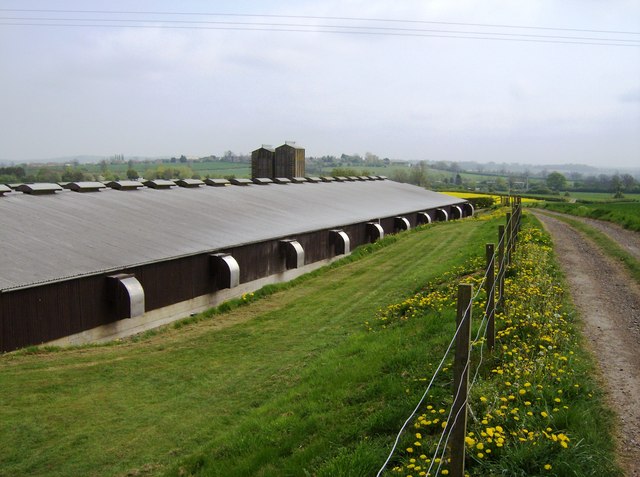
Around 52,000 installations are currently covered by the IED, of which 23,000 are large pig and poultry farms. One of the revisions proposed by the Commission is to extend the scope of the IED to include large cattle (dairy and beef) farms and to lower the size threshold for the inclusion of pig and poultry farms.

With a proposed threshold of 150 Livestock Units (LSU), this would increase the number of farms covered by the IED to around 185,000.… Read the rest

Tracking structural change in EU agriculture

Let me welcome you to the first blog post on capreform.eu since I last posted in July. The long absence was due to two reasons. First, the blog was hacked which prevented me from accessing the back end where I construct the posts. And second, a series of commitments over the summer and autumn meant that I did not have the time (or skills) to work out how to regain access to the blog. Fortunately, the blog posts themselves remained available for those who wanted to read them.

I have now found a way around the block. The site will need a bit more work to fully stabilise it and secure it against future hacking attempts but at least I am able to post again. And for this first post after the enforced break I thought to look at what the recent publication of the Agricultural Census 2020 results on the Eurostat website can tell us about the changing structure of EU agriculture.… Read the rest

EU throws hand grenade into global agri-food trade

On 6 July 2022 the EU circulated to WTO Members its proposed revisions to Maximum Residue Limits (MRLs) for two neonicotinoid insecticides clothianidin and thiamethoxam (the documents include the formal notification to the TBT Committee, the proposed draft Commission Regulation, and a comparison of existing and proposed MRLs by agricultural product).

Under WTO rules, this is a necessary step when changes in MRLs are proposed. Other Members now have 60 days in which to provide comments on the proposed changes. These comments are then considered by the Standing Committee on Plant, Animal, Food and Feed, the EU body consisting of Member State representatives that decides on pesticide issues, before final approval is given to the proposed Regulation.

While such notifications of changes in MRLs are routine, this particular notification stands out because it is the first time that the EU, or indeed any WTO Member, has proposed to set MRLs on the basis of the global environmental impact of the specified pesticides rather than on the basis of good agricultural practice (GAP) while ensuring protection of consumer health.… Read the rest

Taking developing country interests into account when designing Green Deal trade policies

Today I gave a presentation on the implications of the European Green Deal  for agri-food trade with developing countries to a webinar organized by the European Landowners’ Organisation (ELO) (the presentation can be downloaded here and you can also listen to the presentation itself as well as the webinar as a whole at the following link). The presentation was based on a paper I am preparing on this topic commissioned by the ELO and the issues raised at the webinar will feed into the final version of the paper.

The urgent need to address the challenges that face our food system, to provide healthy and adequate nutrition for all and ensure decent livelihoods while remaining within planetary boundaries, is not in question. The European Green Deal and Farm to Fork Strategy requires that food placed on the market should not only be safe but also sustainable and contribute to better health outcomes.… Read the rest