We are pleased to carry this guest post by Professor Berkeley Hill, Emeritus Professor of Policy Analysis at the University of London.
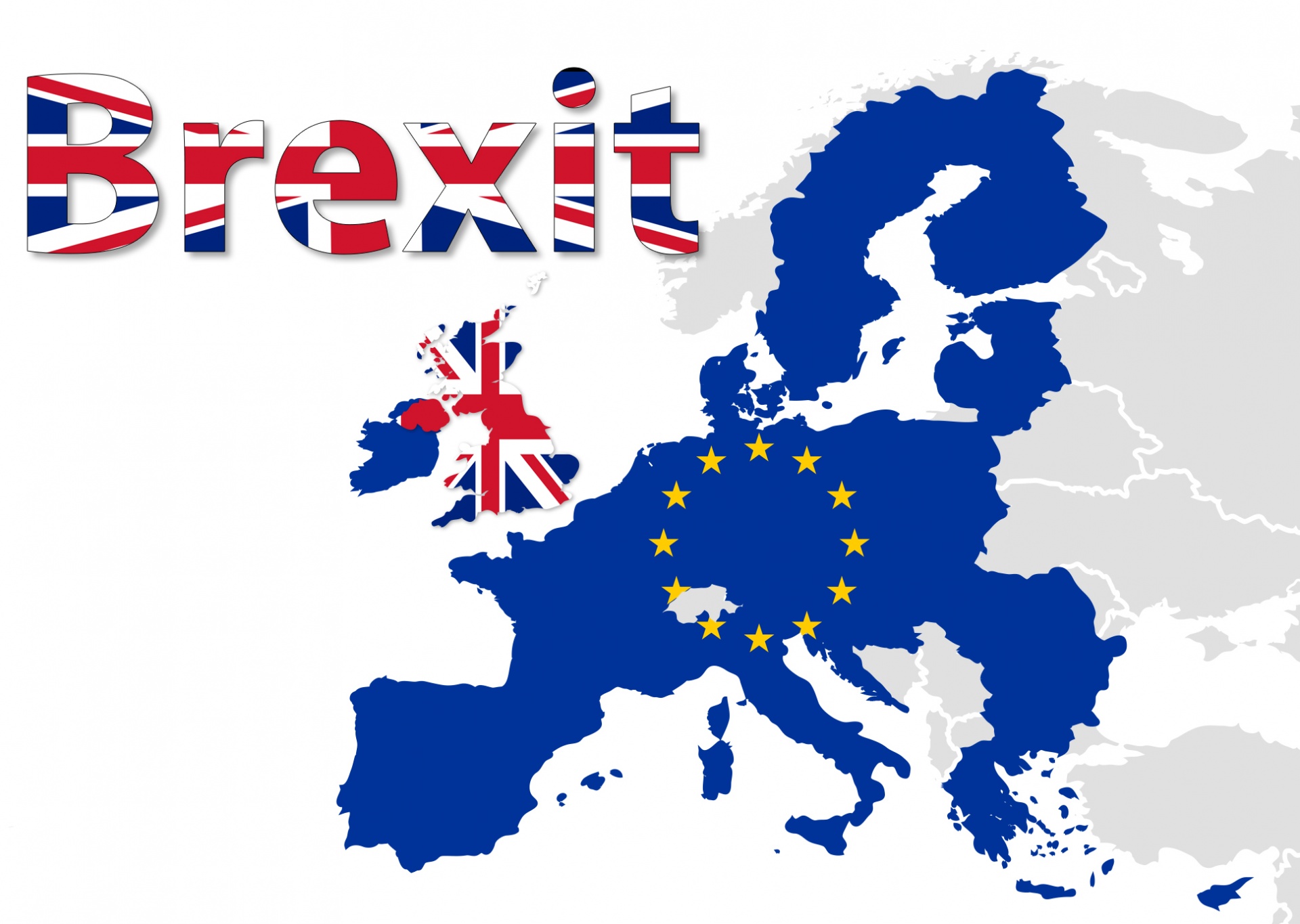
The surprise win by the Conservative Party in the 2015 General Election left it with the unwelcome obligation to carry out a referendum on UK membership of the EU. Political insiders believe this was one of the Conservative Party election manifesto proposals included to placate the right wing of the party, which David Cameron was intending to sacrifice in order to bring the Liberal Democrats into a renewed coalition government under his Premiership.
However, the Conservative Party won sufficient seats to enter government on its own. Added to this, the result of the referendum of June 2016 was contrary to the expectations of the Conservative government. So it was not surprising that the government departments responsible for agriculture in the UK (domestic policy is a devolved responsibility for the separate administrations in England, Wales, Scotland, and Northern Ireland) had no ready-made national policy plans on their desks which could be made operational in time for Brexit in, say, 2019 or 2020.… Read the rest
What can we expect following the CAP public consultation?
DG AGRI launched its 12-week public consultation on modernising and simplifying the CAP on 2 February last. The publication of the on-line consultation was accompanied by an inception impact assessment to support the preparation of a Commission Communication on modernising and simplifying the CAP which is expected late this year, possibly in November.
According to the Q&A memorandum prepared by DG AGRI which accompanied these documents, the stakeholder consultation is expected to provide opinion-based information. “It is an opportunity to take into account societal demands in the policy discussions on the future of the CAP and adapt it to better integrate the new political priorities in an inclusive and comprehensive manner.” The impact assessment, on the other hand, proceeds on an evidence basis. “It identifies challenges, outlines objectives, and draws up policy options to achieve them. Impacts of these policy options are then assessed, considering economic, social and environmental dimensions.… Read the rest
GMO decision-making and the potential impact of Brexit
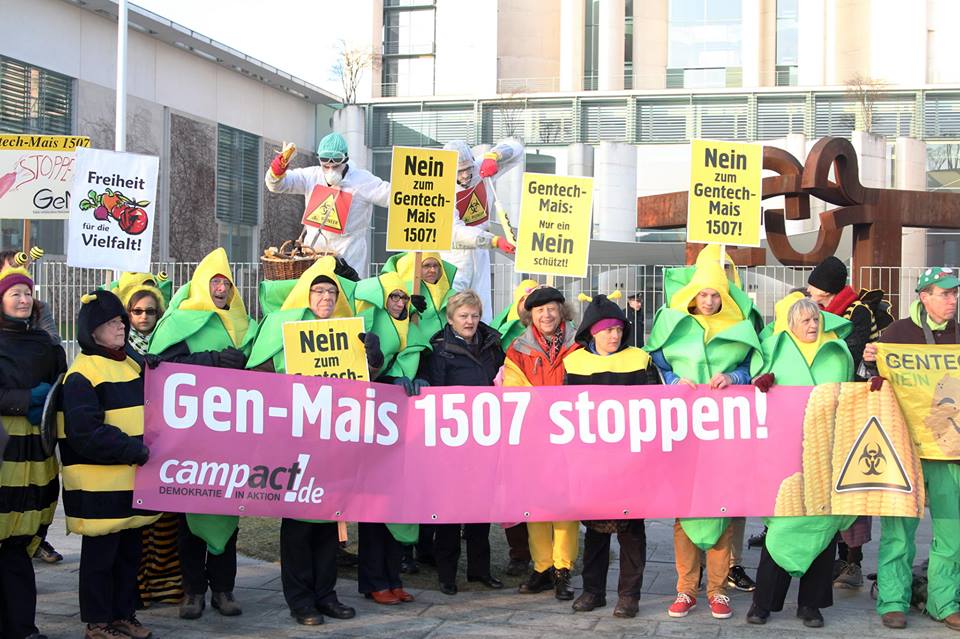
The EU’s paralysis with respect to decision-making on genetically-modified crops was illustrated once again at last Friday’s (27 January 2017) meeting of the Standing Committee on Plants, Animals, Food and Feed when the committee failed to reach a qualified majority either for or against the renewal of the cultivation licence for the GM maize MON810 (currently the only GM crop licensed for cultivation in the EU) as well as on authorisations for cultivation of two other GM varieties ‘maize 1507’ and ‘Bt11’.
This is despite the fact that 19 Member States have excluded all or part of their territory from the cultivation of these three GMOs, pursuant to the provisions of Directive (EU) 2015/412 (the ‘cultivation opt-out’ directive).
The Commission’s expectation that allowing countries to ‘opt out’ of cultivation of an approved GM crop would soften their opposition to allowing other countries to proceed with cultivation if they so wished has only been partially fulfilled.… Read the rest
Establishing the UK’s non-exempt limit on agricultural support after Brexit
One of the issues the UK must address in establishing its WTO schedule of commitments post-Brexit is the limit it will have on certain types of domestic support it can provide to its farmers. This limit will, in turn, have implications for the way in which the UK and its devolved administrations can design their post-Brexit agricultural policies, assuming that they might wish to continue to provide some support to their farmers.
Domestic support in the WTO is measured as an Aggregate Measurement of Support, or AMS. Countries which provided non-exempt domestic support in the base period (1986-88) for commitments under the Uruguay Round Agreement on Agriculture (AoA) entered a Total AMS commitment in Part IV of their WTO schedules of commitments (their Bound Total AMS or BTAMS). This sets the maximum limit on their allowed non-exempt support (often referred to as the Amber Box or, inaccurately, as trade-distorting support).
Where no Total AMS commitment exists in Part IV of a Member’s Schedule, a WTO Member is not allowed to provide support to agricultural producers in excess of the relevant de minimis levels (Art 7, AoA).… Read the rest
Brexit and Irish agri-food trade
I am preparing to give evidence to the Irish Oireachtas Joint Committee on Agriculture, Food and the Marine on Tuesday 17 January on how Brexit might impact on the Irish agri-food sector. Ireland is the EU Member State with the most to lose from Brexit, and the Irish agri-food sector is the most vulnerable economic sector because of its high dependence on the UK as an export market. More than 80 per cent of Ireland’s key beef and dairy production is exported. Although there has been some diversification away from the UK over the past decade, it still takes 43% of all Irish agri-food exports.
In thinking about the potential impact of Brexit on Irish agri-food trade, I draw heavily on the excellent study of the potential impact of Brexit on Irish agri-food trade prepared by two Teagasc economists Trevor Donnellan and Kevin Hanrahan just prior to the Brexit referendum. Although the study was finalised in April 2016, its key messages are still valid after the referendum result.… Read the rest
Why further reform of the CAP is needed now
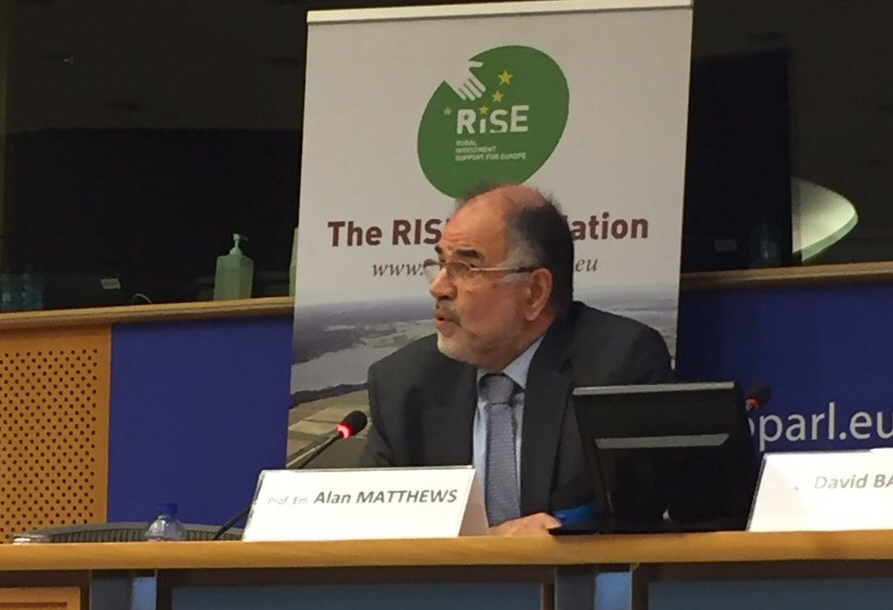
Yesterday I took part in a meeting at the European Parliament under the heading “CAP – Out of the box thinking‘ jointly organised by the RISE Foundation and the European Landowners’ Association. The event was part of the preparation for a report by the RISE Foundation under the leadership of Professor Allan Buckwell aiming to provide ideas for the CAP post 2020. My contribution was to argue that further reform of the CAP is needed now. Below is a slightly edited transcript of my remarks.
… Read the restReform of the Common Agricultural Policy has been ongoing since the seminal McSharry reforms in 1992. They have covered both the common market organisations, which have become more market-oriented, as well as rural development programming.
Direct payments were originally introduced to compensate for the reduction in market intervention prices in the MacSharry and later reforms, but were subsequently extended to farmers in new Member States where this rationale did not apply.
Designating new Areas with Natural Constraints
One of the longer-running sagas in EU agricultural policy-making is now entering the end game. I refer to the redesignation of certain less favoured areas (now called Areas with Natural Constraints) for the purpose of determining eligibility for ANC payments under the CAP. After much foot-dragging, it was agreed in the 2013 CAP reform that updated designation criteria would be used for ANC schemes in the 2014-2020 Rural Development Programmes, but Member States were given leeway to delay their introduction until 2018.
Presentations by DG AGRI officials at two recent workshops on the new ANC criteria, one organised by the European Network for Rural Development in October last year, and the other organised by COPA-COGECA in November last year, provide an overview of the state of play. While a number of Member States/regions have completed the redesignation, the great majority are still outstanding at this point in time.
Purpose of the ANC scheme
The purpose of ANC payments is to provide total or partial compensation to farmers for the natural or specific disadvantages of farming in areas with natural or specific handicaps to ensure that this land remains in agricultural production and to prevent land abandonment.… Read the rest
First COMAGRI discussion on Omnibus Regulation
On 5 December last, COMAGRI had a first exchange of views on the so-called “Omnibus” proposal for a Regulation on the financial rules applicable to the general budget of the Union and amending a number of sectoral regulations. In my previous post, I flagged that this legislation provided the first opportunity to make changes to the CAP basic acts since the 2013 CAP reform was concluded.
It was thus interesting to listen to the mood of the Committee as the co-rapporteurs for the opinion, Albert Dess (EPP) and Paolo De Castro (S&D) introduced the discussion (a video of the discussion can be viewed here, beginning at 16:07).
The general tenor of the remarks from the COMAGRI co-rapporteurs as well as other contributors to the debate was that the Committee should adopt a narrow interpretation of its powers to amend the proposal, keeping in mind that its purpose is to deliver simplification of the CAP both for managing authorities and for farmers.… Read the rest
Triggering the next revisions of the CAP
I have long puzzled over the timeline, processes and trigger points that could lead to the next revision of the basic CAP regulations. As long ago as September 2014 I wrote a lengthy post on the prospects for the next CAP reform before even the ink was dry on the 2013 reform. This highlighted the mid-term review of the 2014-2020 Multi-annual Financial Framework (MFF) as a possible trigger point. It also discussed the complications of the parliamentary timetable for concluding a new MFF for the post-2020 period and the implications this might have for a further round of CAP reform.
I returned to this issue in a post in November 2015 in which I asked whether there would be a proposal for a CAP reform in 2017 to coincide with the publication of the Commission proposal for the next MFF? My conclusion was that we were more likely to see a rolling series of proposals for incremental changes in the various basic acts over the period of the Commissioner’s tenure, designed to address specific problems and issues, but without fundamentally changing the structure of the 2013 reform.… Read the rest
We need a British Ecosystem Services Policy not a British Agricultural Policy
We are delighted to bring you this guest post by Professor Ian Hodge of the Department of Land Economy, University of Cambridge on the topic of UK policy towards agricultural land after Brexit. The views expressed are his own and should not be attributed to any organisation with which he is associated.
Brexit requires the United Kingdom to develop its own policy towards agriculture and rural land to replace the Common Agricultural Policy. This must recognise the multiple benefits and costs associated with rural land use and promote the integrated management of rural land in the long term public interest through a British Ecosystem Services Policy (BESP).
The UK must have a new policy for rural land
Over the past forty three years, agriculture in the UK has been subject to the guidance and control of the Common Agricultural Policy (CAP). As it has lurched from crisis to crisis, it has evolved from a policy focussed primarily on securing European food security through intervention in agricultural commodity markets towards a broader-based, more nationally differentiated policy concerned with the support of farm incomes and the promotion of sustainable farming.… Read the rest