Understanding the 'active farmer' debate

When COMAGRI publish their compromise amendments to the Commission’s draft revised CAP regulations, one issue to look out for will be the proposed definition of active farmers. This has been a difficult area in the direct payments regulation dossier because the issue of how to define an active farmer goes to the heart of the decoupled nature of the SPS system.

The item is on the reform agenda because of repeated criticisms of the Court of Auditors, first in the context of its report on SPS implementation and more recently in its report on SAPS implementation in the new member states. The Court complains that many beneficiaries of CAP payments do not appear to be ‘farmers’ as conventionally understood.
There are at least four different themes in the discussion on defining ’active farmers’ in order to better target direct payments to the intended beneficiaries:

(a) To avoid the leakage of payments to beneficiaries whose principal business has nothing to do with farming (for example, golf courses, airports, municipalities);

(b) To avoid the leakage of payments to ‘sofa farmers’, by which is meant persons who own land and gain entitlements to a payment but where the land is not used for production.… Read the rest
Rural development funds allocation hits new member states

Update 15 December 2012: I have now learned that I was incorrect to attribute the table of allocation of rural development funds to Van Rompuy in this post and these figures were not circulated at the European Council meeting as I suggest. I regret the error but I have left the post stand unedited as an example of one possible distribution of funds being discussed in the negotiations. But as of this date no official proposed allocation has been made, see fuller discussion here)

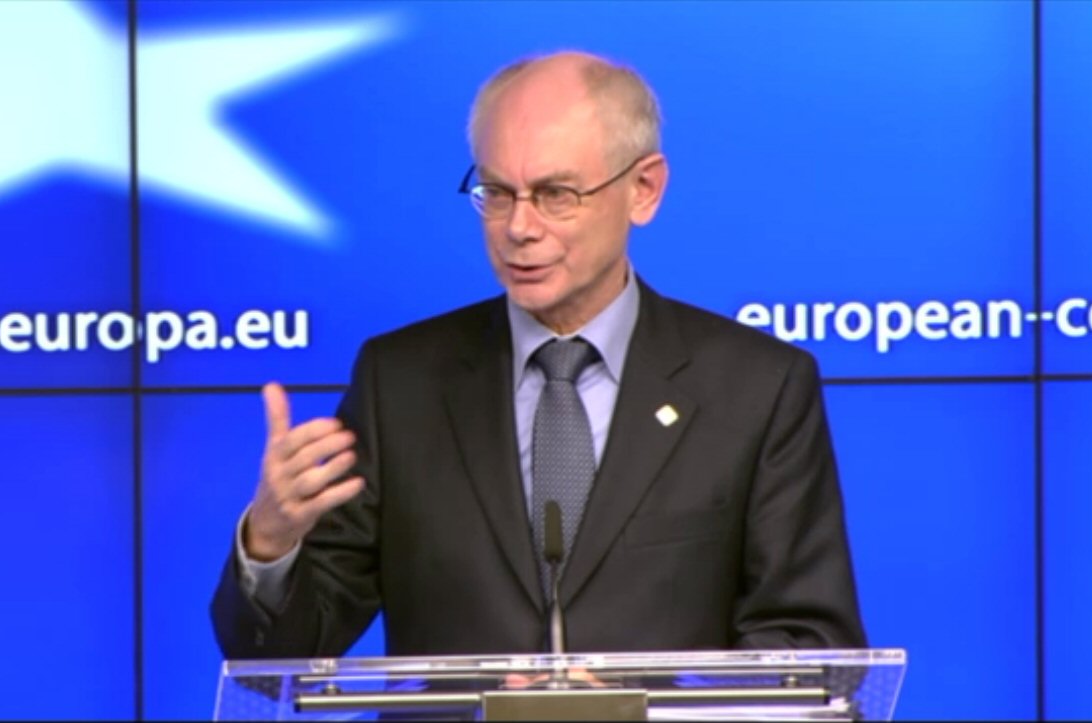
In previous posts I had wondered how member states were expected to come to an agreement on the MFF for the 2014-2020 period at the special European Council meeting at the end of the November without being aware of the proposed allocation of Pillar 2 rural development funds under the CAP. The answer is now clear. A well-kept secret is that Herman van Rompuy (HvR) did circulate proposed rural development allocations at that meeting.… Read the rest

EIP: has the role of knowledge in agriculture been rediscovered?

It is believed by experts and also somehow confirmed by statistics that the European agriculture is losing a battle with international competition in the field of food production. Although the situation is by no means identical everywhere in Europe, an objective observer cannot help concluding that the European agro-food sector has been stagnating; even the Common agricultural policy itself is based on the assumption that agriculture “needs to get” income supports because it is uncompetitive. In some Member States and sectors, substantial direct payments under the Pillar I of CAP even exceed the level of generated income on the market. Thus, it no longer means only a compensation for the lack of competitiveness, but also gives a wrong signal to producers and has negative development consequences. Many producers today do not look for new opportunities in better technological or market solutions, more efficient use of resources or more reasonable combination of products, but rather adapt their decisions to the solutions stemming from the policy incentives.… Read the rest

Council debate on greening raises more questions than answers

Watching the videostream of the Agricultural Council’s greening debate held earlier this week was a rather depressing experience. There is something profoundly wrong with a decision-making system where food and agricultural policy is determined solely by agricultural ministers who speak on behalf of their farmers only, with only the Commission present to even vaguely represent the other interests who have a legitimate right to be heard, including taxpayers, environmentalists and those interested in the impact of EU policies on developing countries

At least in the Parliament, despite the enormous power of COMAGRI under the Parliament’s rules of procedure, final decisions are taken in plenary session where all interests (with the possible exception of taxpayers, as the Parliament does not face an effective budget constraint) are represented. And membership of COMAGRI is in principle open to all MEPs even if in practice it is heavily dominated by farming representatives.

Farmers, of course, have a perfect right to have their views heard and their interests taken into account.… Read the rest

Nobody cares what we spend our money on

All we know that no decision was made last week in Brussels on how much money the EU should spend in the next programming period (MFF). Besides Van Rompuy’s detailed and complicated figures and plans, it is pretty evident that the debate is about the possibility to redistribute the European Budget among Member States.

If one takes a short look to the operating budgetary balance of the Member States, it becomes evident that Poland, Greece, Hungary, Spain and Portugal are the greatest recipients of the current system, while Germany, France, Italy, the United Kingdom and Netherlands are the biggest contributors in absolute terms. This picture varies, of course, if we analyse the balance per capita or as a proportion of GDP. It is also evident that the former group wants to save the status quo, while the latter wants to cut the budget.

Source: http://ec.europa.eu/budget/figures/interactive/index_en.cfm

If we compare the figure above with the one below, it turns out that expenditure on agriculture and rural development by country shows a great diversity among Member States as well.… Read the rest

No decision on MFF budget at first attempt

Van Rompuy’s second attempt (HvR-II) at preparing draft conclusions on the EU’s multi-annual financial framework (MFF) for the European Council which failed to agree them at this week’s special European Council meeting can be summarised in two sentences: (a) within the overall budget, the reinstatement of much of the CAP spending cuts at the expense of all other budget headings (except Administration which stayed the same, though see below); and (b) separately, within Heading 1, a shift from competitiveness (Europe 2020) to cohesion spending.

The detailed figures are shown in the table below. The total budget (including extra-MFF spending) in HvR-II is maintained at exactly the same level as HvR-I but because emergency aid for humanitarian crises in developing countries is moved out of the MFF, the MFF total falls by just over €1 billion euro.


Europe 2020 spending (competitiveness) took the largest cut in absolute terms in HvR-II compared to his first draft conclusions.… Read the rest

Strengthening the role of young farmers in the future CAP

The European Council of Young Farmers (CEJA) has recently launched a campaign “Future Food Farmers” to raise public awareness of the impending age crisis in European agriculture. The aim of the campaign is to achieve progress on generational renewal in the agricultural sector in the future CAP.

The issue is highly relevant these days as only 6% of agricultural holders in the EU are below the age of 35, while one third are over 65. However, Member States show a great diversity in this issue as Poland has the highest share of young farmers in Europe (12%), while Portugal has the lowest (2%), according to Eurostat data. Neither figure is promising for the future, though.

The ‘young farmers problem’ affects European agriculture in many different ways. Just to mention a few, food security, biodiversity, rural job creation as well as productivity and competitiveness are at stake. Young farmers are faced with significant entry barriers (access to land and credit, investments, etc.),… Read the rest

MFF baton passes to Van Rompuy: further cuts proposed compared to Commission proposal

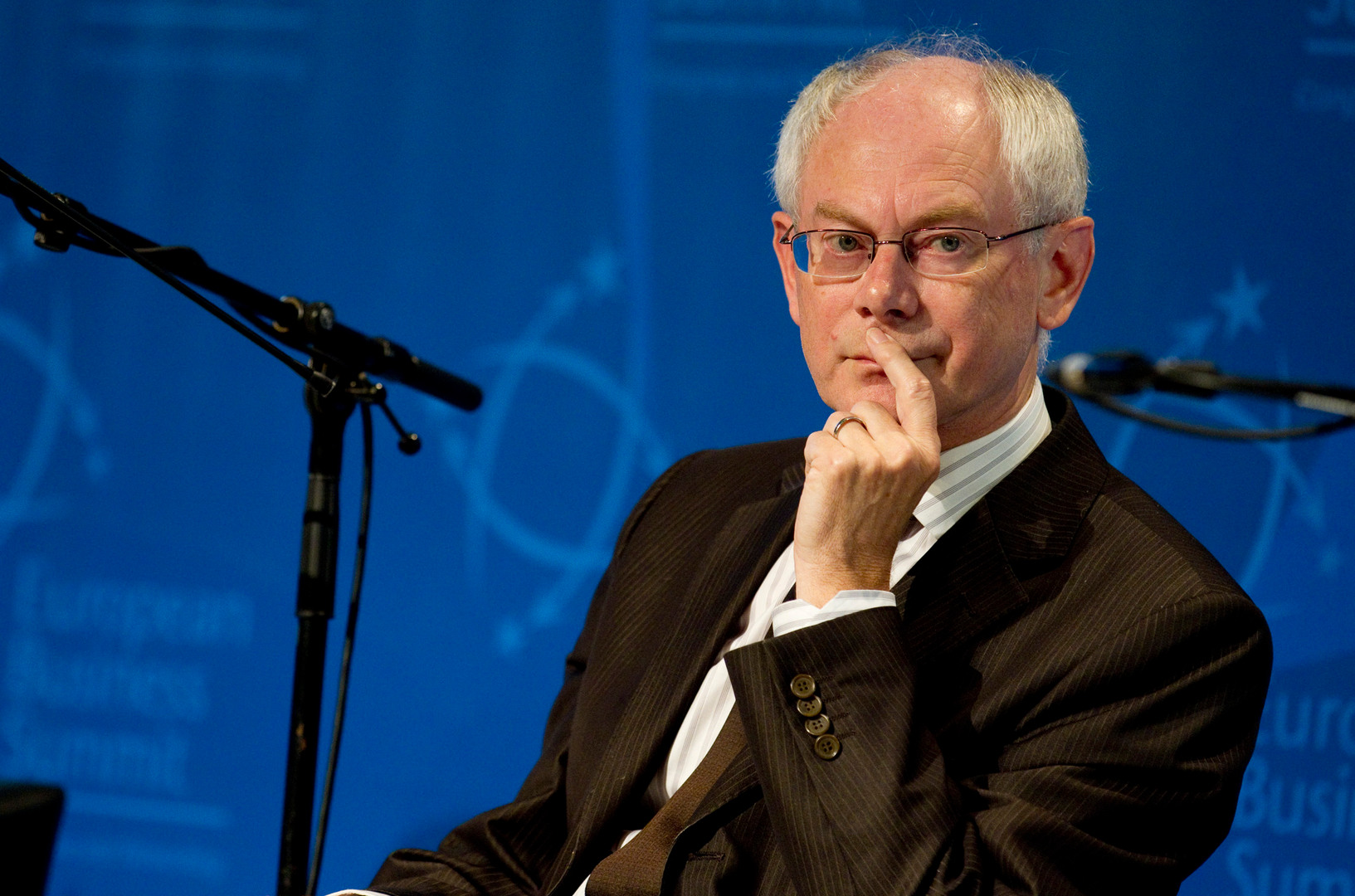
The President of the European Council Herman Van Rompuy has now tabled his proposal for expenditure and financing in the EU’s MFF for the 2014-2020 period for discussion. The document will be tabled at the next General Affairs Council scheduled for 20 November. It is then not clear if Van Rompuy will have time to rework the numbers before the 22-23 November European Council which will convene solely to discuss and, if things go according to plan, agree on the Council’s view on the new MFF.

The draft starts with the last version of the MFF negotiating box developed by the Cyprus Presidency but revises the numbers, again in a downward direction. This post takes a look at the main changes proposed in the headline numbers and in the proposals for agriculture contained in the Van Rompuy proposal.

Overall MFF expenditure

First, the ballpark figures. In evaluating the proposal it is necessary to be clear about what is being compared to what.… Read the rest

The US Farm Bill: Lessons for CAP Reform ?

The current CAP reform debate and the US Farm Bill debate have been taking place in parallel for several months. There are some interesting contrasts between the two procedures, which are explored in a note for the European Parliament. The note also describes the current situation of the Farm Bill negotiations, based on the proposals tabled by the Senate and by the Committee of Agriculture of the House of Representatives (not endorsed by the House as a whole, so far).

It is difficult to compare the proposed €370 billion for 7 years in the CAP (a crude estimate based on recent budget proposals) with some US$ 690 billion, i.e €523 billion budget projected in the US Senate Farm Bill proposal for an equivalent period of time (1). Indeed, almost 80 percent of the US Farm Bill budget is devoted to nutrition programs such as food stamps and school lunches that benefit primarily to the urban poor and the unemployed.… Read the rest

The nitty-gritty of CAP reform: the case of new entrants

David Barnes is the Scottish Government’s Deputy Director for Agriculture and Rural Development. He sits with his Minister around the Council of Agricultural Ministers’ table as the negotiations on the shape of the CAP2020 take place and, more interestingly, he blogs about it. His blog gives an insider’s view and a personal perspective on what is going on during the course of the negotiations.

Not surprisingly, his posts give some fascinating insights into the process.

The complexity of the CAP 2020 fineprint was demonstrated in one of his recent posts which addressed issues for new entrants that might arise under the Commission’s proposal for the allocation of entitlements under a new direct payments scheme. Written from the Scottish point of view, it illustrates the intricacies of developing legislation to cover all eventualities across all member states.

For example, the specific measure giving rise to the first difficulty he mentions for new entrants, the requirement that farmers receiving entitlements in 2014 should have activated at least one entitlement in 2011, was inserted into the Commission proposal at the last minute under pressure from the Irish.… Read the rest