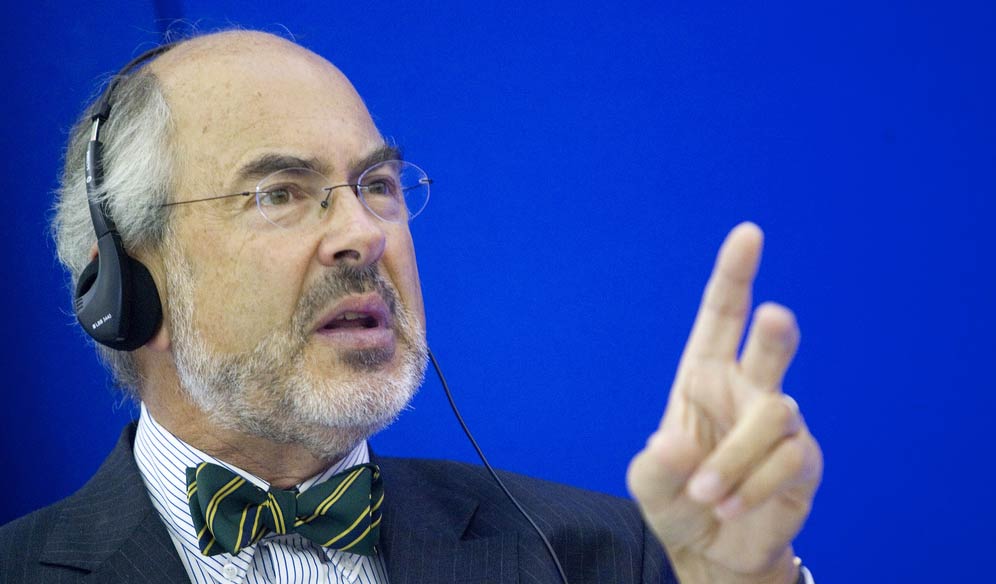
Further risk management toolkit for EU agriculture not warranted

A concern about increased price volatility facing EU farmers marks virtually every statement on the challenges facing the CAP post 2013, with the presumption that new instruments to address this challenge should be part of the CAP reform proposals. Income insurance and ‘contractualisation’ (greater use of written contracts and new collective bargaining powers for producer organisations) are the new tools most often mentioned in this context. A new report by Stefan Tangermann published by the International Centre for Trade and Sustainable Development punctures these claims and flatly concludes that intensified risk management instruments for EU agriculture are not warranted.

His argument is based around five points.

  • Farmers may well face greater price volatility in the future, but there is little that can be done to dampen volatility of agricultural prices on international markets. While use of trade policy can help to limit the transmission of world price volatility into the EU market, this is always at the expense of trading partners including developing countries and so should be avoided.
  • However, price volatility in the coming period will most likely involve price spikes around an increasing trend or, at least, a higher price level than before. This does not threaten farm incomes and indeed will benefit farmers. He points out that the dairy ‘crisis’ in late 2008/2009 most usually cited in support of new instruments occurred between years of unusually high prices.
  • The stabilising role of direct payments which he assumes will be continued at much their current level into the next CAP financing period. Currently almost one third of factor income in EU agriculture is made up of totally reliable government payments which make a very substantial contribution to stabilising farm income.
  • The well-known problems of adverse selection and moral hazard as well as the symmetric nature of agricultural risks which are often seen as market failures preventing the emergence of private insurance markets do not disappear when schemes are publicly-funded or subsidised. The result is that, in countries where such schemes have been introduced, they tend to quite costly. There is also evidence that publicly-funded schemes crowd out private risk management solutions which adds to their cost.
  • Risk-related policies have the potential to distort production and trade. Where risk is reduced, farmers will tend to expand risky production activities, and overall resources employed in agriculture are also likely to expand when farming becomes a less risk-prone business. Even if empirical research, for now, suggests that these effects are relatively minor.

He considers that, even if in spite of these criticisms, an enhanced risk management toolkit were to be included in Pillar 2, it would be likely to do relatively little harm because of the way it would be constrained by budgetary limits.

He concludes that government policy could do more to empower farmers to manage risk, and that there will continue to be a role for disaster payments in the face of catastrophic risks. Here he recommends that “a strong dose of ex ante rules for criteria to be applied and procedures to be followed in responding to catastrophic risks would make a lot of sense”.

The real losers from price volatility are not European producers, who have a range of options open to them to transfer and cope with risk, but poor consumers in developing countries whose options, faced with a significant price spike in staple foods, are much more limited. Greater attention to the design of social safety nets and their funding therefore is warranted.

Tangermann is right to emphasise that risk management must primarily remain the responsibility of producers and the food chain as a whole. The lesson from the 2009 dairy ‘crisis’ was not the increased volatility of agricultural markets, but rather the total unprepardeness of farmers and the rest of the dairy food chain for this volatility. Having grown up in the protected nest of market price support for so long, risk mangement strategies and institutions had never been required and thus never came into being. This has got to change.

However, drawing the line between normal volatility and unexpected catastrophic risk will always be difficult. Responding to natural disasters (floods, drought, disease outbreaks) is now covered by state aid derogations and (since the 2008 Health Check) by the  possibility for Member States to use Pillar 2 funding to subsidise premiums for insurance against such production risks.

What is now proposed is that the state aid derogations would be extended to subsidies for premiums insuring also against market risk, provided they adhere to WTO Green Box rules for such payments.  Despite the powerful arguments made by Tangermann against any extension of risk management instruments in the post-2013 CAP, such insurance may have a role in helping farmers to cope with catastrophic risks and avoid that taxpayers end up paying for the totality of losses . In that context, it may actually make sense for the EU to  encourage experimentation at Member State level by allowing financial participation in subsidising such schemes to be reimbursed under Pillar 2 (an argument I made in a paper last year).

What has been happening to the numbers undernourished during the food crisis?

Much of the recent discourse around CAP reform emphasises that European agriculture has an important role to play in the future in contributing to global food security. This concern has been driven by the growing awareness of the challenge of increasing global food production in a sustainable way, which in turn was underlined by the impact of the two recent food price spikes (2007-08 and 2010-11) on global hunger.

Estimates by the U.N. Food and Agriculture Organization (FAO), the U.S. Department of Agriculture (USDA), and the World Bank concluded that between 75 million and 160 million people were thrown into hunger or poverty as a result of the 2007/08 global food crisis. One response to this finding is that it apparently contradicts the conventional wisdom that low global food prices (for example, brought about by high OECD agricultural protection) were responsible for increasing hunger and poverty in developing countries in previous years (see the paper by Jo Swinnen for a discussion of this issue).

Now, a recent paper by Derek Headey at the International Food Policy Research Institute (see the summary on Dani Rodrik’s blog and the response by Martin and Zaman from the World Bank) questions whether the international organisations have correctly diagnosed the trend in the numbers of food insecure in recent years. According to his figures, there has been a massive decrease in the numbers of food insecure during the years of the food crisis. What explains this startling disparity?

Essentially, the numbers from the international organisation are simulations based on ceteris paribus assumptions, that is, they calculate the effect of higher food prices holding everything else constant. But as Headey points out, lots of other things were happening in the world economy in those years, including rapid economic growth in developing countries and much higher input costs, which in turn were partly responsible for the higher food prices. According to his data (which are based on self-reported responses to a Gallup World Poll survey question administered in around 150 countries over a period of years asking whether families had experienced situations in the previous 12 months where they did not have enough money to purchase the food that the family needed), the impact of higher economic growth greatly outweighed the impact of higher food and input prices, leading to a significant decline in the numbers undernourished.

His conclusion comes with some important caveats. First, data from the survey responses suggests that the methodology used by the FAO as the world’s hunger ‘scorekeeper’ underestimates the total numbers undernourished, particularly in Africa. Thus, hunger may be an even bigger problem than described in the FAO numbers. Second, there is no guarantee that the favourable evolution in the numbers undernourished during the years coinciding with the 2007-08 price spike will be repeated during subsequent spikes when food price inflation might be higher than it actually was in the earlier period. And third, while the numbers undernourished may have fallen between 2005 and 2008, they would have fallen by even more if food prices had not spiked. Thus the global food price spike did hurt, and measures to offset the impact of severe price spikes on the very poorest are indeed warranted.

http://rodrik.typepad.com/dani_rodriks_weblog/2011/06/was-the-food-price-crisis-of-2008-really-a-myth.html

European Parliament displays little courage in its report on the future EU budget

This month (June 2011) sees the real start of the negotiations on the future EU budget framework for the coming years. On Thursday 9 June the Parliament will vote on the opinion prepared by its Policy Challenges Committee setting out its views on the size, structure and duration of the next multi-annual financial framework (MFF).

On 29 June the Commission will publish two legislative proposals, one on future own resources and the other on the MFF. These will be accompanied by impact analyses including of potential new own resources. This will be the first real indication of the Commission’s thinking on the future resources to be made available for the Common Agricultural Policy, although many months of hard negotiating lie ahead before an eventual agreement is reached. The current MFF runs until the end of 2013.

The Policy Challenges Committee report

A year ago, the Parliament set up a special committee on the policy challenges and budgetary resources for a sustainable European Union after 2013, also known as the SURE or Policy Challenges Committee. Its remit was to prepare the Parliament’s opinion on the political priorities for the post-2013 period and on the necessary budgetary resources to implement these priorities.

The Committee’s report (which given its wide representation will likely be approved by the Parliament as a whole) includes the following recommendations:

    An overall increase in the EU budget of 5% (from 1.06% to 1.11% in commitment appropriations measured in 2013 prices)
    A spending structure divided into six headings. Four of these would cover internal policies (knowledge, cohesion, natural resources and sustainable development, and citizenship, freedom, security and justice), a fifth would cover external policies and the sixth administration.
    Continues to favour the replacement of the GNI-based own resource with alternative taxes directly under EU control
    Funding for agricultural and regional policy to remain at current levels
    Calls for the creation of a ‘global MFF margin’ to give the EU flexibility to respond to unexpected events
    The MFF to last for one further 7-year cycle to 2020 and then to move to a 5+5 cycle to bring it more into line with the Parliament’s 5-year mandates.

Powers of the Parliament

The Parliament’s powers under the Lisbon Treaty differ with respect to the financing and spending sides of future EU budgets. The EU’s own resources are decided using the consultation procedure, where the Council decides unanimously after noting the opinion of the Parliament. Decisions to introduce a new own resource or to abolish an existing one must also be approved by the Member States in line with their respective constitutional requirements.

The spending side of the MFF is decided using the consent procedure. This means that the draft outline is prepared unanimously by the Council and is then forwarded for adoption (or rejection) by a majority of the members of the Parliament. The Parliament does not have the power to propose amendments.

However, the Treaty further notes that ‘Throughout the procedure leading to the adoption of the financial framework, the European Parliament, the Council and the Commission shall take any measure necessary to facilitate its adoption.’ The Parliament believes that this imposes an obligation on both the Council and the Commission to carry out negotiations to prepare a text on which the Parliament can agree. It will be interesting to see how this works out in practice.

Can the Parliament learn to say no?

The difficulty is that the Parliament does not show itself to be a credible negotiating partner. The SURE report is just a shopping list of desirable and not-so-desirable programmes and projects for which increased funding is sought. There is not one paragraph in the document where the SURE committee feels that there is even the slightest possibility that EU spending might be reduced. This inability of the Parliament to prioritise, even in the light of the huge fiscal challenges and austerity programmes being undertaken by many EU member states, strips it of any moral authority to be taken seriously in the coming negotiations on the MFF.

Update Wednesday 15 June 2011
The Parliament as expected voted in favour of this report on 8 June last. The debate can be read here.

In passing, it is interesting to note the comments of Richard Ashworth, of the ECR Group, which echoes the conclusion of my post:

In the Special Committee on Policy Challenges and Budgetary Resources for a Sustainable European Union after 2013 we rightly talked about priorities, but then we never acted on it. There was no evidence of a willingness to take tough choices, the kind of choices which are being taken by governments all over Europe at this time.

Paying for the EHEC food safety crisis

The enterohaemorrhagic E. coli (EHEC) ‘cucumber’ crisis raises many questions. The most immediate is the public health dimension. The scale of the outbreak has been described as unprecedented by public health officials and the cause of the outbreak has yet to be localised. To date there have been 18 fatalities, all but one in Germany, and at least 499 people have haemolytic uraemic syndrome (HUS), a life-threatening kidney disease (see update from a German spokesman here). For comparison, according to the University of Edinburgh National Creutzfeldt-Jakob Disease Research & Surveillance Unit, 209 people have died in the EU (168 in the UK alone) from vCJD (‘mad cow disease’) since 1990.

The outbreak also raises questions once again about the governance of the food system – is the mixture of market incentives, public regulation, legal liability and socially-enforced moral standards of behaviour working sufficiently well to warrant consumer trust in the governance of food safety? How well has the EU food system responded to the crisis? (the DG Sanco website documents the Commission’s response). While agricultural ministers meeting at the informal Council meeting in Debrecen, Hungary apparently accepted that the European rapid alert alarm system worked well, questions will be asked as to why the Hamburg laboratory apparently misdiagnosed the genetic signature of the outbreak, thus wrongly accusing Spanish cucumbers as its cause.

Compensating producers

The economic impacts are still evolving. Once the source of the infection is identified, it will be open to the victims and their families to claim damages from the perpetrator. Another set of costs are borne by horticultural producers across Europe, mainly in Spain but also in other countries, who have seen their markets collapse because of advice to consumers not to eat certain types of raw vegetables, because of a general collapse in consumer confidence, and because of trade bans introduced by third countries such as Russia.

Commissioner Dalli has indicated that the Commission is examining the possibility of providing financial compensation to vegetable growers hit hard by the outbreak. The matter is complicated by the initial Spanish government demands for compensation from Germany for wrongly identifying Spain as the source of the contaminated produce, although German ministers have pointed out in response that official communications did not refer to any source of infection in Spain.

One issue is whether compensation to growers would be provided from EU funds or as national state aid. A recent case of dioxin contamination of pigmeat in Ireland in December 2009 cost Irish taxpayers in excess of €100 million in financial assistance made available to the industry to cover the cost of product recall. In legal terms, this payment was a state aid which was approved by the Commission as a consequence of a situation that could be qualified as an extraordinary event in the meaning of Article 87 (2) (b) of the EC Treaty. This was clearly an incident in a single country which only affected producers in that country.

Lessons from the feed industry

The question of how to finance support to producers adversely affected by a food crisis more generally was raised in the EU feed hygiene regulation adopted in 2005. One of the recitals to this legislation noted:

Successive feed crises have shown that failures at any stage in the feed chain can have important economic consequences. The characteristics of feed production and the complexity of the feed distribution chain mean that it is difficult to withdraw feed from the market. The costs of rectifying the economic damage along the feed and food chain is often borne by public funds. The remedying of this economic consequence at a low cost to society could be improved if the operator whose activity causes economic damage in the feed sector is held financially responsible. However, establishing a general mandatory system of financial liability and financial guarantees, for example through insurance, which applies to all feed business operators may not be feasible or appropriate. The Commission should therefore consider this issue in greater depth, taking into account provisions in existing legislation with regard to liability in other spheres, as well as existing systems and practices amongst the Member States. To this end, the Commission should present a report, accompanied where appropriate by legislative proposals.

This was a watered-down compromise from the Commission’s original proposal. According to Europolitics:

The Commission’s original proposal would have forced all feed producers from the farmer to the processor to take out some sort of financial protection from the costs of cleaning up after a feed hygiene disaster. Strong criticism of this idea has been made by both the Member States and MEPs, led by rapporteur Hedwig Keppelhoff-Wiechert (EPP-ED, Germany). The Presidency compromise removes the teeth from the original Article 8 of the Commission proposal by calling on Member States to “encourage feed business operators to ensure on a voluntary basis” that they have sufficient financial guarantees to deal with a general recall of infected feed. The Commission would have to produce a report within two years on the feasibility of a mandatory system.

Not surprisingly, the EU feed industry felt it was odd to have a measure which called for a mandatory financial guarantee (insurance) for feed producers but not for food processors, although at that time feed was implicated in the majority of European food scares.

The Commission subsequently published a report on the feasibility of financial guarantees in the feed sector. It concluded that financial guarantees were technically feasible but not currently available. The Commission envisaged a wide public debate following publication of the report, but this has not taken place.

This is a pity, as there are important issues at stake in evaluating the merits or otherwise of requiring food and feed businesses in the food chain to cover the costs of food safety incidents. Whether mandatory guarantee requirements should be extended to farmers, as the Commission originally proposed in the case of farmers producing feed ingredients, is clearly even more problematic.

At present, there seems to be an implicit social contract that, in return for accepting strict rules on traceability and food safety standards, farmers and food processors are entitled to compensation from the taxpayer for unexpected losses due to food safety incidents for which they are not responsible. This implicit bargain, in the case of farmers, is something I could support, but it raises the question of double compensation given that support through the Single Farm Payment is also, in part, justified on these grounds.

Update Wednesday 8 June
Yesterday an emergency meeting of the Agricultural Council agreed in principle to a Commission proposal to award compensation to vegetable growers from the EU budget. The payments will be made under Article 191 of the Single CMO Regulation No 1234/2007 which allows for emergency measures, thus justifying them as part of the market support function of the CAP.

The Commission shall adopt the measures which are both necessary and justifiable in an emergency, in order to resolve specific practical problems.
Such measures may derogate from provisions of this Regulation, but only to the extent that, and for such a period, as is strictly necessary.

Commissioner Ciolos made an initial proposal for a budget of €150 million which was estimated to cover 30% of the losses of vegetable producers during June. Payments will be made through Producer Organisations and these will be allowed to provide additional compensation. Apparently most Member States proposed a higher figure seeking 100% compensation, inclusion of a greater number of products, and raising the price base for compensation. Commissioner Ciolos pointed out that there could be difficulty finding the funds in the budget but promised to propose a draft Regulation to the rest of the Commission today (8 June) which would be published within the next 3 days to be approved by the Management Committee on 14 June.

Update Wednesday 15 June 2011
From the EUROPA Press Releases RAPID service 15 June 2011

Yesterday’s Management Committee has voted through an emergency aid package for fresh vegetable growers worth €210 million. This scheme, initiated by EU Agriculture Commissioner Dacian Ciolo?, will allow for the EU to pay producers for cucumbers, tomatoes, lettuce, courgettes, and sweet peppers that have been withdrawn from the market since May 26 as a result of the E-coli outbreak in Northern Germany. The decision foresees paying a maximum rate of 50% of the usual producer price in June. The final figure will only be confirmed on July 22 once member states confirm the volumes that will be covered. The scheme also provides Producer Organisations with some additional flexibility in compensating associated farmers for withdrawals of their vegetables from the market. The Commission Regulation will be published in the Official Journal in the coming days after which producers can apply for support. Following the identification of the origin of the contamination, EU Agriculture & Rural development Commissioner Dacian Ciolo? stated: “I am relieved that the source of the contamination has now been identified, and that consumers can now enjoy fresh vegetables in full confidence. I am optimistic that consumption will pick up very quickly.” On yesterday’s vote, the Commissioner said: “This is an important signal for fresh vegetable growers because I was very keen to show that Europe can react quickly when it needs to. European agriculture has become more and more market-oriented in recent years. However, this crisis again highlights that the market alone is not sufficient for something as strategically important as agriculture. These are elements that we must bear in mind when it comes to fixing the rules and the budget for the CAP after 2013.”

Haskins sets out vision for CAP reform

It’s customary that on the eve of a reform of the Common Agricultural Policy, Chris Haskins (Baron Haskins of Skidby, an appointed member of the House of Lords) sets out his case for radical change.

In the 2011 edition, Haskins argues for a cut in the CAP budget and a redistribution from farmers in western Europe to farmers in the east. With an outlook of increasing commodity prices, the CAP should focus less on subsidising farmers and more on providing help declining rural areas, particularly in eastern Europe, following the model of EU structural and cohesion policy.

A former Chairman of Northern Foods, one of the UK’s biggest processed food companies, Haskins joins the growing chorus of those rejecting the notion that preserving the CAP is necessary for European food security:

“The main economic justification for an EU common agricultural policy is that, consistent with the rules of the single market, it offers all EU citizens secure and adequate supplies of affordable food. So, putting the case the other way round, would supplies of food be at risk if farmers did not receive financial support from the taxpayer? If such action was taken precipitously and unilaterally (i.e. without comparable action by other large food producing countries especially in North America) some areas of European agriculture would contract in the short term, especially dairy and beef farming. But imports would fill any gap in the market without much difficulty. If there were a problem of supply, prices would rise and it would entice European farmers back into production”

He continues,

“There is no food security problem in the EU, and nor would there be if subsidies were phased out. Furthermore, if support for farmers was run down in an orderly way and in conjunction with the United States, it is arguable that the industry’s income would not be seriously damaged. Indeed, European agriculture might even benefit. Without the cushion of subsidies and protectionist barriers, farmers would have an incentive to tackle the extensive inefficiencies of their industry – too many small unproductive farms, inadequate investment because of a lack of collateral, and insufficient co-operation in reducing costs and strengthening market clout. The most inefficient farmers would probably go out of business (and should receive one-off compensation if need be). But the better farmers could further expand with all the benefits of scale – more capacity to invest, increased efficiency, more resilience when times are tough. Good small farmers would also survive by continuing to diversify and develop alternative sources of income.”

He admits, however, that abolition of subsidies is politically unfeasible. So an end date should be set for the single farm payment of 2023 and in the mean time, attention should be focussed on making the CAP less wasteful and better targeted at genuine policy objectives.

Himself the owner of a large farm in Yorkshire, Haskins proposes a novel kind of cap on subsidy entitlements for large farms. He says that farms should only be subsidised up to their first 1000 hectares.

He has little to say about the environment, or the ‘public money for public goods’ arguments made by the likes of the RSBP and the European Landowners Organisation. He does say more research is needed into the effect of agriculture on climate change, and vice versa. He also warns that “farmers must expect further regulation to curb excessive use of pesticides and fertilisers”.

The paper is published by the Centre for European Reform and can be read in full, here (PDF).

Tangermann pulls Commission reform plans to pieces

Stefan Tangermann’s study on Direct Payments in the CAP post-2013 which was released by the European Parliament on February 11th last is a masterly deconstruction of the fragile rationale behind many of the proposals for the redesign of direct payments in the Commission’s Communication on the CAP post-2013 published last November. A powerpoint presentation of his study is also available.

The closely-argued report is divided into five sections, each of which deserves comment in its own right. In this post, I comment on the introductory section entitled The EC communication: another CAP reform?

In this opening section, Tangermann starts from the Commission’s standpoint that a further reform of the CAP is needed to prepare EU agriculture for the challenges of the future. The Communication identifies three challenges of food security, environment and climate change, and territorial balance. Tangermann argues that, while these are real and important challenges, the policy proposals in the Communication are hardly consistent responses.

With respect to food security, he makes that point that there is no need to provide any additional incentive to ensure that the EU can contribute to world food demand, as higher world food prices will in themselves stimulate additional production.

While he welcomes the emphasis given in the Communication to the importance of strengthening the competitiveness of EU agriculture, he makes a distinction between measures to enhance the productivity of resource use in EU agriculture which contribute to ‘true’ competitiveness, and direct aids which may help farmers to withstand international competition but which keep agriculture dependent on public support and which therefore represent no more than a form of ‘artificial’ competitiveness.

With respect to the objective of addressing environmental sustainability and climate change, he agrees that market forces alone will not necessarily achieve these goals and that public intervention may be justified. However, he also notes that agriculture’s ability to contribute to these public goods is highly differentiated and variable from place to place, and thus requires policies that are targeted and location-specific. This would require a major shift of policies and resources towards Pillar 2 of the CAP which is best suited to deliver policies of this kind, but this is not what the Communication proposes.

A similar criticism can be made about the objective of territorial balance, where the contribution that agriculture can make to the vitality of rural areas is very variable, and thus better suited to support from Pillar 2.

His overall conclusion reads as follows:

In summary, the Communication identifies important challenges. However, the limited policy adjustments proposed are not consistent with these challenges. In spite of the emphasis the Communication quite rightly places on the need for better targeting, there is little in the way of concrete policy changes proposed that would result in an effectively more targeted policy. Instead, the primary focus on direct payments, and emphasis on the need to make them more understandable to taxpayers and citizens, conveys the impression that the major aim of the Communication is to develop a justification for making direct payments on a per hectare basis a permanent and politically sustainable feature of the CAP.

Tangermann’s basic point in this opening section of his report is that the objectives identified by the Commission, while valid, require a targeted and differentiated response which is better delivered by Pillar 2 instruments. He thus anticipates that the Communication should propose a significant shift of resources from Pillar 1 to Pillar 2 but this is not the case. Indeed, the Communication appears to do the opposite, in that it is proposed to complement or substitute measures now in Pillar 2 with similar measures in Pillar 1.

Of course, there is no appetite among Member States for an increase in the share of Pillar 2 payments, in part because this is opposed by the farm organisations, in part because it is unpopular with Finance Ministries who have to come up with co-financing, and in part because transactions costs of Pillar 2 schemes are high and their effectiveness remains contested. Tangermann is nonetheless correct that this is what should be implied by the logic of the Commission’s argumentation for the future role of the CAP.

French environmentalists try the rough way

This week, the French national federation of environmental NGOs, France Nature Environnement (FNE), federation of hundreds of environmental groups, launched a poster campaign that raised considerable controversy. It showed, in a rather shocking way, some (real or alledged) environmental damages caused by agriculture. Adding insult to injury, this took place a day before the annual “salon de l’agriculture”, a big national fair in Paris that attracts close to 1 million visitors and where every politician goes to cuddle farmers. All farmers’ organisations became mad, and claimed that the campaign indiscriminately accused farmers of being polluters. The French Minister of agriculture, Bruno Le Maire talked about “a scandal”. Opening the agricultural fair, President Nicolas Sarkozy said that the poster campaign was a “loathable”, and compared FNE (for some strange reason) to the National Front taking over ongoing debates on the status of islam. Probably under some political pressure, the Paris metro advertising branch refused to display the posters (invoking bizarre reasons like the need for Quentin Tarentino’s approval on the “kill bees” poster below…). Was the choice of controversy by environmental NGOs a good one? How will it affect the public opinion on farming and environment? Could it lead to put pressure on the government for a more environmentally friendly CAP? Or will this damage environmental groups’ influence on farm policy design?

2011 started as a good year for farmers’ image in France. Since the 2009 farm income crisis, farmers’ organisations have done an excellent communication job. Grain growers were seen as villains in 2008 when the price of baguette was raised, and when their high income that particular year became public knowledge. Not wasting the opportunity of a good crisis, farmers’ organisations highly publicized the fall in income that took place in 2009. Even grain producers surfed on the wave of sympathy triggered by images of dairy producers spreading their milk in their fields. The conservative farm lobby also strengthened its political influence in 2010. Many arable crops farmers had turned against the Sarkozy government, when Michel Barnier (then minister of agriculture) reallocated some €1.4 billion Single Farm Payments to extensive grazing under the Health Check provisions. Threatening to vote against the candidate Sarkozy, the traditional farmers unions regained political influence. One year before the election, those farmers that are Members of Parliament and Senate tightened their grip on the future candidate. Recent government decisions, from the extension of tax cuts on biofuels (which the government initially opposed to) to the refusal to release information on individual farm payments, show evidence of a hunt for farm votes. So does the much advertised introduction of farm price volatility in the G20 agenda, currently under French presidency. In the same time, president Sarkozy pleased the most conservative farm groups by saying that, he too, was fed up with environmental constraints. Since his speech, the zeal of the ministry of agriculture in the environmental area has become even lower; and in Brussels, French resistance to any greening of the CAP more apparent.

The FNE poster that shows a child playing in those seaweeds that flood French seashore is a risky bet in terms of communication. The image is provocative and, true, quite unfair: these seaweeds expand because of nitrates leaked by agriculture, but also because of phosphorus which mostly come from households (detergents). By turning the tourism industry as well as local politicians against FNE, such a campaign could backfire.

Nitrates and seaweeds were chosen as a campaign theme probably because it is one of the few areas where environmental problems find a large echo in the public. Indeed, some 90 000 tons of these seaweeds were harvested last year at a high cost. In some bays, hotels are closing since tourists can no longer bear the smell. Local dwellers have to purchase mineral water because of nitrates. However, even in this favorable context, environmentalists have not had a lot of success at curbing government policy.The government’s plan to fight seaweeds in Brittany released a year ago includes money for collecting and disposing seaweeds but is lax on farmers. This follows successive programs paying farmers for reducing their nitrate leakage, which have cost billions of euros since 1994. Both the Court of auditors as well as Finances’ General Inspectors’ audits have repeatedly concluded enforcement was poor and that such payments have had little effect on water quality (to say nothing about the fact they were against international commitments regarding the polluter-pays principle and that their compatibility with EU Treaties was unclear). France was condemned by the European Court of Justice for non respect of EU directive on water quality in 2001, and has since then been threatened numerous time by the Commission. It was on the verge of being fined again in 2007 and 2010 and got away by promising reforms. In brief, regarding water quality, French environmentalists are simply grateful that a non-elected, European body like the Commission puts some pressure on their government, as other ways do not work much. In other areas than nitrates, the public opinion is even less keen at questioning farm policy, except perhaps on GMOs and on bees mortality, two other FNE campaign themes.

One may wonder why FNE took the risk of engaging into such a controversial campaign. During the last few months, most governments decisions have been steps back, away from original environmental commitments made in a large scale consultation called the “Grenelle” of the environment in 2007-08. Perhaps considering that they had little to lose given their loss of influence on the French farm policy, environmental NGOs seem to have decided to try the rough way. Another explanation is that the farm lobby has been communicating a lot on how French agriculture was sustainable and good for the planet, thanks to no-tillage techniques (the solution to carbon emissions), precision farming (no more pollution) and biofuels (labelled “flower power” in advertisements played repeatedly on national radio). Maybe FNE saw no other way to stop the greenwashing.

It is unclear whether the FNE campaign will manage to rally public opinion and put more pressure for a more environmentally friendly agricultural policy. The campaign might have unwanted effects. It was risky, and relations with farm groups will be affected, including groups that have tried to get closer to environmental NGOs. But from an environmentalists’ point of view, one might consider that other strategies had little chance to curb the French position and to lead to a greener CAP, anyhow.

Sustainable intenstification

The term ‘sustainable intensification’ began to gain real currency following a report by the UK’s Royal Society, Reaping the benefits: Science and the sustainable intensification of global agriculture. The thrust of the argument is that the old ways of increasing global food production – bring more land under the plough and adopt the high input, high output technologies of the green revolution – will not work in the 21st century.

It is said that bringing more land into use will have more negative impacts than positive. It will accelerating climate change, loss of biodiversity, social dislocation of people living on the land. Likewise, the high input high output model of the green revolution is said to result in unsustainable pressure on water and soils and a model of farming that is heavily reliant on the extravagent and ultimately unsustainble use of fossil fuels. What’s more, this approach has had significant negative externalities in terms of pollution and loss of wildlife habitats.

As the climate continues to change, the problems associated with high input / high output will only become more acute.

So, what’s to be done? The Royal Society is ‘a fellowship of the world’s most eminent scientists and is the oldest scientific academy in continuous existence’. Not surprisingly, their chief recommendation is for more research into the agricultural sciences, as a global effort, oriented around the idea of ‘sustainable intensification’ – getting more food out of a fixed amount of land, but using less water, agrochemicals and fossil fuels. Some have interpreted the emphasis on science research as code for more genetic engineering in agriculture, and this has provoked a hostile response from opponents of GE/GMO technologies.

Of course, those involved in the ‘alternative agriculture’ movement would say they’ve been working towards sustainable intensification for decades. Perhaps the most well known iteration of the ideas of getting more for less is the One Straw Revolution by the Japanese farmer and agronomist Masanobu Fukuoka.

A low input model based around smallholder agriculture, working with natural processes and an emphasis on human development rather than technological revolution was proposed by the International Assessment of Agricultural Knowledge, Science and Technology for Development in 2008. The initiative was directed by Robert Watson, chief scientific advisor to the UK Government’s agriculture department.

There are clearly divergent visions for what sustainable intensificaiton really means.

Sustainable intensification also featured heavily in the UK Government Office for Science’s gargantuan study The Future of Food and Farming, published last month. So far, I’ve only read the 200 page final project report but that’s just the tip of an iceberg of analysis, case studies, even a list of The top 100 questions of importance to the future of global agriculture (PDF).

It is clear that many fine minds are thinking about how humanity will feed itself in the 21st century, and there’s much that needs to be done, here in Europe as well as globally. The European Commission’s consultation on the future of the common agricultural policy alludes to some of the key issues at stake.

It is therefore rather disheartening that the vast majority of polticians in the European Parliament who are responsible for ‘reforming’ Europe’s common agricultural policy remain entirely committed to a defence of the status quo.

How the CAP budget is perceived by the Member States

Later this week Agriregionieuropa, the Italian on-line review of agricultural economics and policy, together with the Groupe de Bruges will organize a half-day seminar on “The CAP and the EU Budget” in Ancona, Italy, details here.

Franco Sotte, one of the contributors to this seminar, has produced an interesting analysis of CAP budget expenditure to be presented at an EAAE seminar on ‘Evidence-based Agricultural and Rural Policy Making’ which also takes place in Ancona following the budget seminar.

Sotte’s starting point is that much discussion of the CAP budget is based on proposed expenditure as set out in the multiannual financial framework, but that actual expenditure, as revealed in the EU’s Financial Reports on budget spending, can tell a different story. He notes a number of reasons why expenditure trends in these two series can differ:

  • Appropriations for commitments differ from appropriations for payments because it can take time for planned expenditure to actually take place. This affects most EU budget headings apart from CAP Pillar 1 payments where committed expenditure is paid almost immediately to the beneficiaries. As a result, the share of the CAP in appropriations for payment tends to be larger than in commitment appropriations.
  • Payments made to Member States can differ from expenditure appropriated for payment particularly in the structural policies (cohesion and Pillar 2 of the CAP) for a variety of reasons. Member States may be unable to come up with sufficient co-financing to draw down funds made available to them. Intended beneficiaries may be unable or unwilling to proceed with approved projects because of difficulties in getting bank credit or for personal reasons. Commission auditing of Member State expenditure may disallow some of it as not complying with the relevant regulations.
  • Even the mere fact of the delay between appropriation commitments and final payment to Member States means there is a loss due inflation in the value of the funds transferred. Again, this does not affect CAP Pillar 1 transfer payments where disbursement is virtually immediate.
  • A final adjustment is that, in calculating proportions, he nets out administrative expenditure from the overall EU budget (around 6-7% of the total), as administration is a charge equally on all EU expenditure programmes.

Looking at the importance of the CAP in ex-post payments suggests that its share is closer to 50% of the overall EU budget rather than the 40% more usually assumed. This share differs greatly across Member States. For example, for northern Europe the share is 65% but for the new Member States it is only half this, 32%. The figures for individual Member States are shown in Figure 1. Clearly, the importance of CAP receipts in total EU budget transfers varies greatly by Member State.

Share of CAP in Member State EU net budget transfers (net of adminstrative costs) average 2007-09
Figure 1. Share of CAP in Member State EU net budget transfers (net of adminstrative costs) average 2007-09

A second feature highlighted by Sotte is that, instead of the presumed ratio between Pillar 1 and Pillar 2 expenditure of 3:1, in payment terms the ratio is more like 5:1. The trend over time is shown in Figure 2. There is a clear cyclical pattern to Pillar 2 expenditure reflecting the rhythm of the programming periods. Again, there are substantial differences in the ratio at Member State level. While the shares between Pillar 1 and Pillar 2 in the new Member States are roughly equal (56:44), the shares are 87:13 in the old Member States. Further disparities are evident within the old Member States. While countries like Finland, Austria and Portugal get more than 40% of their CAP payments as Pillar 2 payments, it is less than 10% in countries such as France, the UK, Netherlands and Denmark.

He also highlights that, despite modulation, the shares of Pillar 1 and Pillar 2 in total CAP expenditure appear to have changed little since the 2003 Fischler reform.

These figures no doubt help to explain the negotiating position of Member States on the future CAP.

Share of CAP in overall EU payments (net of administrative costs)
Figure 2. Share of CAP in overall EU payments (net of administrative costs)

Note that the Ancona seminar “The CAP and the EU budget” will be webstreamed in both English and Italian and can be watched at this URL after February 16th.

The challenge of reducing agriculture's greenhouse gas emissions

One of the innovations proposed in the Commission’s communication on the CAP post-2013 is that more resources in both Pillar 1 and Pillar 2 should be devoted to helping agriculture to mitigate and to adapt to climate change.

“Although GHG emissions from agriculture in the EU have decreased by 20% since 1990, further efforts are possible and will be required to meet the ambitious EU energy and climate agenda. It is important to further unlock the agricultural sector’s potential to mitigate, adapt and make a positive contribution through GHG emission reduction, production efficiency measures including improvements in energy efficiency, biomass and renewable energy production, carbon sequestration and protection of carbon in soils based on innovation. “

In terms of mitigation, the challenge for agriculture is to identify cost-effective mitigation measures which can help the agricultural sector to contribute to challenging greenhouse gas emission reduction targets and the long-term decarbonisation of society. A new article by Dominic Moran and his colleagues at the Scottish Agricultural College which appears in the latest issue of the Journal of Agricultural Economics (may be behind paywall) addresses this issue in the UK context and shows just how difficult the task will be.
The UK is committed to a very ambitious climate change target of reducing national emissions by 80% of 1990 levels by 2050 under its Climate Change Act, 2008. Emissions from agriculture contribute around 8% of the national total. Under the Act, an independent Committee on Climate Change has the job of developing emission reduction targets for each sector not in the EU Emissions Trading Scheme. It recognises that abatement possibilities and costs differ across sectors, so it is developing marginal abatement cost curves (MACC) for each sector to help it set these targets in an economically efficient manner. The new article presents a MACC for UK agriculture and describes the assumptions and methodology behind the approach.
A MACC shows a schedule of abatement measures ordered by their specific costs per unit of carbon dioxide equivalent abated, where the measures are additional to mitigation activity that would be expected to happen in a ‘business as usual’ (BAU) scenario. By comparing the unit marginal abatement cost to the shadow price of carbon, the efficient reduction in emissions can be calculated and the appropriate carbon budget or target set for a sector (the procedure is indicated in the figure below which is taken from the article).
UK MACC curve
The UK MACC curve is characterised by a strong polarity. The researchers conclude that their central feasible potential estimate for abatement would be around 17% of 2005 emissions by 2022, assuming a shadow price of carbon of £36/tCO2e, of which around 12% of current emissions might be abated at negative or zero cost. The cost effectiveness of identified abatement measures beyond this point worsens dramatically and in any event does not enlarge the abatement potential significantly – all abatement measures regardless of cost would reduce UK emissions from agriculture by just 22%.
Improved nitrogen management on arable farms, improved animal genetics and both on-farm and centralised anaerobic digestion are the main abatement measures identified as being cost-effective. Interestingly, the potential of carbon sequestration in grassland does not appear to be identified as a potential abatement measure.
The authors attach a number of caveats to their results. Their approach is to build the agricultural MACC from the bottom up, costing each individual abatement measure by adding it as a constraint to a representative farm optimisation model. The advantage of this approach is that it better allows to take account of the diversity and heterogeneity of farm production, but it is also very demanding of data. The authors found that it was very difficult to get up-to-date estimates of the costs of adopting many of the abatement measures they reviewed.
They make the important point that the abatement potential of any stand-alone measure will be influenced by the simultaneous adoption of other measures. For example, if a farm implements biological fixation, then less nitrogen fertiliser will be required, lessening the extent to which nitrogen fertiliser can be reduced. They allow for this by applying an interaction factor each time an abatement measure is implemented which reduces (or sometimes increases) the abatement potential of subsequent measures.
The authors focus on the abatement potential of agricultural production. Their MACC explicitly excludes emissions from energy use and transportation (which are addressed in the MACCs for these sectors). It also excludes conversion of land use to forestry and the use of land to produce agricultural feedstocks for biofuels. In the latter case, the mitigation benefit accrues to the transportation sector when biofuels substitute for fossil fuels (let us recall that the extent of the saving, especially when indirect land use change is factored in, is very disputed).
The methodology explicitly recognises that there is likely to be a gap between the maximum technical abatement potential and the feasible potential, which will depend on the adoption rate of the measure by farmers. Their central estimate quoted above is based on an explicit assumption regarding adoption of the various abatement measures.
The researchers draw attention to the fact that some of their abatement measures would probably not be recognised for the purposes of calculating the national emissions inventory. This highlights the problem of Monitoring, Verification and Reporting of emission reductions which are dependent on particular management behaviours across tens of thousands of farms. They estimate that not recognising what they call ‘indirect measures’ (measures that reduce emissions indirectly as opposed to a reduction in animal numbers which is seen as a direct measure) would have the effect of reducing the abatement potential in agriculture by around two-thirds. In other words, the cost effective abatement potential that would be recognised in the national inventory would be only around 6% of current emissions – a far cry from the overall 80% reduction sought by the UK government.
The researchers exclude a reduction in animal numbers as a potential abatement measure, on the grounds that this would simply lead to the displacement of production to other countries, with uncertain effects for global emissions. While this is a valid concern, it also highlights the weakness in the MACC approach which concentrates solely on production behaviour and ignores consumption behaviour.
It is very hard to see how we can decarbonise the food system, more broadly defined, without tackling consumption habits and particularly meat consumption. While this is not a call for a move to complete vegetarianism, some reduction in meat consumption in developed countries would seem beneficial to health and absolutely necessary for climate change mitigation.
Note: Front image copyright Thorsten Wagner http://www.flickr.com/photos/7764340@N08/1457879873 and licensed for reuse under Creative Commons licence 2.0.