"Habemus consilium rusticarum"

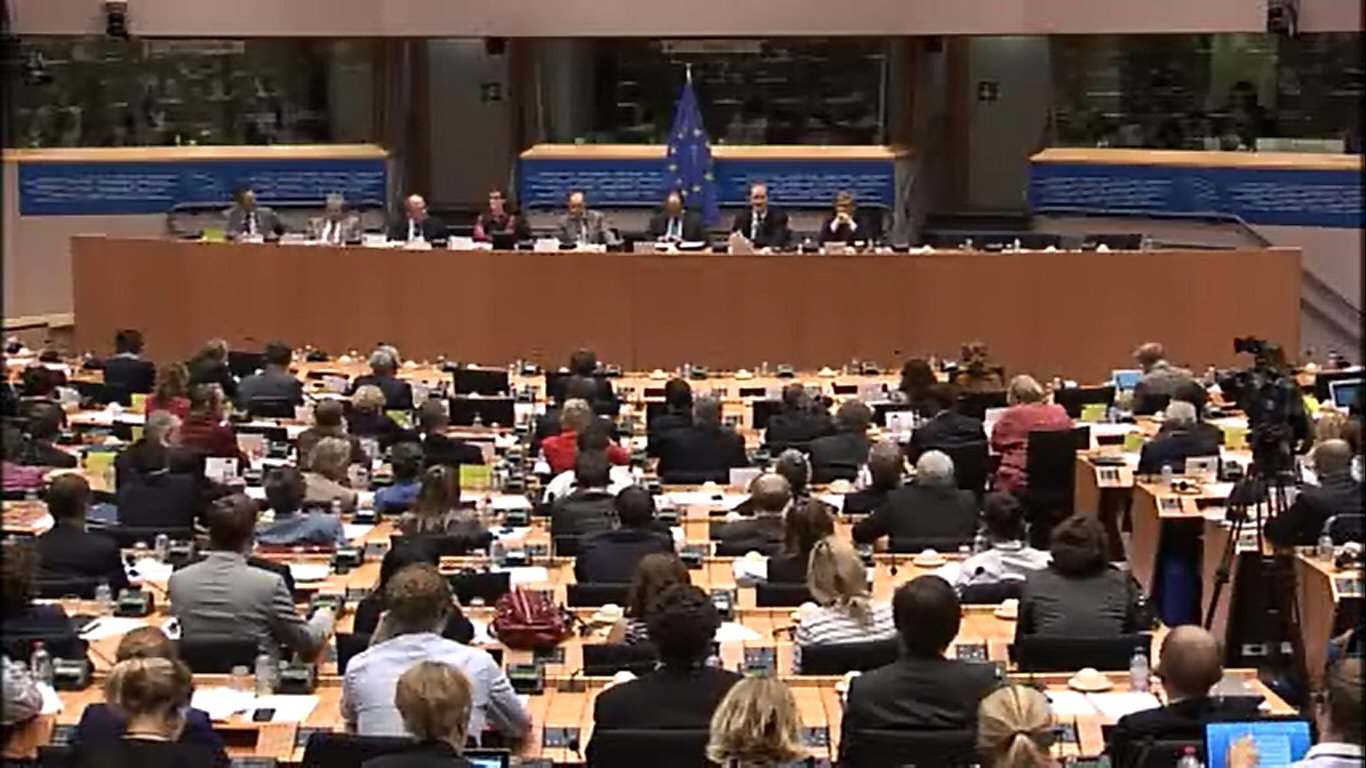
White smoke eventually emerged from the Brussels CAP negotiations on Tuesday evening last 24 September to indicate that the final elements of the CAP regulations for the period 2014-2020 had been agreed between the Council, Parliament and Commission. The Ciolos reform has been concluded. The outstanding elements concerned those issues related to the CAP which were left in ‘square brackets’ in the June political agreement because they had been included in the European Council’s MFF conclusions in February this year.

For the Parliament it was a matter of principle that issues which would be addressed in the CAP regulations should be negotiated through the co-decision procedure and not decided unilaterally by the Council, even the European Council. It wanted to establish the principle that all outstanding issues were open to negotiation even if, in the final compromise, only some of the Council conclusions were modified.

But that even some of the February European Council conclusions were modified was underlined in the Parliament’s press conference this morning as an important outcome in the inter-institutional battle, as indeed it was.… Read the rest

The CAP budget in the MFF Part 3 – Pillar 2 rural development allocations

When the European Council agreed on the EU’s multi-annual financial framework (MFF) for 2014-2020 in February this year, the overall allocation to the CAP’s Pillar 2 was made known but not the individual allocations to member states. Apparently, in order to secure a final agreement, each member state was told its own allocation but not that of the other countries.

It was not until May, after repeated requests from the European Parliament’s rapporteur on the rural development regulation, Luis Capoulas Santos, that the Commission communicated the individual country totals to the Parliament negotiators in the trilogue process. However, until the publication of the European Parliament secretariat’s Note European Council Conclusions on the Multiannual Financial Framework 2014-2020 and the CAP these figures were not generally available. In this post, the third and final in a series on the CAP budget in the MFF, we identify the winners and losers in the allocation of Pillar 2 funds (for the earlier posts in this series, see here and here).… Read the rest

The CAP budget in the MFF Part 2 – direct payment envelopes in Pillar 1

In my previous post I discussed some of the difficulties in comparing the money set aside for the CAP in the 2014-2020 Multiannual Financial Framework (MFF) and in the current 2007-2013 MFF. Among the issues highlighted were the counterfactual baseline to be used, whether to compare period-to-period or end-year to end-year figures, and the importance of adjusting the current MFF figures to ensure like-with-like comparisons with the next MFF period.

The European Parliament secretariat’s Note European Council Conclusions on the Multiannual Financial Framework 2014-2020 and the CAP also contains a detailed breakdown of Pillar 1 direct payment envelopes by member state for the two MFF periods, allowing us to see which countries are winners and losers under the decisions taken by the European Council.

The EP’s note calculates the national envelopes for each member state in the 2007-2013 period on the assumption that each country received the full 100% of its envelope, thus ignoring the impact of the phasing-in of these payments in the new member states.… Read the rest

The CAP budget in the MFF agreement

Today the European Parliament approved the political agreement on the MFF reached with the Irish Presidency, thus concluding the negotiations on the EU’s medium-term financial framework until 2020. A mandatory review will be undertaken by the Commission before the end of 2016 taking account of the economic situation at that time. The actual MFF Regulation and the accompanying inter-institutional agreement including various declarations by the parties will be voted in the Parliament in the early autumn once the Council has adopted the draft MFF regulation.

The overall MFF ceiling and the allocations by heading as agreed by the European Council in February 2013 were not changed in the final agreement. So the allocation for the CAP Pillars 1 and 2 remain as agreed last February. Many commentators have tried to compare the amount of money allocated to the CAP in the next programming period with that in the current period, and various figures have been circulated.… Read the rest

A triumph for the Irish Presidency – a damp squib for CAP reform

Yesterday morning (Wednesday 27 June), in a final trilogue, the Irish Presidency reached a political agreement with the European Parliament negotiating team on remaining outstanding issues on the CAP reform dossiers. In the afternoon the deal was discussed in a relaxed COMAGRI meeting.
Although no formal vote was taken, Paolo de Castro, the COMAGRI chair, concluded that there was broader support among the Parliament’s political groups for the final outcome than there was for the vote on the negotiating mandate in March. The Presidency had secured a more flexible negotiating mandate at the June Agricultural Council meeting earlier in the week, so although there is as yet no formal reaction from agricultural ministers it seems clear this agreement will also be supported by the Council. The main points of the deal are summarised in this Commission press release.
To cap this success for the Presidency, there was the further announcement this morning of a political agreement between the three Presidencies (Council, Commission and Parliament) on the MFF.… Read the rest

The MFF compromise texts

Euractiv.fr yesterday published the texts of the three documents which make up the compromise package to be put to the Council and Parliament following the trilogue meeting on 19-20 June. The three documents are:

    Draft COUNCIL REGULATION laying down the multiannual financial framework for the years 2014-2020
    Draft Inter-Institutional Agreement between the European Parliament, the Council and the Commission on budgetary discipline, cooperation in budgetary matters and on sound financial management
    Draft declarations relevant to the above two pieces of legislation.

(Note that the texts can be read but not downloaded from the Euractiv.fr website; a downloadable copy of the draft MFF regulation is available here.)
As I reported yesterday, total commitment appropriations in the draft MFF Regulation are exactly the same as those agreed by the European Council in February 2013. However, the Regulation includes the compromises on budget flexibility and MFF revision proposed by the Presidency (it is not accurate to describe these compromises as agreed in the trilogue as the Parliament representatives simply accepted that the compromise drafts could be forwarded for consideration by the Parliament plenary without necessarily agreeing their content, see this statement from Reimer Böge issued on behalf of the EPP Group).… Read the rest

Provisional MFF agreement still to be approved

The prediction in my last post on the MFF that it would be a long midnight on Tuesday 18th June proved only too true, with the Presidency, Parliament and Commission negotiators finally reaching agreement only after more than 24 hours of talks around 8 pm last night on a compromise MFF text to forward to the Council and Parliament. The compromise agreement represents a major achievement for the Irish Presidency, but must yet be signed off by the Council and Parliament. We must now see whether the momentum will carry over to the CAP negotiations at the beginning of next week.
What has been agreed?
The full text of the agreement is not available at the time of writing. Both the Irish Presidency and Alain Lamassoure, chair of the EP Budget committee, held their cards close to their chests last night. The Presidency indicated that details of the compromise had first to be shared with the other member states.… Read the rest

Tuesday 18 June – high noon (or long midnight) for an MFF agreement?

I previously posted updates on the state of play in the MFF negotiations on 29 April and 15 May last. At the end of April, the General Affairs Council had just agreed the ‘political guidance’ for the Irish Presidency to start discussions with the Parliament’s negotiating team. However, the Parliament had refused to attend the first proposed trilogue meeting with the Presidency and Commission because of the Council’s unwillingness to commit to meet the anticipated gap in payment appropriations in the EU’s 2013 budget.
A trilateral meeting of Presidents was held on May 6 which broke this deadlock (see my 15 May post for details). The first trilogue meeting took place on May 13 but dealt largely with procedural issues. Since then, the trilogue discussions have continued with a number of additional meetings scheduled, most recently on Monday 10 June.
That meeting failed to reach agreement although a number of the participants have tried to talk up the momentum (see the Irish Presidency press release as well as Budget Commissioner Lewanowski’s press release) following the meeting.… Read the rest

A race against time

Two important meetings as part of the process of agreeing a CAP reform took place earlier this week – the Agricultural Council on Monday and the Ecofin Council on Tuesday. The Agricultural Council meeting was notable for the success of the Irish Presidency in getting agreement on a compromise mandate on the Common Fisheries Policy reform after 36 hours of negotiations which it is hoped will be the basis for a political agreement with the Parliament before the end of the Irish Presidency in June.
We are not yet at the same point with the CAP reform dossier (see this recent update to the Irish Parliament by Simon Coveney, the Irish Minister representing the Council in the trilogue negotiations and this view from Mairead McGuinness, one of the shadow rapporteurs in the European Parliament). Both the Irish Presidency and the Agriculture Commissioner continue to make bullish pronouncements (as indeed they must) that an overall CAP package also acceptable to the European Parliament negotiators will be agreed at the next Agricultural Council in June.… Read the rest

MFF negotiations blown off course as European Parliament plays poker

Last week (Monday 22 April) the General Affairs Council (GAC) gave ‘guidance’ to the Irish Presidency for the negotiations with the European Parliament on concluding the MFF negotiations. The Irish Presidency’s objective is to reach agreement with the Parliament on the MFF by the end of June and to translate the overall MFF agreement into legal texts.
According to the conclusions of the meeting:

Ministers supported the presidency’s efforts to find a compromise with the European Parliament on the next MFF in a timely manner. Ministers expressed their willingness to discuss the four key elements of the European Parliament’s resolution (flexibility, revision, own resources and unity of the budget). Some ministers also stressed that substantial elements of the Parliament’s demands had already been agreed by the European Council in February, in particular as regards flexibility.

More than two months have passed since the European Council agreed its proposal on 8 February, and the Presidency was anxious to lose no more time.… Read the rest