
2025 marked a decisive break in relations between the United States and Europe. From U.S. Vice-President Vance’s speech in February at the Munich Security Conference to the publication of the U.S. National Security Strategy at year’s end, Washington has framed the European Union not as a strategic partner but as an obstacle to U.S. objectives. This shift was illustrated throughout the year by escalating trade actions, growing divergence over Ukraine, and threats against tech regulation. By the end of the year, the EU had accepted an unequal trade deal with the United States, undermining its long-standing self-image as a ‘soft power’.… Read the rest
EU throws hand grenade into global agri-food trade
On 6 July 2022 the EU circulated to WTO Members its proposed revisions to Maximum Residue Limits (MRLs) for two neonicotinoid insecticides clothianidin and thiamethoxam (the documents include the formal notification to the TBT Committee, the proposed draft Commission Regulation, and a comparison of existing and proposed MRLs by agricultural product).
Under WTO rules, this is a necessary step when changes in MRLs are proposed. Other Members now have 60 days in which to provide comments on the proposed changes. These comments are then considered by the Standing Committee on Plant, Animal, Food and Feed, the EU body consisting of Member State representatives that decides on pesticide issues, before final approval is given to the proposed Regulation.… Read the rest
Taking developing country interests into account when designing Green Deal trade policies
Today I gave a presentation on the implications of the European Green Deal for agri-food trade with developing countries to a webinar organized by the European Landowners’ Organisation (ELO) (the presentation can be downloaded here and you can also listen to the presentation itself as well as the webinar as a whole at the following link). The presentation was based on a paper I am preparing on this topic commissioned by the ELO and the issues raised at the webinar will feed into the final version of the paper.
The urgent need to address the challenges that face our food system, to provide healthy and adequate nutrition for all and ensure decent livelihoods while remaining within planetary boundaries, is not in question.… Read the rest
Market and trade effects of the next CAP reform
It is not possible to be definitive about the market and trade effects of the next CAP reform, for two reasons. One is that the Commission’s legislative proposal published in June 2018 is just that, a proposal, that may well be altered, even quite radically, before the new CAP regulations are agreed. The other is that, under the Commission’s proposal, Member States are given significantly more flexibility than they have at present to craft their own agricultural policy interventions in the context of their CAP Strategic Plans. Until these Plans are approved, it is not possible to predict, inter alia, the level of environmental and climate ambition that EU farmers will be asked to meet after 2020, the extent of targeting and redistribution of Pillar 1 direct payments, or the use that will be made of coupled payments.… Read the rest
Implications of Brexit for developing countries’ agri-food trade
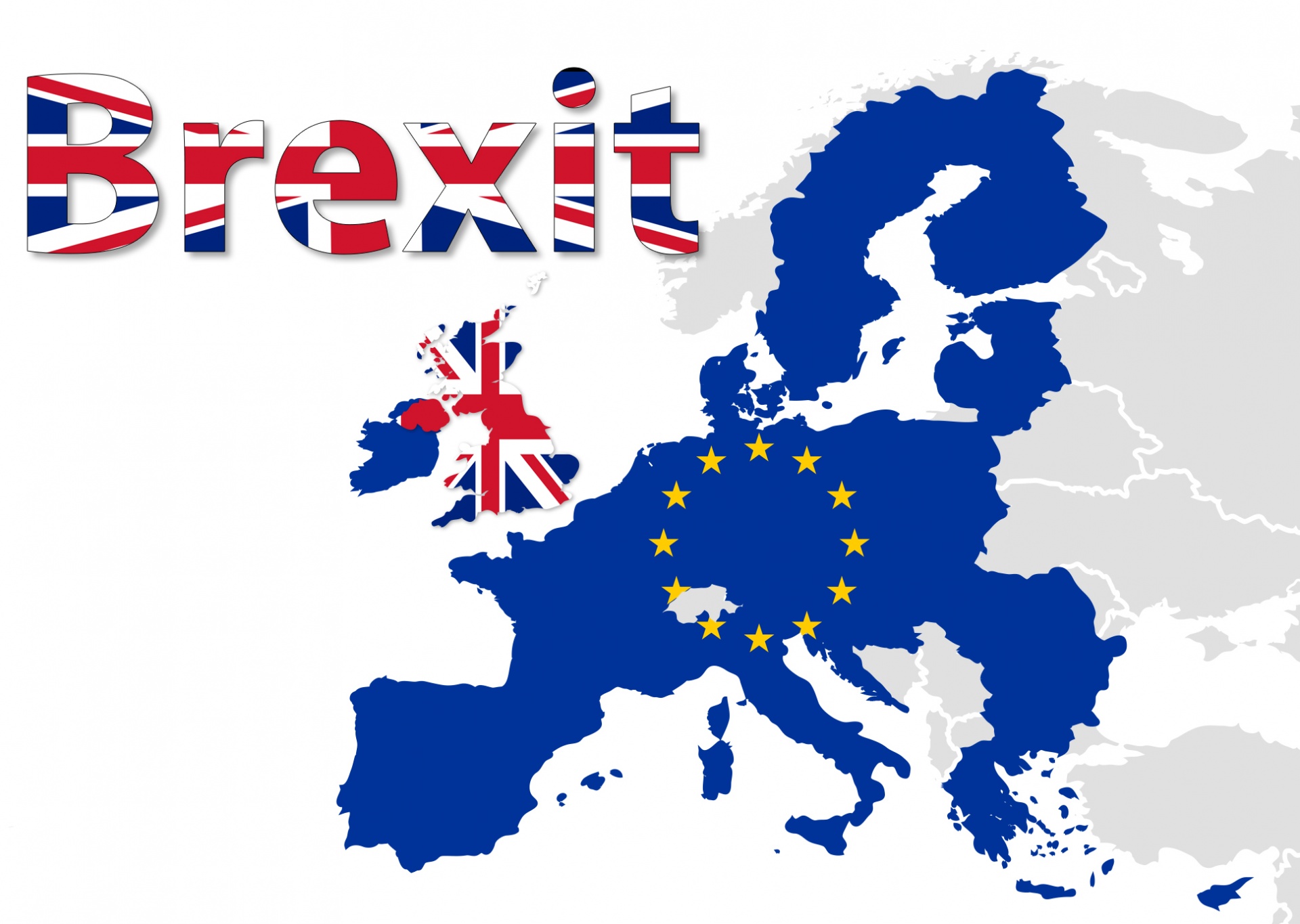
Back to Brexit, I’m afraid, but I thought readers of this blog might be interested in a recent working paper I have written on this topic. Brexit (the UK’s exit from the European Union) will have important repercussions for the agri-food trade of developing countries because of the UK’s size (it is the sixth largest economy in the world) and its important role as an importer of agri-food products (it accounts for 12% of the EU’s imports from developing countries). These effects will occur through a variety of different channels.
Some of the key conclusions of the paper are:
• There will be higher trade costs for UK-EU27 trade.… Read the rest
The Brexit negotiations on the future trade relationship
On 23 March 2018, the European Council in its Art. 50 formation welcomed the agreement reached earlier last week by the negotiators on parts of the legal text of the Withdrawal Agreement covering citizens’ rights, the financial settlement, a number of other withdrawal issues and the transition. Prime Minister May wrote following that agreement to European Council President Donald Tusk giving her full support to the draft Agreement and highlighting, in particular, her support for efforts to solve the Ireland border issue. The European Council was therefore willing to set out its guidelines with a view to the opening of negotiations on the overall understanding of the framework for the future relationship, which will be elaborated in a political declaration accompanying and referred to in the Withdrawal Agreement.… Read the rest
Brexit Withdrawal Agreement forwarded to UK
The EU Commission yesterday forwarded a draft Withdrawal Agreement to the UK authorities for negotiation. This draft builds on the initial draft submitted by the Commission for approval by the Council (Art.50) and the Brexit Steering Group of the European Parliament on 28 February last. To accompany that initial text, the Commission published a helpful Q&A as a guide to the withdrawal process which still remains valid today. Press reports have highlighted that governments tweaked the initial text in some minor ways but retained the broad thrust of the document.
Negotiators are expected to work on the draft over the weekend and in Brussels on Monday and Tuesday next week.… Read the rest
Pitfalls on the way to a Brexit transition period
Most of the attention around the European Council meeting on 14-15 December 2017 last focused on the implications of the Joint Report agreed between the UK and EU negotiators on 8 December for the three key Phase 1 issues – citizens’ rights, the financial settlement, and the border between Ireland and the North of Ireland. Sufficient progress on these issues was the prerequisite for the European Council to agree to move to the second phase of the negotiations. Both the European Council in its conclusions and the European Parliament in its resolution of 13 December 2017 agreed with the Commission recommendation that sufficient progress had been achieved.… Read the rest
UK publishes proposals on customs arrangements with the EU
In her keynote Brexit speech at Lancaster House in January this year, the Prime Minister outlined:
“I do want us to have a customs agreement with the EU. Whether that means we must reach a completely new customs agreement, become an associate member of the Customs Union in some way, or remain a signatory to some elements of it, I hold no preconceived position. I have an open mind on how we do it. It is not the means that matter, but the ends.”
In the White Paper that followed in February, the Government stated that it would prioritise securing “the freest and most frictionless trade possible in goods (…) between the UK and the EU“.… Read the rest
Avoiding the ‘cliff edge’: Immediate trade arrangements post-Brexit need to be given higher priority in Article 50 negotiations
The European Union, under the Commission’s lead negotiator Michel Barnier, has proposed to begin Brexit negotiations with the United Kingdom on June 19th next following the latter’s general election. Based on the European Council’s guidelines on the EU’s objectives for these negotiations, detailed negotiating directives have been agreed by the General Affairs Council. The Commission’s Task Force on the Article 50 of the Treaty of the European Union (TEU) negotiations has also begun to prepare draft position papers, beginning with two on essential principles of citizens’ rights and essential principles on financial services.
This level of preparedness on the EU side for the forthcoming negotiations contrasts sharply with the impressions we have of the UK side.… Read the rest