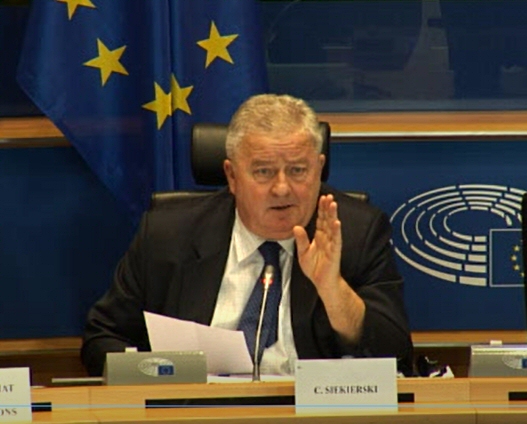
First COMAGRI discussion on Omnibus Regulation

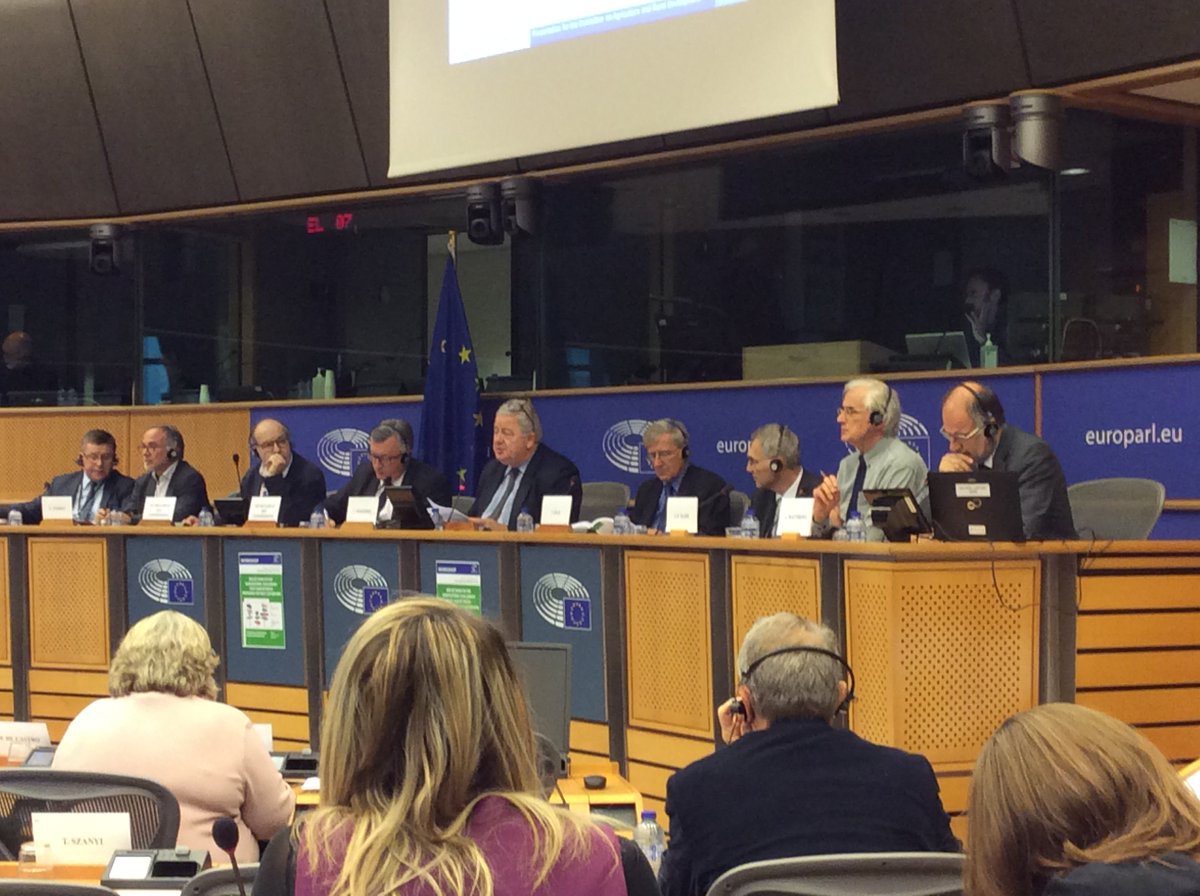
On 5 December last, COMAGRI had a first exchange of views on the so-called “Omnibus” proposal for a Regulation on the financial rules applicable to the general budget of the Union and amending a number of sectoral regulations. In my previous post, I flagged that this legislation provided the first opportunity to make changes to the CAP basic acts since the 2013 CAP reform was concluded.
It was thus interesting to listen to the mood of the Committee as the co-rapporteurs for the opinion, Albert Dess (EPP) and Paolo De Castro (S&D) introduced the discussion (a video of the discussion can be viewed here, beginning at 16:07).

The general tenor of the remarks from the COMAGRI co-rapporteurs as well as other contributors to the debate was that the Committee should adopt a narrow interpretation of its powers to amend the proposal, keeping in mind that its purpose is to deliver simplification of the CAP both for managing authorities and for farmers.… Read the rest


Triggering the next revisions of the CAP

I have long puzzled over the timeline, processes and trigger points that could lead to the next revision of the basic CAP regulations. As long ago as September 2014 I wrote a lengthy post on the prospects for the next CAP reform before even the ink was dry on the 2013 reform. This highlighted the mid-term review of the 2014-2020 Multi-annual Financial Framework (MFF) as a possible trigger point. It also discussed the complications of the parliamentary timetable for concluding a new MFF for the post-2020 period and the implications this might have for a further round of CAP reform.

I returned to this issue in a post in November 2015 in which I asked whether there would be a proposal for a CAP reform in 2017 to coincide with the publication of the Commission proposal for the next MFF? My conclusion was that we were more likely to see a rolling series of proposals for incremental changes in the various basic acts over the period of the Commissioner’s tenure, designed to address specific problems and issues, but without fundamentally changing the structure of the 2013 reform.… Read the rest

We need a British Ecosystem Services Policy not a British Agricultural Policy

We are delighted to bring you this guest post by Professor Ian Hodge of the Department of Land Economy, University of Cambridge on the topic of UK policy towards agricultural land after Brexit. The views expressed are his own and should not be attributed to any organisation with which he is associated.

Brexit requires the United Kingdom to develop its own policy towards agriculture and rural land to replace the Common Agricultural Policy. This must recognise the multiple benefits and costs associated with rural land use and promote the integrated management of rural land in the long term public interest through a British Ecosystem Services Policy (BESP).

The UK must have a new policy for rural land

Over the past forty three years, agriculture in the UK has been subject to the guidance and control of the Common Agricultural Policy (CAP). As it has lurched from crisis to crisis, it has evolved from a policy focussed primarily on securing European food security through intervention in agricultural commodity markets towards a broader-based, more nationally differentiated policy concerned with the support of farm incomes and the promotion of sustainable farming.… Read the rest

More on the future of direct payments

Yesterday, I had the privilege of presenting my report on the future of direct payments to a workshop on the future of the CAP after 2020 organised by the AGRI Committee in the European Parliament and its Policy Department (AGRI Research). I reproduce below my statement to the workshop which attempted to convey the flavour of my report.

It is an honour to be invited to address you today on the background note that I have prepared on the future of direct payments. Direct payments accounted for around 72% of the CAP budget and for just less than 30% of the EU budget in recent years. They are also an important source of income on many farms. They are therefore central to the debate on the future of the CAP.

Direct payments came about largely in response to successive reforms of the CAP. In the most recent reform, an important innovation was to convert a 30% share of direct payments into a greening payment to farmers respecting certain agricultural practices beneficial for the climate and the environment.

Read the rest

Bibliography of proposals for CAP post 2020 Feb 2017

As the debate on ‘modernisation and simplification of the CAP’ in the period post 2020 gathers pace, I thought it would be useful to start a page which brings together relevant contributions from political, think tank, academic, industry and NGO sources as well as relevant blog posts. I will plan to update this occasionally as new contributions are made. There will inevitably be a bias towards contributions in the English language. Readers are very welcome to draw my attention to omissions which might be added to this page.

Political and official documents (listed in time sequence)

Dutch Government, Food of the future – the future of food, Background paper for the informal AGRIFISH Council, 24-25 May 2016.
French Government, A reformed CAP for competitive, sustainable and resilient agriculture, Contribution to the informal AGRIFISH Council, 24-25 May 2016
Conclusions of agricultural Ministers gathered at Chamborg at the invitation of the French Agriculture Minister Stéphane Le Foll, 2 September 2016
The Cork 2.0 Rural Development Declaration, 6 September 2016.… Read the rest

The US farm safety net

In its most recent Farm Bill in 2014, the US eliminated its decoupled direct payments, in part because it was hard to justify making income support payments to farmers at a time when farm incomes were booming due to favourable prices. Instead, it substituted a new set of counter-cyclical payments as part of the US farm safety net. At the same time, it expanded the scope of its federal crop insurance programmes by introducing a new programme to cover ‘shallow losses’ not normally covered by these programmes.

These US developments have led some in Europe to argue that the CAP should move in the same direction. Direct payments should be reduced and the money used instead to support insurance products for farmers or to fund counter-cyclical payments. This blog post does not discuss the merits of these proposals (for discussion, see this report prepared for the European Parliament’s COMAGRI). The US programmes are not widely known.… Read the rest

The future of direct payments

My previous post highlighted the somewhat muted commitment in the Commission’s 2017 Work Programme to “take forward work and consult widely on simplification and modernisation of the Common Agricultural Policy to maximise its contribution to the Commission’s ten priorities and to the Sustainable Development Goals. This will focus on specific policy priorities for the future….”.

Member States as well as the European Parliament are also beginning to prepare their positions on what may or may not become the next CAP reform. Next week, on November 8th in Brussels, the European Parliament’s COMAGRI and Policy Department B are organising a workshop on Reflections on the agricultural challenges post 2020 in the EU: preparing the next CAP reform. To prepare for this workshop, three background notes were prepared for COMAGRI covering the future of direct payments, the future of market measures and risk management schemes and the future of rural development. I have contributed the note on the future of direct payments.… Read the rest

Has the starting signal sounded for the next CAP reform?

Yesterday, the Juncker Commission released its third annual Work Programme for 2017. This year’s Work Programme proposes 21 key initiatives as well as a further 18 REFIT proposals intended to improve the quality of existing EU legislation. In addition, the Commission Work Programme identifies 34 priority pending proposals made in the past two years where it seeks swift adoption by the Parliament and Council.

The Work Programme Communication contains two specific references to agricultural policy development. The full paragraph reads as follows:

The Commission will take forward work and consult widely on simplification and modernisation of the Common Agricultural Policy to maximise its contribution to the Commission’s ten priorities and to the Sustainable Development Goals. This will focus on specific policy priorities for the future, taking account of the opinion of the REFIT Platform, and without prejudice to the Commission proposal to revise the Multiannual Financial Framework. As concerns the position of farmers in the food supply chain, in the light of the outcome of the ongoing work of the Agricultural Markets Task Force and the High Level Forum on the food supply chain, the Commission will consider further action as necessary.

Read the rest

Mitigation potential in EU agriculture

In my previous post on this blog, I noted that the Commission’s impact assessment (IA) accompanying its presentation of the new Effort Sharing Regulation (ESR) proposal concluded that very little additional agricultural mitigation is expected in the period 2021-2030, over and above what is projected to occur under current policies.

Two possible conclusions might be drawn from this finding. One is that the agricultural sector lobby organisations have used their political clout to ensure that the sector is required to do as little as possible to contribute to the EU’s 2030 climate targets. This reaction was advanced by some NGO activists in response to the post.

The other explanation is that it is difficult (and expensive) to achieve additional agricultural mitigation above and beyond the business as usual scenario. This was the view of the European Council in October 2014 when, in agreeing the EU’s 2030 climate targets, it noted the lower mitigation potential of the agriculture and land use sectors.… Read the rest

Is agriculture off the hook in the EU’s 2030 climate policy?

In October 2014, the European Council agreed the 2030 policy framework for climate and energy policy. The framework sets out the European Union (EU)’s commitment to a binding target of at least a 40% domestic reduction in economy-wide greenhouse gas (GHG) emissions by 2030 compared to 1990, with the reductions in the Emission Trading System (ETS) and non-ETS sectors (NETS) amounting to 43% and 30% respectively by 2030 compared to 2005. The European Council also set an EU target of at least 27% for the share of renewable energy consumed in the EU in 2030, and an indicative target at the EU level of at least 27% for improving energy efficiency in 2030 compared to projections of future energy consumption based on current trends. This will be reviewed by 2020, having in mind an EU level of 30%.

In a previous post, I examined the likely treatment of agriculture in this 2030 Climate and Energy Framework in the run-up to the European Council meeting which agreed the 2030 targets.… Read the rest