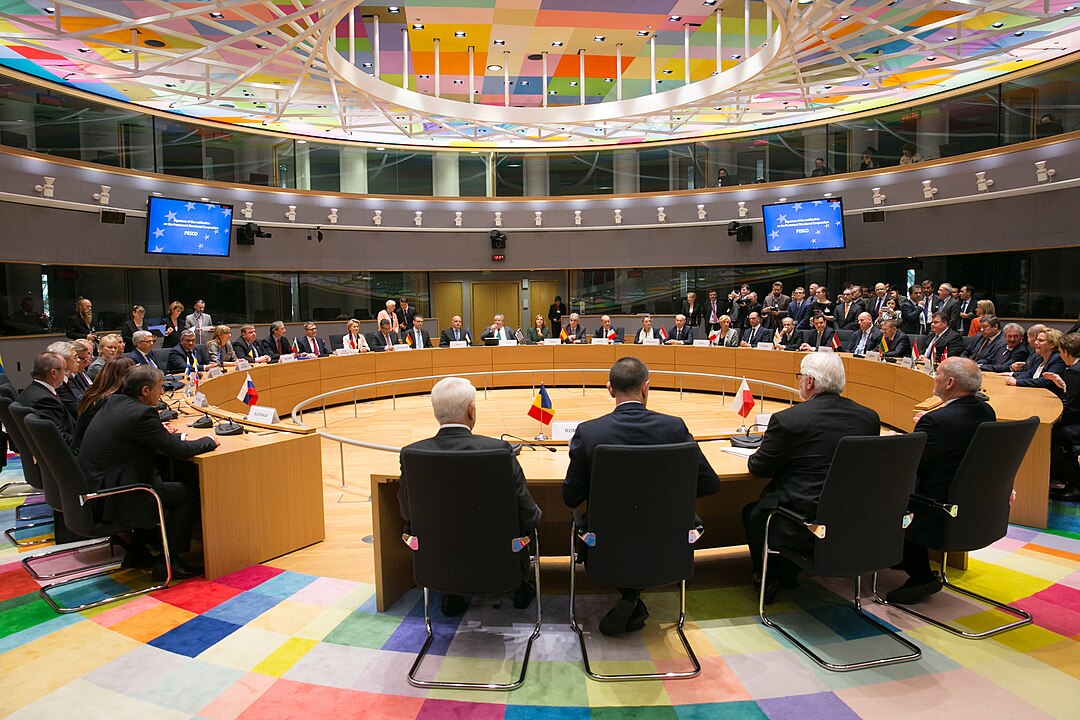
Danish Agricultural Minister Mette Gjerskov presided over her first Agricultural Council of the Danish Presidency with some dash and vigour last Monday 23 January. Her energy contrasted with the comments of some of her fellow Ministers in their first formal debate on the Commission’s single CMO legislative proposal, with a number of ministers seeking to roll back some previous reforms.
The Presidency structured the debate around two themes: the effectiveness of exceptional measures in case of market disturbances and crisis; and the proposed measures aiming at a more competitive and well-functioning food supply chain. The debate, which lasted just over two hours, can be followed here on video.
The key battle lines that emerged can be summarised as follows. For simplicity, I refer to those who would like to return to a more managed market as the ‘blues’, and those who would like to push further in a more market-oriented direction as the ‘reds’, while recognising that this crude distinction does not always work. For another summary of Monday’s debate, see this Europolitics article.
Market disturbances (Articles 154-156)
There was general agreement that agriculture is vulnerable to various types of crisis and market disruption, including from animal disease outbreaks, extreme weather events, and loss of consumer confidence due to a food safety breakdown. The Commissioner also highlighted that sectors could face a crisis not only because of low product prices but also where margins are squeezed by high input costs.
The regulation provides for measures to deal with both kinds of crisis and the general market disruption clause is expanded to cover all sectors in the current CMO. The Commissioner has emphasised the need for a speedy response to crisis situations, and supplementary funding to deal with crises is proposed in a crisis reserve outside of the main EU budget.
The ‘blues’ did not have much to complain about in this proposal. Some countries were unhappy with the extent of the dismantling of market instruments in the past – Spain and Poland called for a broadening of intervention and an increase in reference and trigger prices but there seemed little appetite for that. Latvia wanted the risk management toolkit proposed for Pillar 2 to be moved into Pillar 1.
The ‘reds’ raised a range of issues. Some countries were concerned about the need for a clearer definition of market disturbance and for a clear distinction between crises and normal volatility to avoid this measure becoming a form of income support. These countries expressed unease about giving the Commission quite far-reaching powers through delegated acts to introduce safeguard measures. They wanted more guidance on when these measures could be invoked written into the basic law, and more involvement by the member states in making the decision.
Countries differed on whether the crisis reserve should be outside the budget or not. Poland was not happy with the level of co-financing of the animal health and consumer confidence measures and wanted a higher rate of co-financing than the 50% proposed.
Market management
The milk quota system and the vine planting ban are set to expire under existing legislation. Sugar quotas are also set to expire under the existing regulation by 30 September 2015.
Wine-producing countries are unhappy with the disappearance of the vine planting ban and have come together to reverse this decision. Commissioner Ciolos at the Berlin Green Week earlier this month announced the establishment of a high level group to discuss wine reform to report by the end of this year, with no subject taboo. This proposal was not surprisingly welcomed.
‘Blue’ countries also sought to delay the end of sugar quotas, with a number of countries calling for an extension of quotas to 2020. An extension was justified on the grounds that the sector had just come through the 2006 reform, and that a number of processors had invested heavily in acquiring additional quota. One country argued that quotas were necessary to secure adequate sugar supply in the EU.
The fact that the end of quotas in 2015 was clearly signalled as part of this reform and processors should have been aware of this when making their investment decisions seems overlooked in this argument. It was left to the Irish Minister to point out that, in a situation of high sugar prices and short supplies on the EU market, the quicker that quotas were removed, the better.
Improving the functioning of the food supply chain
The ‘blue’ countries are generally happy with the proposal for compulsory recognition of producer organisations and inter-branch organisations, and with the proposal to extend the derogations from competition policy rules which currently apply in the fruit and vegetable sector to all products (while still excluding activities which would fix prices or restrict market access).
The ‘red’ countries objected to the mandatory recognition of producer groups, arguing it should be left up to member states. Other countries were concerned that the proposal to extend PO rules to all producers could lead to the creation of a dominant position in the market place, or the potential for abuse of dominant position. Sweden took the most radical position that strengthening producers’ competitiveness was fundamentally about innovation and not about market regulation.
Phasing out export subsidies
The Commission has not proposed any change to the existing situation with respect to export subsidies. But one of the encouraging aspects of the debate was the number of member states who took the opportunity to explicitly make clear their opposition to the continued use of export subsidies after 2013. There is an opportunity here which can be built on.
This post was written by Alan Matthews
Today, the European Commission has launched the CAP@50 communication campaign to mark the fiftieth anniversary of the Common Agricultural Policy.
The Commission’s campaign wants to emphasise the CAP as a cornerstone of European integration, as a policy that has provided European citizens with half a century of food security and a living countryside. The year-long communication campaign includes an interactive website, an itinerant exhibition, audio-visual and printed materials, as well as a series of events in Brussels and the Member States.
No one wants to spoil a good party, but of course the overall balance sheet of the CAP remains controversial, to say the least.
CAP benefits and costs
Yes, the CAP helped to stabilise farm prices for EU farmers over the past 50 years and by reducing risk it encouraged farmers to make the investments which contributed to the modernisation of European agriculture over that period. Yes, the CAP resulted in a transfer of income to farmers which helped to smooth the huge rural to urban migration and adjustment that characterised European society in the 1960s and 1970s. And yes, more recently, the CAP has begun to take responsibility for paying farmers for the public goods which are otherwise neglected in production-oriented agriculture.
But these benefits were bought at a very high price. The high protection provided to European agricultural production prevented resources from moving into more productive sectors. It distorted the global trading system to the detriment of developing countries. It led to a costly and inefficient transfer of resources from, often, relatively poor consuming households to much more wealthy farmers.
It pushed up asset prices (especially land) in agriculture and inhibited structural change and the emergence of a more competitive agricultural sector. It contributed little to overall food security in Europe, not only because raising food prices is about the worst way I can think of to try to improve a poor household’s food security, but also because the main impetus to increased production came from the flow of innovations from the chemical, plant breeding and animal genetics industries rather than market regulation per se.
Making the CAP right
It was not that the objectives were wrong, but rather the instruments used to achieve them. This was eventually recognised in the early 1990s with the MacSharry reform, and since then there has been halting progress towards a more efficient and targeted agricultural policy. The extent of this progress, and the distance of the road yet to be travelled, was excellently documented in this OECD report last year.
For those wishing to review the past fifty years of the CAP, there are some excellent monographs, such as Michael Tracy’s Government and Agriculture in Western Europe and Michael Cardwell’s The European Model of Agriculture.
However, for a quick overview of the main trends in CAP support, Tim Josling’s account of agricultural subsidies in Western Europe over the past fifty years is a good starting point. To whet the appetite, I reproduce below one of the graphs in that paper, showing the Nominal Rate of Assistance (NRA) to EU agriculture over the period from 1956 to 2007.
The graph distinguishes between the NRA to exportables (products in which the EU was competitive on world markets, and where the NRA was close to zero for most of the time) and importables (where protection was much, much higher) as well as giving the overall average. It tells the story in a single picture of a highly distorting policy which, over time, has gradually been reformed.

(Josling and Kym Anderson drew on this paper in their own commemoration of the CAP at fifty written five years ago marking the signing of the Treaty of Rome, and it is still worth reading even if they were a little quick off the mark).
European agricultural policy now faces a major challenge in helping to steer the farming industry through the conflicting objectives of producing more food while reducing its resource footprint and protecting environmental assets and biodiversity. As we commemorate the CAP at fifty, we must strive to ensure that, in the next fifty years, the instruments used are better adapted to the objectives to be achieved than was the case in the past.
This post was written by Alan Matthews
One of the themes of this CAP reform is the need for a major increase in research and innovation to address the urgent social challenges of providing more food in an environment of increasing land use competition and pressures on resources and the environment. Whether the Commission’s proposals actually deliver on this objective is still an open question.
Three instruments are envisaged in the Commission’s CAP reform proposals to support this agenda:
• Continued support in the Rural Development Pillar 2 for investment in physical assets, business development, cooperation for the development of new products, processes and technologies in the agriculture and food sector as well as a revamping of farmer advisory services to broaden their scope and improve their effectiveness.
• A new European Innovation Partnership instrument for agricultural productivity and sustainability (EIP-A) also in the Rural Development Pillar.
• Increased funding for agricultural and food research under the Commission’s Horizon 2020 research programme.
What do we know about the EIP-A
I last posted about the EIP-A in October last year just before the publication of the Commission’s legislative proposals on CAP reform. I commented then that EIPs were a new initiative under the Commission’s Innovation Union flagship programme and that little was known about how the EIP-A would work in practice.
The EIP-A will not have any funding attached to it, apart from support for the administrative costs of the operational groups and the EIP network. Its intention is to bring together main actors, policies and actions at EU and national levels, from research to market, around common objectives to address major societal challenges more effectively.
Since my earlier post, some limited additional material on the Commission’s thinking behind the EIP-A has come into the public domain, including the Commission’s impact assessment of different options with respect to research and innovation, a presentation at a conference on EIPs organised by the Polish Presidency by Martin Scheele who is the Commission official in charge of the EIP-A programme, and a Commission roadmap produced as part of the impact assessment process for new Commission legislative proposals.
Commission thinking behind EIP-A
In the Commission’s impact assessment, the EIP-A is motivated as follows:
In view of closing the gap between the vast range of innovative research results, on the one side, and the availability of innovative approaches applicable to farming practice, on the other, an European Innovation Partnership Agriculture “Agricultural Productivity and Sustainability” (EIP-A) is set up aiming at an EU agricultural sector that ‘produces more with less’, thereby overcoming the existing development path of enhancing productivity at the expense of the environment and natural resources. Currently new approaches take too long to reach the ground and the practical needs on the ground are not sufficiently communicated to the scientific community. This EIP-A will ensure a faster exchange of knowledge from research to “practical” farming and provide feedback on practical needs to science via operational groups.
Martin Scheele’s presentation gives a number of examples of possible areas which might be addressed by the EIP-A:
However, we are still awaiting the Commission Communication itself which will spell out how the EIP-A will work and how it will be coordinated with the agriculture and food research programme in Horizon 2020.
EIPs have been launched by the Competitiveness Council which has insisted on its active involvement in the development of further EIPs, so it will also be interesting to see how the possible involvement of Research and Industry Ministers as well as Agricultural Ministers from member states will shape the proposed EIP-A.
Brussels event
For those able to get to an event in Brussels, a conference and dinner debate on the Agricultural Productivity and Sustainability EIP is being hosted by MEP Luis Manuel Capoulas Santos in the European Parliament on 24 January next.
Further details on the Commission’s expectations for the EU sugar market following the end of sugar quotas in 2015 are contained in its market outlook to 2020 publication published last month.
This medium-term outlook for the EU sugar market is based on a status quo assumption for agricultural and trade policy. The Commission notes that its CAP towards 2020 legislative proposal confirms the existing provisions on expiry of the regime after the marketing year 2014/15. Thus it argues that the policy assumption on the expiry of sugar quotas is in conformity with existing legislation.
In my own review of the legislative proposals I argued that the Commission’s decision not to propose an extension to the sugar quota regime after 2014-15 is a part of the 2013 CAP reform, on the grounds that this was the first time that the Commission had made its intentions clear. But formally the Commission is correct that the current legislation expires in September 2015 and would require a positive decision to extend it.
In my review I was surprised at the limited impact of removing sugar quotas that the Commission was projecting. This is confirmed in the sugar market balance projections to 2020 published in the market outlook. This balance sheet refers to centrifugal white sugar only. It does not account for other sweeteners (isoglucose), nor does it include sugar used for bioethanol (whether use for other industrial processing such as in the manufacture of medicines and enzymes is included is not clear) which is currently supplied from out-of-quota sugar. With sugar beet one of the top feedstocks for ethanol production in the EU, increased utilisation of sugar beet for ethanol in line with the overall increase in demand for ethanol is also projected.

It is striking how steady the market balance remains over the projection period. Sugar processing is expected to remain largely unchanged from its current level. Since the EU sugar reform, the EU has turned from a net-exporter into a net importer of sugar. Despite the expectation of relatively high prices and the end of production constraints following the expiry of the quota system, it is projected that the net-trade position of the EU will not change much during the projection period. This implies that the EU import market will still be available after 2015 for those developing country exporters that currently meet this demand.
This post is written by Alan Matthews
The Commission’s legislative proposals for the CAP post 2013 contain two measures to harmonise direct payments per ha across farms: (i) a move to more uniform payments per hectare across member states, and (ii) a move to more uniform payments per hectare within member states by moving from the historical to the regional model of payments. While both measures are prompted by the desire to have a more uniform distribution of payments per hectare across EU farms, it is useful to keep the measures distinct. For that reason, it is helpful to talk about the convergence of payments across member states, and the flattening of payments within a member state.
The argument for flattening payments within a member state is that differences in the level of payments per hectare due to historical factors can no longer be justified, and that tying the value of entitlements to historical performance is unfair as between farmers themselves. However, the redistribution of payments among farmers is bound to give rise to political difficulties within a member state.
Reluctance to move to the regional model
The reluctance of member states to adopt the regional model is shown by the fact that the only member states to adopt the regional model outright have been Slovenia and Malta on their accession to the EU (initially the payments were applied as coupled payments and the regional model was applied from 2007). The other new member states which adopted the SAPS flat-rate area payment also have de facto a regional model. But none of the old EU-15 member states decided to adopt the regional model.
DA, DE, FI and England adopted the dynamic hybrid model which is moving to a flat-rate payment over time (a flat-rate payment does not mean a uniform payment per hectare, as these countries make distinctions between different types of regions or land uses in their hybrid models). SE, LU and Northern Ireland adopted a static hybrid, in which part of the payment is area-based and part linked to historical payments. But all other old member states continue to use the historical model.
In the Health Check, member states were authorised to revise their original decision to opt for a particular model of implementation of the SPS. Member states that had chosen the historical model could either decide to narrow the gap between the unit values of payment entitlements or to change over to a (full or hybrid) regional model. Member states which had introduced a static hybrid model could decide to reduce the historical component of the value of the payment entitlements and thus adjust them closer to the regional value. Member states could also revise the composition of the regions. However, the Court of Auditors report on the SFP in 2011 noted that no member state has yet decided to apply any of the options made available to them under the Health Check reforms and to revise the model chosen.
The distribution of payments per hectare in the old member states
The political and production implications of moving to the regional model for member states depend, in part, on the extent of the existing dispersion in the value of payments per hectare within a member state, or within regions of that member state. Most of the distributional data on the single payment is presented on the basis of payments per farm rather than payments per ha.
An exception was an analysis done by DG Agri for the Health Check drawing on FADN data for 2006. All countries had introduced the SPS by 2006, some countries making use of the possibility to delay its introduction by one year. There are some drawbacks in using FADN data to draw inferences on the distribution of payments within member states. FADN data cover “commercial” farms and thus it is likely that they account for a larger share of payments than of area. However, it appears to be the most recent data available on the distribution of payments per hectare at an EU-wide level.
In the table below, the direct payments considered refer to Pillar 1 payments (both coupled and decoupled) paid by the EU, thus excluding national aids paid to farmers. For each country, the median payment per ha (rather than the mean) is shown because this is a more appropriate parameter to use when analysing a distribution – 50% of farms have payments below the median, and 50% of farms have payments above it.
The measure of dispersion shown is the interquartile range, which is defined as the spread of the middle 50% of scores. When farms are arranged in ascending order of payment per hectare, it is the difference between the maximum payment received by farms in the lowest 25% and the minimum payment received by farms in the highest 25% of the distribution. The larger the interquartile range, the more dispersed is the distribution of payments and the more redistribution would follow from a move to the regional model.
Because there are significant differences in the median payment in each country, countries are ranked by the size of their interquartile range as a percentage of the median. There are significant differences. Luxembourg, the Nordic countries, German and the UK would see the largest redistribution in moving to a regional model with a single flat-rate payment.

This analysis assumes that these countries move to a uniform flat-rate payment across the country as a whole. In practice, these countries have implemented different models. For example, in the UK, the four devolved administrations have separate systems, and even England which was the only administration to opt for the dynamic hybrid model distinguishes between different types of regions. Germany also implements its dynamic hybrid model at the individual Land level and has introduced a separate grassland premium.
The proposed Irish model
Irish data drawn from the IACS database also show the dramatic differences in payments per hectare under the historical model. As a result, a national flat-rate payment would lead to very large transfers between farmers: 76,412 farmers would get payment increases averaging 86%, while 56,683 would lose average of 33%. Even distinguishing separate uniform rates for the 8 NUTS3 regions in Ireland would lead to very large transfers between farmers: 74,445 farmers would get payment increases averaging 75%, while 58,650 would lose an average of 33%.
Source: Irish Farmers JournalGiven that in Ireland direct payments make up a substantial proportion of family farm income (72% on average in 2010 but up to 100% for particular systems such as cattle and sheep), such redistribution of direct payments would have immediate and dramatic effects also on the distribution of farm income. Apart from the political backlash, moving to a regional model would also likely redistribute payments from more productive to less productive farms, an important consideration given that growth in the agri-food sector is one of the few bright spots in an economy which yet again has entered recession in trying to address the results of the economic crisis.
The Irish government is appalled at the prospect, and is looking for greater flexibility in the Commisison’s proposals. Its ‘big idea’ is that the flattening of payments within member states should follow the same rhythm and use the same modalities as the Commission proposes for the convergence of payments across member states.
In other words, rather than the front-loaded flattening proposed by the Commission in which all member states would have to implement the regional model by 2013, it proposes a more pragmatic approach in which individual payments per hectare would be flattened using a mechanism which would reduce the gap with 90% of the average regional payment for any farm by one-third by 2013. This of course is exactly the pragmatic mechanism the Commission has proposed to address the convergence issue.
The convergence issue is about finding a more acceptable basis for dividing up the direct payments budget between the member states. The flattening issue is more about trying to legitimise the continuation of basic income support to farmers after 2013 (the green payment would, by construction, be flat from the start). So despite the apparent consistency in approach, the logic for harmonising payments under the two measures is not the same.
But the Irish government claims there is considerable support for such a mechanism among other member states forced to move from the historical model. Whether the Parliament would see this as a sufficient reform to justify continued basic income support is another question.
This post is written by Alan Matthews
The publication of the Commission’s legislative package for CAP reform is merely the starting gun for the EU’s legislative procedure to debate the regulations before they can take effect. The regulations now enter the co-decision procedure involving the Council of Ministers and the European Parliament (EP).
In an article this week in the Irish farming press, Mairead McGuinness set out the timeline as seen from the Parliament’s perspective. Mairead McGuiness is the EPP Group shadow rapporteur for the direct payments report contained within the legislative package, and thus centrally involved in formulating the EP’s position.
According to McGuinness, the current timeline envisages that draft reports will be prepared for consideration by the Agriculture Committee by April next, with a vote in Committee taking place in September on the changes proposed by MEPs.
However, she warns that given the complexity of the reforms proposed this timetable is by no means certain and that divergent views may delay the work programme.
In parallel with the work in the Parliament, the 27 EU agriculture ministers will also be working towards a common position on each of the dossiers. Technically, the legislative procedure allows the institutions, with the assistance of the Commission, three attempts (first reading, second reading and third reading or conciliation) to get agreement on the proposals. McGuinness states that at this early stage the objective is to get agreement at first reading stage, to ensure that the reforms can come into effect by 1 January 2014.
The hard bargaining between the Council and the Parliament would need to begin in autumn 2012 to meet this deadline. She notes:
Already, there are rumblings that the timetable is too tight and that if agreement is not reached at first reading, then the current regime may need to be rolled over for 2014.
The process involved is known as trilogue (trialogue in French). According to the European Commission’s glossary on co-decision, trilogue are informal tripartite meetings attended by representatives of the Parliament, the Council and the Commission. As a general rule, they involve the rapporteur (accompanied where necessary by shadow rapporteurs from other political groups), the chairperson of COREPER I or the relevant Council working party assisted by the General Secretariat of the Council and representatives of the Commission (usually the expert in charge of the dossier and his or her direct superior assisted by the Commission’s Secretariat-General and Legal Service).
The purpose of these contacts is to get agreement on a package of amendments acceptable to the Council and the Parliament. Any agreement in trilogues is informal and “ad referendum” and will have to be approved by the formal procedures applicable within each of the three institutions.
If agreement between the Parliament and Council is not reached in the first round of negotiations, dossiers go to a second reading (following a vote in the Parliament on the reports). Unlike the first reading, second reading is subject to strict time limits. Within three months (or four if an extension has been agreed) of the announcement of the Council’s common position, the Parliament must approve, reject or amend it at second reading.
Approval of the common position without amendment requires the support of a simple majority of the MEPs voting. However, amendments or rejection of the common position require the support of an absolute majority (i.e., at least 369 votes in favour out of a possible 736).
If the Commission is opposed to any amendment tabled by the Parliament, the Council would have to act unanimously to accept the amendment.
Because of the short time frames involved in the second and third readings, McGuinness’ view is that all efforts will be made to avoid moving to the second stage. The logic is simple. By keeping the ball in the air during the first stage, the time schedule is open-ended and both parties have the freedom of manoeuvre to engage in consultations, consider alternatives and try to seek agreement.
But once the Council’s common position is announced, then the clock starts ticking and agreement must be reached within strict time limits, which would put enormous pressure on the slow-moving institutions. In the absence of agreement, then the Commission proposals to alter the regulations would fall.
The next steps are a special meeting in Strasbourg next week between members of the Ciolos cabinet and the EP’s agriculture committee and then, in November, the 27 farm ministers will attend the Parliament for an exchange of views with the Agriculture Committee.
Amy timeline is of course dependent on the parallel negotiations underway on the EU’s multi-annual financial framework. Any delay in agreeing the EU’s budget over the 2014-2020 period would mean a corresponding delay in agreeing the CAP regulations, as it is hard to envisage agreement on the CAP if countries are not clear on the overall budget envelopes for Pillar 1 and Pillar 2.
The International Centre for Trade and Sustainable Development has now published the final updated version of my paper looking at the trade and development implications of the Commission’s legislative proposals for the CAP post 2013. Apart from making some corrections to the preliminary version, it takes account of the main changes in the Commission’s proposals on October 12th last compared to what was in the heavily-leaked drafts as well as the full impact assessments released at the same time.
The main changes include:
- The replacement of the firm commitment to have a uniform payment per hectare across all land and member states by 2029 in the regulation itself, to an aspirational commitment in the preambular material that member states will work towards this goal in the next financial perspectives period.
- The possibility for Member States to modulate up to 10%, rather than 5%, of their Pillar 1 envelope to enhance their Pillar 2 funds.
- The decision to let the sugar quota regime end in 2015 and not provide a further year extension as initially foreseen.
- Despite the abolition of axes in Pillar 2 rural development programming, member states will be required to use at least 25% of their envelope for issues relating to land management and fighting climate change.
- The inclusion of net ceilings as well as national ceilings for each member state, thus indicating the relative importance of the amounts modulated to Pillar 2 through capping (overall, just 0.4% of the €42 billion in direct payments will be affected).
- The need for a beneficiary of the new allocation of entitlements in 2014 to have owned at least one entitlement in 2011 (a specific provision intended to try to prevent speculation in land in Ireland).
The negativity in the reactions to the Commission’s proposals has been quite striking, even given the issues at stake. It was clear that this CAP reform would always be a conservative one, and would thus fall short of the recommendations of more radical critics of the CAP. But Euractiv’s reporting noted that “absolutely no one, except for the European Sugar Users association (CIUS), seems happy with the Commission’s legal proposal to reform the CAP, presented on 12 October.”
Now these reactions may all be just negotiating tactics, but they must be a disappointment to the Commission all the same. Given the huge effort that went into the consultation process, both before the release of the Commission’s Communication in November 2010 and in the course of the impact assessment, and given the various leaks of the proposals which would have made it easy for member states and others to influence the process at an early stage, one wonders if the Commission has seriously misjudged the mood of decision-makers? What happens to the proposals now in the Parliament and in the Council of Ministers will decide.
The first thoughts of the Ministers in reaction to the proposals can be viewed in the videocasting of yesterday’s meeting of the Council of Agricultural Ministers (Commissioner Ciolos takes the floor to introduce the debate 15 mins into the video, the language can be chosen from the bar underneath the video).
What might be the production, consumption and trade effects of the Commission’s proposals to redistribute direct payments by moving to a flat(ter) structure of direct payments across the Member States, and to redistribute payments within Member States by moving from the historic basis of farm payments (in the majority of Member States which operate this system) to a regional flat rate system?
A silly question, some might respond, for are not the EU’s direct payments decoupled (leaving aside the continued existence of a share of coupled payments) and thus not meant to have an effect on farm production? If a direct payment is truly decoupled, then moving payments from one farm to another, or from one country to another, will affect relative incomes but not output.
But there is widespread agreement that even decoupled direct payments do have an effect on production, even if there is less agreement on how strong this effect is in practice. There are now a number of studies which attempt to quantify these effects.
These include the yet-to-be-released Commission draft impact assessment of changes to the direct payments regime, as well as studies using the CAPRI and AGMEMOD models. The general message from these studies is that the production (and thus trade) effects are likely to be small, but that the distributional effects across and within countries could be significant.
Commission AIDS7K model
One approach is illustrated by the Commission’s farm income impact modelling using its AIDS7K model based on FADN data. Because this is a static model with no behavioural structure, it cannot directly calculate possible changes in the structure of production.
However, the Commission reports possible income changes by farm type. If the assumption is made that higher incomes on some farm types will be associated with increased production, and vice versa, then some inferences can be made on the likely direction of production changes.
As a general rule, a uniform flat rate would reduce support in more productive regions and sectors in favour of more marginal regions. In any move towards a flat-rate payment either between or within Member States, grazing livestock (beef and sheep) farms are the main beneficiaries (along with wine and horticultural farms). According to the Commission, moving to a uniform flat rate per hectare of potentially eligible area (PEA) across the EU as a whole (note that in the scenario it models farmers in several Member States continue to receive a limited amount of coupled direct payments (suckler cows, sheep and goat, cotton, Article 68, Posei)) would see farm net value added per Agricultural Work Unit increase by 10% on beef and sheep farms. Farm net value added would fall marginally on milk and arable farms.
(If account were taken of the greening component in Pillar 1, which means farmers must incur additional costs to become eligible for the payment, then the income gain to grazing livestock is reduced and the income losses on milk and arable farms but also pig and poultry farms are exacerbated).
AGMEMOD study
These production effects are more formally modelled in two well-known sector models AGMEMOD and CAPRI. In each case the results are, in part, determined by the modellers’ assumptions about how direct payments impact on production as well as by the policy scenarios that they assume.
The AGMEMOD 2020 combined model is an econometric, dynamic and partial equilibrium model representing each of the 27 Member States. Direct payments are incorporated as add-ons to the relevant producer price to form a reaction price (livestock, livestock products) or expected gross returns (crops).
Coefficients are applied to these add-ons to determine their production effect. For example, a coefficient of 1 would imply that farmers perceive direct payments as equivalent to a similar price increase, while a coefficient of 0 would imply that they treat them as totally decoupled.
The coefficients used in AGMEMOD vary across countries and commodities, for example, to reflect differences between the historic and regional SPS systems. For historical payments the coefficients vary between 0.3 and 0.6 and for regional payments between 0.1 and 0.5. The coefficients for coupled payments lie between 0.5 and 1.0.
Results of moving to a uniform flat-rate payment across the EU as a whole are reported in a recently-published AGMEMOD simulation [access to ScienceDirect required] for wheat, barley, maize, beef, pork and milk. Unfortunately, the consequences of moving to a uniform EU flat-rate payment are conflated with an overall reduction in the CAP budget for direct payments (by around 54% in the final year of implementation). Another important difference with the Commission analysis is that coupled payments are assumed to be decoupled in this analysis, which has particular consequences for the beef results. Despite these more severe assumptions, the production effects are estimated to be very marginal (ranging from 0% to -0.8% of commodity production in 2020) apart from beef where production is estimated to fall by -3.3%.
The AGMEMOD study does not report the expected commodity market price changes although these are presumably correspondingly small. AGMEMOD assumes exogenous world prices which are not affected by the EU net trade balance. To the extent that world prices respond to a reduction in EU production, then the AGMEMOD results, small as they are, also represent upper-bound estimates.
CAPRI study
A second study published by the EU’s Joint Research Centre uses the partial equilibrium CAPRI model together with a specially tailored farm group component called CAPRI farm type (CAPRI FT) to analyse the impact of a flat rate for direct payments at NUTS 1, MS and EU levels (with the level of redistribution and potential impacts increasing in moving to an EU flat rate). The farm models are behavioural programming models in which production and land use (but not farm structure) change in response to changes in relative profitability of different enterprises.
In the CAPRI model direct payments have an impact on production through their partial capitalisation in the returns to land. As direct payments change, so does the cost of land. Thus a reduction in direct payments will favour land-intensive production and vice versa. Land has an elastic supply curve in the model and, at the margin, is in competition with non-agricultural uses such as forest, recreation or nature reserve. So if direct payments fall sufficiently, land moves out of agricultural production and overall production will fall.
The study assumes that if land moves out of production the equivalent direct payment is lost and so overall expenditure on direct payments falls slightly in the scenarios modelled. The scenarios also assume that payments which are coupled in the baseline are decoupled in the scenarios, which will particularly affect beef and sheep as noted earlier.
This study also shows relatively small production and price impacts. In the EU flat rate scenario, which represents the most radical redistribution of direct payments, production generally falls (by -1.3% and -1.9% for cereals, by -1.7% and -0.8% for oilseeds, and by -0.6% and -0.2% for meat in the EU-15 and EU-10 respectively). The maximum price increase was for cereals of 1.5% for the EU-15 and 2.9% for the EU-10, while for meats prices are projected to increase by 1.1% in the EU-15 and 1.2% in the EU-10. The small magnitude of the impacts is due in part to the role of entitlements in limiting land use expansion while allowing for some substitution between grassland and arable land.
Given the small price and production changes, income effects are mainly driven by the redistribution of decoupled payments and to a lesser extent by land use changes. As regards farm types, large and medium size farms and dairies, mixed crops and livestock, general field and mixed cropping, olives, cereals and oilseeds and permanent crops are particularly negatively affected. Small farms tend to be less affected. On the other hand, the most extensive production systems, such as sheep, goats and grazing, the residual farm category and mixed livestock farms, realized higher premiums and incomes. These income changes correspond closely to those projected in the Commission’s AIDS47 model. They are aggregate changes, and there can also be redistribution within farm type groups with some farms gaining income and others losing. These distributional effects are analysed in detail in the study.
Conclusion
The Commission’s 2013 legislative proposals to be released next month will contain a number of measures likely to affect the level of EU domestic production and thus the impact of EU agricultural policy on third countries. The most significant will be the market measures confirming the elimination of milk and sugar quotas. But changes in the design of direct payments, including the overall budget for these payments, redistribution across farmers and member states, the introduction of the greening component, and the extent to which payments can be coupled or not, can also potentially have market effects.
Redistribution of direct payments (moving from the historic payment for entitlement payments to a regional flat-rate system in the EU-15 Member States plus Malta and Slovenia, and moving to greater convergence in the value of payment entitlements across Member States) will tend to shift payments from more productive to less productive Member States, and from more intensive to less intensive farms within Member States.
Redistribution of payments on its own would thus be expected to have a negative effect on EU production. Recent studies support this intuition but suggest that the effects will be very marginal, in most cases less than 1-2%. The effects are somewhat larger for cereals than for livestock but still rather small. Overall, therefore, the studies support the view that the EU’s direct payments are rather decoupled in practice.
One of the more significant changes proposed by the Commission in its draft legislative proposal on direct payments is to eliminate those existing entitlements to support which farmers have built up in the past. The basic payment scheme will replace the Single Payment Scheme and the Single Area Payment Scheme as from 2014. The new scheme will operate on the basis of payment entitlements allocated at national or regional level to all farmers according to their eligible hectares in the first year of application.
The proposal to allocate new entitlements on the basis of land farmed in 2014 has provoked a massive protest in Ireland (see, for example, this Irish Examiner story). It is alleged that, in an attempt to build up their claim to entitlements in 2014, farmers are taking back land which is currently leased out, thus creating massive disruption in the land rental market and discriminating against those farmers who are actively farming the land.
It might seem hard to understand why a farmer who had decided to rent out land and thus exit farming himself would now wish to re-enter farming (given that to retain the entitlement the landowner must continue farming in the future). One reason might be that land rents failed to fully reflect the value of the single farm payment, at least in Ireland.
For example, in the Irish Examiner story quoted above, the farmer leasing land was paying on average €100 per acre or €240 per hectare. Because the value of entitlements is based on historic payments in Ireland, the exact value of the single payment on those leased hectares cannot be known with certainty. However, on average the value of an entitlement in Ireland is around €270 per hectare of eligible area. So this suggests that existing land rents might not fully capture the value of the entitlement payment, although it must also be remembered that the entitlement holder also must bear the cross-compliance costs. In the case of the farmer in the Irish Examiner story, it seems that he was outbid by another farmer prepared to offer a higher rent.
Whether driven by rational considerations or simply fuelled by uncertainty about how the new system might work in practice, there is at least anecdotal evidence that the choice of 2014 as the new base year is proving disruptive. The Irish Minister for Agriculture Simon Coveney is quoted as calling it “nonsensical” and there is a high-powered lobbying effort underway to link the entitlements in some way to 2011 when the Commission’s proposals are published on 12 October next.
One potential solution floated in the Irish farming press this week was a proposal that, to qualify for payments in 2014, an applicant must have received some payment in 2011. This might mitigate but it would not eliminate pressures to get hold of land before 2014. More significantly, it would retain the link to the historic basis of payments which it is the Commission’s intention to remove.
The Irish Minister claims support from other countries in his lobbying efforts, but it would be interesting to know if these fears of a ‘land grab’ between now and 2014 are shared in other Member States.
The Commission’s proposals for the design of direct payments after 2013 include a greening component which, according to the draft legislative proposal (yet to be released on 12 October next and thus subject to change) will be mandatory for farmers in receipt of the basic income payment – thus becoming what I called in an earlier post a form of super-cross-conditionality.
In the impact assessment to be released with the legislative proposal the Commission has made some estimates of the cost of implementing these green measures. In this post, I examine these costs using information in the draft version of the impact assessment (Annex 12 Impact of Scenarios on the Distribution of Direct Payments and Farm Income).
This version was completed before June 2011 and the favoured proposal in the draft regulation now differs somewhat from the version examined in June. In particular, the obligation to maintain a green cover during winter has been dropped, but on the other hand the area to be setaside under the ecological focus requirement has been increased from 5% to 7% (see this post for a summary of the draft direct payments regulation).
The effect on farm income in 2020 of greening direct payments is determined by two factors. First, the implementation of the green measures increases the costs of farming either directly or in the form of loss in income. Second, various of the green measures (the requirement to maintain the 2014 level of permanent pasture, the requirement for crop diversification and, particularly, the ecological set-aside) will have an impact on supply and thus market prices. Thus, the greening leads to an increase of agricultural prices which tends to counterbalance the impact of the measures on cost.
The study concludes that the cost of greening will amount to €33/ha of potentially eligible area (PEA) in 2020. Just half of this figure is the cost of maintaining permanent grassland (€17/ha PEA). I have not been able to find any IACS figures on the size of the EU eligible area (if anyone knows where these can be found, please let me know). But the Commission estimates that the average direct payment will be €267 per ha PEA and, assuming a budget for direct payments of around €40 billion, this works out at a PEA of 151 million ha in 2020 (this compares to a utilised agricultural area of 178 million ha in EU-27 today). Using this figure, the cost of greening would amount to approximately €5 billion. This compares to the value of the green payment (30% of €40 bn) of around €12 billion.
Costs for the maintenance of permanent grassland and the ecological set-aside are in general the highest. For instance, among regions, the cost of maintaining permanent grassland in areas where an alternative use of land exists varies between €5 and €620/ha, with an EU average of €216/ha of grassland. With 5% of set-aside, the average cost per ha of land to be set-aside is €260/ha, but in some regions the costs per ha are more than €1,000. When the cost of greening is brought back to the total PEA, the amounts are lower. It is estimated that 29% of farms would have a cost between €15 and €30/ha of PEA, 4% would have a cost higher than € 200/ha of PEA, and about 21% of farms would not experience any cost.
In general, the costs are estimated to be highest in the Member States where maintaining large areas of permanent grassland is economically challenging due to pressure to substitute grassland by fodder crops (the Netherlands, Slovenia and Belgium).
It is interesting to speculate what is the value of the environmental benefit to be gained from incurring this cost? The Commission study cannot answer this question because of a lack of data on the environmental impact of the green measures. Instead, it quotes some figures on the land area likely to be affected by these measures.
Overall, for the EU-27, it estimates that 25% of the PEA will be affected. The risk of ploughing permanent grassland is reduced on about 13 million ha. On about 1.7 million ha of land, farmers receive incentives to cultivate alternative crops, mitigating the negative effects of monoculture, while about 3.6 million ha of arable land are set aside for ecological purposes. [It also estimated that an additional 20 million ha of arable land green cover is applied during winter time but, as noted above, this measure seems to have been dropped from the draft regulation].
But, in themselves, these figures do not give any insight into the size of the environmental benefits to be gained on these areas. Given this, it will be hard to answer the question posed at the beginning of this post whether incurring a €5 billion cost in this way is the most effective way of increasing the production of environmental public goods by farming.
Commission methodology
At a technical level, the credibility of the Commission estimates can be assessed by examining the methodology used. The Commission methodology is sophisticated and appears well suited to the task. My main criticism would be with the estimate of the cost of maintaining permanent pasture, which seems to me to be over-estimated. This is because the Commission methodology seems to assume that all permanent pasture that could be converted into arable cropland would be by 2020 in the status quo scenario. Its model does not have the capacity to estimate the proportion of permanent grassland that would actually be under threat in 2020, given the configuration of relative profitability (gross margins) between grazing livestock and other enterprises at that time.
The Commission’s analysis is carried out with FADN data at farm level using the AIDS7K model which covers 81,000 farms in 27 Member States. Expected prices and yield estimates in the scenario year 2020 are based on results taken from the Commission’s AGLINK-COSIMO model. Additionally, the labour input has been adjusted according to observed trends. The following steps are involved.
Crop diversification: This measure requires farms to cultivate at least 3 different crops, with no crop allowed to cover more than a 70% of the total arable land. It is assumed that the profitability of the additional crops corresponds to the average regional gross margin of field crop farms with diversified arable crops. Therefore, the costs are assumed to be equal to the difference between the farm’s individual gross margin of arable land and this average regional gross margin. In the cases where the farm individual gross margin is lower than this regional average it is assumed that there are no additional costs.
Ecological set aside: 5% of arable land has to be taken out of production. Costs for the implementation of the measure arise if the amount of fallow land on the farm is lower than the area to be set-aside. For each hectare to be additionally set aside it is assumed that the costs equal 2/3 of the farm individual gross margin of arable land. The idea is that farmers will set aside the less productive areas first (with the assumption that their gross margin is 2/3 of the farm average).
Preservation of grassland: Farmers have to maintain their permanent grassland. The cost of the implementation of this measure would be an opportunity cost. To estimate this cost, it was necessary to assess on each farm whether there is an opportunity to convert grassland to arable land or not and to quantify the magnitude of the opportunity cost.
There will be little or no opportunity to convert grassland in farms with poor soil quality. For the simulation it is assumed that this is the case on farms with a low share of arable land (less than 5%) and on farms where sheep and goats represent more than 70% of grazing livestock units. Furthermore, it is assumed that rough grazing and 10% of the remaining permanent pastures cannot be converted.
For the remaining permanent pasture it is assumed that the opportunity costs are 2/3 of the difference in gross margins between permanent grassland based dairy and beef production systems and alternative systems at regional level. Only a fraction of the difference is kept in order to take into account that the newly converted grassland would probably not have the same level of productivity as land already in fodder crops (the most productive areas have been converted into arable crops before).
For the calculation of the difference in gross margins at regional level, it is considered that there are no opportunity costs in regions where permanent grassland is not relevant or where there is no alternative identified (no cattle production). Otherwise, in regions where grass-based and forage crops based feeding systems co-exist in specialised farms, it is assumed that the first alternative to cattle production based on grass is to intensify production adapting the feeding system by ploughing the grassland to produce forage crops. Finally, in the remaining regions, where cattle production takes place in mixed cropping-livestock farms, the farm gross margins per hectare of utilised agricultural area in mixed and specialised cropping farms are used.
Green cover: I include this because it is included in the draft Commission study even if it appears to have been dropped from the draft legislative proposal. During winter, farms have to apply green cover on 70% of their arable land and the area covered by permanent crops, excluding the area of ecological set-aside The costs of the implementation of green cover are estimated based on assumptions on the affected area and the costs per ha. As there is no information on green cover available at farm level several assumptions had to be made: first, it was assumed that a large part of the area covered by cereals is covered during the winter, as in most cases a large share of the cereals are winter crops. As in the FADN it is not differentiated between winter and summer crops it was assumed that on each farm the share is equal to the national shares of winter and summer varieties published by EUROSTAT. Furthermore, it was assumed that 30% of the area of permanent crops is already covered. The costs per ha of land to be additionally covered in order to meet the requirement are assumed to be equal to 50€.
Market effects: These gross costs of implementing the green measures are the appropriate measure to compare with the value of the environmental benefits to be achieved. However, in terms of the impact on farm income, these gross costs will be offset by a transfer from consumers through higher commodity prices. These are reported in the Commission study by farm type rather than by commodity. The income effect over all farms is reported to be an increase of +0.6%, with more positive effects on crop farms (2.6%) and grazing drystock farms (+1.2%), while enterprises using grain as a feed are worse off (income on milk farms would fall -0.2% and on pig/poultry farms by -8.4%).
Overall, farm income falls by -2.8% on average in the Integration scenario (which includes the greening option, but also includes the effect of capping, where the money saved by capping and diverted to rural development is assumed lost to farmers). It seems that the positive impact of the market effects from reduced supply do not compensate farmers for the increased cost of implementing green measures in Pillar 1.
Overall, these results are probably quite a good guide to the likely outcomes of the proposals in the draft legislative proposal because, although the green cover requirement is removed (thus reducing costs), the ecological focus area requirement is increased from 5% to 7% (thus raising costs).
Photo downloaded from http://www.flickr.com/photos/13847552@N03/3906560447/ under Creative Commons licence
While the Commission’s Communication on the future of the CAP after 2013 is less remarkable for what it says than what it leaves out, one of the accompanying documents is a fascinating read, and reveals much about how the Commission regards the future of the EU’s €55 billion-a-year farm policy.
Despite its unpromising title, the Consultation Document for Impact Assessment shows there are at least some people in the DG Agri bunker who are engaging their brains on the future of the CAP. What’s more, the document hints we might expect something altogether more radical and ambitious when the Commission’s legislative proposals are made later this year.
Most striking about the document are the home truths told about the state of EU agriculture – admissions that one would rarely, if ever, hear uttered in public by a Commissioner or a senior DG Agri official.
First, European farming is in a parlous economic state and ‘the current policy has a strong focus on income support’. According to the document’s authors, farming is chronically unprofitable and the imperative of “short term survival dominates the perception of many farmers”, making it very difficult to reorient policy towards greater economic and environmental sustainability. Income support measures not only dominate the policy but are unfair, insufficiently targeted and ‘hard to justify to the general public’.
Second, food security concerns advanced by farm unions and others are misplaced. All but the very poorest Europeans can afford to feed themselves perfectly adequately and are likely to be able to do so for the foreseeable future. Food security may be an issue for people in the Global South living on less than $2 a day, but not for relatively wealthy Europeans. The dominant food policy worry for Europeans is over-consumption and the authors pulls no punches in blaming the food industry and the mass media for the marketing of “unhealthy food stuffs (soft drinks, highly processed foods)” that contribute to obesity, diabetes, cardiovascular disease and cancer.
Third, while much rhetoric is devoted to the public goods provided by farming, the reality is that agriculture does as much to despoil the environment as it does to enhance it. Agriculture is using more water than ever, particularly in southern Europe where it is a particularly precious resource. A quarter of EU soils suffer from unsustainable erosion and almost half have low organic matter content. Biodiversity is declining across the continent, and farmland wildlife is suffering the most. Agriculture contributes upwards of 10 per cent of EU greenhouse gas emissions, yet is exempt from the Emissions Trading System. (On the positive side, fewer agrichemicals are being applied than in the recent past).
In considering the farm income question, which is rapidly emerging from the shadows as the fundamental justification for the CAP, the Commission authors make a basic but fundamental error that has been previously discussed on this blog. They equate income-from-farming with the incomes of farm households. While income from farming may be ‘lower than that of the rest of the economy’, it doesn’t follow that incomes of farm households are necessarily any lower than non-farming households. At least a third of farmers have non-farm incomes (and yet more have a spouse with a non-farm income). This ought to be taken into account in deciding whether farm households need a dedicated, EU-funded income support policy. More time should be spent on the question of whether farmers should continue to enjoy an EU-funded income support policy that is not offered to any other sector of the European economy.
The document concludes by proposing three objectives for the future CAP and five scenarios for the future of the CAP. The objectives are:
1. Maintaining agricultural production capacity throughout the EU (but don’t tell anyone at the WTO!)
2. Preserving natural resources and the countryside
3. Contributing to the vitality of rural areas
The five proposed scenarios to be analysed in detail in the full impact assessment are as follows:
1. ‘Adjustment scenario’ – gradual change in line with previous reforms of the CAP.
2. ‘Integration scenario’ – a thoroughly revised policy framework to address three objectives via substantial changes to both the first and second pillars of the CAP.
3. ‘Re-focus scenario’ – phase out the income support and market management elements of the CAP in favour of a less expensive policy targeted on sustainable growth, environmental conservation and climate change (economic and social policies would be hived off from the CAP to the EU’s existing cohesion policy).
4. Status quo
5. No policy
The document is open for consultation until 25 January 2011 and respondents are invited to address eleven questions listed at the very end.
PDF to download. Main text (without footnotes and annex):
EUROPEAN COMMISSION
Brussels, 2910912010
COM(2010) version finale
COMMUNICATION FROM THE COMMISSION TO THE COUNCIL, THE EUROPEAN PARLIAMENT, THE EUROPEAN ECONOMIC AND SOCIAL COMMITTEE AND THE COMMITTEE OF THE REGIONS
The CAP towards 2020: Meeting the food, natural resources and territorial challenges of the future
1. INTRODUCTION
The Common Agricultural Policy (CAP) is confronted with a set of challenges, some unique in nature, and most unforeseen, that invite the EU to make a strategic choice for the longterm future of its agriculture and rural areas.
In preparation for this Communication, the Commission organised an extensive public debate earlier in 2010 that concluded with a conference in July 20101¥ The Council discussed during four successive Presidencies the reform, the European Parliament (EP) adopted an own initiative report on the post-2013 CAP, and its link with the Europe 2020 Strategy and both the Economic and Social Committee and the Committee of the Regions (CoR) have come forward with position papers.
In the course of these discussions, the overwhelming majority of views expressed concurred that the future CAP should remain a strong common policy structured around its two pillars. In broad terms, the views expressed recommended the following strategic aims:
To preserve the food production potential throughout the EU, so as to guarantee long-term food security for European citizens and to contribute to growing world food demand, expected by FAO to increase by 70% by 2050. Recent incidents of increased market instability, often exacerbated by climate change, further highlight these trends and pressures. Europe’s capacity to deliver food security in time of crisis is therefore an important long term choice for Europe which cannot be taken for granted.
To support farming communities that provide the European citizens with quality and diversity of food produced sustainably, in line with our environmental, water and animal welfare ambitions. The active management of natural resources by farming is a key lever to maintain the rural landscape, to combat biodiversity loss and contributes to mitigating climate change. This is an essential basis for dynamic territories and long term economic viability.
To maintain viable rural communities, for whom farming is a core economic activity creating local employment; this delivers multiple economic, social, environmental and territorial benefits. A significant reduction in local production would also have implications with regards to greenhouse gases (OHO), characteristic local landscapes as well as more limited choice for the consumer.
Agriculture is an integral part of the European economy and society. In terms of indirect effects, any significant cut back in European farming activity would in tum generate losses in GDP and jobs in other economic sectors -notably within the agri-food supply chain, which relies on the ED primary agricultural sector for high quality, competitive and reliable raw material inputs. Rural activities, from tourism, transport, to local and public services would also be affected. Depopulation in rural areas would probably accelerate. There would therefore be important environmental and social consequences.
Reform of the CAP must also continue, to promote greater competitiveness, efficient use of taxpayer resources and effective public policy returns European citizens expect, with regard to food security, the environment, climate change and social and territorial balance. The objective should be to build more sustainable, smarter and more inclusive growth for rural Europe.
To achieve this, the future CAP should contain a greener and more equitably distributed first pillar and a second pillar focussing more on competitiveness and innovation, climate change and the environment with a view to releasing the latent productivity potential, notably in the new Member States, thus contributing to the Europe 2020 objectives. Targeting support exclusively to active farmers and remunerating the collective services they provide to society would increase the effectiveness and efficiency of support and further legitimize the CAP. All this needs to happen within the constraints of limited budgetary resources and taking into account the severe impact of the economic crisis on agriculture.
2. THE CAP REFORM PATH
The main objectives of the CAP set out in the Treaty of Rome have remained the same over the years. However, the reform path of the CAP since the early 1990s has led to a completely new policy structure.
The challenges addressed relate to agriculture’s productive capacity, the increasing diversity of agriculture and rural areas following successive enlargements, and the demands by EU citizens on the environment, food safety and quality, animal welfare, the preservation of the countryside, biodiversity and climate change. At the same time, the instruments to achieve the objectives have also changed considerably. Today, they are structured in two complementary pillars, with annual direct payments and market measures making up the first, multi-annual rural development measures the second pillar.
The introduction of direct payments has been a lever for consistent market-oriented reforms, enhancing the competitiveness of the agricultural sector by encouraging farmers to adapt to market conditions. Decoupled direct payments provide today basic income support and support for basic public goods desired by European society.
Because of this greater market orientation, the various market measures, which were the main instruments of the CAP in the past, today provide merely a safety net only used in cases of significant price declines.
Rural development aims at promoting competitiveness, the sustainable management of natural resources, and the balanced development of rural areas by more specific and targeted measures. It gives Member States flexibility to address the issues of most concern within their respective territory with co-financing. Other CAP initiatives, such as quality policy, promotion and organic farming, also have an important impact on farmers’ situation.
Together, the present set of policy measures results in what is the main contribution of the CAP – a territorially and environmentally balanced EU agriculture within an open economic environment. Continuing to deliver these public benefits in future will require a strong public policy because the goods provided by the agricultural sector cannot be adequately remunerated and regulated through the normal functioning of markets.
Withdrawing public support would lead to greater concentration of agricultural production in some areas with particularly favourable conditions, using more intensive farming practices, while the less competitive areas would face marginalisation and land abandonment. Such developments would result in increased environmental pressures and the deterioration of valuable habitats with serious economic and social consequences including an irreversible deterioration of the European agricultural production capacity.
3. WHAT ARE THE CHALLENGES?
3.1 Food security
The primary role of agriculture is to supply food. Therefore it is essential that EU agriculture maintains its production capacity. A strong agricultural sector is vital for the highly competitive food industry’ to remain an important part of EU economy and trade (the ED is the leading world exporter of, mostly processed and high value added agricultural products)”. Moreover, EU citizens demand high quality and a wide choice of food products, including local products.
EU agriculture finds itself today in a considerably more competitive environment, as the world economy is increasingly integrated and the trading system more liberalized. Favourable in the medium-term, the perspectives for agricultural markets are expected nonetheless to be characterised by greater uncertainty and increased volatility.
Moreover, the future CAP will operate in the aftermath of an economic crisis that has seriously affected agriculture and rural areas by linking them directly to wider macroeconomic developments affecting its cost of production. After a decade of mere income stagnation, agricultural income dropped substantially in 2009 adding to an already fragile situation of an agricultural income significantly lower (by an estimated 40% per working unit) than that in the rest of the economy, and income per inhabitant in rural areas is considerably lower (by about 50%) than in urban areas.
3.2 Environment and climate change
Although GHG emissions from agriculture have decreased by 20% since 1990, further efforts will be required to meet the ambitious EU energy and climate agenda, to reduce GHG emission, to adapt and make a positive contribution through carbon sequestration and biomass production based on innovation. The environmental challenges, such as depletion of soil, water and air quality as well as habitats and biodiversity need to be addressed too.
3.3 Territorial balance
Even if a growing number of rural areas have become increasingly driven by factors outside agriculture, agriculture remains the motor of the rural economy in much of Europe. The vitality and potential of many rural areas remain closely linked to the presence of a competitive and dynamic farming sector, attractive to young farmers. This is particularly the case in predominantly rural areas where the primary sector represents around 5% of value added and 16% of employment, and in the new Member States where it is important to consolidate the recent gains in productivity and fulfill the full potential of agriculture. In addition, agriculture plays an important role in rural areas through generating additional economic activities, with especially strong linkages with food processing, tourism and trade. In many regions, in particular in the New Member States, agriculture is the basis of local traditions and of the social identity.
4. WHY DO WE NEED A REFORM?
The CAP has evolved, but further changes are necessary in order to respond to the new challenges notably:
to address rising concerns regarding both EU and global food security,
to enhance the sustainable management of natural resources such as water, biodiversity and soil,
to deal with both the increasing pressure on agricultural production conditions caused by ongoing climatic changes, as well as the need for farmers to reduce their contribution to climate change,
to act and stay competitive in a world characterized by increasing globalisation, with rising price volatility while maintaining agricultural production across the whole European Union,
to make best use of the diversity ofEU farm structures and production systems, which have increased following EU enlargement, while maintaining its social, territorial and structuring role.
to strengthen territorial and social cohesion in the rural areas of the European Union, notably through the promotion of employment,
to make CAP support more equitable and balanced between Member States and farmers and better targeted to active farmers.
By facing these challenges, the CAP will also contribute to the EU 2020 Strategy in terms of:
Smart growth -by increasing resource efficiency through technological knowledge and innovation, developing high value added and quality products; developing green technologies, investing in training and providing incentives for social innovation in rural
areas;
Sustainable growth -by maintaining the food, feed and renewable production base, ensuring sustainable land management, providing environmental public goods, addressing biodiversity loss, promoting renewable energies, further reducing emissions and fully developing the potential of rural areas; and
Inclusive growth -by unlocking economic potential in rural areas, developing local markets and jobs, accompanying the restructuring of agriculture and supporting farmers’ income to maintain a sustainable agriculture throughout Europe”.
This means green growth in the agricultural sector and the rural economy as a way to pursue economic growth while preventing environmental degradation.
5. OBJECTIVES OF THE FUTURE CAP
The three main objectives for the future CAP would thus be:
Objective 1: Viable food production
To contribute to farm incomes and limit farm income variability, recalling that price and income volatility and natural risks are more marked than in most other sectors and farmers’ incomes and profitability levels are below those in other sectors.
To improve the competitiveness of the agricultural sector and enhancing its value share in the food chain, because the agricultural sector is dispersed compared to other sectors of the food chain which are better organised and have therefore a stronger bargaining power. In addition European farmers face competition from the world market while also having to respect high standards relating to environmental, food safety, quality and animal welfare objectives.
To compensate for production difficulties in areas with specific natural constraints because such regions are at increased risk of land abandonment.
Objective 2: Sustainable management of natural resources
to guarantee sustainable production practices and secure the provision of environmental public goods as many of the public benefits generated through agriculture are not remunerated through the normal functioning of markets.
to foster green growth through innovation which requires adopting new technologies, developing new products, changing production processes, and supporting new patterns of demand.
to pursue climate change mitigation actions -and also enable agriculture to adapt to climate change. Because agriculture is particularly vulnerable to the impact of climate change, enabling the sector to better adapt to the effects of extreme weather
fluctuations, can also reduce the negative effects of climate change.
Objective 3: Balanced territorial development
to support rural employment and maintaining the social fabric of rural areas;
to improve the rural economy and promote diversification to enable local actors to unlock their potential.
to allow for structural diversity in the farming systems, improve the conditions for small farms and develop local markets because in Europe, heterogeneous farm structures and production systems contribute to the attractiveness and identity of rural regions.
Achieving all these objectives will require that public support to the agricultural sector and rural areas be maintained. Policies set at European level are therefore needed in order to ensure that farmers encounter fair conditions with a common set of objectives, principles and rules. Also, an agricultural policy designed at ED level provides for a more efficient use of budgetary resources than the coexistence of national policies. In addition to single market concerns, several other objectives are better addressed at trans-national level, e.g. cohesion across Member States and regions, cross-border environmental problems, and global challenges such as climate change, water management and biodiversity.
6. REFORM ORIENTATION
6.1. Future instruments
All potential options of the future CAP imply changes in present CAP instruments. This section explores how instruments could be defined in order to respond in a more efficient way to the above objectives.
The future design should be based on a two pillar structure, which was the overwhelming view expressed in the public debate and which is also clearly favoured by the Council, the EP and the CoR. The first pillar should contain the support paid to all farmers on a yearly basis, whereas the 2nd pillar is the support tool for community objectives giving the Member States sufficient flexibility to respond their specificities. The separation between the two pillars should bring about clarity, each pillar being complementary to the other without overlapping and focussing on efficiency.
Direct payments
The necessary adaptations of the direct payment system relate to the redistribution, redesign and better targeting of support. There is widespread agreement that the distribution of direct payments should be reviewed and made more understandable to the taxpayer. The criteria should be both economic, in order to fulfil to the basic income function of direct payments, and environmental, so as to support for the provision of basic public goods.
The use of a single, flat rate direct payment was one of the proposals floated in the public debate. However, agricultural producers face very different economic and natural conditions across the EU which advocates for an equitable distribution of direct aids.
Thus the fundamental question is how to reach a more equitable distribution that reflects, in a pragmatic, economically and politically feasible manner, the declared objectives of this support, while providing a sufficient transition to avoid major disruptive changes which could have far reaching economic consequences in some regions and/or production systems. A possible route could be a system that limits the gains and losses of Member States by guaranteeing that farmers in all Member States receive on average a minimum share of the EU-wide average level of direct payments.
The future of direct payments to be granted to active farmers could be based on the following principles, taking up the concept proposed by the European Parliament:
Basic income support through the granting of a basic decoupled direct payment, providing a uniform level of obligatory support to all farmers in a Member State (or in a region) based on transferable entitlements that need to be activated by matching them with eligible agricultural land, plus fulfillment of cross-compliance requirements. An upper ceiling for direct payments received by large individual farms (“capping”) should be introduced to improve the distribution of payments between farmers. Disproportionate effects on large farms with high employment numbers could be mitigated by taking into account salaried labour intensity.
Enhancement of environmental performance of the CAP through a mandatory “greening” component of direct payments by supporting environmental measures applicable across the whole of the ED territory. These could take the form of simple, generalised, non-contractual and annual agri-environmental actions (e.g. permanent pasture, green cover, crop rotation and ecological set-aside). In addition, the possibility of enhancing certain elements of GAEC standards should be analysed.
Promotion of the sustainable development of agriculture in areas with specific natural constraints by providing an additional income support to farmers in such areas in the form of an area-based payment with optional national top-ups on a voluntary basis. The existing support for LFAs granted in the 2nd pillar would come to an end.
In order to take account of specific problems in certain regions where particular types of farming are considered particularly important for economic and/or social reasons, voluntary coupled support, may continue to be granted, within clearly defined limits (with support based on fixed areas, yields or number of heads).
The loss of employment opportunities in many rural areas could be mitigated with support to small farmers by ensuring a minimum level of direct payment.
Simplification of cross compliance rules by providing farmers and administrations with a simpler and more comprehensive set of rules without watering down the concept of cross compliance itself.
These changes in the design of direct payments should go hand in hand with a better definition and targeting of support to “active farmers” only, which, responding to the criticism of the European Court of Auditors.
Market measures
The public debate revealed a broad consensus on keeping the overall market orientation of the CAP while also maintaining the general architecture of the market management tools.
Indeed the 2009 dairy market crisis highlighted the important role that existing mechanisms play in supporting the market in times of crisis. However, some specific adaptations appear necessary, most notably in streamlining and simplifying instruments currently in place, as well as in introducing new policy elements with respect to the functioning of the food chain.
Potential adaptations could include the extension of the intervention period, the use of disturbance clauses and private storage to other products, and other revisions to enhance efficiency and improve controls.
A proposal for a revised quality policy will be presented by the end of 20I0 to improve possibilities for farmers to communicate specific qualities or attributes of their product to consumers.
The removal of dairy quotas will take place in 2015. Legal proposals are to be tabled at the end of 2010 on the basis of the recommendations of the High Level Expert Group on Milk to enable long-term planning, and thereby ensuring stability, for the dairy sector. In the sugar and isoglucose sectors, the current regime is set to expire in 2014/15. Several options for the future, including a non-disruptive end of the quotas at a date to be defined, need to be examined to bring about increased efficiency and greater competitiveness for the sector.
Finally, improving the functioning of the food supply chain is necessary. Long term prospects for agriculture will not improve if farmers cannot reverse the steadily decreasing trend in their share of the value added generated by the food supply chain”. Indeed, the share of agriculture in the food supply chain has decreased from 29% in 2000 to 24% in 2005, while over the same period the share of the food industry, wholesale and the distribution sector have all increased.
Without well-functioning transmission of market signals, the long-term prospects of the farm sector and its share of the value added generated by the whole food chain are in jeopardy. Key issues of interest relate to the current imbalance of bargaining power along the chain, the contractual relations, the need for restructuring and consolidation of the farm sector, transparency, and the functioning of the agricultural commodity derivatives markets.
Rural Development
As an integral part of the CAP, rural development policy has proved its value by reinforcing the sustainability of the EU’s farm sector and rural areas -economically, environmentally and socially.
There are strong calls for the policy to continue to fully integrate the constraints of the environment and climate change and to deliver a wide range of benefits for farming, the countryside and wider society and contribute to:
the competitiveness of agriculture, by promoting innovation and restructuring and
by enabling the farm sector to become more resource efficient;
the sustainable management of natural resources, by taking care of the
environment and the countryside, and maintaining the production capacity of the land;
the balanced territorial development of rural areas throughout the ED by
empowering people in local areas, building capacity and improving local conditions.
Within this framework, environment, climate change and innovation should be guiding themes that steer the policy more than ever before. For example, investments should lift both economic and environmental performance; environmental measures should be more closely tailored to the individual needs of regions and even local areas; measures to help unlock the potential of rural areas should pay close attention to innovative ideas for business and local governance. Support for developing direct sales and local markets should also be important. Addressing the specific needs of young farmers and new entrants will be a priority.
For the policy objectives to translate into results on the ground, effective delivery mechanisms are of paramount importance. The current strategic approach would be strengthened by setting quantified targets at EU and then at program level, possibly coupled with incentives. Such a shift towards a more outcome based approach would best steer the policy towards ED priorities and show what it actually achieves. The set of indicators in the Common Monitoring and Evaluation Framework should be both simplified and improved for this purpose.
For the sake of efficiency, it will be essential to strengthen the coherence between rural development policy and other EU policies, while also simplifying and cutting red tape where possible. To this end, a common strategic framework for ED funds may be envisaged.
In terms of instruments, a wide range of tools would remain useful, from investments and infrastructure to payments for ecosystem services, support for environmental and climate change measures, support for innovation, knowledge transfer and capacity building, business creation, social and institutional development. Improvements may consist in better linking measures together, especially with training, creating packages to address the needs of specific groups or areas (e.g. small farmers, mountain areas), or offering incentives such as preferential aid intensity rates for improved targeting.
In addition, a risk management toolkit should be included to deal more effectively with income uncertainties and market volatility that hamper the agricultural sector’s possibility to invest in staying competitive. The toolkit would be made available to Member States to address both production and income risks, ranging from a new WTO green box compatible income stabilization tool, to strengthened support to insurance instruments and mutual funds.
As regards the distribution of rural development support among Member States, the use of objective criteria should be considered, while limiting significant disruption from the current system.
It is also essential to further strengthen and simplify the quality (including organic farming) and promotion policies in order to enhance the competitiveness of the agricultural sector.
6.2. Broad policy options
Three broad policy options, reflecting the main orientations of the public debate without being mutually exclusive, merit further consideration. They are presented here as indicative of potential paths whose impact will be analysed before final decisions are made. All three options are based on a two-pillar structure (with a different balance between pillars).
Option 1: enhanced Status Quo
This option would build upon the well-functioning aspects of the policy and focus on limited improvements in specific areas (e.g. more equity in the distribution of direct payments between Member States).
While this option would ensure continuity with the current CAP, thus facilitating long-term planning for operators along the food chain, it could arguably represent a missed opportunity of reforming the CAP into a more effective and legitimate policy tailored to address future challenges and respond to criticism about the balance of support.
Option 2: more balanced, targeted and sustainable support
Another alternative would be to capture the opportunity for reform, and make major overhauls of the policy in order to ensure that it becomes more sustainable, and that the balance between different policy objectives, farmers and Member States is better met. This would be done through more targeted measures which would also be more understandable to the EU citizen.
This orientation would be more suitable to address economic, environmental and social challenges. Moreover, the efficiency of budgetary resource use would be increased thanks to improved targeting, although the required adaptation of delivery mechanisms would need to avoid additional administrative burden.
Option 3: abolished market and income support
Those requesting a more radical reform of the CAP advocate moving away from income support and most market measures, and focusing entirely on environmental and climate change objectives. This alternative could have the advantage that it would allow for a clear focus of the policy. However, this would lead to a significant reduction in production levels, farm income, and number of farmers for the most vulnerable sectors and areas, as well as cause land abandonment in some areas and intensification of production in other areas, with serious potential environmental and social consequences. This option would thus imply a loss of synergies between the economic, environmental and social dimensions of the CAP.
7. CONCLUSIONS
The Commission’s response to the debate on the future CAP comes in the form of the present Communication, which outlines options and launches the institutional debate around these options. Based on the responses to this debate and to the public consultation launched in the framework of the Commission Impact Assessment inter-service group, legal proposals will be presented in 2011.
The options for reform consist of both major changes that require a new design, and improvements of the elements that have proven their usefulness in their current design. On this basis, the future CAP should become a more sustainable, more balanced, better targeted, simpler and more effective policy, more accountable to the needs and expectations of the EU society.
This week the governments of France and Germany have published a short document setting out their common position on the future of the common agricultural policy. It makes for fairly light reading though the following points are worth remarking on:
- The common position endorses further moves towards greater market orientation in the CAP but suggests countervailing measures are needed “to buffer devastating effects of growing price volatility and market crises”.
- There is nothing concrete on the future budget of the CAP and it is stressed that “a final decision on all questions relating to finances will be made when decisions are made on all policies and the entire EU financial framework”. In other words, there is not going to be another stitch-up like the Chirac-Schroeder deal of 2002 which effectively fixed the CAP budget for the next 11 years, short-circuiting the normal EU budget-setting processes.
- The two pillar structure of the CAP should be maintained, and no national co-financing should be required of pillar one expenditure (i.e. direct payments and market measures). This is something of a surprise, coming as it does from Germany, the major net contributor to the CAP and France, that is soon to become a net contributor. Co-financing is one way for net contributor countries to improve their budget balances.
- Once the budgets of the two pillars have been decided, there should be no need for modulation of funds between the pillars.
- While new measures may be needed to meet new challenges and objectives, these must “take very carefully into account the financial implications for each Member State.”
- It is argued that “EU standards must be met by all imported products” though it is not clear whether this relates to methods of production or EU sanitary and phytosanitary standards, which imports must meet already.
- The common position states that “In some sectors we need more transparency and more market power for the producer” and suggests some methods by which this could be achieved.
- “Decoupled payments have to remain central in any future system.” The common position argues that “direct payments provide remuneration for public goods that are not rewarded by the market, cover production cost caused by higher production standards desired by society and they contribute to the income of farmers and are an essential part of the risk reducing safety net for European agriculture”. France and Germany reject “EU-wide flat rate” for direct payments and argue that direct payment rates are to be set with regard to net budget positions of member states. Effectively, this is France and Germany saying they don’t want to pay any more for direct payments to Polish and Romanian farmers.
- Member states should investigate, on a voluntary basis, insurance and mutual funds, as a method for stabilising farm incomes over time.
- The countries support greater national flexibility in rural development policies and in “distribution of direct payments within a Member State”.
What should we make of the common position? It reads rather as though France’s main priority is to secure its own position on the CAP, which is to preserve the status quo with the addition of measures of the kind that were introduced as emergency measures during last year’s milk price crash. Germany, which also has concerns about price volatility, is additionally looking to constrain the CAP budget (and the EU budget more widely) and protect its national budgetary position.
The 5-page document can be downloaded from here (PDF).
What’s in a word? Or, to be more specific, two words? Where CAP and the term ‘public good’ is concerned, quite a lot. A new briefing note from the Institute for European Environment Policy takes a look at how the slogan ‘public money for public goods’ has come to define the political debate over the future shape of the CAP.
The briefing looks at the evolution of the idea of environmental public goods as a justification for future public expenditure on agriculture. It also sounds a note of caution, that’s worth repeating here:
The increasing visibility of the public goods concept however, has resulted in the concept being interpreted in different ways. It appears that there has been recognition of this agenda as one with real gravity and legitimacy, and therefore for political reasons some interests are trying to justify various aspects of current policy as conducive to, or essential for outcomes that they have presented as ‘public goods’. There are for example several cases that can be found where the term is being used more generally to refer to any sort of ‘public benefit’ from agriculture. For example, COPA COGECA have started to use the term to refer to ‘maintaining farming activities’ and ‘keeping farm income stable’ as a means of justifying public support. It is also becoming increasingly commonplace for policy interventions via the CAP to be sought as a means of providing public goods, even if this is not the most appropriate policy instrument. The debate over Europe’s role in contributing to global food security is a case in point.
Some clarification of the rhetoric of public goods in the agricultural context is needed. Without it there is the danger that the term will be misused as a justification for supporting anything in the ‘public interest’. CAP commentators such as Alan Matthews of Trinity College Dublin have noted this confusion, stating that current understanding of the term appears overly “elastic”.
Quite right. You can read the briefing in full at the CAP2020 website.
Attila Jambor and David Harvey presented a new paper to the Annual Conference of the Agricultural Economics Society a few months ago in which they argue that “two pillars are not enough for a sustainable future for the CAP”. They note that:
“The CAP, post 2013, is supposed by many to be required to contribute to meeting the major and diverse challenges of: global food security and climate change; environmental and land conservation and management; rural development; agrarian transition; food quality and safety; bioenergy and biofuels; regional and sectoral competitive (dis)advantages; market volatility and business risk and, no doubt, other issues as well.”
They also suggest that all of this must be achieved with a smaller share of the EU budget. Despite a wide range of contributions to the debate on the future of the CAP, the authors argue that “the critical ideas for reform still largely echo the Buckwell Report (EC, 1997), and reflect the accepted economic logic”. The issues to be addressed “can be grouped under three major policy headings: food markets; rural development; the environment” which conveniently correspond with the three widely-accepted aspects of sustainability (economic, social and environmental). This makes a lot of sense though the authors admit that
There is a challenge… to develop a coherent framework for such a Food Market Pillar. What should government (specifically the European Government) be doing that it is not doing already to secure a healthy and safe food market for its constituents?
Nevertheless, the authors strongly assert that the current pillar one of the CAP, which is dominant in terms of share of the budget, is “intellectually and logically incoherent”:
“There is no economic case for the continued, indefinite support of farmers simply because they are farmers. Payments can only be justified by associated contributions to society not otherwise compensated by the market. Furthermore, as already accepted by the Farm Council, Pillar 1 as presently constituted is not legitimate either. The wide variations in rates of payment, both between farms and between countries, bear no obvious relationship to any justifiable criterion for support.”
In a thoughtful section of the paper on the political economy of pillar one, Jambor and Harvey make two valuable observations. First, it is widely accepted that the variation in the rates of payment of direct aid “between farms and between countries” is politically unsustainable and there is a strong motivation towards greater fairness in any system of direct aids post-2013. Second, any move towards leveling out the rates of payment will lead to a significant changes to the allocation of the EU budget among member states and is therefore politically unpalatable since countries have a strong tendency to defend their own share of the EU pot. They argue that a flat rate payment system may have to be refined with “segmented rates for different regions, farm types and sizes so as to secure sufficient support in both the Farm Council and the European Parliament”.
They also address the prospect of a total phasing out of direct aids to farmers and suggest such a radical reform is unlikely. As they put it:
“There are, essentially two critical issues which prevent such a ‘radical’ change: the farmers’ legitimate concerns about whether or not they can possibly survive without ongoing support; public concerns about what the countryside and rural economies would look like in a world without support for farmers. Neither or these questions can be answered persuasively without actually seeing what such a world would look like. So both generate more than sufficient room for doubt and debate to a) substantially discourage our political system from risking such a change; b) encourage all sorts of propositions as to what might happen which can then be used to justify continued payments to avoid these market failure outcomes.”
The authors reveal their true colours as agricultural economists by coming down in favour of converting direct aids into a bond scheme, “a single, once-and-for-all payment [that] would provide farmers with a more secure capacity for the substantial adjustment and adaptation, which will be necessary for agriculture to meet future challenges.” What they fail to note is that most environmentalists dislike the bond scheme since it reduces the leverage of direct payments to achieve (modest but identifiable) environmental improvements through cross compliance, i.e. the things that farmers are required to do to qualify for aid. Politically, this is the real Achilles heal of the bond scheme.
The paper is concise, cogently argued and well worth a read:
In the second in a series of in-depth conversations with leading figures in the debate on the future of the European Union’s common agricultural policy, Jack Thurston speaks with Ariel Brunner, Head of EU Policy at BirdLife International.
BirdLife International is “a global partnership of conservation organisations that strives to conserve birds, their habitats and global biodiversity, working with people towards sustainability in the use of natural resources. BirdLife Partners operate in over one hundred countries and territories worldwide.”
Anyone who has been in and around Brussels policy circles over the past few years will know that Ariel Brunner is among the most knowledgeable and persuasive advocates for radical reform of the CAP. Recently been promoted from his role in charge of the agriculture policy brief, he is now BirdLife’s Head of EU Policy. Despite the new portfolio that includes big issues like climate change, he is certain to be in the mix at the crunch moments over the next year or two as the EU decides the future of the CAP.
In the course of the interview Ariel makes the case for an ambitions Europe-wide agriculture policy based upon the idea of putting money behind sustainable farming. He takes on the argument that in the wake of the food price spikes of 2008, Europe can afford to ignore the environment and calls for farmers and environmentalists to put past conflicts behind them and work together. He explains why the current political debate on the CAP is disappointing, with most member states defending narrow views of their own ‘national interest’ and the European Parliament too often defending the status quo.
CAP Reform Conversations: Ariel Brunner, BirdLife International from farmsubsidy.org on Vimeo.
The USDA Foreign Agricultural Service carries a useful report of the meeting in Warsaw on 3 February last attended by the agricultural ministers from the new Member States which concluded with a declaration on the future of the CAP after 2013. Its a fairly uncompromising defence of a large agricultural budget after 2013. The USDA notes that not only are the NMS sore about the unequal distribution of direct payments, but they are rapidly losing ground in the production of primary agricultural commodities. Poland, for example, now imports more pork than it exports, while meat and dairy exports from West to East have surged. The declaration was signed by ten Member States, including Estonia which is sometimes seen as part of the CAP reform camp. Only the Czech Republic attended as an observer but did not sign. The USDA FAS report contains the translation of the agreed declaration which can also be downloaded from the Polish Ministry of Agriculture website here.
Just as it’s hard to love Commission President José Manuel Barroso, it’s hard to loathe him. Maybe that’s why he’s the ultimate compromise candidate and has just secured a second five year term of office. President Barroso has just published political guidelines for the next Commission, setting out his stall for a ‘2020 vision’ of the EU. [...]