
Last week the Irish government launched the latest in a series of rolling ten-year strategies for the Irish agri-food sector called Food Wise 2025 (FW2025). The report follows in the footsteps of Agri Food 2010 (published in 2000), Agri Vision 2015, Food Harvest 2020 (full disclosure: I was a member of the committees that drafted those two reports) and now Food Wise 2025. In this post, I review the latest strategy and comment, in particular, on its environmental implications.
While Food Harvest 2020 (FH2020) contained a number of detailed sectoral targets, Food Wise 2025 avoids this level of quantification and contains just four headline aspirations:
• increase the value of agri food exports by 85% to €19 billion,
• increase value added to the sector by 70% to €13 billion,
• increase the value of primary production by 65% to €10 billion.… Read the rest
Including LULUCF in the EU’s 2030 climate policy target
Today, Thursday 18 June, is the closing date for the Commission’s consultation on addressing greenhouse gas emissions from agriculture and land use, land use change and forestry (LULUCF) in the context of the 2030 EU climate and energy framework. The consultation will be followed by a Commission proposal in the course of next year (2016). This proposal will be a very significant initiative, and will have large implications for land use within the EU, as well as determining the severity of member state mitigation targets under the Effort Sharing Decision (ESD) to 2030.
Background
In 2012, agricultural non-CO2 emissions amounted to 10.3% of total emissions in the EU.… Read the rest
Levelling the playing field for land-based enterprises in Ireland
Ireland faces particular challenges in meeting the EU’s 2030 member state climate targets when these are set as part of a new Effort Sharing Decision in the next few years. The overall target agreed at the European Council meeting in October 2014 for the sectors not covered by the EU’s Emissions Trading Scheme is a reduction of 30% by 2030 compared to 2005, with individual member state targets differentiated between reductions of 0% to -40%. Ireland’s 2020 target is a reduction of 20% over 2005 levels.
Ireland’s overall 2030 target for the non-ETS sectors will be set partly on the basis of its relative GDP per capita but also taking account of the high share of agricultural emissions (around 45%) in its non-ETS total.… Read the rest
Removal of vineyard planting rights will require another French Revolution
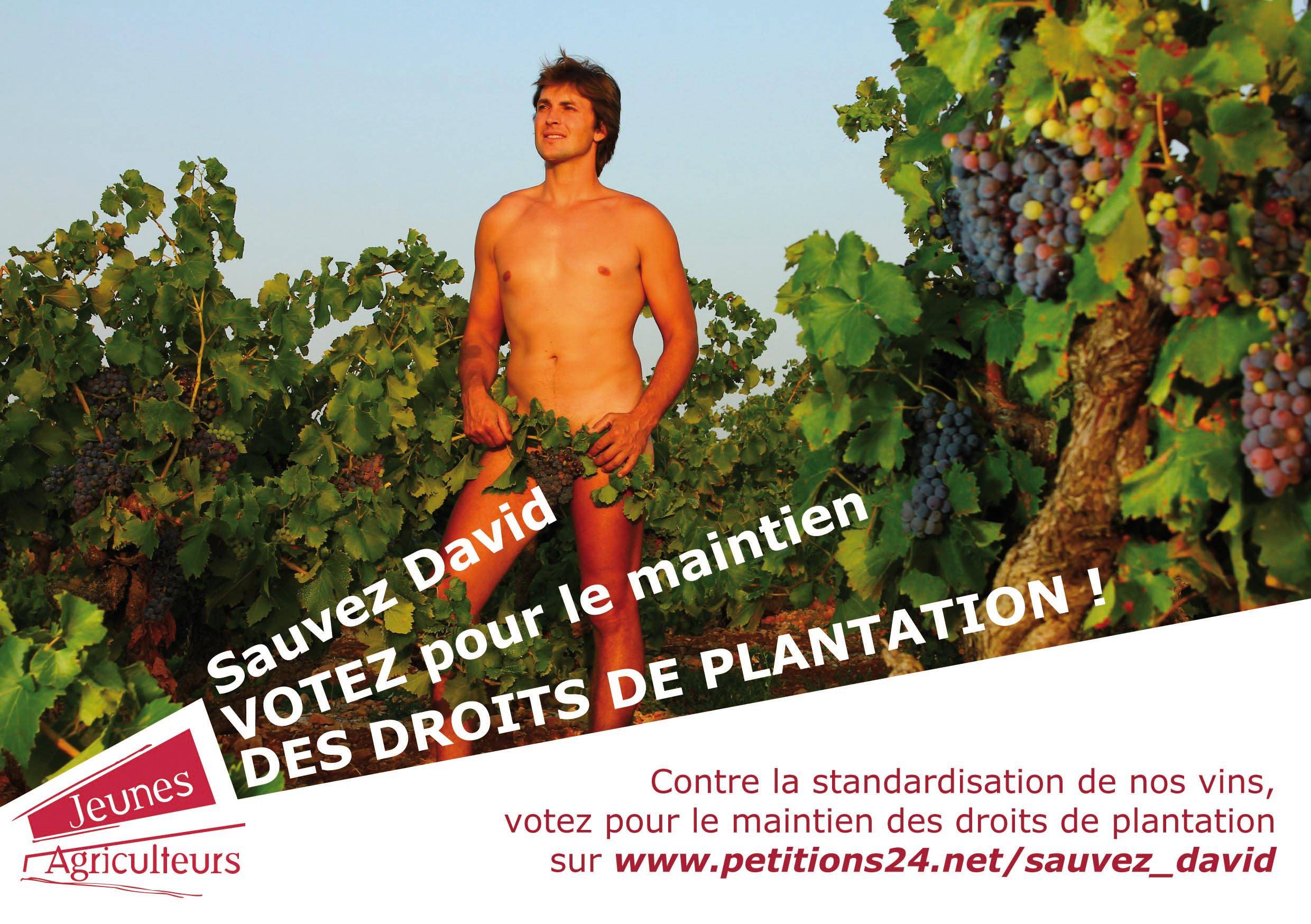
In 2008, as part of the CAP Health Check, the Agricultural Council agreed to eliminate restrictions on the planting of new vines, albeit cautiously and over a period up to 2015, with the possibility for individual member states to extend this to 2018. Planting limitations have been a part of the CAP since the early 1960s, and there has been a total ban on new plantings of table wines since 1976 which was expanded to include quality wines in 1984.
The 2008 decision was taken to make European wine producers more competitive, to stem the loss of market share both inside and outside the EU, and was in line with the decisions to also remove supply controls in the dairy and sugar sectors.… Read the rest
Food prices, poverty and the CAP
The Fabian Society in the UK has established a Commission on Food and Poverty to examine how poverty relates to the food system. The Commission published an interim report in March based on the initial evidence it has gathered. The Commission’s approach is to look at access to food, health outcomes and what the consequences of the ways the food system operates are for low-income households in the UK and consequently elsewhere.
I recently made a submission to the Commission on the way in which agricultural policy affects food prices and the implications this might have for consumption, nutrition and health.… Read the rest
UK Brexit and agriculture
I wrote a post last January on the agricultural implications of a British withdrawal from the EU (Brexit) for agriculture in the rest of the EU. Following submission of evidence to an Irish Parliamentary Committee on the implications of Brexit specifically for the Irish agri-food sector, I have developed the possible scenarios into a longer paper which can be downloaded here.
Although the discussion concentrates on the potential impact on the Irish agri-food sector, the early part of the paper discusses the possible alternative trade arrangements between the UK and the rest of the EU following a potential Brexit which might be of wider interest.… Read the rest
Two steps forward, one step back: coupled payments in the CAP
One of the success stories in the evolution of CAP reform has been the change from supporting the product to supporting the producer by moving, first, from market price support to coupled payments, and then by decoupling these payments.
The 2013 CAP reform has reversed this process. Coupled aids have started to grow again, from a projected €2.7 billion in 2014 to a projected €4.8 billion in 2015, an increase of nearly 75%. Their share of total direct payments will rise from 6.7% in 2014 to 11.6% in 2015. This step backwards was one of the negative outcomes of the recent CAP reform.… Read the rest
TTIP and the potential for US beef imports
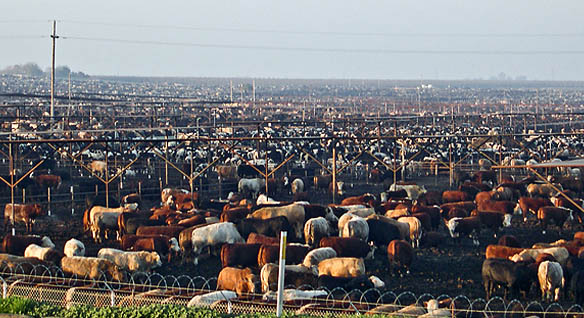
Beef is generally considered to be a sensitive sector in the EU-US negotiations on a possible Transatlantic Trade and Investment Partnership (TTIP) agreement. Currently, imports of beef from the US are limited by high tariffs and by the refusal of the EU to allow the import of beef produced with the aid of pharmaceutical technologies such as hormones and beta-agonists (a class of non-hormonal compounds that act to increase feed efficiency).
Nonetheless, EU imports of non-hormone-treated beef from the US have been increasing in recent years. Different views have been expressed about the likely consequences for the EU beef market if market access were further liberalised under a TTIP agreement.… Read the rest
Forum for the Future of Agriculture 2015 – Remarks on EU agricultural trade policy
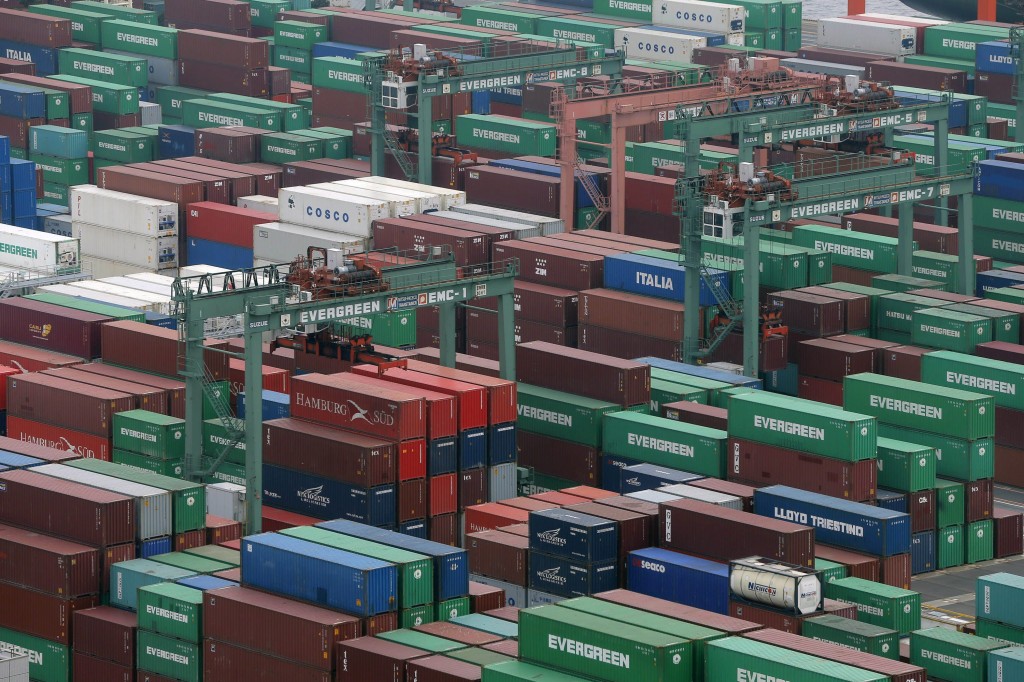
The 8th Forum for the Future of Agriculture (FFA2015) was held yesterday in Brussels. This annual meeting, organised jointly by the European Landowners’ Association and Syngenta, attracts around 1400 participants and has established itself as one of the principal fora for debate on the future of agricultural policy. What makes the event interesting is that it attracts a good number of participants from among farmers and the agri-business sector while also being open to environmental NGOs and others critical of current agricultural practices.
The theme for yesterday’s meeting was the UN Sustainable Development Goals and possible implications for EU agriculture, with contributions from both Commissioners Hogan (Agriculture) and Vella (Environment, Maritime Affairs and Fisheries).… Read the rest
Farmers' share of food chain value added
In response to a question recently in the European Parliament from Mairéad McGuiness MEP, one of the Parliament’s Vice Presidents and a member of COMAGRI, the Commission presented updated figures on the distribution of the value added in the food chain between the various actors. Mairéad McGuinness had asked if the Commission could provide details on the average share/percentage of the final price that farmers receive for their produce, relative to the share/percentage received by other actors in the food supply chain?
The Commission had previously presented figures for the distribution of value added in the food chain between the years 1995 and 2005 in a staff working paper accompanying its communication A better functioning food supply chain in Europe in 2009.… Read the rest