
To understand the possible timing of the CAP reform negotiations it is crucial to understand the new decision-making process under the Lisbon Treaty involving both the Parliament and the Council. In a recent post, I set out my understanding of the process, based on the assumption shared by most commentators (for example, see this Brussels briefing) that the Parliament would vote in plenary on its position on CAP reform in March, thus making a first reading agreement impossible.
I now think another scenario is more likely, namely, that COMAGRI will appoint its formal trilogue negotiating team at its next meeting in a week’s time based on the mandate arising from the voting on the compromise amendments. The Parliament in plenary may decide to approve this mandate in February, but it may not actually vote on the CAP reform regulations until a new set of amendments emerge from the trilogue process, assuming this is successful.… Read the rest
Forum on CAP reform

I did not get time before Christmas to draw attention to the Forum on the Common Agricultural Policy after 2013, a series of articles on the CAP reform process published in the Nov/Dec issue of Intereconomics. This is a review of European economic policy published jointly by the Centre for European Policy Studies and the Leibniz Information Centre for Economics. I contributed one of the articles, and the contributions of my colleagues are uniformly excellent even if they take different views on some of the main issues.
The full list of contents is as follows:
Jean-Christophe Bureau Where is the Common Agricultural Policy heading?
Stefan Tangermann CAP reform and the future of direct payments
Alan Matthews Greening the Common Agricultural Policy post-2013
Davide Viaggi Rural development in the post-2013 CAP: huge opportunity or devil in the details?
Christophe Crombez, Louise Knops and Johan Swinnen Reform of the Common Agricultural Policy under the co-decision procedure
Jean-Christophe Bureau accepts that the Commission’s reform proposal does not address the most fundamental criticisms of the CAP including the unwanted effects of direct payments and the lack of targeting of the budget on public goods.… Read the rest
Welcome to the Irish Presidency
Ireland took over the EU Presidency from 1 January 2013 and the Irish Minister for Agriculture, Food and the Marine, Simon Coveney, will chair the Council of Agricultural Ministers for the next six months. Coveney is an energetic Minister and the Irish have an experienced bunch of officials (see who’s who in the Irish delegation) who will do everything to ensure an agreement on CAP reform on their watch.
Securing an agreement under the Irish Presidency is conceivable. But I am going to argue that the institutional decision-making process between the Council and the Parliament, as well as the linkage with the Multi-annual Frinancial Framework (MFF) negotiations, will make it extraordinarily difficult, even assuming that the European Council will reach an agreement on the next MFF at its next meeting on 7-8 February 2013.
In this post I discuss my understanding of the decision-making process (the ordinary legislative procedure, also known as co-decision) over the next six months.… Read the rest
What potential agroforestry holds for the future CAP?
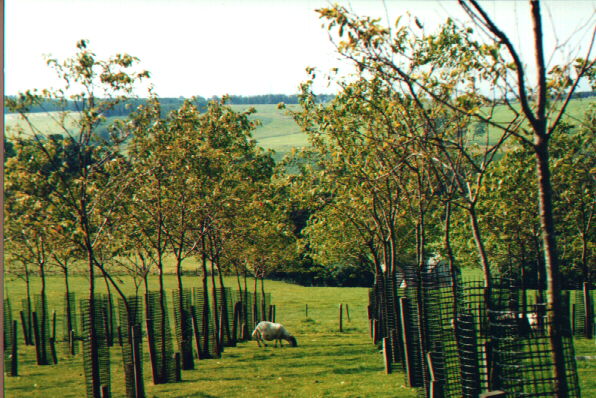
More than 80 policy makers, farmer’s representatives, NGOs and scientists got together on Wednesday this week in the European Parliament in Brussels to discuss the potential agroforestry holds for the future CAP. The event, entitled “Agroforestry: Trees for a Sustainable European Agriculture”, was organised and chaired by MEP Gaston Franco with the aim of promoting and supporting agroforestry at the European level. The programme (see agenda and presentations here) has brought together many speakers with various backgrounds and perspectives, resulting in a demonstration of a diverse and sophisticated picture of the field.
Agroforestry combines production and environmental protection in an innovative way, said Alain Canet – President of the French Agroforestry Association. It allows optimising the use of natural resources and produces biomass and biodiversity as well as it “offers innovative solutions to modern challenges of rural development,” argued Christian Dupraz, Researcher and President of the European Agroforestry Federation (EURAF).… Read the rest
Danish Presidency CAP reform progress report
The Danish Presidency has submitted its report to the Agricultural Council on the progress achieved during the first half of 2012 on CAP reform. The report indicates the main amendments suggested by the Presidency to the Commission proposals and on which the Presidency has noted broad support from delegations. The overview report contains a list of working documents in the Annex prepared by the Commission which provide further explanations of its proposals.
In addition to the overview report which notes the positions taken in the Council on the various elements of the Commission’s proposals, the report is accompanied by a series of revised draft regulations which include the specific amendments proposed by the Presidency. The Presidency proposals for the four main revised regulations are as follows.
Proposal for a Regulation of the European Parliament and of the Council establishing rules for direct payments to farmers under support schemes within the framework of the common agricultural policy (CAP Reform) – Presidency consolidated revised text
Proposal for a Regulation of the European Parliament and of the Council establishing a common organisation of the markets in agricultural products (Single CMO Regulation) (CAP Reform) – Presidency consolidated revised text
Proposal for a Regulation of the European Parliament and of the Council on support for rural development by the European Agricultural Fund for Rural development (EAFRD) – Presidency consolidated revised text
Proposal for a Regulation of the European Parliament and of the Council on the financing, management and monitoring of the common agricultural policy (the horizontal regulation) – Presidency consolidated revised text
An interesting parlour game for CAP watchers for the rest of the summer will be to compare the Presidency draft text for the four regulations with the COMAGRI rapporteurs’ draft texts which will be discussed in COMAGRI on 18-19 June.… Read the rest
Are the CAP 2013 proposals a major reform?
The economist’s dilemma
Economists evaluating the Commission’s legislative proposals for the CAP post 2013 face a dilemma.
Economists work within a paradigm in which agriculture is an industry no different from any other, where markets by and large do a good job in allocating resources, and where the only justification for government intervention requires both the existence of market failures and demonstrating that governments have access to relevant information or resources which would allow them to address those market failures effectively.
This is an extremely powerful toolkit because it allows economists to distinguish between welfare-enhancing policy interventions and those which are largely about shifting resources and rents from one group to another (the distinction between PERTs and PESTs using Gordon Rausser’s terminology in his well-known 1982 AJAE paper).
Applied to the CAP, this paradigm produces unambiguous policy recommendations: eliminate support to farm incomes, confine public budgets to the purchase of environmental public goods through targeted programmes, and maintain a minimum crisis management capacity to deal with catastrophic risk.… Read the rest
End the use of export subsidies in the 2013 CAP review
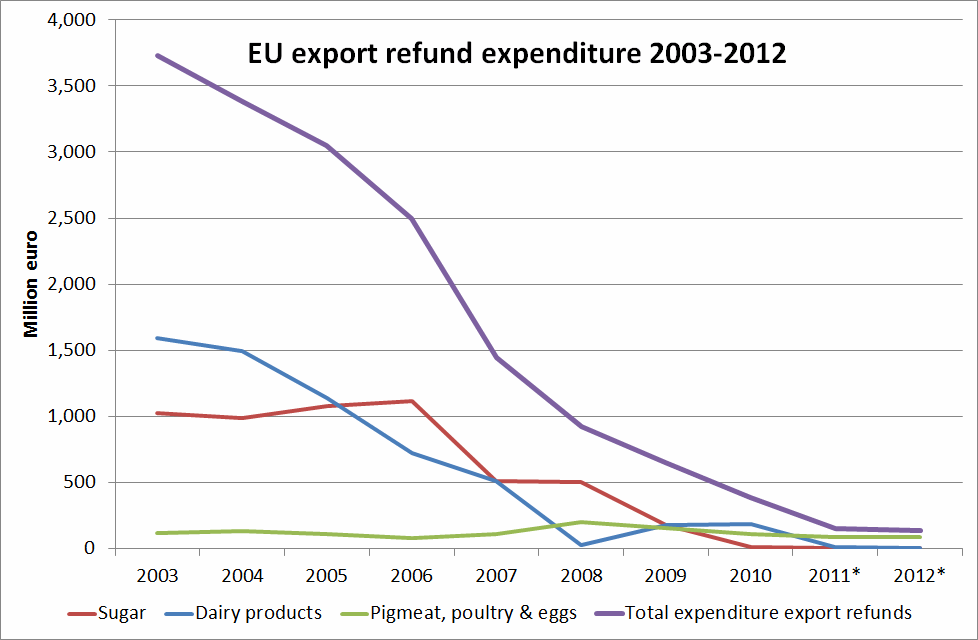
A rather specific feature of the EU’s agricultural policy has been its use of export subsidies to maintain market prices on its domestic market in the past. While the EU was not the only country to make use of this policy mechanism, it accounted for around 90% of global expenditure on formal export subsidies (while arguing that other countries provide export support through more indirect means, such as through state monopoly marketing boards or through food aid).
EU use of export subsidies has fallen dramatically although they still have not disappeared. Total expenditure on export refunds fell from €3.8 billion in 2003 to a projected €139 million set aside in the EU’s draft 2012 budget (at their peak in the late 1980s and early 1990s, they amounted to €10 billion per year). Pigmeat, poultrymeat, eggs, beef and some non-Annex 1 (that is, processed) food products are now the only beneficiaries.
It is surely time for the EU to renounce the use of this policy instrument in the new CAP after 2013.… Read the rest
Agricultural Council discusses the single CMO
Danish Agricultural Minister Mette Gjerskov presided over her first Agricultural Council of the Danish Presidency with some dash and vigour last Monday 23 January. Her energy contrasted with the comments of some of her fellow Ministers in their first formal debate on the Commission’s single CMO legislative proposal, with a number of ministers seeking to roll back some previous reforms.
The Presidency structured the debate around two themes: the effectiveness of exceptional measures in case of market disturbances and crisis; and the proposed measures aiming at a more competitive and well-functioning food supply chain. The debate, which lasted just over two hours, can be followed here on video.
The key battle lines that emerged can be summarised as follows. For simplicity, I refer to those who would like to return to a more managed market as the ‘blues’, and those who would like to push further in a more market-oriented direction as the ‘reds’, while recognising that this crude distinction does not always work.… Read the rest
The CAP at Fifty
Today, the European Commission has launched the CAP@50 communication campaign to mark the fiftieth anniversary of the Common Agricultural Policy.
The Commission’s campaign wants to emphasise the CAP as a cornerstone of European integration, as a policy that has provided European citizens with half a century of food security and a living countryside. The year-long communication campaign includes an interactive website, an itinerant exhibition, audio-visual and printed materials, as well as a series of events in Brussels and the Member States.
No one wants to spoil a good party, but of course the overall balance sheet of the CAP remains controversial, to say the least.
CAP benefits and costs
Yes, the CAP helped to stabilise farm prices for EU farmers over the past 50 years and by reducing risk it encouraged farmers to make the investments which contributed to the modernisation of European agriculture over that period. Yes, the CAP resulted in a transfer of income to farmers which helped to smooth the huge rural to urban migration and adjustment that characterised European society in the 1960s and 1970s.… Read the rest
More on the European Innovation Partnership for Agricultural Productivity and Sustainability (EIP-A)
One of the themes of this CAP reform is the need for a major increase in research and innovation to address the urgent social challenges of providing more food in an environment of increasing land use competition and pressures on resources and the environment. Whether the Commission’s proposals actually deliver on this objective is still an open question.
Three instruments are envisaged in the Commission’s CAP reform proposals to support this agenda:
• Continued support in the Rural Development Pillar 2 for investment in physical assets, business development, cooperation for the development of new products, processes and technologies in the agriculture and food sector as well as a revamping of farmer advisory services to broaden their scope and improve their effectiveness.
• A new European Innovation Partnership instrument for agricultural productivity and sustainability (EIP-A) also in the Rural Development Pillar.
• Increased funding for agricultural and food research under the Commission’s Horizon 2020 research programme.… Read the rest