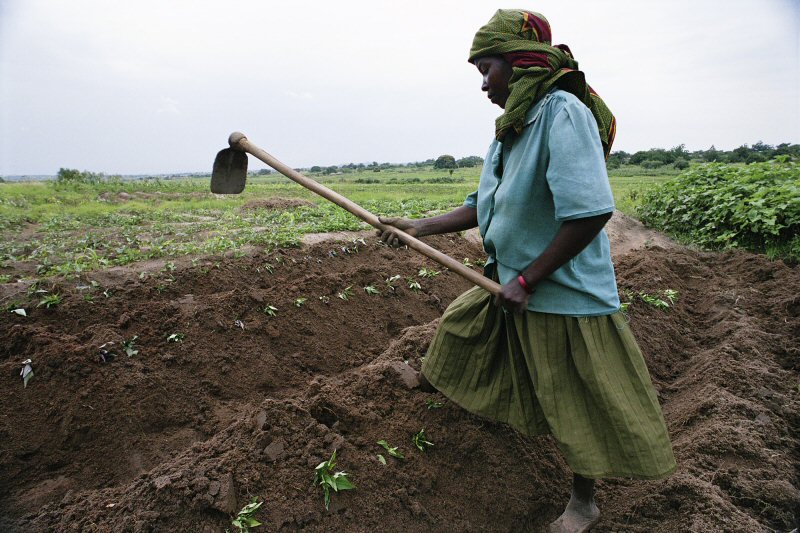
The CAP and its limited effect on development

Dr Bettina Rudloff of the Stiftung Wissenschaft und Politik / German Institute for International and Security Affairs and Michael Brüntrup of the Deutsches Institut für Entwicklungspolitik / German Development Institute recently published a joint briefing paper on the implications of CAP reform for development. Their paper is available in English to download here, and they have contributed the following abstract.

For a long time the CAP has been accused of causing damage to developing countries. However, several reforms have limited these risks to a handful of issues. Especially further coupling and the missing internalization of costs related to climate and the environment are the remaining risks for developing countries.

Other risks can arise due to the complex interplay of the CAP with other policies like trade or energy policy, which is relevant for biofuel or soy imports. Such risks can only be partly addressed by CAP reform, i.e. not to extend coupling.… Read the rest
Why capping will be a mirage

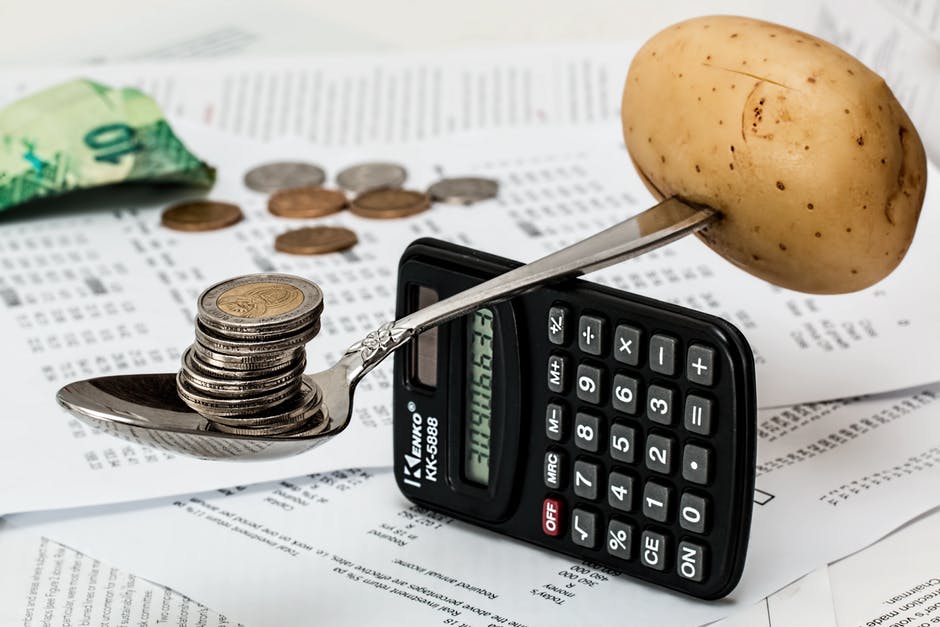
Commissioner Hogan confirmed in his press conference folllowing the publication of the Commission’s proposal on the next Multi-annual Financial Framework that the Commission intends to introduce a cap of €60,000 on the maximum amount of direct payments any holding can receive in the next CAP legislative period. Commission President Juncker is reported as telling the Belgian Parliament earlier this week that “the European Commission will propose a €60,000 limit on individual direct payments to support small farm holdings instead of ‘agricultural factories’”. These statements are misleading and disingenuous, because they ignore what is likely to be the fine-print in the Commission proposal.

The problem is that this proposal is unlikely to achieve its intended objective. The leaked draft of the Commission’s legislative proposals requires Member States to first deduct (the language used is “shall deduct”) the value of salaries paid from the direct payments received before the cap is applied.… Read the rest

Commission assaults rural development spending to protect direct payments

Please note that the key chart in this post (the third chart, comparing the CAP ceiling in 2027 with that in 2020, has been updated using Commission figures in this post.

The Commission’s MFF proposal (including both ceilings for expenditure as well as ideas on how to finance the budget) was published yesterday. The Commission claims that the proposal includes reductions of roughly 5% in both the Common Agricultural Policy and Cohesion Policy programmes, as they have the largest financial envelopes. However, another way of looking at the numbers suggests that the cut is more like 15% overall in real terms over the period of the next MFF, but with a much bigger cut in Pillar 2 rural development expenditure of around 26%. Direct payments will be maintained constant in nominal terms. In this post, I set out the analysis behind these figures.

Budget Commissioner Oettinger had been indicating for some time before the publication of the MFF proposals that the CAP budget would be cut by around 6%.… Read the rest

Is there a particular generational renewal problem in EU agriculture?

Six years ago, I wrote a post The greying of Europe’s farmers which reviewed the evidence on the ageing of farm operators up to that point in time (the latest data available referred to 2007). The data confirmed that Europe’s farmers were getting older. However, I questioned whether this was evidence of a growing policy problem. Instead, I suggested “that what we observe is a slow upward shift in the age distribution which can be explained by general social trends (longer schooling periods and longer longevity) rather than any specific worsening of the generational transfer problem in agriculture as such.”

The greying of Europe’s farmers continues…

The recent publication by Eurostat of the first results from the 2016 Farm Structure Survey allows us to revisit this issue. The table below shows trends over the period since 2005. Because 2016 data are not yet available for four Member States (Belgium, Croatia, Italy and Luxembourg) I provide two series in the table – one for the EU-28, and the longer series for the EU-24.… Read the rest

The CAP and migration

One of the more unexpected sections in the Commission Communication The Future of Food and Farming published in November 2017 was the very final section on Migration. This begins “The future CAP must play a larger role in implementing the outcome of the Valetta (sic) Summit, addressing the root causes of migration.” This is, to my knowledge, the first time that an explicit link has been made between the CAP and migration pressures from countries outside the EU in a Commission publication. For example, in the most recent EU Policy Coherence for Development report from 2015, the section on agricultural policy makes no reference to migration.

The root causes of migration

However, 2015 was the year in which more than one million undocumented migrants and refugees arrived in Europe, and several thousands more died in their attempt to cross the Mediterranean. In May of that year, the Commission published its communication A European Agenda on Migration.… Read the rest

Implications of Brexit for developing countries’ agri-food trade

Back to Brexit, I’m afraid, but I thought readers of this blog might be interested in a recent working paper I have written on this topic. Brexit (the UK’s exit from the European Union) will have important repercussions for the agri-food trade of developing countries because of the UK’s size (it is the sixth largest economy in the world) and its important role as an importer of agri-food products (it accounts for 12% of the EU’s imports from developing countries). These effects will occur through a variety of different channels.

Some of the key conclusions of the paper are:

• There will be higher trade costs for UK-EU27 trade. The size of these additional trade costs will depend on whether there is a ‘hard’ Brexit (where the UK makes a disorderly departure on 29 March 2019 without any trade agreement in place) or a ‘soft’ Brexit (where the UK makes an orderly departure following a transition period under the terms of an agreed Withdrawal Agreement (WA) on 31 December 2020 and a free trade agreement including agricultural trade enters into force immediately thereafter).… Read the rest

Co-financing CAP Pillar 1 payments

After a couple of Brexit posts, it is time to return to the debate on the future of the CAP and its financing. Early last month, I wrote a post making the case for co-financing CAP Pillar 1 payments in the forthcoming MFF proposal from the Commission. I have since fine-tuned the arguments and the result has appeared as a policy brief published by the Swedish Institute for European Policy Studies.

From the summary:

The idea of national co-financing of the EU’s income support to farmers was introduced into the debate on the next Multi-Annual Financial Framework (MFF) in June 2017 in the Commission Reflection Paper on the Future of EU Finances. The European Commission mentioned the idea only in passing and it was immediately rejected by Agriculture Ministers, a stance that can be understood on political economy grounds.

This paper makes four arguments in favour of this policy instrument – for example that it would make better value-for-money choices in the CAP more likely – while also responding to some of the criticisms of the proposal.

Read the rest

The Brexit negotiations on the future trade relationship

On 23 March 2018, the European Council in its Art. 50 formation welcomed the agreement reached earlier last week by the negotiators on parts of the legal text of the Withdrawal Agreement covering citizens’ rights, the financial settlement, a number of other withdrawal issues and the transition. Prime Minister May wrote following that agreement to European Council President Donald Tusk giving her full support to the draft Agreement and highlighting, in particular, her support for efforts to solve the Ireland border issue. The European Council was therefore willing to set out its guidelines with a view to the opening of negotiations on the overall understanding of the framework for the future relationship, which will be elaborated in a political declaration accompanying and referred to in the Withdrawal Agreement.

In this post, I discuss some of the trade implications of the European Council’s guidelines, particularly for trade in goods. (I apologise in advance for yet another post on Brexit on this blog about the CAP, but given the importance of this future trade relationship not least for EU farmers I think the attention can be justified).… Read the rest

Brexit Withdrawal Agreement forwarded to UK

The EU Commission yesterday forwarded a draft Withdrawal Agreement to the UK authorities for negotiation. This draft builds on the initial draft submitted by the Commission for approval by the Council (Art.50) and the Brexit Steering Group of the European Parliament on 28 February last. To accompany that initial text, the Commission published a helpful Q&A as a guide to the withdrawal process which still remains valid today. Press reports have highlighted that governments tweaked the initial text in some minor ways but retained the broad thrust of the document.

Negotiators are expected to work on the draft over the weekend and in Brussels on Monday and Tuesday next week. The hope is that sufficient progress will have been made in ironing out remaining differences that the European Council, which will meet in its Article 50 formation next Friday 23 March, will approve the guidelines to start negotiations on the framework of future relationships.… Read the rest

Measuring changing farm structure in the EU

A particular type of farm structure is not an explicit policy objective of the EU’s Common Agricultural Policy (CAP). However, facilitating structural change is an objective of the CAP, set out in Article 39 of the Treaty on the Functioning of the European Union, as a way of ensuring a fair standard of living for the agricultural community and increasing the individual earnings of persons engaged in agriculture (the Treaty language speaks of “ensuring the rational development of agricultural production and the optimum utilisation of the factors of production, in particular labour”).

However, there is a widely-shared view that it is desirable to maintain the family farm model of European agriculture. There also seems to be broad political support for the view that assistance should be targeted on smaller family farms. There is keen interest in the evolution of agricultural structures, with many regretting the decline in the number of smaller farms and criticising the emergence of larger, ‘industrial’ holdings.… Read the rest