Addressing generational renewal: the situation in Ireland

Generational renewal in farming is a big topic in Brussels right now. It is likely to feature heavily in the Vision for Agriculture and Food that the Commission is expected to publish shortly in response to the report of the Strategic Dialogue on the Future of Agriculture. Von der Leyen’s Mission Letter to the incoming Commissioner for Agriculture and Food Christophe Hansen directed him “to present a strategy for generational renewal in agriculture, notably supporting family farms and young farmers to access capital”.  In his confirmation hearings with the European Parliament, Hansen stated that “Creating the conditions to turn the trend of lagging generational renewal, by making sure that farming remains a viable and attractive vocation decades from now, will be the central tenet of my Vision.” In line with this commitment, generational renewal was one of the issues addressed in the first Youth Policy Dialogue organised by DG AGRI last December.… Read the rest

Climate measures in Irish agriculture

Today, I made an online presentation to a virtual workshop jointly organised by MAREI, the Marine and Renewable Energy Ireland centre at University College Cork and the Economic and Social Research Institute, Dublin on climate and energy policy research. The talk discussed measures in agriculture to reduce Irish agriculture’s greenhouse gas footprint in the context of the country’s policy goals for climate stabilisation. Below is a transcript of the talk.

Agriculture is the single largest contributor to Ireland’s greenhouse gas emissions, accounting for 34% of total national emissions in 2018, but 46% of the emissions that are limited by the EU Effort Sharing Decision. If we are to reduce emissions in line with our national targets for 2030 and 2050, agricultural emissions must clearly be reduced. Yet they have been increasing in recent years.

Reducing absolute emissions is more difficult in agriculture because of the absence of obvious technical solutions such as exist for energy generation, transport and the built environment.… Read the rest

Why funding a suckler cow reduction scheme in Ireland makes sense

I have discussed previously on this blog (here and here) that Ireland faces particular challenges in meeting its EU reduction targets for the non-Emissions Trading Sector in 2030 under the EU’s Effort Sharing Regulation (ESR) because of the high share of agricultural emissions covered by the ESR.

Ireland has an EU obligation to reduce ESR emissions by 20% compared to 2005 levels by 2020, and by 30% by 2030.  The agricultural sector contributes 32% of national emissions, but 45% of the emissions regulated by EU legislation. The other regulated sectors include transport, heat, waste and small industry.

Emissions from all these sectors must be reduced if Ireland is to avoid contributing to global warming. Assessing the impact of Irish agriculture on global warming is complicated by the fact that methane, which is a short-lived greenhouse gas, makes up 60% of its total emissions. Nonetheless, net emissions from the agricultural and land sectors (including soils and forestry) must fall if Ireland is to meet its medium-run targets and if the combined sectors are to approach carbon neutrality by 2050.… Read the rest

Brexit and Irish agri-food trade

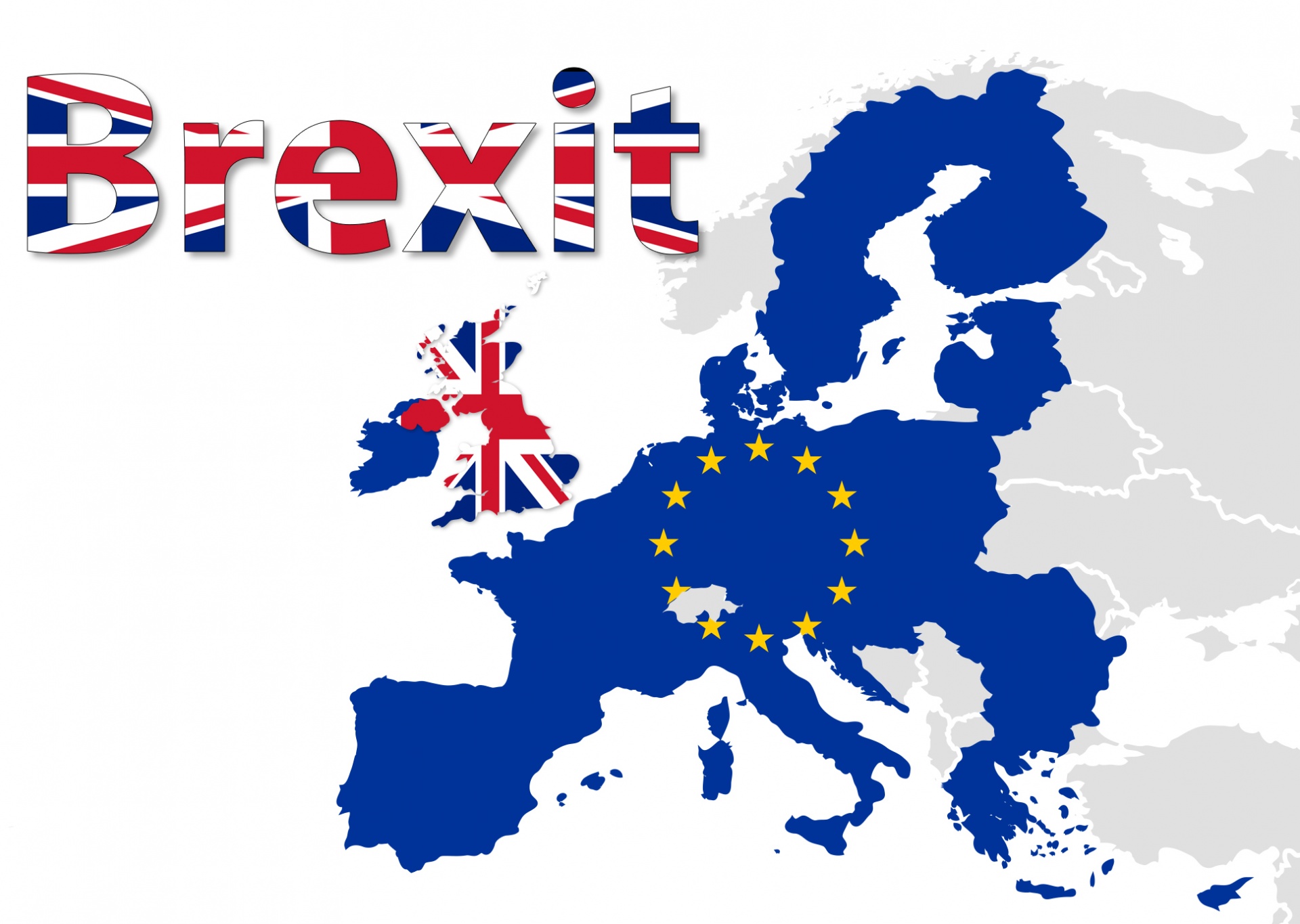
I am preparing to give evidence to the Irish Oireachtas Joint Committee on Agriculture, Food and the Marine on Tuesday 17 January on how Brexit might impact on the Irish agri-food sector. Ireland is the EU Member State with the most to lose from Brexit, and the Irish agri-food sector is the most vulnerable economic sector because of its high dependence on the UK as an export market. More than 80 per cent of Ireland’s key beef and dairy production is exported. Although there has been some diversification away from the UK over the past decade, it still takes 43% of all Irish agri-food exports.

In thinking about the potential impact of Brexit on Irish agri-food trade, I draw heavily on the excellent study of the potential impact of Brexit on Irish agri-food trade prepared by two Teagasc economists Trevor Donnellan and Kevin Hanrahan just prior to the Brexit referendum. Although the study was finalised in April 2016, its key messages are still valid after the referendum result.… Read the rest

When is enough taxpayer aid enough?

The article below was published in the Irish Farming Independent on Tuesday 17 May (the original article can be read by clicking on this link and choosing the ‘Continue to use Press Display’ option). The article addresses the high dependence of Irish agriculture on public support, but the question I raise has, I think, wider relevance for other EU member states as well. With expectations growing that the June Agricultural Council may announce yet another aid package for the agricultural sector, my question is whether there is a vision for European (and not only Irish) agriculture in which this heavy dependence on public support for income in the sector can be reduced.

“Farm incomes are back in the news again, with milk prices in particular having fallen from their record levels in early 2014. Although Teagasc economists were projecting a further growth of 5% in family farm income in 2016 at their annual Outlook conference last December, this figure will be revised downwards in the light of more disappointing milk returns than expected in the first half of 2016.… Read the rest

Greenhouse gas emission targets and Irish agriculture

Ireland faces a huge challenge in reducing its greenhouse gas emissions in the coming years. Taoiseach (Irish Prime Minister) Enda Kenny got into hot water last week for apparently saying one thing in his official speech to the Paris COP21 climate conference and another thing in unscripted remarks to journalists afterwards. Much of the subsequent controversy during the week revolved around the Irish government’s attitude to agricultural emissions and whether it was seeking special favours for the Irish agricultural sector in the current negotiations on setting national emissions targets for the period to 2030 in the framework of the EU’s 2030 Climate and Energy Package. I look at the background to this controversy in this post.

In his speech to the COP21 conference, Mr Kenny pointed out that Ireland’s national long-term vision is presented in climate legislation. This sets out its intention “to substantially cut CO2 emissions by 2050, while developing an approach towards carbon neutrality in the land sector that does not compromise our capacity for food production”.… Read the rest

Food Wise 2025 agri-food strategy launched in Ireland

Last week the Irish government launched the latest in a series of rolling ten-year strategies for the Irish agri-food sector called Food Wise 2025 (FW2025). The report follows in the footsteps of Agri Food 2010 (published in 2000), Agri Vision 2015, Food Harvest 2020 (full disclosure: I was a member of the committees that drafted those two reports) and now Food Wise 2025. In this post, I review the latest strategy and comment, in particular, on its environmental implications.
While Food Harvest 2020 (FH2020) contained a number of detailed sectoral targets, Food Wise 2025 avoids this level of quantification and contains just four headline aspirations:
• increase the value of agri food exports by 85% to €19 billion,
• increase value added to the sector by 70% to €13 billion,
• increase the value of primary production by 65% to €10 billion.
• In turn, achieving these targets is expected to deliver a further 23,000 jobs in the agri food sector by 2025.… Read the rest

Levelling the playing field for land-based enterprises in Ireland

Ireland faces particular challenges in meeting the EU’s 2030 member state climate targets when these are set as part of a new Effort Sharing Decision in the next few years. The overall target agreed at the European Council meeting in October 2014 for the sectors not covered by the EU’s Emissions Trading Scheme is a reduction of 30% by 2030 compared to 2005, with individual member state targets differentiated between reductions of 0% to -40%. Ireland’s 2020 target is a reduction of 20% over 2005 levels.

Ireland’s overall 2030 target for the non-ETS sectors will be set partly on the basis of its relative GDP per capita but also taking account of the high share of agricultural emissions (around 45%) in its non-ETS total. The exact ceiling will not be known until the Commission makes a proposal for new national ceilings under a revised Effort Sharing Decision in 2016 and this is agreed through the legislative process.… Read the rest

Distributing farm payments in Ireland

The Irish Department of Agriculture, Food and the Marine’s consultation on how to implement the new Direct Payments Regulation in Ireland closed last Friday. Ireland is an interesting case study in moving from the historic payment model because of its predominantly grassland-based agriculture and the high dependence of Irish farm incomes on direct payments (the single farm payment alone contributes 50% of Irish farm income). There are significant differences across farms in both the value of payment entitlements per hectare as well as in stocking densities per hectare (the best measure of the intensity of land use in grassland farming), which has given rise to a lively debate on how direct payments should be distributed in future. Those interested will find my submission to the consultation here.

Picture credit: Jon SullivanRead the rest

The challenge of moving to the regional model

The Commission’s legislative proposals for the CAP post 2013 contain two measures to harmonise direct payments per ha across farms: (i) a move to more uniform payments per hectare across member states, and (ii) a move to more uniform payments per hectare within member states by moving from the historical to the regional model of payments. While both measures are prompted by the desire to have a more uniform distribution of payments per hectare across EU farms, it is useful to keep the measures distinct. For that reason, it is helpful to talk about the convergence of payments across member states, and the flattening of payments within a member state.

The argument for flattening payments within a member state is that differences in the level of payments per hectare due to historical factors can no longer be justified, and that tying the value of entitlements to historical performance is unfair as between farmers themselves.… Read the rest